
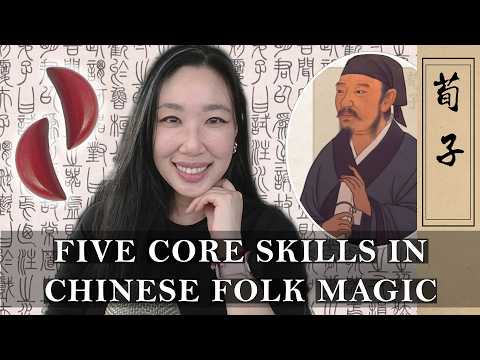
The pragmatic nature of Chinese folk magic is best encapsulated by a single, profound statement from Xunzi: "The Minister of Oracles." This seemingly simple bureaucratic role unveils a sophisticated, five-step curriculum for navigating the unseen forces that shape our reality. It’s not about abstract philosophy; it’s about practical application, discerning patterns, and wielding the energies that govern auspiciousness and inauspiciousness. Forget vague pronouncements; this is about mastering the mechanics of the universe.
At its core, Chinese occultism is remarkably accessible, a testament to its pragmatic roots. Unlike esoteric systems that often demand years of deciphering cryptic texts, the principles of Chinese folk magic are embedded within its governmental structures and philosophical debates, accessible to any diligent practitioner. This isn't about dogma; it's about understanding the observable (and unobservable) mechanics of the world.
Table of Contents
The Minister of Oracles
Within the ancient Chinese royal bureaucracy, the "Minister of Oracles" was not merely a title but a functional cornerstone of governance. This role codified the essential skills required to maintain societal harmony and guide the populace through the ever-shifting tides of fate. It represents a structured approach to what many today might consider "occult" knowledge, but which the Chinese viewed as a vital administrative function. Understanding this position is the first step to demystifying Chinese folk magic, stripping away the mystique and revealing the practical framework beneath.
Core Skill 1: Yin-Yang Discernment
At the heart of all Chinese cosmology and folk magic lies the fundamental principle of Yin and Yang. This is not an abstract philosophical concept but a practical tool for understanding the dualistic nature of reality. Mastering Yin-Yang discernment means learning to identify these opposing yet complementary forces in all phenomena – from the weather and human emotions to the subtle energies that influence events. It's about recognizing the dance between light and shadow, activity and rest, expansion and contraction, and understanding how to navigate their interplay for beneficial outcomes. This skill is foundational because it allows you to see the underlying patterns in what appears to be chaos. For practitioners aiming to understand deeper cosmic currents, tools like the Unofficial Rider Waite Tarot app can offer a visual language for exploring these complex dualities, helping to train your intuition in recognizing these patterns in a more digestible format.
Consider the subtle shifts in the environment: a sudden drop in temperature, a change in the wind's direction, or even a shift in the mood of a room. These are not random occurrences but manifestations of Yin and Yang in motion. The ability to perceive these shifts allows a practitioner to anticipate changes and adapt their actions accordingly. This cultivated awareness is the first step in actively participating with, rather than passively being subjected to, the forces of the universe.
Core Skill 2: Divining Omens
Once you can discern the flow of Yin and Yang, the next crucial step is to interpret the omens they generate. Chinese folk magic views the universe as a communicative entity, constantly sending signals to those who are attuned. Divining omens is the art of reading these signs – from unusual animal behavior and atmospheric phenomena to seemingly coincidental occurrences. These are not mere superstitions but coded messages from the cosmos, offering insights into potential future events or the underlying energetic conditions of a situation.
This practice requires keen observation and a developing intuition. It’s about moving beyond a superficial understanding of events to grasping their deeper significance. For instance, the sudden appearance of a specific type of bird might signify a coming message, while a localized weather anomaly could indicate a shift in energetic balance. Learning to reliably interpret these signs is vital for avoiding pitfalls and seizing opportune moments, transforming potential chaos into directed action.
Core Skill 3: Know the Sacred Methods
With the ability to read patterns and interpret signs comes the responsibility to act upon this knowledge. This leads to the third core skill: understanding and wielding the "Sacred Methods." In the context of Chinese folk magic, these methods are the practical techniques and rituals designed to interact with the energetic fabric of the universe. They are the tools that allow a practitioner to petition, influence, or harmonize with cosmic forces.
These methods are diverse and can include everything from specific meditative practices and the use of symbolic objects to complex rituals involving incantations and energetic manipulation. They are the active components of magical practice, translating intuitive understanding into tangible results. Without this knowledge, the discernment of Yin-Yang and omens remains purely academic. For anyone serious about applying these principles, exploring apps like the Chaos Magick Sigil Generator can offer a modern, accessible way to understand the creation and manifestation of symbolic intent, a core element in many such "sacred methods."
The pragmatic approach means these methods are not seen as appeals to capricious deities but as precise applications of universal laws. They are the mechanics through which a practitioner can influence destiny, much like a skilled engineer manipulates physical forces.
Core Skill 4: Use the Five Arts to Expel Harm
A critical application of Chinese folk magic is the ability to protect oneself and others from negative influences and harmful energies. This is where the "Five Arts" come into play. These are not abstract concepts but practical disciplines designed to create energetic shields, neutralize malevolent forces, and restore balance. The effectiveness of these arts lies in their systematic application, ensuring that the practitioner is not merely reacting to threats but actively creating a secure and auspicious environment.
This involves understanding not just how to defend, but also how to proactively fortify one's energetic field. It’s about recognizing vulnerabilities and preemptively addressing them. The goal is to maintain a state of energetic integrity, making oneself a less attractive target for disruptive forces and ensuring that one's path remains clear for positive manifestation.
The Five Mystical Arts
While the specifics of the "Five Arts" can vary across different traditions, they generally encompass disciplines such as divination (as discussed), geomancy (feng shui), astrology, healing arts (including herbalism and Qigong), and the creation of talismans or charms. Each art offers a unique lens through which to understand and influence the energetic landscape. Their synergistic application creates a robust system for navigating life's challenges and enhancing well-being.
For instance, understanding celestial alignments through astrology can inform the timing of rituals, while geomancy provides guidance on harmonizing living spaces for optimal energy flow. The healing arts address the physical and energetic body, and divination offers foresight. Together, these arts form a comprehensive toolkit for the pragmatic practitioner.
Core Skill 5: Auspicious-Inauspicious Discernment
The ultimate goal of mastering the preceding skills is the ability to consistently discern what is auspicious (favorable) and what is inauspicious (unfavorable). This is the pinnacle of practical magical application, allowing one to make informed decisions that align with beneficial currents and avoid those that lead to misfortune. It's about developing a finely tuned sensibility that navigates the world with confidence and foresight.
This skill isn't about predicting the future with absolute certainty but about understanding probabilities and energetic leanings. It involves synthesizing information from Yin-Yang patterns, omens, and the insights gained from the Five Arts to make choices that foster success, well-being, and harmony. It transforms magical practice from a series of isolated techniques into a coherent, proactive life philosophy.
"The superior man, when resting in some honorable situation, may be compared to the Minister of Oracles." - Xunzi
Human Nature and "Black" vs. "White" Magic
The perennial debate of "white" versus "black" magic often arises when discussing human nature and intent. Philosophers like Mencius, in contrast to Xunzi's more pragmatic, even cynical, view of human nature, suggested an inherent goodness. This philosophical divergence has implications for how we approach magical practices. Is magic inherently neutral, with intent dictating its color, or are certain operations fundamentally aligned with constructive or destructive forces?
From a pragmatic Chinese folk magic perspective, the distinction is less about inherent morality and more about outcomes and energetic consequences. Magic is a tool, and like any tool, it can be used for construction or destruction. The "Minister of Oracles" was concerned with maintaining societal order and prosperity, implying a preference for practices that fostered these ends. While not explicitly condemning "black" magic, the focus was clearly on cultivating auspiciousness. The question then becomes not whether magic is good or bad, but whether your chosen path leads to beneficial or detrimental outcomes for yourself and your environment.
This pragmatic approach extends to resource management. Pursuing deep understanding and effective practice often requires dedicated tools and reliable information. For those delving into the complexities of divination and energetic management, utilizing digital aids can significantly streamline the learning process. Applications like the Lunar Phase Calculator can be instrumental in timing rituals and understanding celestial influences, while the Chaos Magick Sigil Generator allows for rapid and precise symbol creation, empowering focused intent. These tools are not a replacement for personal development but accelerators for practitioners committed to real results.
The consistency observed in Chinese cosmological systems, often supported by rich historical context and clear visualizations, demonstrates this pragmatic ethos. Whether studying Taoism, Qigong, or the I Ching, the emphasis remains on observable results and actionable principles. This approach makes Eastern arts, including folk magic, captivating for serious practitioners and academics alike.
"The superior man knows what is proper. The inferior man knows what is profitable." - Confucius
Mage's Arsenal
- Essential: Chaos Magick Sigil Generator App - For creating potent symbols of intent and understanding the mechanics of sigilization.
- Recommended: Unofficial Rider Waite Tarot App - For a visual and intuitive exploration of archetypes and dualities, aiding Yin-Yang discernment.
- Reference: Xunzi's "On Heaven" and Mencius' "On Human Nature" - For foundational philosophical understanding.
- Auxiliary: Lunar Phase Calculator App - To align practices with natural energetic cycles.
- Advanced: Texts on I Ching, Feng Shui, and Chinese Astrology - For deeper dives into the Five Arts.
FAQ
-
What is the primary goal of Chinese folk magic?
The primary goal is pragmatic: to understand and harmonize with the natural forces of the universe to ensure auspiciousness, well-being, and societal order. -
How does Xunzi's philosophy relate to this practice?
Xunzi's emphasis on structured bureaucracy and clear roles, like the "Minister of Oracles," provides a framework for understanding Chinese folk magic as a system of practical governance and control over unseen forces, rather than mere superstition. -
Is there a difference between "white" and "black" magic in this context?
The focus is less on abstract morality and more on the energetic outcomes. Practices that foster harmony and prosperity are favored, aligning with the concept of auspiciousness, while those that create discord or harm are implicitly discouraged. -
Can modern tools enhance the study of Chinese folk magic?
Yes, digital tools such as sigil generators, tarot apps, and lunar phase calculators can offer accessible ways to practice and understand core concepts like intent, symbolism, and energetic timing.
Your Operation: Discernment in Action
This week, your operation is to consciously practice Skill 1: Yin-Yang Discernment. For seven days, observe your immediate environment. Identify at least three instances where you perceive a clear interplay of Yin and Yang – perhaps a situation that is both stimulating and draining, a moment of quiet activity, or an object possessing both harsh and soft qualities. Note these down. Afterward, consider how recognizing this duality might have informed your actions or perceptions in that moment. If you find yourself struggling to visualize these dualities, use the Unofficial Rider Waite Tarot app. Draw a single card each day and reflect on how its imagery embodies Yin and Yang principles.
Now, reflect on your own experiences. How do you see these five core skills manifesting in your life, or in other magical traditions you're familiar with? Share your insights in the comments below. What auspicious signs have you observed recently, and how did you interpret them? Let's engage in practical discernment.
Practitioner's Note: True magick requires resources. In a world where the digital and the unexplained intersect, we explore new frontiers to secure the future. Do you dare to be part of the vanguard? Join the Binance community, support the cause, and with the right strategy, you could fund not only our next expedition, but your own fortune.
No hay comentarios:
Publicar un comentario