
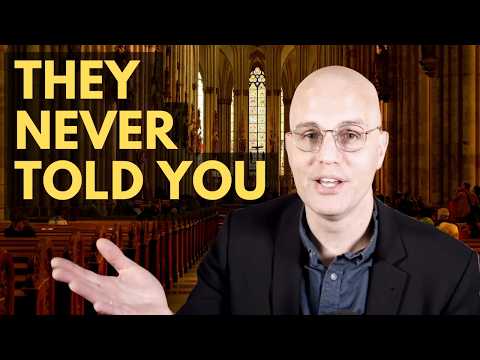
The scent of incense, the weight of ancient stone, the cadence of ritual – these are not mere elements of worship. They are the very architecture of occult practice, meticulously designed and employed within every church. From the towering spires to the whispered prayers, the principles of Western ceremonial magick are not just present, but are the functional bedrock upon which these institutions operate.
If this post is making you uncomfortable, you're on the right track. Subscribe for more truth bombs that shatter your comfort zone, and share this with someone still believing in toothless fairies.
Table of Contents
- Introduction: The Sacred Geometry of Power
- Why Churches Face East: Aligning with Cosmic Currents
- The Floor Plan as the Tree of Life: Mapping the Divine Blueprint
- Baptism: A Ritual of Purification and Banishment
- Stained Glass Windows: Sigils of Light and Belief
- The Mass: Ceremonial Magick in Action
- Practical Application: Beyond Dogma, Into Operation
- Mage's Arsenal
- Practitioner's Verdict
- Frequently Asked Questions
- Your Operation: Deconstructing the Sacred Space
Introduction: The Sacred Geometry of Power
You've likely walked into countless churches, perhaps for a wedding, a funeral, or out of mere curiosity. You've felt the shift in atmosphere, the hushed reverence. But what if that shift wasn't just spiritual, but *energetic*? What if every church, regardless of denomination, is a meticulously crafted occult instrument, designed to harness and direct unseen forces? This isn't heresy; it's a practical deconstruction of sacred architecture and ritual, viewed through the lens of Western esoteric traditions. The same principles that govern the creation of sigils, talismans, and ceremonial circles are embedded within the very fabric of religious spaces.
The architecture isn't accidental. The rituals are not arbitrary. They are codified systems of magick, designed to influence consciousness, invoke specific states, and manifest intentions. Think of it as Technomancy for the masses, a form of Magitech where belief and symbolism are the programming language. For anyone who has delved into the depths of Magick, especially the practical applications pioneered by figures like Austin Osman Spare, the parallels are undeniable. This isn't about faith; it's about function.
Why Churches Face East: Aligning with Cosmic Currents
Most churches, historically and functionally, are oriented to face East. Why? This isn't simply a matter of tradition. In Western magickal traditions, the East is associated with illumination, beginnings, and the element of Air. It's the direction of the rising sun, a potent symbol of rebirth and divine light. Magicians align their ritual spaces and their bodies to face specific cardinal directions to tap into corresponding elemental and planetary energies. This orientation ensures that the rising solar energies, a potent force for manifestation and clarity, are channeled directly into the symbolic heart of the church during morning services.
This alignment is a fundamental aspect of ceremonial magick, ensuring that the practitioner is in harmony with the flow of cosmic energies. By facing East, a church not only greets the physical dawn but also symbolically aligns itself with the forces of enlightenment and spiritual awakening. It’s a subtle, yet powerful, invocation designed to imbue the space and its congregants with the light of whatever divine or symbolic power it represents.
The Floor Plan as the Tree of Life: Mapping the Divine Blueprint
Step inside a traditional church, and observe the layout. You'll often find a nave, a sanctuary, and an altar, perhaps with side chapels. This spatial arrangement frequently echoes the Qabalistic Tree of Life, a foundational diagram in Western esotericism. The nave can represent Malkuth (the material world), leading through various stages to the altar, which often symbolizes Kether (the divine crown) or Tiphareth (harmony and sacrifice). The placement of pillars, often reminiscent of Boaz and Jachin from the Temple of Solomon, further reinforces this esoteric blueprint. This isn't mere architectural coincidence; it's a deliberate mapping of spiritual ascent. The journey from the entrance through the nave to the altar mirrors the pilgrim's path of spiritual evolution, a journey that is central to many occult systems.
The concept of mapping spiritual journeys through physical space is a cornerstone of various magickal systems. The very act of traversing this spatially encoded path is intended to induce a shift in consciousness, preparing the individual for deeper communion or magical operation. This detailed geometrical construction ensures that the physical space itself is an active participant in the intended energetic and psychological outcomes.
Baptism: A Ritual of Purification and Banishment
Baptism, a rite performed in nearly every Christian denomination, is a powerful example of an occult ritual disguised as a sacrament. At its core, baptism is a ritual of purification and banishment. The candidate is immersed in water, symbolically washing away original sin or past transgressions. This act mirrors banishing rituals common in ceremonial magick, such as the Lesser Banishing Ritual of the Pentagram (LBRP), which aims to clear energetic space and establish protective boundaries. The water itself, often blessed or considered holy, acts as a purifying agent, cleansing the individual and preparing them for a new spiritual state.
The very act of emerging from the water symbolizes rebirth, a common theme in magickal workings that seek transformation. It’s a powerful symbolic act of death to the old self and resurrection into a new spiritual identity. This mirrors the ecstatic states sought in magick, where the old self is shed to allow for the manifestation of a new reality or desired outcome. Churches that baptize at the entrance, rather than deeper within the sanctuary, particularly highlight this function: a crossing of a threshold, a cleansing before entering the sacred space.
Stained Glass Windows: Sigils of Light and Belief
Consider the stained glass windows found in most churches. They are not merely decorative. These vibrant tableaux, depicting saints, biblical scenes, and divine figures, function as massive, illuminated sigils. In magick, a sigil is a symbol charged with intent and then used to impress that intent upon the subconscious mind. These windows, bathed in natural light, project symbolic imagery throughout the sanctuary. Each figure, each color, each scene is a potent visual anchor designed to evoke specific archetypes, emotions, and beliefs in the minds of the congregants. They are designed to bypass the rational mind and speak directly to the soul, embedding spiritual or devotional messages through visual resonance.
The use of light and color in sigil creation is a well-established technique. By channeling light through these carefully designed patterns, the church amplifies the symbolic power, creating a focused energetic field. This practice, akin to what might be called Digital Divination in a modern context, where symbolic information is processed and broadcasted, ensures that the messages and intentions are deeply ingrained. The visual narrative on the windows serves as a constant, subliminal reinforcement of the church's doctrine and its associated spiritual powers.
The Mass: Ceremonial Magick in Action
Perhaps the most potent example of ceremonial magick within a church is the Mass itself, or any equivalent central liturgy. This is not simply a service; it's a highly structured ceremonial performance. It involves specific incantations (prayers), invocations (calling upon divine beings or forces), the use of symbolic objects (bread, wine, vestments), and a precise sequence of actions. The consecration of the Eucharist, where bread and wine are believed to be transformed into the body and blood of Christ, is a prime example of transubstantiation – a magical act of creating a tangible link to the divine. This mirrors the magician’s goal of manifesting their will, creating a sacred object that holds deep spiritual power and can be used for communion or further ritual work.
The collective participation, the shared belief, and the precise timing all contribute to the magical potency of the Mass. This is ceremonial magick elevated to an art form, designed to create a powerful ecstatic or devotional experience. The use of sacred geometry in the church's layout, combined with the ritualistic drama, creates an environment primed for profound psychological and spiritual transformation. The entire service is a carefully orchestrated operation, aiming to connect the earthly with the divine, a goal shared by all serious practitioners of the occult arts.
Practical Application: Beyond Dogma, Into Operation
Recognizing the occult basis of religious structures shifts our perspective. It moves us from passive belief to active understanding. These churches are not passive buildings; they are energetic machines. The rituals are not just traditions; they are functional operations. This understanding empowers us. It shows that the mechanisms for influencing reality through symbolism, intention, and focused will are not exclusive to hidden orders, but are woven into the very fabric of our societal structures.
The challenge is to decouple the *function* from the *dogma*. The principles of Magick, whether in a grimoire or a cathedral, are tools. Understanding them allows us to wield them deliberately for our own purposes. For instance, comprehending how a Novena functions as a ritual of repeated intent can inform how you structure your own magical working. Observing the spatial dynamics of a church can inspire the design of your personal ritual space. This is where Esoterismo Digital meets ancient practice – understanding the underlying algorithms of manifestation, whether they are coded in silicon or sung in sacred verse.
Mage's Arsenal
- Unofficial Rider Waite Tarot
- "Liber Null & Psychonaut" by Peter J. Carroll
- "The Golden Bough" by James George Frazer
- "The Kybalion" by Three Initiates
- A high-quality journal for recording operations and insights (I recommend a Moleskine or a similar quality sketchbook for detailed ritual diagrams).
- Access to a reliable calendar for tracking celestial alignments, particularly lunar phases and planetary hours.
Practitioner's Verdict
The argument that churches function as occult instruments is not a provocative claim, but an observable reality when viewed through the lens of ceremonial magick. The architecture, the orientation, the ritualistic sequences – all are designed to manipulate consciousness and energy in highly specific ways. While the ultimate *intent* or *meaning* ascribed to these operations varies wildly across denominations, the underlying *mechanics* are remarkably consistent with established occult principles. The power lies not in the dogma, but in the precise application of symbolic language, spatial arrangement, and focused collective will. This perspective demystifies religious practice, revealing it as a form of high-level, socially ingrained sorcery. For the modern practitioner, understanding these mechanisms can unlock new avenues for personal magical efficacy.
Frequently Asked Questions
- Are all churches identical in their occult design? No. While many share common principles (Eastward orientation, symbolic layouts), the specific manifestation varies greatly by denomination and even individual congregation. Modern evangelical churches, for instance, may have stripped away much of the traditional architectural and ritualistic symbolism, focusing more on direct preaching and communal singing, though elements often remain.
- Does this mean religious rituals are "fake"? Not at all. It means they are *functional*. The efficacy of a magical operation doesn't depend on the practitioner's belief in its supernatural origin, but on its ability to produce a desired effect, whether through psychological transformation, energetic manipulation, or other means.
- How can I use this knowledge in my own practice? By understanding the symbolic language and energetic principles at play, you can refine your own rituals. Analyze the spatial setup of a church: where is the focal point? How does light play a role? How are intentions reinforced? Apply these lessons to your own magical space and workings.
- Does this imply a conspiracy? Not necessarily a conscious, centralized plot. These patterns have evolved over centuries through shared traditions, esoteric knowledge passed down, and the inherent effectiveness of these symbolic systems. Many architects and clergy may not fully grasp the deeper occult significance of their work, as the knowledge has become deeply embedded and naturalized.
Your Operation: Deconstructing the Sacred Space
Your operation this week is an exercise in applied observation and deconstruction. Visit a place of worship – any place of worship that you can access safely and respectfully. It doesn't need to be a grand cathedral; a small chapel, a modern church hall, or even a historical site will suffice. Your task is to approach it not as a worshiper, but as a magician.
Observe:
- The orientation of the building.
- The layout of the main worship space (altar, pews, baptismal font).
- Any symbolic imagery (stained glass, statues, carvings).
- The use of light and sound.
- The atmosphere. What emotions does it evoke?
Take notes. Sketch the layout. Record your impressions. Afterwards, analyze your observations. How do these elements align with the principles of ceremonial magick discussed in this post? How might this space be functioning as an occult instrument? This practical exercise will solidify your understanding and sharpen your magician's eye for the symbolic architecture that surrounds us.
For those looking to deepen their understanding of ritual and symbolic systems, I highly recommend exploring the Unofficial Rider Waite Tarot app. It’s an incredible tool for dissecting archetypes and understanding the visual language of magick. You can generate readings and explore symbolic meanings that mirror the visual narratives found in churches: Unofficial Rider Waite Tarot.
The world is a book, and those who do not travel read only one page. Likewise, the architect of reality understands that even the most sacred edifices are built upon underlying principles that can be understood and, if necessary, repurposed. As you continue your journey, remember that true power lies in understanding the mechanics behind the magic, not just the stories we tell ourselves about it.
Practitioner's Note: True magick requires resources. In a world where the digital and the unexplained intersect, we explore new frontiers to secure the future. Do you dare to be part of the vanguard? Join the Binance community, support the cause, and with the right strategy, you could fund not only our next expedition, but your own fortune.
No hay comentarios:
Publicar un comentario