
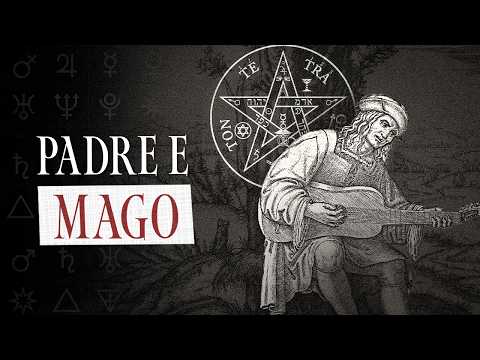
The scent of ozone and ancient parchment filled the air. The sigil for arcane knowledge, freshly charged, pulsed with an almost visible energy. The very fabric of reality seemed to hum with potential. This wasn't just history; it was the pulse of a hidden current that reshaped the Western world.
The Renaissance – a period often painted as solely the triumph of cold reason over medieval superstition. A convenient narrative, but one that conveniently ignores the seismic shift that occurred. You're about to discover how this era was, in fact, a profound reawakening of magical currents, a fervent embrace of Hermeticism, and the rebirth of the mythical prisca theologia, a primordial wisdom that captivated the era's most brilliant minds and iconic artists.
This isn't about dusty textbooks and polite academic discourse. This is an excavation into the deep currents that powered innovation and artistic expression. We'll dissect the flawed, often politically motivated, narratives that have distorted this pivotal epoch.
If this post is making you question everything you thought you knew, you're on the right path. Subscribe for more intellectual shocks to your system and share this with someone who still believes the Renaissance was just about pretty paintings.
Table of Contents
- The Renaissance: A Rebranding of Ancient Powers
- Ficino's Florence: The Hermetic Crucible
- The Re-emergence of Practical Magic
- Pico della Mirandola: Expanding the Arcane Horizon
- Botticelli's Brush: Art as Arcane Cipher
- Practitioner's Verdict: The Enduring Legacy
- Mage's Arsenal
- FAQ: The Rebirth of Magic
- Your Operation: Explore the Origins
The Renaissance: A Rebranding of Ancient Powers
The Renaissance wasn't a sudden break from the past; it was a deliberate, often clandestine, reinterpretation and revival of ancient knowledge systems. Far from a mere triumph of "reason," this period saw a conscious effort to reintegrate magical and esoteric traditions that had been suppressed or driven underground.
The prevailing historical narrative often sanitizes the Renaissance, presenting a sanitized version that aligns with modern secular ideals. However, dig beneath the surface, and you'll find a period deeply steeped in Hermeticism, Neoplatonism, and various forms of *prisca theologia* – the idea of a singular, ancient divine wisdom predating all known religions. This wasn't a rejection of the divine, but an attempt to access it through channels previously deemed heretical or forbidden.
Think of it as a high-stakes rebranding operation. The core principles of magic, divination, and spiritual technology didn't disappear; they were repackaged, recontextualized, and reintroduced into intellectual and artistic circles. This allowed practitioners to explore these concepts under the guise of scholarly inquiry, effectively circumventing the rigid doctrines of the established Church.
The implications of this intellectual and spiritual resurgence are profound. It laid the groundwork for much of what we now consider the foundations of modern Western thought, art, and science – albeit through a lens that often erases its esoteric origins.
Ficino's Florence: The Hermetic Crucible
For anyone serious about understanding the resurgence of magic in the West, the Florentine Academy, under the guidance of Marsilio Ficino, is ground zero. This wasn't just an academic salon; it was a nexus where the forbidden knowledge of antiquity was resurrected and reimagined.
Ficino's monumental task was the translation of the Corpus Hermeticum, a collection of ancient philosophical and religious writings attributed to Hermes Trismegistus, a syncretic figure combining the Greek god Hermes and the Egyptian god Thoth. This foundational text became the bedrock for much of the Renaissance's esoteric revival. It offered a sophisticated framework for understanding the cosmos, the divine, and humanity's place within it, all through a decidedly magical lens.
The Corpus Hermeticum essentially provided the intellectual scaffolding for a new magical worldview. It spoke of a divine unity, the power of the human mind to influence reality, and the correspondences between the microcosm (humanity) and the macrocosm (the universe). This resonated deeply with thinkers who were chafing under the constraints of scholastic theology.
Here's the critical insight: Ficino and his circle weren't just passively translating ancient texts. They were actively *applying* the principles within them. This period marked a pivotal shift from purely theoretical philosophy to a more pragmatic, experimental approach to the divine and the occult. They sought not just to understand magic, but to *practice* it.
The translation and dissemination of the Corpus Hermeticum acted like a powerful catalyst, igniting a widespread interest in Hermetic philosophy and, by extension, practical magic across Europe. It opened the floodgates for further exploration into what were considered arcane arts.
The Re-emergence of Practical Magic
The academic revival of Hermeticism was merely the prelude. The true impact of this era was the tangible reintroduction of practical magical arts into Western culture. This wasn't about abstract philosophy; it was about harnessing occult forces for tangible results.
Practices like talismanic magic, astrology, and the channeling of divine inspiration through oracles, such as the Orphic Hymns, were not just tolerated but actively incorporated into the Renaissance mindset. These weren't seen as superstitious relics but as potent tools for understanding and influencing the world.
Consider talismanic magic: the creation of objects imbued with specific energies to achieve desired outcomes. This involved intricate knowledge of planetary correspondences, symbolic language, and the precise timing of rituals. Astrologers, far from being mere prognosticators, were seen as cosmic navigators, using celestial patterns to understand earthly events and human destinies. The Orphic Hymns, devotional poems invoking various deities, were utilized not just for worship but as powerful tools for invoking specific energies and states of consciousness.
The appeal of these practices lay in their promise of direct access to spiritual power and knowledge, bypassing the intermediaries and dogma of established religious institutions. They offered a sense of agency and control in a world often perceived as chaotic and unpredictable.
The ability to create or acquire these magical tools and practices became a hallmark of the era. For those seeking to truly engage with the energies of the cosmos, these were not optional extras but essential components of a comprehensive spiritual and intellectual toolkit. The temptation to leverage these powerful techniques for personal or societal gain was immense.
Pico della Mirandola: Expanding the Arcane Horizon
If Ficino opened the door, Giovanni Pico della Mirandola kicked it down. His ambition was not merely to understand Hermeticism but to synthesize *all* recognized systems of ancient wisdom, believing they all pointed to a single, ultimate truth.
Pico della Mirandola, a towering intellect of the Renaissance, was fascinated by the idea of a unifying, primordial theology. He delved deeply into a vast array of traditions, including Neoplatonism, Aristotelianism, Kabbalah, astrology, and alchemy, alongside Hermeticism. His magnum opus, the Oration on the Dignity of Man, is a testament to this syncretic vision, portraying humanity as a being capable of ascending to the divine through knowledge and will.
His deep dive into Kabbalah, in particular, was groundbreaking. The Jewish mystical tradition offered a complex symbolic system, a divine map of creation and consciousness, and powerful techniques for spiritual ascent and divine communion. Pico saw in Kabbalah a key that unlocked deeper layers of understanding within Hermeticism and other traditions.
This wasn't just an academic exercise. Pico believed that by understanding these diverse systems, one could achieve a profound connection with the divine and even unlock latent human potential. This integration of previously disparate systems was a bold move, aiming to create a universal philosophy that transcended religious boundaries. He saw the practice of Kabbalah not just as a philosophical pursuit but as a powerful method for spiritual transformation and the acquisition of true gnosis.
Pico’s work amplified the magical current of the Renaissance, demonstrating that these esoteric disciplines were not isolated phenomena but interconnected branches of a universal secret doctrine. His embrace of systems like Kabbalah further legitimized and popularized the study of occult sciences among the educated elite, pushing the boundaries of what was considered acceptable intellectual inquiry.
Botticelli's Brush: Art as Arcane Cipher
The influence of this magical and esoteric revival wasn't confined to philosophical treatises and grimoires; it permeated the very fabric of Renaissance art, most notably in the works of Sandro Botticelli.
Paintings like "The Birth of Venus" and "Primavera" are often analyzed through a lens of mythology and classical allegory. However, a deeper examination reveals layers of hidden meaning, intricate symbolic language, and direct references to Hermetic philosophy, Neoplatonic ideals, and even Kabbalistic concepts. These weren't just beautiful decorations; they were potent visual spells, designed to evoke specific states of consciousness and convey profound esoteric truths.
Consider "Primavera." The figures, the flora, the composition – each element is imbued with symbolic weight. The arrangement of figures, the specific plants depicted, and the overall narrative can be interpreted as an allegorical representation of Neoplatonic love, the cycle of nature, and the journey of the soul towards the divine. Botticelli was not just an artist; he was an initiate, using his canvas as a medium for transmitting occult wisdom.
The art of the period serves as a critical piece of evidence, demonstrating how deeply these magical and philosophical currents were woven into the cultural tapestry. It shows that the Renaissance elite wasn't just *thinking* about magic; they were *living* it, expressing it through the highest forms of cultural output.
This integration of esoteric symbolism into art provided a visual language for complex magical and philosophical ideas that might have been too dangerous or too esoteric to express openly. It allowed this hidden knowledge to circulate, influencing perceptions and inspiring further exploration, even among those who might not have been direct practitioners.
Practitioner's Verdict: The Enduring Legacy
The Renaissance wasn't a fleeting historical blip; it was the catalyst for a permanent shift in Western consciousness. The magic that re-emerged then never truly left.
- Pros: The Renaissance reintegration of magic and esoteric wisdom democratized access to spiritual knowledge. It fostered a culture of experimentation and inquiry that, intentionally or not, paved the way for scientific advancements and individualistic thought. The emphasis on the power of the human will and intellect continues to resonate.
- Cons: The deliberate obfuscation of these magical roots has led to a desacralized worldview, where many of the profound insights of the era are dismissed as mere superstition. This has created a void that is often filled with superficial self-help trends or dogmatic religious interpretations that ignore the deeper mystical currents. Furthermore, the historical narrative has been heavily manipulated to serve specific ideological agendas, often denigrating the Church's role while promoting heretical ideas under the guise of progress.
The legacy is undeniable. From the foundational principles of modern science and psychology to the resurgence of interest in occultism today, the Renaissance effectively embedded a powerful magical current into the Western psyche. It proved that the exploration of altered states, symbolic language, and the harnessing of intangible energies are not fringe activities but fundamental pathways to understanding reality itself.
Mage's Arsenal
- Chaos Magick Sigil Generator App (Essential): For anyone looking to harness the power of intention in the modern age, digital tools are indispensable. This app streamlines the creation of potent sigils, allowing you to focus on visualization and energy projection rather than intricate manual design. It's a 21st-century take on ancient principles of sympathetic magic.
- The Corpus Hermeticum by Hermes Trismegistus: The foundational text that reignited Western esotericism. Essential for understanding the intellectual bedrock of the Renaissance magical revival.
- Oration on the Dignity of Man by Giovanni Pico della Mirandola: A powerful articulation of Renaissance humanism and its embrace of diverse mystical traditions, including Kabbalah.
- The Marriage of Heaven and Hell by William Blake: While from a later period, Blake’s work is deeply infused with the spirit of Renaissance esoteric thought, offering a radical reinterpretation of biblical narratives and divine concepts.
- Books on Renaissance Art History with an esoteric focus (e.g., Edgar Wind's Pagan Mysteries in the Renaissance): Essential for understanding how magical concepts were visually encoded.
- A robust system for managing and organizing your research, whether digital or physical. For anyone exploring complex financial or technological frontiers related to esoteric concepts, platforms that support secure transactions and exploration of the digital ecosystem, like , can be surprisingly relevant for acquiring niche resources or managing energies invested in occult research.
FAQ: The Rebirth of Magic
- Q: Was the Renaissance truly a magical period, or is this an overstatement?
A: While the term "magic" carries various connotations, the Renaissance definitively saw a revival and integration of practices and philosophies that were then, and often still are, classified as magical. This included Hermeticism, astrology, talismanic magic, and the exploration of altered states of consciousness, all of which were deeply influential. - Q: How did the Church react to this resurgence of magic?
A: The Church's reaction was complex and often contradictory. While officially condemning many occult practices, influential figures within the clergy, including scholars and even some ecclesiastical leaders, were deeply involved in studying and sometimes practicing these arts. The line between scholarly inquiry, religious devotion, and forbidden magic was often blurred. - Q: Is there a direct link between Renaissance magic and modern occultism?
A: Absolutely. The foundational texts and ideas rediscovered and popularized during the Renaissance, such as Hermeticism and Kabbalah, form the bedrock of much of modern Western occultism, including traditions like ceremonial magic, Rosicrucianism, and even elements of modern witchcraft and chaos magic. - Q: Can Renaissance magic be applied today?
A: The principles underlying Renaissance magical practices—intention, symbolism, the power of belief, and the understanding of correspondences—are timeless. While the specific rituals and cosmologies may differ, the core mechanics of influencing reality through focused will and symbolic action remain relevant for contemporary practitioners.
Your Operation: Explore the Origins
Your mission, should you choose to accept it, is to delve deeper. The prevailing historical narratives are often deliberate distortions, designed to obscure the true roots of Western thought and practice. Your task is to become a historical archaeologist of the occult.
For your operation, select one specific artwork or philosophical text from the Renaissance era (e.g., Botticelli's Primavera, Ficino's Theologia Platonica, Pico della Mirandola's Oration on the Dignity of Man). Research its potential esoteric meanings. What symbols are present? What philosophical or magical concepts does it reference? Document your findings and consider how these ideas might still resonate or be applied today. Remember, true understanding comes from direct engagement, not passive acceptance of dogma.
The history of magic isn't a forgotten relic; it's a living current that flows beneath the surface of our reality. Understanding its resurgence during the Renaissance is key to understanding its enduring power.
Practitioner's Note: True magick requires resources. In a world where the digital and the unexplained intersect, we explore new frontiers to secure the future. Do you dare to be part of the vanguard? Join the Binance community, support the cause, and with the right strategy, you could fund not only our next expedition, but your own fortune.
No hay comentarios:
Publicar un comentario