Saltar al contenido principal

Anuncio Superior

Mostrando entradas con la etiqueta Solomonic Magic. Mostrar todas las entradas

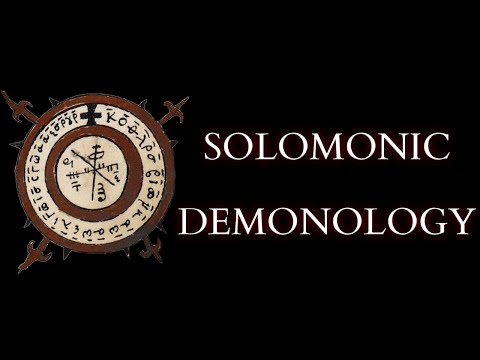
The Testament of Solomon: Unveiling the Origins of Solomonic Magic, Occultism, and Demonology


The name Solomon is synonymous with unparalleled dominion over the demonic realm. But where does this potent lore originate? Composed between the first and fifth centuries CE, The Testament of Solomon stands as a fascinating confluence of legendary biography, a catalog of demons, and a proto-grimoire. In this exploration, we delve into the intricate demonology of The Testament, charting its evolution from a legendary account to the practical occult techniques of demon conjuring. This transition forms the bedrock of Solomonic Magic and general Occultism, ultimately paving the way for infamous texts like The Lesser Key of Solomon.

I. The Enigma of Solomon and Demonic Control

King Solomon, renowned for his wisdom, is also a pivotal figure in occult traditions, credited with possessing the power to command demons. While historical accuracy is debated, the narrative surrounding his control is deeply ingrained in esoteric lore. Is it mere legend, or does it point to a profound understanding of hidden forces? The legends suggest that Solomon utilized a divine ring to compel demons, forcing them to reveal their names, powers, and the secrets of construction, not unlike how modern engineers might leverage advanced software for complex projects. This narrative, whether literal or metaphorical, has profoundly shaped the trajectory of magic and demonology.

II. Deconstructing The Testament of Solomon

The Testament of Solomon is far more than a simple biblical apocrypha. It's a composite work, likely compiled over several centuries. Its structure can be broken down into distinct, yet interconnected, parts:

  • Legendary Biography: It expands upon Solomon's biblical narrative, focusing on his spiritual and magical prowess, particularly his ability to subdue demons.
  • Demonological Catalog: This is perhaps its most enduring legacy, meticulously listing and describing various demons, their hierarchies, their powers, and the specific incantations or seals required to control them.
  • Proto-Grimoire: It contains instructions and rituals, offering the earliest glimpse into what would become formalized Solomonic magic, emphasizing the practical application of esoteric knowledge.

The text often reads like a detailed field report from an explorer charting unknown territory. The skepticism surrounding Solomon's alleged use of demons to build the Temple—a task often requiring immense resources and labor—suddenly appears more plausible when viewed through the lens of esoteric practices that bypass conventional limitations.

III. A Deep Dive into the Demonological Catalog

The heart of The Testament lies in its extensive catalog of demons. Each entity is described with striking detail, including their astrological correspondences, the specific afflictions they cause, and, crucially, the linguistic keys or sigils used to bind them. This wasn't just a list; it was a functional guide for the aspiring magician. The sheer volume of research that went into codifying these entities is staggering, reminiscent of a meticulously crafted spreadsheet detailing the 'stats' of each demon. The names themselves, like "BOR PHOR PHORBA," are often bizarre and, when read aloud, can evoke peculiar, almost humorous, reactions—a testament to the disorienting power of the unknown.

"Come for the forbidden knowledge, stay for the deadpan humor."

This inherent absurdity, coupled with the gravity of the subject, makes the text digestible, a skill that Dr. Sledge, a noted scholar in this field, demonstrates masterfully. His ability to inject humor, like comparing a demon-binding ritual to a Pokémon-style capture sequence, lightens the often dense and intimidating subject matter.

IV. The Shift Towards Practical Occultism

What distinguishes The Testament of Solomon from earlier mythological accounts is its overt focus on practical application. It bridges the gap between legend and tangible magic. The text details how Solomon, through divine means and the use of a magical ring, extracted information from demons. This transition from passive myth to active engagement is a critical development in the history of Western esotericism. It marks a significant step towards the concept of Technomancy, where esoteric principles are applied to achieve tangible results, much like leveraging complex algorithms.

V. The Evolution into a Grimoire

As centuries passed, the lore contained within The Testament was synthesized and adapted. This evolutionary process led to more structured grimoires, with The Lesser Key of Solomon being the most prominent descendant. These later texts codified the rituals, seals, and summoning procedures into a more accessible format for practitioners. The journey from the narrative of Solomon's exploits to the detailed instructions in a grimoire exemplifies the human drive to systematize and replicate powerful experiences, a principle that underpins much of modern technological and scientific advancement.

VI. The Crucial Question: Sigil Construction

A recurring question in the study of Solomonic magic, particularly when examining the lineage to later works like The Goetia, concerns the construction of sigils. How did the pictograms of the Greek Magical Papyri era evolve into the distinct seals found in texts like Dr. Rudd's The Goetia of Dr. Rudd or the Lesser Key? The Testament offers early insights into binding symbols, and historical manuscripts like the 15th-century Harley MS 5596 provide visual evidence of these evolving designs. Understanding this visual evolution is key to grasping the development of Sigilos Digitales and their manifestation in practical magic.

For those looking to create their own sigils, the process can seem daunting. Manually crafting them requires precision and a deep understanding of symbolic language. This is where modern tools can streamline the process and allow practitioners to focus on the energetic intent. For instance, Chaos Magick Sigil Generator offers a powerful way to create unique sigils instantly, ensuring accuracy and allowing for rapid iteration of intent.

VII. Historical Threads and Connections

The figure of Solomon and his magical legacy resonate across various cultures and historical periods. The text has inspired countless interpretations and connections, from the esoteric practices of the Solomonari in Romania, rumored to be dragon-riding wizards, to the academic study of Judeo-Christian metaphysical theory. The very act of researching Solomon's seals and their historical context is akin to navigating the complex narratives found across different biblical testaments, each offering a unique perspective on a central figure. The demon Pazuzu, for example, mentioned in The Testament, found its way into popular culture, notably in the film The Exorcist, demonstrating the enduring power of these ancient symbols and narratives.

"Beats the hell out of me." I think that’s what it’s supposed to do, Dr. Sledge.

This sentiment, delivered with deadpan humor, captures the often-elusive nature of deep esoteric knowledge. It's a journey of continuous exploration rather than a destination of absolute certainty. The pursuit of such knowledge often requires significant resources, whether for acquiring rare texts, supporting research channels, or utilizing specialized software. Exploring the frontiers of any complex field, especially one as historically rich as occultism, benefits greatly from the broader digital ecosystem, including platforms which facilitate secure transactions and resource management.

VIII. Solomonic Magic Today

The legacy of The Testament of Solomon is not confined to ancient history. It continues to influence contemporary occult practices. Modern magicians and demonologists engage with its teachings, seeking to harness the principles of commanding spirits and understanding their influence. The meticulous research presented in works like The Testament of Solomon: Recension C and the efforts to create comprehensive demonological spreadsheets highlight the academic rigor and ongoing interest in this field. The exploration of Magitech, the intersection of magic and technology, offers new avenues for practitioners to engage with these ancient systems.

IX. Practitioner's Verdict

The Testament of Solomon is an indispensable cornerstone of Western esotericism. Its value lies not just in its historical significance, but in its practical guidance. It provides a foundational understanding of demonology and ritual magic that remains relevant today. While the text itself is a proto-grimoire, its true power is realized when its principles are applied and evolved. The transition from legend to actionable magic is a testament to the enduring human quest to understand and influence the forces that shape our reality, blurring the lines between myth and the tangible outcomes of focused intention—a core principle of Magia del Caos.

X. Mage's Arsenal

  • Essential: Chaos Magick Sigil Generator - For the instantaneous creation and visualization of potent symbols.
  • The Testament of Solomon (various translations) - Essential for understanding the roots of Solomonic demonology.
  • The Lesser Key of Solomon (various editions) - The practical evolution of Solomonic magic.
  • Harley MS 5596 (15th century) - For visual historical context on sigil evolution.
  • McCown Critical Edition of The Testament of Solomon - For scholarly analysis.
  • The Old Testament Pseudepigrapha by Charlesworth - For broader context on ancient Jewish writings.
  • Patrick M. Dey's Demonological Spreadsheet - An invaluable resource for comparative analysis.

XI. FAQ

  • Is The Testament of Solomon historically accurate?
    While it contains legendary elements, it provides valuable historical insight into ancient beliefs about demons and magic.
  • How does The Testament of Solomon relate to The Lesser Key of Solomon?
    The Testament is considered a precursor or proto-grimoire, laying the groundwork for the more formalized rituals and demonology found in The Lesser Key.
  • Can the demons described in The Testament be contacted today?
    Practitioners of modern occultism may attempt to work with these entities, but it requires significant study, preparation, and caution.
  • What is the significance of Solomon's ring?
    In the text, the ring is depicted as Solomon's primary tool for binding and commanding demons, symbolizing divine authority and magical power.
  • How are Solomonic sigils constructed?
    Sigils often derive from demonic names or attributes, transcribed into symbolic forms. Their design evolved over centuries, with early graphical representations appearing in texts like The Testament and later, more formalized seals in grimoires. The Chaos Magick Sigil Generator app can assist in visualizing and creating these symbols rapidly.

XII. Your Operation

Your operation for this cycle is to engage directly with the source material. Locate a reputable translation of The Testament of Solomon online or in print. Read through the catalog of demons, paying close attention to the descriptions of their powers and the methods prescribed for their control. As you read, consider how these ancient concepts of power and influence might manifest in the modern world, particularly through digital means. Reflect on how precise intent, symbolized effectively, can become a potent force.

Practitioner's Note: True magick requires resources. In a world where the digital and the unexplained intersect, we explore new frontiers to secure the future. Do you dare to be part of the vanguard? Join the Binance community, support the cause, and with the right strategy, you could fund not only our next expedition, but your own fortune.

Astral Necromancy: The First Known Theory and Practice from the Medieval Vaults


The labyrinthine corridors of medieval magic whisper tales of forbidden arts, and few are as shrouded in mystery as necromancy. Yet, beneath the veneer of superstition, a daring intellectual lineage began to coalesce, seeking to systematize the arcane. By the early 14th century, the landscape of Western occultism was irrevocably altered by figures who dared to fuse the celestial mechanics of astrology with the potent rituals of demon conjuration. Among these pioneers, Cecco d'Ascoli stands as a tragic yet pivotal figure. His lectures and commentaries, attempting to weave these disparate threads, ultimately led to his fiery demise in 1327. But his sacrifice was not in vain, for it paved the way for a radical evolution in magical thought.

As the century drew to a close, a new dawn broke with the advent of Antonio da Montolmo and his seminal work, Liber de Occultis et Manifestis (Book on the Hidden and Manifest). This wasn't merely another grimoire; it was the first publicly authored treatise dedicated to what can only be described as Black Magic, a bold declaration of intent in a world wary of such knowledge. Da Montolmo meticulously outlined the theory and practice of combining astrological elections – the precise timing of celestial alignments for maximum efficacy – with the established Solomonic tradition of conjuring and binding demonic entities. He posited that these beings, the "Intelligences Outside Divine Grace," were imprisoned in the sublunary realm, a concept deeply rooted in the geocentric cosmology of the time. Join me as we dissect this obscure, yet foundational, text that laid the groundwork for Astral Necromancy.

The Ghosts in the Machine: Unpacking the Medieval Mindset

The very idea of spirits, demons, and celestial influences pervading the world was not a fringe belief but the very fabric of reality for our ancestors. The medieval worldview was a complex tapestry woven from theological doctrine, philosophical inquiry, and empirical observation – however different that observation might seem to us today. When we speak of "demons in the air," we're not talking about ethereal metaphors; we're discussing a fundamental conception of the cosmos. Early modern thinkers like Cecco d'Ascoli and Antonio da Montolmo weren't just dabbling in dark arts; they were engaging in a rigorous, albeit heterodox, intellectual pursuit. Their work offers a window into a mentality where the spiritual and material were inextricably linked, a stark contrast to our modern, often secularized, understanding of existence. This is not about superstition; it's about a different mode of comprehending the mechanisms of reality itself.

Cecco d'Ascoli: The Martyr of Systematized Sorcery

Cecco d'Ascoli, a physician, astronomer, and poet, was a man ahead of his time, pushing the boundaries of accepted knowledge. His astronomical commentaries, particularly his work L'Acerba, sought to integrate astrological principles with a nascent understanding of occult forces. He was among the first to systematically link planetary configurations with the conjuration of what he termed "Intelligences," beings that, while distinct from the Divine, were considered celestial intermediaries or, in some interpretations, demonic forces. His heresy wasn't just in his astronomical theories, which challenged established Church dogma, but in his explicit attempts to systematize the interactions with these intelligences. His execution by burning at the stake in 1327 for heresy serves as a stark reminder of the dangers inherent in challenging established paradigms, especially when those challenges touched upon the spiritual and cosmological order.

Antonio da Montolmo and the Liber de Occultis et Manifestis

Following in Cecco's defiant footsteps, but with a more structured approach, was Antonio da Montolmo. His Liber de Occultis et Manifestis, penned in the late 14th century, is critically important as the first known publicly authored book dedicated to what we now recognize as Black Magic. The term "Black Magic" here signifies a practice focused on influencing the material world and personal destiny, often through pacts or interactions with entities perceived as outside divine grace. Da Montolmo’s genius lay in his methodical synthesis. He didn't just dabble; he codified. He detailed how to perform specific astrological *elections* – choosing the precise moment dictated by the stars, moons, and planets – as a prerequisite for conjuring demonic intelligences. His text bridges the seemingly disparate worlds of astral science and demonic evocation, creating a unified system for magical operation.

Astral Necromancy: A Synthesis of Celestial and Infernal

The core innovation of da Montolmo's work, and the essence of "Astral Necromancy," is the synergistic application of celestial timings to empower the conjuration and binding of demonic beings. This wasn't about raising the dead in the common understanding; it was about harnessing spiritual and elemental forces linked to the planetary spheres. The "Intelligences Outside Divine Grace" were not merely abstract evils but potent forces trapped in the cosmic ether beneath the Moon. By understanding their astrological correspondences – their ruling planets, their operative days, their necessary celestial aspects – a practitioner could target specific stellar alignments to draw forth and command these beings for influence or power. It’s a sophisticated dance between cosmic timing and directed will, a concept that resonates with modern game design mechanics, where specific conditions must be met for powerful entities to manifest.

Geocentrism and Demonic Spheres: A World Reimagined

To grasp da Montolmo's system, we must understand the cosmological framework of his era. The prevalent geocentric model placed Earth at the center of the universe, with celestial bodies orbiting in concentric spheres. The region "beneath the Moon" was the sublunar sphere, a realm of constant change and decay, believed to be the domain of elemental spirits and, crucially, demons. This contrasts with later theological concepts that often placed Hell beneath the Earth's crust. For da Montolmo, the air, the very space around us, was a teeming matrix of spiritual forces, accessible through precise astrological timing and ritual. This understanding of the world as an enchanted, layered reality, where celestial events directly impact terrestrial and sublunary phenomena, is fundamental to the practice of Astral Necromancy. It highlights how different our ancestors' conception of the world's fundamental mechanisms was from our own.

The Legacy of Early Necromancy

The impact of figures like Cecco d'Ascoli and Antonio da Montolmo cannot be overstated. They represent a critical evolutionary phase in Western magic, moving from scattered folk practices towards a more codified, theoretical, and even scientific approach – albeit one based on a vastly different paradigm. Their willingness to engage with forbidden knowledge, to systematically explore the connections between astrology and demonology, laid essential groundwork. While the Church condemned such practices, the allure of harnessing celestial and infernal powers persisted, influencing later magical traditions. Their daring exploration of the occult demonstrates a profound commitment to understanding the unseen forces that shape our reality, a pursuit that continues to fascinate and inspire to this day. This historical perspective is vital for understanding the roots of many occult practices today.

Practitioner's Verdict: Is the Old Magic Still Relevant?

The systems laid out by da Montolmo, while ancient, possess a startling elegance and pragmatic structure. The emphasis on precise astrological timing for magical operations is a cornerstone of advanced ritualistic practice. It teaches a vital lesson: that magic is not merely about intent, but about aligning that intent with the opportune currents of the cosmos. Can you conjure demons today without adhering to medieval cosmology? Absolutely. But will you achieve the same targeted results, the same *precision* of manifestation, without understanding the underlying sympathetic resonances? That's a question every serious practitioner must ask themselves. The principles of astrological election, the understanding of planetary intelligences, and the disciplined approach to conjuration are timeless. While the demonology might evolve, the foundational concept of working *with* universal cycles remains profoundly potent. The "confidence of the doctor," as one observer noted, is crucial, but it must be underpinned by rigorous technique and understanding.

Arsenal of the Occultist

To delve into the deeper currents of this type of magic, certain tools and texts are indispensable for serious study:

  • Key Texts: For those seeking to understand the intellectual context, works like *Invoking Angels: Theurgic Ideas and Practices, Thirteenth to Sixteenth Centuries*, edited by Claire Fanger, offer crucial insights into the period. The original manuscript of Liber de Occultis et Manifestis (MS of Liber de Occultis et Manifestis, Latin 7337) is available for scholarly review. For a broader Hermetic perspective, "Antonio da Montolmo et la magie hermétique" within *Hermetism from Late Antiquity to Humanism*.
  • Astrological Software: Modern astrological programs such as Astro.com or dedicated professional software are essential for calculating precise astrological elections. Understanding the mechanics of planetary aspects, dignities, and timing is paramount. The Medium Coeli (MC) at the top of a birth chart, representing the highest point, is a key indicator in this celestial mapping.
  • Historical Grimoires: Familiarize yourself with the Solomonic tradition, as referenced in texts like the Lemegeton (The Lesser Key of Solomon). While da Montolmo adapted and synthesized, the foundational elements of demon conjuration are key.
  • Dedicated Study Resources: Consider sourcing rare occult books from reputable dealers like Justin Sledge's Shop to build a comprehensive library.

Taller Práctico: Crafting Your Personal Planetary Talisman

While directly conjuring "Intelligences Outside Divine Grace" requires extensive training and risk, we can emulate the principles of astrological election to create a potent talisman. This exercise focuses on harnessing planetary energies ethically and effectively:

  1. Identify a Goal: Determine a clear, positive intent. For example, enhanced focus, creative inspiration, or personal protection. Avoid negative or harmful desires.
  2. Consult the Stars: Using astrological software, find a favorable election for your chosen intention. For focus, a Mercury-dominant period might be ideal. For creativity, Venus or Neptune. For protection, Saturn or Mars (used defensively). Look for auspicious aspects to the ruling planet and the absence of malefic influences. The time of day when the planet is angular (rising, setting, or culminating) is often considered strongest.
  3. Gather Materials: Choose materials that resonate with the planetary energy. For Mercury: silver, mercury symbols, lapis lazuli. For Venus: copper, rose quartz, symbols of love or beauty. For Saturn: lead, obsidian, symbols of structure or discipline.
  4. Consecrate the Talisman: On the chosen day and hour, inscribe or draw the planetary symbol onto your chosen material. As you do this, visualize your intention and the planetary energy flowing into the object. Speak aloud your intent and anchor it to the talisman.
  5. Charge the Talisman: Hold the talisman, focusing your will and energy into it. Imagine it glowing with the power of the celestial body and your intention. You can also expose it to the natural light of the ruling planet if possible (e.g., moonlight for Luna, sunlight for Sol), but this is not strictly necessary.
  6. Activation: Carry the talisman with you or place it in a significant location. Trust its subtle influence to support your intention. Remember, this is an act of sympathetic magic, aligning yourself with cosmic forces.

Preguntas Frecuentes

¿Hay videojuegos que utilicen sistemas de invocación similares?

Sí, juegos como *The Elder Scrolls II: Daggerfall* presentan sistemas de invocación de entidades "daédricas" que requieren condiciones específicas de día, lugar e incluso clima, reflejando la lógica de las elecciones astrológicas y las condiciones para la manifestación.

¿Es la necromancia solo sobre revivir a los muertos?

Aunque el término "necromancia" popularmente se asocia con la resurrección de los muertos, en contextos históricos y ocultistas más amplios, como el de Antonio da Montolmo, se refiere más a la adivinación o la invocación de espíritus y entidades (a menudo demoníacas) para obtener conocimiento o poder, utilizando la astrología como herramienta clave.

¿Por qué la Iglesia condenaba estas prácticas?

La condena se basaba en varias razones: el desafío a la autoridad de la Iglesia, la mezcla de prácticas consideradas paganas (astrología) con la demonología, y el riesgo percibido de que tales artes desviaran a los fieles del camino divino y los pusieran bajo la influencia del mal.

¿Qué rol juega la "confianza" en la práctica mágica?

La confianza, o la fe en el proceso y en la propia voluntad, es un componente psicológico crucial. Actúa como un catalizador, amplificando la intención y la energía. Un practicante seguro de sí mismo puede lograr resultados más tangibles, ya sea a través de la auto-sugestión (efecto placebo) o al proyectar una mayor fuerza de voluntad en la operación.

¿Cómo se diferencia la concepción medieval de los demonios de la actual?

La concepción medieval de los demonios como seres que habitaban en la esfera sublunar, en el "aire" bajo la Luna, difiere de la imagen más popularizada de demonios residiendo en un infierno subterráneo. Esta visión medieval estaba intrínsecamente ligada a la cosmología geocéntrica y a la creencia en una realidad espiritual omnipresente.

Tu Operación: Lanza Tu Primer Sigilo Astrológicamente Alineado

Ahora que hemos explorado los cimientos de la necromancia astral, es hora de que apliques estos principios. Elige una intención simple y positiva. Investiga los días y horas más propicios según la astrología para esa intención (por ejemplo, usando recursos como Astrology Basics). Crea un sigilo para tu intención (consulta nuestra guía sobre Sigil Magic). Durante la hora planetaria apropiada, carga tu sigilo con tu intención, visualizando la energía cósmica alineándose con tu propósito. Guarda el sigilo y olvídate de él. Observa cómo el universo conspira para manifestar tu deseo.

Practitioner's Note: True magick requires resources. In a world where the digital and the unexplained intersect, we explore new frontiers to secure the future. Do you dare to be part of the vanguard? Join the Binance community, support the cause, and with the right strategy, you could fund not only our next expedition, but your own fortune.

Angelic Invocation: Unlocking the Ancient Secrets of Western Ceremonial Magic | Practical Chaos Magick

The Solomon's Key Ritual: Unlocking Ancient Western Ceremonial Magic


EMERALD TABLE — Grimoire Record Ritual
⚔️ TypeSpell
📅 Date2026-07-22
📜 FileMC-2026-0142
⭐ Difficulty★★★★☆ Avanzado
⏱ Read time12 min
🔗 Related AppGoetian Seals Generator
cha0smagicklabs.com — Digital Grimoire of Chaos Magick

The air crackles. A palpable hum resonates, speaking not of sterile studios, but of sacred spaces steeped in ritual. This exploration plunges into the heart of Solomonic magic, a tradition frequently misunderstood and feared. Forget theatrical sensationalism; this is a glimpse into authentic practices by seasoned magicians, a testament to a potent Western path of psychospiritual development. Viewers, be warned: this is not for the uninitiated. The efficacy of these ceremonial techniques demands respect, discipline, and a stable mind – akin to mastering a demanding martial art. This serves as an educational insight, not an invitation for casual dabbling. These practitioners are not devil-worshippers; they are spiritual explorers navigating the intricate landscapes of the psyche, guided by ancient wisdom and a connection to higher powers.

RitualUnveiling the 72 Spirits of Solomon: The Brass Vessel Legend

Our narrative begins with a pivotal moment: the legendary King Solomon, celebrated for his unparalleled wisdom, commanding 72 mighty kings and princes into a consecrated vessel of brass. This act, born from their hubris, resulted in their submersion within the depths of a Babylonian lake. This foundational legend serves as our entry point into understanding the core principles presented.

As a cultural anthropologist and ceremonial magician with over 25 years dedicated to the study and practice of Western shamanism, I've witnessed firsthand how many in my field overlook this rich, yet often maligned, tradition. My own journey has involved the privilege of rediscovering and meticulously reconstructing the actual techniques of ancient Western ceremonial magic. This exploration is your expedition into a realm as mysterious as forgotten continents, yet intimately connected to our very being – the deep caverns of the human psyche. For the first time, we are revealing practical methods once employed by ancient wizards and warlocks to invoke celestial angels and evoke spirits into visible manifestation, even engaging in direct dialogue with them.

What you are about to witness is not mere performance; these techniques remain as potent and effective today as they were centuries ago. Crucially, no mind-altering substances or extraordinary psychic talent are prerequisites. These are the secrets of a lost art, accessible to anyone possessing a vivid imagination and unwavering determination.

From Personal Crisis to the Esoteric Depths: A Journey of Discovery

My own magical odyssey commenced in 1969. A reclusive writer at the time, my existence was a relentless cycle of chain-smoking, excessive coffee consumption, and the gnawing discomfort of chronic indigestion, which doctors misdiagnosed as an ulcer. As a former Green Beret, the notion of succumbing to a "neurotic disease" was profoundly unacceptable. I resolved to heal myself through self-hypnosis. While I achieved initial success in suppressing the pain, it invariably returned, often with increased intensity.

I pushed into trance states deeper than most dared, yet the ulcer persisted. The stark reality, discovered at the precipice of death, was a gallbladder turned to solid rock. In this state of toxic psychosis, my path shifted dramatically. I transitioned from mere self-hypnosis to the profound practices of Tibetan tantric yoga, and ultimately, to what was then considered the most obscure and forbidden path: Western ritual magic.

I had already delved into numerous books on Western ceremonial magic, voraciously consuming ancient grimoires like the *Medieval Key of Solomon* and the infamous *Lesser Key*, which meticulously cataloged the 72 genii of the Arabian Nights – spirits allegedly imprisoned by Solomon within a brass vessel. In my desperate, life-threatening condition, I became profoundly convinced that a hidden truth lay embedded within these seemingly fantastical narratives, a secret key to summoning these powerful princes of the Jinn.

The Elusive "How": Making Spirits Manifest

I immersed myself in the works of both ancient and modern magicians. Their texts were replete with meticulous instructions: crafting specific ritualistic equipment, inscribing intricate sigils, and detailing precise timings and rituals for summoning. Conjurations and divine names of power were laid out, ready to be recited: "Hear me and make all spirits subject unto me so that every spirit of the firmament and of the Aether upon the Earth and under the Earth on dry land and in the waters of whirling air and of rushing fire and every spell and scourge of God may be obedient unto me." The mere recitation of these words sent an undeniable shiver down my spine.

However, a crucial element remained elusive: the practical "how-to." Where, precisely, how, and in what form were these spirits intended to manifest? The missing link was the tangible method of their appearance.

The Angelic Connection: A Pragmatic Bridge

The answer, I discovered, lay not in brute force, but in a profound understanding of the angelic hierarchy and its mirroring within the human psyche. These aren't distant, detached beings, but potent forces that can be invoked and interacted with. The Solomonic tradition, often misinterpreted, is fundamentally about working with these intelligences, internal and external, to achieve tangible results.

The key lies in viewing these angelic and spiritual forces not as external masters, but as highly organized energies, akin to advanced cognitive programs or archetypal manifestations. The process involves aligning your own consciousness with these frequencies, effectively creating a resonance that facilitates interaction. This is where the power of the mind, coupled with ancient techniques, becomes paramount.

The Power of the Celestial Hierarchy

In Western ceremonial magic, the angelic hierarchy provides a structured framework for understanding and interacting with spiritual forces. From the highest Archangels to the lower choirs, each level represents distinct energies and intelligences. King Solomon, in this tradition, is seen as a master adept who understood how to navigate and command these hierarchies through profound knowledge and specific techniques. The Angelic Invocation was his method of accessing and directing these potent forces.

Beyond Belief: The Mechanism of Manifestation

The effectiveness of these invocations stems not from blind faith, but from a deep understanding of consciousness and its interaction with reality. The spirits, whether viewed as external entities or internal psychological constructs, respond to the focused intent and energetic signature of the practitioner. By understanding the principles of Chaos Magick, which posits that belief itself is a tool, one can approach these practices with a flexible paradigm, focusing on the desired outcome rather than rigid dogma.

The Brass Vessel: A Metaphor for Containment and Control

The Brass Vessel legend offers a powerful metaphor. It represents the act of containing and directing immense, potentially chaotic, spiritual energies. Solomon’s act was not one of subjugation for its own sake, but of organization and control for specific purposes – wisdom, protection, and the construction of the Temple. This concept resonates deeply with the modern practice of creating and managing Servitors, where focused intent is used to shape and direct energetic constructs.

From Demons to Angels: Reinterpreting the Grimoires

The historical reinterpretation of many ancient deities and spirits as "demons" in later Abrahamic traditions is a key aspect of ceremonial magic. By understanding this historical shift, practitioners can approach texts like the *Lesser Key* not as literal demonic rosters, but as complex symbolic systems. Evoking a "demon" might, in essence, be interacting with the raw, primal energies that originally represented powerful pagan gods and goddesses. The invocation of angels, conversely, provides a framework for approaching these same potent forces with a structured, protective, and divinely aligned intent. The Goetia, when approached with a ceremonial mindset, can be a powerful tool for psychological exploration and energetic manipulation.

The Practicality of Angels and Spirits

Contrary to popular belief, these practices do not necessitate innate psychic talent or the use of illicit substances. The methods are grounded in accessible psychological and energetic principles. The practitioner's imagination, unwavering determination, and a disciplined approach are the essential components. These techniques offer a system for engaging with what might be termed higher consciousness or archetypal forces, providing a practical pathway to personal transformation and the manifestation of desired outcomes.

Elemental Magic and the Sacred Geometry of Intent

The application of elemental principles and sacred geometry plays a crucial role in ceremonial magic. The arrangement of ritual space, the symbolic representation of elements (Earth, Air, Fire, Water, Spirit), and precisely drawn sigils act as focal points for intention. These elements are not merely symbolic; they are energetic conduits that help structure and direct the practitioner's will.

Within Occult Practices, the understanding of how to create and consecrate tools is paramount. A consecrated circle, for example, serves not only as a boundary but as a charged space for focused work. The geometry of the circle, pentagrams, and hexagrams, when properly understood, acts as a blueprint for energetic construction.

The Dark Mirror Ritual: Reflecting the Inner Landscape

The practice of the Dark Mirror Ritual is particularly potent for self-exploration and interaction with the subconscious. A mirror, charged with intent, can serve as a scrying tool, a portal into the inner realms. This ritual allows for the direct observation of one's own psyche, the identification of hidden patterns, and the invitation of specific archetypal energies for integration or transformation. It’s a powerful technique within Esoteric Psychology for gaining self-awareness.

Angelic Invocation as a Safeguard

When engaging with the more potent or primal forces, the invocation of angelic guides and protective spirits is not just recommended, but essential. These higher intelligences act as a buffer, a guiding force, and a source of alignment, ensuring that operations remain constructive and beneficial. The Angelic Invocation serves as a vital safeguard, preventing uncontrolled energetic feedback or psychological destabilization.

The Solomonic Tradition: A Bridge Between Worlds

The Solomonic Magic tradition, as presented, offers a comprehensive system for psychospiritual development. It is a path that requires dedication, study, and rigorous self-discipline. The techniques, while ancient, remain profoundly relevant for the modern practitioner seeking to understand and consciously influence their reality.

This tradition provides a bridge between the tangible and the intangible, the material and the spiritual. It offers a framework for understanding the complex interplay of consciousness, energy, and manifestation, empowering individuals to take an active role in their own evolution. The ability to invoke celestial angels and engage with spirits is, at its core, the ability to harness the latent potentials of the human mind and spirit.

Frequently Asked Questions (FAQ)

What is the primary goal of Solomonic magic?

The primary goal is psychospiritual development, inner transformation, and the conscious manipulation of reality through structured interaction with spiritual and psychological forces. It aims to unify the practitioner with their higher self and achieve mastery over both the inner and outer worlds.

Are Solomonic spirits literal beings or psychological archetypes?

This is a core debate within ceremonial magic. The tradition itself accommodates both views. Success in practice often depends on the practitioner's paradigm. Whether viewed as external entities or powerful internal manifestations of the psyche, their influence and the results of interacting with them are tangible. The key is the operational effectiveness, not the ontological debate.

Do I need expensive ritual tools to practice?

While traditional tools enhance the ceremonial atmosphere and act as energetic focal points, they are not strictly necessary for efficacy. The most crucial elements are focused intention, disciplined mental states, and a deep understanding of the principles involved. A simple mirror, a consecrated space, and unwavering determination can suffice.

What are the risks involved in practicing Solomonic magic?

The risks are primarily psychological and energetic, stemming from a lack of preparation, discipline, or respect for the forces involved. Approaching these practices with a strong ethical framework, clear intent, and protective measures like Angelic Invocation significantly mitigates these risks. Uncontrolled invocations or a destabilized psyche can lead to psychological distress or energetic imbalance.

How does Solomonic magic relate to modern psychology?

Solomonic magic can be seen as a highly ritualized form of depth psychology. The spirits invoked often represent archetypes, shadow aspects, or specific psychological complexes. Techniques like scrying and trance work are ancient precursors to modern therapeutic techniques for accessing the subconscious. The goal of integrating these forces aligns with modern psychological concepts of self-awareness and individuation.

Can these techniques be applied to everyday life?

Absolutely. The principles of focused intention, disciplined will, and energetic management cultivated through Solomonic magic are directly applicable to achieving goals, overcoming obstacles, and enhancing one's overall well-being. Understanding these forces can help in navigating personal challenges and manifesting desired outcomes in tangible ways.

Are these practices considered "occult"?

Yes, these practices fall under the umbrella of Occult Practices and Western Esotericism. They involve working with hidden knowledge, unseen forces, and inner potentials that are not typically part of mainstream empirical study.

Is this related to the rituals described in the Bible?

The tradition draws heavily from the biblical narrative of King Solomon, who is depicted as possessing extraordinary wisdom and the ability to command supernatural forces. While the Bible itself doesn't detail the specific ceremonial techniques, later grimoires elaborated on these accounts, forming the basis of Solomonic magic.

What is the role of angels in Solomonic magic?

Angels are invoked primarily for protection, guidance, and as intermediaries or regulators of spiritual energies. They help ensure that operations are conducted safely, ethically, and with alignment to higher principles, preventing practitioners from being overwhelmed by more primal or chaotic forces.

Can pagan deities be contacted through these methods?

Yes. As mentioned, many historical pagan deities were later reclassified. By understanding the archetypal energies they represent, practitioners may indeed contact these forces through Solomonic frameworks, approaching them with the appropriate reverence and understanding of their associated powers.

About the author: Frater Alek0s is a veteran practitioner and researcher in the field of chaos magick. His work focuses on the practical and experimental application of occult techniques for self-development and reality exploration, demystifying esotericism for the modern practitioner.

Your Operation: Define Your Paradigm of Evocation

Now that you have been offered a glimpse into the power and complexity of Solomonic magic, it's your turn to engage. Reflect deeply on your personal relationship with the "shadow" aspects of the psyche and the concept of spiritual forces. Do you perceive the spirits of the grimoires as external entities, or as potent internal manifestations of your own consciousness? How might your chosen perspective influence your experience when attempting to evoke them?

Craft a personal manifesto that outlines your paradigm of evocation. Define your ethical guidelines for interacting with these profound forces, and articulate how you plan to integrate Angelic Invocation as a safeguard and guiding principle in your magical work. Sharing your insights can foster a valuable dialogue, as collective exploration is the crucible where true understanding is forged.

***

Arsenal of the Modern Mage

* Essential: Generador de Sellos Goetianos - This powerful tool allows you to generate and understand the sigils of the 72 spirits of Goetia, aiding in their invocation and study. Understand the geometric and symbolic language of these ancient entities. * Recommended: The Lesser Key of Solomon (various editions) - A foundational text for understanding the spirits and rituals of Solomonic magic. * Recommended: The Medieval Key of Solomon - Offers historical context and variations on the Solomonic tradition. * Useful: A High-Quality Mirror - For scrying and Dark Mirror Ritual practices. * Useful: A Dedicated Ceremonial Space - Even a small, consecrated corner can serve as a focal point for ritual work. * Useful: Journal and Pen - For recording experiences, insights, and designing your own sigils and rituals.

***


Referencias

  1. Mathers, S. L. M. (1904). The Goetia: The Lesser Key of Solomon the King. Weiser Books.
  2. Peterson, J. H. (2001). The Lesser Key of Solomon. Weiser Books.
  3. McGregor, J. (2018). The Ars Goetia: A Practical Guide. New Falcon Publications.
  4. Crowley, A. (1904). The Goetia: The Lesser Key of Solomon the King. Self-published.
  5. Rankine, D. (2009). The Grimoire of St. Cyprian. Avalonia.
  6. Skinner, S. (2006). The Goetia of Dr Rudd. Golden Hoard Press.
  7. Boudet, J. (2001). The Grimoire of Armadel. Weiser Books.
  8. Waite, A. E. (1898). The Book of Black Magic and of Pacts. Redway.
  9. Rudd, T. (2007). The Goetia of Dr Rudd: The Angels and Demons of Liber Malorum Spirituum. Golden Hoard Press.
  10. Kieckhefer, R. (1989). Magic in the Middle Ages. Cambridge University Press.
  11. Agrippa, C. (1533). De Occulta Philosophia Libri Tres. Various.
  12. Betz, H. (1986). The Greek Magical Papyri in Translation. University of Chicago Press.