Saltar al contenido principal

Anuncio Superior

Mostrando las entradas para la consulta practical occultism ordenadas por relevancia. Ordenar por fecha Mostrar todas las entradas

The Testament of Solomon: Unveiling the Origins of Solomonic Magic, Occultism, and Demonology


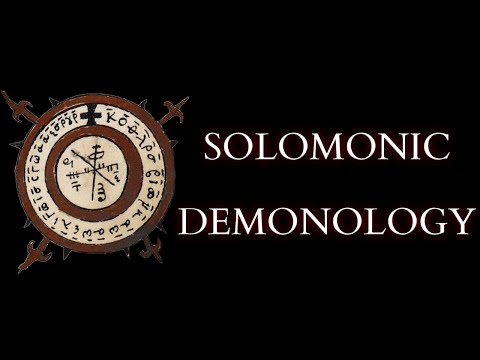
The name Solomon is synonymous with unparalleled dominion over the demonic realm. But where does this potent lore originate? Composed between the first and fifth centuries CE, The Testament of Solomon stands as a fascinating confluence of legendary biography, a catalog of demons, and a proto-grimoire. In this exploration, we delve into the intricate demonology of The Testament, charting its evolution from a legendary account to the practical occult techniques of demon conjuring. This transition forms the bedrock of Solomonic Magic and general Occultism, ultimately paving the way for infamous texts like The Lesser Key of Solomon.

I. The Enigma of Solomon and Demonic Control

King Solomon, renowned for his wisdom, is also a pivotal figure in occult traditions, credited with possessing the power to command demons. While historical accuracy is debated, the narrative surrounding his control is deeply ingrained in esoteric lore. Is it mere legend, or does it point to a profound understanding of hidden forces? The legends suggest that Solomon utilized a divine ring to compel demons, forcing them to reveal their names, powers, and the secrets of construction, not unlike how modern engineers might leverage advanced software for complex projects. This narrative, whether literal or metaphorical, has profoundly shaped the trajectory of magic and demonology.

II. Deconstructing The Testament of Solomon

The Testament of Solomon is far more than a simple biblical apocrypha. It's a composite work, likely compiled over several centuries. Its structure can be broken down into distinct, yet interconnected, parts:

  • Legendary Biography: It expands upon Solomon's biblical narrative, focusing on his spiritual and magical prowess, particularly his ability to subdue demons.
  • Demonological Catalog: This is perhaps its most enduring legacy, meticulously listing and describing various demons, their hierarchies, their powers, and the specific incantations or seals required to control them.
  • Proto-Grimoire: It contains instructions and rituals, offering the earliest glimpse into what would become formalized Solomonic magic, emphasizing the practical application of esoteric knowledge.

The text often reads like a detailed field report from an explorer charting unknown territory. The skepticism surrounding Solomon's alleged use of demons to build the Temple—a task often requiring immense resources and labor—suddenly appears more plausible when viewed through the lens of esoteric practices that bypass conventional limitations.

III. A Deep Dive into the Demonological Catalog

The heart of The Testament lies in its extensive catalog of demons. Each entity is described with striking detail, including their astrological correspondences, the specific afflictions they cause, and, crucially, the linguistic keys or sigils used to bind them. This wasn't just a list; it was a functional guide for the aspiring magician. The sheer volume of research that went into codifying these entities is staggering, reminiscent of a meticulously crafted spreadsheet detailing the 'stats' of each demon. The names themselves, like "BOR PHOR PHORBA," are often bizarre and, when read aloud, can evoke peculiar, almost humorous, reactions—a testament to the disorienting power of the unknown.

"Come for the forbidden knowledge, stay for the deadpan humor."

This inherent absurdity, coupled with the gravity of the subject, makes the text digestible, a skill that Dr. Sledge, a noted scholar in this field, demonstrates masterfully. His ability to inject humor, like comparing a demon-binding ritual to a Pokémon-style capture sequence, lightens the often dense and intimidating subject matter.

IV. The Shift Towards Practical Occultism

What distinguishes The Testament of Solomon from earlier mythological accounts is its overt focus on practical application. It bridges the gap between legend and tangible magic. The text details how Solomon, through divine means and the use of a magical ring, extracted information from demons. This transition from passive myth to active engagement is a critical development in the history of Western esotericism. It marks a significant step towards the concept of Technomancy, where esoteric principles are applied to achieve tangible results, much like leveraging complex algorithms.

V. The Evolution into a Grimoire

As centuries passed, the lore contained within The Testament was synthesized and adapted. This evolutionary process led to more structured grimoires, with The Lesser Key of Solomon being the most prominent descendant. These later texts codified the rituals, seals, and summoning procedures into a more accessible format for practitioners. The journey from the narrative of Solomon's exploits to the detailed instructions in a grimoire exemplifies the human drive to systematize and replicate powerful experiences, a principle that underpins much of modern technological and scientific advancement.

VI. The Crucial Question: Sigil Construction

A recurring question in the study of Solomonic magic, particularly when examining the lineage to later works like The Goetia, concerns the construction of sigils. How did the pictograms of the Greek Magical Papyri era evolve into the distinct seals found in texts like Dr. Rudd's The Goetia of Dr. Rudd or the Lesser Key? The Testament offers early insights into binding symbols, and historical manuscripts like the 15th-century Harley MS 5596 provide visual evidence of these evolving designs. Understanding this visual evolution is key to grasping the development of Sigilos Digitales and their manifestation in practical magic.

For those looking to create their own sigils, the process can seem daunting. Manually crafting them requires precision and a deep understanding of symbolic language. This is where modern tools can streamline the process and allow practitioners to focus on the energetic intent. For instance, Chaos Magick Sigil Generator offers a powerful way to create unique sigils instantly, ensuring accuracy and allowing for rapid iteration of intent.

VII. Historical Threads and Connections

The figure of Solomon and his magical legacy resonate across various cultures and historical periods. The text has inspired countless interpretations and connections, from the esoteric practices of the Solomonari in Romania, rumored to be dragon-riding wizards, to the academic study of Judeo-Christian metaphysical theory. The very act of researching Solomon's seals and their historical context is akin to navigating the complex narratives found across different biblical testaments, each offering a unique perspective on a central figure. The demon Pazuzu, for example, mentioned in The Testament, found its way into popular culture, notably in the film The Exorcist, demonstrating the enduring power of these ancient symbols and narratives.

"Beats the hell out of me." I think that’s what it’s supposed to do, Dr. Sledge.

This sentiment, delivered with deadpan humor, captures the often-elusive nature of deep esoteric knowledge. It's a journey of continuous exploration rather than a destination of absolute certainty. The pursuit of such knowledge often requires significant resources, whether for acquiring rare texts, supporting research channels, or utilizing specialized software. Exploring the frontiers of any complex field, especially one as historically rich as occultism, benefits greatly from the broader digital ecosystem, including platforms which facilitate secure transactions and resource management.

VIII. Solomonic Magic Today

The legacy of The Testament of Solomon is not confined to ancient history. It continues to influence contemporary occult practices. Modern magicians and demonologists engage with its teachings, seeking to harness the principles of commanding spirits and understanding their influence. The meticulous research presented in works like The Testament of Solomon: Recension C and the efforts to create comprehensive demonological spreadsheets highlight the academic rigor and ongoing interest in this field. The exploration of Magitech, the intersection of magic and technology, offers new avenues for practitioners to engage with these ancient systems.

IX. Practitioner's Verdict

The Testament of Solomon is an indispensable cornerstone of Western esotericism. Its value lies not just in its historical significance, but in its practical guidance. It provides a foundational understanding of demonology and ritual magic that remains relevant today. While the text itself is a proto-grimoire, its true power is realized when its principles are applied and evolved. The transition from legend to actionable magic is a testament to the enduring human quest to understand and influence the forces that shape our reality, blurring the lines between myth and the tangible outcomes of focused intention—a core principle of Magia del Caos.

X. Mage's Arsenal

  • Essential: Chaos Magick Sigil Generator - For the instantaneous creation and visualization of potent symbols.
  • The Testament of Solomon (various translations) - Essential for understanding the roots of Solomonic demonology.
  • The Lesser Key of Solomon (various editions) - The practical evolution of Solomonic magic.
  • Harley MS 5596 (15th century) - For visual historical context on sigil evolution.
  • McCown Critical Edition of The Testament of Solomon - For scholarly analysis.
  • The Old Testament Pseudepigrapha by Charlesworth - For broader context on ancient Jewish writings.
  • Patrick M. Dey's Demonological Spreadsheet - An invaluable resource for comparative analysis.

XI. FAQ

  • Is The Testament of Solomon historically accurate?
    While it contains legendary elements, it provides valuable historical insight into ancient beliefs about demons and magic.
  • How does The Testament of Solomon relate to The Lesser Key of Solomon?
    The Testament is considered a precursor or proto-grimoire, laying the groundwork for the more formalized rituals and demonology found in The Lesser Key.
  • Can the demons described in The Testament be contacted today?
    Practitioners of modern occultism may attempt to work with these entities, but it requires significant study, preparation, and caution.
  • What is the significance of Solomon's ring?
    In the text, the ring is depicted as Solomon's primary tool for binding and commanding demons, symbolizing divine authority and magical power.
  • How are Solomonic sigils constructed?
    Sigils often derive from demonic names or attributes, transcribed into symbolic forms. Their design evolved over centuries, with early graphical representations appearing in texts like The Testament and later, more formalized seals in grimoires. The Chaos Magick Sigil Generator app can assist in visualizing and creating these symbols rapidly.

XII. Your Operation

Your operation for this cycle is to engage directly with the source material. Locate a reputable translation of The Testament of Solomon online or in print. Read through the catalog of demons, paying close attention to the descriptions of their powers and the methods prescribed for their control. As you read, consider how these ancient concepts of power and influence might manifest in the modern world, particularly through digital means. Reflect on how precise intent, symbolized effectively, can become a potent force.

Practitioner's Note: True magick requires resources. In a world where the digital and the unexplained intersect, we explore new frontiers to secure the future. Do you dare to be part of the vanguard? Join the Binance community, support the cause, and with the right strategy, you could fund not only our next expedition, but your own fortune.
Dion Fortune and the Art of Ritual Magic

Dion Fortune & The Power of Ritual Magic


EMERALD TABLE — Grimoire Record Ritual
⚔️ TypeSpell
📅 Date2026-07-15
📜 FileMC-2026-0041
⭐ Difficulty★★★☆☆ Intermedio
⏱ Read time8 min
🔗 Related AppLunar Phase Calculator
cha0smagicklabs.com — Digital Grimoire of Chaos Magick

Dion Fortune remains a towering figure in Western occultism, her teachings a potent blend of psychic defense, esoteric symbolism, and the profound spiritual legacy of Ancient Egypt. For practitioners seeking to deepen their understanding and practice of ritual magic, her work offers an inexhaustible well of wisdom. This exploration delves into the core of her contributions, aiming to arm you with the practical insights needed to infuse your own magical workings with the power and precision she championed.

RitualWho Was Dion Fortune?

Dion Fortune, born Violet Mary Firth, was a prolific writer, occultist, and mystic who lived from 1890 to 1946. She founded the Fraternity of the Inner Light, an occult organization that continues to influence magical study today. Fortune’s approach was deeply rooted in both practical occultism and psychological understanding, a duality that lends her work enduring relevance. She didn't shy away from the complexities of the magical path, often grounding esoteric concepts in tangible principles that resonated with her contemporaries and continue to inspire seekers in the 21st century. Her life’s work revolved around demystifying occult principles and making them accessible, not as dogma, but as practical tools for spiritual growth and manifest change. Her foundational texts, like *The Cosmic Doctrine* and *Psychic Self-Defense*, are considered essential reading for anyone serious about the Western magical tradition.

Psychic Defense and Esoteric Symbols: Fortifying Your Inner Sanctum

One of Dion Fortune's most crucial contributions to practical magic is her emphasis on psychic defense. In a world saturated with unseen energies and potential psychic intrusions, understanding how to shield yourself is not an act of paranoia, but of fundamental magical hygiene. Fortune viewed the human aura as a field of energy susceptible to both external influences and internal imbalance. Her teachings on psychic defense are not about building impenetrable walls, but about cultivating a robust, clear, and resilient energetic structure.

This involves understanding the nature of psychic attacks, which she often described as arising not necessarily from malicious intent, but from the uncontrolled psychic emissions of others or from psychic "vermin" – thought-forms and elemental forces that can attach themselves to an unprepared psyche. Her methods include visualization techniques, the use of protective symbols, and the cultivation of inner strength and mental clarity.

Central to this defense are esoteric symbols. Fortune understood that symbols are not mere representations but potent carriers of energetic charge and intent. They act as keys, unlocking specific forces or energies, and as shields, deflecting unwanted influences. The careful selection and application of symbols, whether drawn, visualized, or worn, form a critical part of her defensive and offensive magical framework. Her work often references ancient systems of symbolism, particularly those connected to Egyptian cosmology, suggesting that these ancient forms hold inherent power due to their deep resonance within the collective unconscious.

The Influence of Ancient Egypt: Echoes of the Pharaohs

The profound impact of Ancient Egypt on Dion Fortune’s mystical system cannot be overstated. She saw in Egyptian magic and religion a sophisticated and potent system of cosmology, symbolism, and ritual that contained universal truths applicable to modern occult practice. Her book, *The Egyptian Elements in the Western Tradition*, delves into how these ancient currents have flowed through Western esotericism.

Fortune was particularly drawn to the Egyptian understanding of deity, the afterlife, and the interconnectedness of the physical and spiritual realms. She interpreted Egyptian myths and symbols not as primitive superstition, but as allegorical representations of psychological and spiritual processes. The figure of the Winged Bull, for instance, which one of her readers mentioned as a favorite, can be seen as representing a powerful symbol of divine protection and cosmic awareness within this framework. Her interpretations encouraged practitioners to look beyond the superficial narrative of myths and uncover the underlying magical principles.

The Egyptian pantheon, with its complex relationships and archetypal significance, provided Fortune with a rich tapestry of divine forces that could be invoked and worked with in ritual. She emphasized that these deities represent fundamental aspects of consciousness and the cosmos, and that working with them is a form of engaging with these universal energies. This perspective grounds her approach, suggesting that the power of ritual magic is deeply connected to tapping into ancient currents of wisdom that have shaped human civilization for millennia.

Ritual Magic in Practice: Crafting Intent, Channeling Energy

For Dion Fortune, ritual magic was not about empty gestures or theatrical performances. It was a deliberate, disciplined craft of directing consciousness and will to effect change in accordance with divine law. Her approach to ritual is characterized by precision, intentionality, and a profound understanding of the interplay between the individual, the cosmos, and the subtle realms.

Key to her practice is the concept of building an inner temple. Before any external ritual can be truly effective, the practitioner must cultivate a balanced, centered, and fortified inner space. This involves practices like meditation, visualization, and self-awareness. Fortune understood that the external ritual is merely a projection of an internal state. If the inner temple is chaotic, the ritual’s energy will be scattered and ineffective.

When it comes to the mechanics of ritual, Fortune’s method emphasizes several core components:

* The Circle of Protection: Drawing or visualizing a magical circle is not merely symbolic; it creates a sacred space charged with protective and consecrating energies. This space acts as a buffer, containing the ritual forces and preventing unwanted intrusions. The effectiveness of the circle is directly tied to the practitioner's belief and intent. * Invocation and Evocation: Fortune explored both how to invoke divine forces and energies into oneself, and how to evoke them into a defined space or form. Both require careful preparation, clear intention, and the use of appropriate correspondences (colors, incense, symbols, divine names). * Intent and Will: The unwavering clarity of intent is paramount. A ritual without a well-defined purpose is like a ship without a rudder. Fortune stressed the importance of "will," not as brute force, but as focused directed energy, aligning one’s personal will with the higher will or the desired outcome. * Symbolism and Correspondences: Every element within a ritual – from the color of a robe to the type of incense burned – carries symbolic weight and energetic resonance. Understanding these correspondences allows the practitioner to build a rich tapestry of energy that amplifies the ritual’s intent. For example, working with Egyptian themes might involve specific colors, herbs, and divine names associated with that pantheon. * Closing the Circle: Just as vital as opening a ritual is properly closing it. This involves thanking the invoked forces, dissolving the circle, and ensuring that the energies raised are either grounded or directed towards the desired outcome, preventing residual energetic entanglements.

Final Thoughts: The Enduring Power of Ritual

Dion Fortune’s teachings on ritual magic offer a sophisticated and practical framework for understanding and engaging with the unseen forces that shape our existence. Her emphasis on psychic defense, the potent symbolism inherited from traditions like Ancient Egypt, and the disciplined practice of ritual itself, provides a holistic approach to magical development.

Her legacy encourages us to see magic not as a passive reception of cosmic gifts, but as an active, intelligent engagement with the universe. Whether you are crafting a simple sigil or performing a complex invocation, the principles she laid down – clarity of intent, disciplined will, energetic hygiene, and understanding of symbolism – remain as relevant today as they were when she first penned them. By studying her work and applying her methods, practitioners can forge a deeper connection with the subtle energies around and within them, leading to profound personal transformation and demonstrable results in their magical endeavors.

***

Mage's Arsenal

* Essential: Lunar Phase Calculator - Precisely track lunar cycles to time your rituals for maximum potency, aligning your magical work with celestial rhythms. * Recommended Reading: *The Cosmic Doctrine* by Dion Fortune. * Recommended Reading: *Psychic Self-Defense* by Dion Fortune. * Practical Tool: Journal for recording rituals, intents, and observations. * Reference: *The Golden Bough* by Sir James George Frazer (for comparative mythology).

FAQ: Frequently Asked Questions

What was Dion Fortune's main contribution to occultism?

Dion Fortune's primary contributions lie in her practical approach to occultism, emphasizing psychological understanding, psychic self-defense, and the integration of ancient wisdom traditions, particularly those of Ancient Egypt, into modern magical practice. She founded the Fraternity of the Inner Light, which continues to disseminate her teachings.

How did Dion Fortune view ritual magic?

She viewed ritual magic as a disciplined craft requiring clear intent, focused will, energetic hygiene, and the intelligent use of symbolism and correspondences. For Fortune, ritual was a practical method for effecting change by aligning oneself with universal forces and cultivating inner strength.

Did Dion Fortune believe in the reality of psychic attacks?

Yes, she did. Fortune extensively wrote about psychic defense, viewing psychic attacks not necessarily as malevolent assaults but as a consequence of psychic imbalance, uncontrolled energetic emissions, or the influence of psychic "vermin" or thought-forms. Her work provides methods for fortifying one's aura and mental space against such influences.

What is the significance of Ancient Egypt in Dion Fortune's teachings?

Fortune saw Ancient Egyptian civilization as possessing a profound and sophisticated understanding of occult principles, cosmology, and symbolism. She believed that these ancient traditions contained universal truths that were foundational to Western esotericism and offered powerful archetypes and energies for magical work.

About the author: Frater Alek0s is a veteran practitioner and researcher in the field of chaos magick. His work focuses on the practical and experimental application of occult techniques for self-development and reality exploration, demystifying esotericism for the modern practitioner.

How can a modern practitioner apply Dion Fortune's teachings on ritual?

Modern practitioners can apply Fortune's teachings by focusing on cultivating a strong inner sanctuary through meditation and self-awareness, practicing clear and precise ritual formulation, understanding and utilizing the power of symbols, and timing their workings according to celestial influences, such as lunar phases, using tools like the Lunar Phase Calculator.

Referencias

  1. Carroll, P. J. (1987). Liber Null & Psychonaut. Weiser Books.
  2. Spare, A. O. (1913). The Book of Pleasure. Self-published.
  3. Hine, P. (1992). Condensed Chaos: An Introduction to Chaos Magic. New Falcon Publications.
  4. Crowley, A. (1904). The Book of the Law. Self-published.
  5. Sherwin, R. (2018). The Chaos Magic Handbook. CreateSpace.
  6. Kraig, D. M. (1988). Modern Magick: Eleven Lessons in the High Magickal Arts. Llewellyn Publications.
  7. Morrison, G. (2003). Pop Magic! The Art of Shaping Reality. Disinformation.
  8. DuQuette, L. M. (2003). The Chicken Qabalah of Rabbi Lamed Ben Clifford. Weiser Books.
  9. Webb, D. (2015). Chaos Magick: A Practical Guide. Self-published.
  10. Tyson, D. (2006). The Power of the Written Word. Llewellyn Publications.
  11. Bonewits, I. (1971). Real Magic. Creative Age Press.
  12. Greer, J. M. (2003). The New Encyclopedia of the Occult. Llewellyn Publications.

Mastering Mental Architecture: The Science of Tele-elementation and Self-Healing


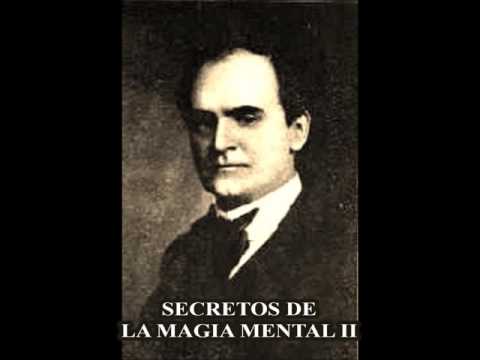
The human mind is not a passive recipient of reality; it is an active architect. In the bustling early 20th century, William Walker Atkinson, a prolific mind in esoteric thought, delved into the very mechanics of this mental construction. His work, "The Secret of Mental Magic," published in 1907, laid foundational principles that continue to resonate. This exploration, part two of his profound insights, plunges into the practical applications of mental forces, focusing on tele-elementation, mental therapeutics, and the art of building a resilient mental architecture.

Table of Contents

  • Part 1: The Science of Tele-elementation – Bridging Mind and Matter
  • Part 2: Mental Therapeutics – Harnessing Mind for Health
  • Part 3: Mental Architecture – Constructing a Potent Psyche
  • Part 4: Cultivating Inner Fortitude and Manifestation
  • Part 5: The Magnetic Individual and the Evolution of Consciousness

Part 1: The Science of Tele-elementation – Bridging Mind and Matter

Atkinson begins by introducing the concept of "Tele-elementation," a term coined to describe the mind's ability to influence external elements and substances. This isn't mere wishful thinking; it's presented as a scientific application of mental energy. Imagine directing focused intent to subtly alter the properties of matter – this is the frontier Atkinson explores. He posits that by understanding the underlying energies and vibrations, one can learn to project mental influence outwards. This principle is not abstract; it finds its roots in the ancient wisdom of such texts as Hermeticism and yogic sciences, where the mastery of external elements was a hallmark of advanced practitioners. The key lies in aligning one's own mental vibrations with the desired outcome, a process he likens to tuning into a specific frequency.

This section emphasizes a practical, if challenging, approach. It's not about waving a wand, but about developing a profound control over one's own mental state and energy projection. The implications are vast, suggesting a capacity to influence our environment in ways we rarely consider. For any serious practitioner of Chaos Magic or sigil work, understanding the principle of imbuing external forms with intent is paramount. Atkinson’s work provides a theoretical framework for what many practitioners experience intuitively.

"The mind is the sculptor, and the universe is the clay."

He urges the reader to move beyond passive observation and to actively engage with the world through directed mental force. This requires rigorous mental discipline, a concept that will be further explored in the subsequent sections. Developing this capacity means understanding that thoughts are not ephemeral whispers but potent forces capable of interacting with the material world. The challenge, as Atkinson presents it, is to harness these forces with precision and intention.

Part 2: Mental Therapeutics – Harnessing Mind for Health

One of the most compelling applications of mental powers, as explored by Atkinson, is in the realm of health and healing. This is where the concept of "Mental Therapeutics" comes into play. He moves beyond simply suggesting positive thinking and delves into how focused mental states can directly impact the physical body. This aligns with modern understandings of the mind-body connection and the burgeoning field of psychoneuroimmunology. Atkinson discusses how a strong, balanced mental state can bolster the body's natural healing mechanisms.

He introduces specific techniques for self-healing and even for influencing the health of others at a distance. This is not about magical cures in the superstitious sense, but about the application of concentrated mental energy. For instance, the ability to "strengthen the aura" or create a "decreto de auto protección" (a decree of self-protection) is presented as a direct application of mental will to fortify one's energetic field against negative influences or dis-ease. The commentaries suggest a strong interest in these areas, with timestamps pointing to discussions on self-protection, aura strengthening, and distant healing. This highlights a core desire within the readership: practical methods for personal well-being.

Atkinson breaks down procedures for healing, detailing how to focus treatment not just generally but specifically on particular organs or conditions. This requires a precise understanding of mental projection and energetic flow. The underlying theory, he suggests, is rooted in the universal presence of a vital force that can be directed by the trained mind. This is a crucial area for anyone interested in alternative healing modalities or the deeper potentials of consciousness. For those seeking to master their own biology, understanding these principles is invaluable. Investing in comprehensive study, perhaps through resources like a deep dive into Energy Work or advanced meditation, can unlock these capabilities.

Part 3: Mental Architecture – Constructing a Potent Psyche

Beyond tele-elementation and therapeutics, Atkinson emphasizes the importance of "Mental Architecture." This metaphor suggests that our minds are not static entities but structures that can be deliberately designed and rebuilt. Building this architecture involves understanding the fundamental laws governing mental operations, such as the "Ley de la auto sugestión" (Law of Autosuggestion) and the "Ley natural de evolución" (Natural Law of Evolution).

The concept of "construction de mente-cerebro" (mind-brain construction) implies a conscious effort to shape our cognitive processes, beliefs, and mental habits. This is where the reader's expressed desire to "develop your will" and "strengthen your aura" finds its practical application. Atkinson discusses how the physical body's expressions are determined by mental states – a core principle in behavioral psychology and ancient occult traditions alike. If the body reflects the mind, then transforming the mind is the key to transforming physical reality.

This section is vital for anyone looking to achieve significant personal growth or manifest their desires. Understanding how our thoughts and beliefs create our reality is the first step. The next is to actively construct a mental framework that supports our goals. This might involve challenging ingrained patterns, cultivating new beliefs, and consistently reinforcing positive mental imagery. The commentary mentioning "Ley de atracción" (Law of Attraction) indicates a strong interest in manifestation, a concept deeply interwoven with robust mental architecture. Mastering these principles requires dedication, perhaps through the study of seminal works like The Kybalion, which profoundly explores hermetic principles of mentalism.

Part 4: Cultivating Inner Fortitude and Manifestation

Atkinson’s work is deeply concerned with the development of inner strength and the practical application of mental forces for personal advancement, particularly in areas such as wealth acquisition and personal magnetism. He discusses "Adquisitividad (dinero)" – the mental disposition conducive to attracting wealth – and the "construcción del hombre magnético" (construction of the magnetic man), suggesting that personal charisma and influence are cultivable traits.

The focus shifts towards developing an unyielding "voluntad" (will). This is presented not as brute force, but as a refined capacity to direct one's mental and energetic resources. The ability to manifest desires, whether material (like money) or experiential, stems from this cultivated will. This ties directly into the reader's interest in their "deseos" (desires) being fulfilled. Atkinson implies that the mind is a powerful instrument for shaping our destiny, but it requires skillful handling.

The concept of "Los escogidos" (The Elect) suggests that certain individuals, through dedicated practice, can achieve a higher state of mental control and influence. While this might sound exclusive, Atkinson frames it as an attainable goal for anyone willing to undertake the necessary mental discipline and internal work. For those aspiring to manifest more effectively, understanding these principles of attraction, will-power, and magnetic presence is crucial. Resources that delve into the practical application of these energies, such as advanced courses on manifestation or personal power, can further amplify these abilities.

Part 5: The Magnetic Individual and the Evolution of Consciousness

Atkinson concludes by exploring the broader implications of mental mastery, touching upon "Estados mentales y sus emanaciones" (Mental states and their emanations). He suggests that our internal states don't just affect us; they radiate outwards, influencing our surroundings and the people we interact with. This is the essence of magnetism – the ability to draw others and opportunities through a cultivated mental and energetic presence.

Atkinson’s work offers a compelling blueprint for those seeking to unlock the full potential of their minds. It’s a call to action, urging readers to become active creators of their reality rather than passive observers. The practical applications, from self-healing to manifestation, are presented not as abstract ideals but as achievable outcomes through diligent practice and a deep understanding of mental laws. For those inspired by these ideas, further exploration into the works of pioneers in Mind Control, consciousness studies, and practical occultism will undoubtedly yield deeper insights.

Veredicto del Practicante: ¿Vale la pena integrarlo a tu práctica?

William Walker Atkinson's "Secret of Mental Magic II" is far more than a historical curiosity; it's a practical manual for psychonauts and aspiring mages. The strength of this work lies in its pragmatic approach, stripping away dogma to reveal actionable principles. Its potential pitfalls? The lofty language can sometimes obscure the direct application, and the sheer scope might feel overwhelming for absolute beginners. However, for those willing to engage with its concepts, the rewards are profound. The emphasis on self-healing, mental architecture, and directed will provides a robust framework for anyone serious about mastering their inner world and influencing their outer reality. It’s a cornerstone text for serious practitioners of Mental Magic, offering a direct path to enhancing personal power.

Arsenal del Mago

  • Libros Clave: "The Secret of Mental Magic" by William Walker Atkinson (comprehensive series), "The Kybalion" for Hermetic principles, "Liber Null & Psychonaut" for practical Chaos Magic.
  • Herramientas Mentales: A dedicated journal for recording mental exercises and manifestations, meditative aids, and visualization tools.
  • Recursos de Estudio: Online courses on consciousness, energy work, and applied psychology; academic texts on historical occultism.
  • Entorno de Práctica: A quiet, distraction-free space for focused mental work and meditation.

Guía de Creación: Desarrolla Tu Voluntad

Atkinson stresses the development of will as foundational. Here’s a practical exercise:

  1. Define un Objetivo Mínimo: Choose a simple, achievable daily task purely to exercise your will (e.g., drinking a full glass of water upon waking, meditating for 5 minutes).
  2. Commitment without Exception: Commit to performing this task every single day for a week. No excuses, no "I'll do it tomorrow."
  3. Focus Your Intent: Before performing the task, clearly state your intention mentally: "I am doing this to strengthen my will."
  4. Observe and Record: Note how you feel before, during, and after the task. Is there resistance? How do you overcome it? Record this in your journal.
  5. Gradual Increase: After a week, if successful, slightly increase the difficulty or duration. This could be a 7-minute meditation, or adding a second small task.

This simple yet rigorous practice builds the mental discipline essential for all higher magical workings.

Preguntas Frecuentes

  • ¿Qué es la Tele-elementación? Es la capacidad de la mente para influir o alterar elementos externos a través de la concentración y la energía mental dirigida.
  • ¿Cómo puedo fortalecer mi aura? A través de prácticas de auto-protección mental y energética, como decretos de defensa y visualizaciones de un campo energético protector.
  • ¿Es posible la curación a distancia? Atkinson sugiere que sí, basándose en la interconexión de la fuerza vital y la mente entrenada para dirigirla.
  • ¿En qué se basa la construcción de la mente-cerebro? En la idea de que podemos rediseñar nuestros patrones de pensamiento, creencias y hábitos mentales para crear una estructura psíquica más potente y alineada con nuestros objetivos.

Tu Operación: Construye Tu Arquitectura Mental

Ahora es tu turno. Reflexiona sobre un área de tu vida donde sientes que tu voluntad o tu estado mental es débil. Puede ser la procrastinación, la falta de disciplina en hábitos saludables, o la dificultad para manifestar tus deseos. Utiliza los principios de la Arquitectura Mental expuestos por Atkinson:

  1. Identifica la Debilidad: Sé honesto contigo mismo sobre dónde resides la falta de control mental.
  2. Define un Patrón de Refuerzo: Elige una afirmación o visualización específica que contrarreste esa debilidad. Por ejemplo, si luchas contra la pereza, una afirmación podría ser: "Mi voluntad es incansable y mi disciplina es absoluta."
  3. Practica la Autosugestión Diaria: Dedica al menos 5-10 minutos cada día (idealmente al despertar o antes de dormir) a repetir esta afirmación o visualizarte actuando con la cualidad deseada. Siente la emoción de ya poseer esa fortaleza.
  4. Observa las Emanaciones: Presta atención a cómo este cambio interno comienza a manifestarse en tu comportamiento y en tus interacciones.

¿Qué patrón mental vas a empezar a construir hoy? Comparte tu intención y tus primeros pasos en los comentarios.

Practitioner's Note: True magick requires resources. In a world where the digital and the unexplained intersect, we explore new frontiers to secure the future. Do you dare to be part of the vanguard? Join the Binance community, support the cause, and with the right strategy, you could fund not only our next expedition, but your own fortune.

Frater U∴D∴: Unveiling the Pragmatic and Ice Magick of a Modern Occult Master


The air thrummed with a palpable energy, a silent hum that spoke of decades dedicated to the craft. This wasn't a mere academic discourse; it was a descent into the practical realities of magick, a conversation with a figure whose very name—Frater U∴D∴—evokes a blend of rigorous intellect and unyielding experimentation. He stands as a colossus in the realm of contemporary occultism, a practitioner whose insights have not just reshaped, but fundamentally redefined how many approach the Great Work.

Introduction: The Practitioner's Paradigm

Listening to Frater U∴D∴ is akin to hearing Gandalf the Practical articulate the nuts and bolts of reality manipulation. This is not about vague spiritual affirmations or unverified mystical pronouncements. This is about understanding the mechanics, the observable phenomena, and the repeatable results that define true practical magick. He represents a generation of occultists who have moved beyond dogma, embracing a scientific, yet deeply intuitive, approach to consciousness and its influence on the material world. His willingness to dissect complex concepts, from the abstract underpinnings of Chaos Magick to the specific techniques of Ice Magic, makes him an indispensable voice for any serious practitioner.

The Genesis: Early Life and Academic Foundations

Born into the transient world of a diplomat's child, Frater U∴D∴'s early life was a tapestry woven with experiences across Africa and Asia. This global exposure undoubtedly forged a mind accustomed to diverse perspectives and adaptable to varied environmental and cultural stimuli. This foundation was further solidified by his academic pursuits at the University of Bonn, where he earned a Master's degree in Comparative Literature, English Literature, and Portuguese Studies. This academic rigor, focused on language, narrative, and cultural expression, provides a critical lens through which to examine the symbolic language of magick itself. It’s this unique blend of lived experience and academic discipline that informs his undogmatic approach to the occult arts.

His early engagement with the occult was not a superficial flirtation but a deep dive, influenced by mentors and fellow explorers of the arcane. Studying with yoga and tantra masters, he absorbed ancient methodologies, seeking not just theoretical knowledge but demonstrable results. For over half a century, he has been immersed in the practical aspects of occultism, translating ancient texts and forging new pathways. This deep well of experience is the bedrock upon which his later contributions are built.

Forging Chaos Magick: A Pragmatic Revolution

Frater U∴D∴ is not merely an observer of the occult landscape; he is a cartographer and a builder. As a co-founder of the Bonn Workshop for Experimental Magic and the founder of Pragmatic Magic and Cyber Magic, he has been instrumental in shaping the modern understanding and application of these disciplines. His seminal work in co-founding the Magical Pact of the Illuminates of Thanateros (IOT) places him at the forefront of European practical magick. This organization, far from being a cloistered society, has become a hub for experimental occultism, emphasizing results over rigid adherence to any single tradition. His translation of Peter Carroll's Liber Null was a pivotal moment, injecting the potent ideas of Chaos Magick into a wider European consciousness.

"The core of Chaos Magick is its refusal to be defined. It’s a meta-system, a toolkit, a stance against ossified belief structures. It’s about results, not dogma."

The pragmatic approach of Chaos Magick, which Frater U∴D∴ champions, emphasizes the power of belief as a tool, rather than an absolute. It allows practitioners to adopt and discard belief systems as needed, focusing on the observable effects rather than the metaphysical justifications. This flexibility is key to navigating the complexities of modern life and its ever-shifting paradigms, enabling practitioners to adapt their magical operations to contemporary technological and psychological frameworks. This is a far cry from older, more rigid systems, offering a dynamic and responsive path to personal transformation and desired outcomes. The very act of translating and disseminating foundational texts like Liber Null was an act of magical engineering in itself, propagating a paradigm shift.

Founding the Pact of the Illuminates of Thanateros (IOT)

The establishment of the Illuminates of Thanateros (IOT), alongside figures like Peter J. Carroll, was a watershed moment. It signaled a formalization of a radically experimental and results-oriented approach to magick. The IOT, at its heart, is built on the principle of finding what works through rigorous personal experimentation, rather than accepting pre-defined magical doctrines. This pragmatic ethos, deeply ingrained in Frater U∴D∴'s work, encourages magicians to develop their own systems and techniques, pushing the boundaries of what is considered possible. This is the essence of a living magical tradition—one that evolves, adapts, and produces tangible results. The focus remains squarely on the efficacy of the operation, on the concrete manifestation of intent in the practitioner's reality. This is the true test of magical prowess: not in esoteric knowledge alone, but in the ability to effect change.

The Five Models of Magic: Deconstructing the Art

One of Frater U∴D∴'s most significant contributions is his articulation of the "Five Models of Magic." This framework provides a sophisticated yet accessible way to understand the diverse approaches to magick, allowing practitioners to categorize and analyze their own practices and those of others. These models are:

  • The Spirit Model: This is the most traditional view, positing a reality populated by spirits, entities, and forces that can be invoked, evoked, or communed with. It’s the realm of angels, demons, elementals, and ancestral spirits, where magick is seen as a form of supernatural interaction.
  • The Energy Model: This model views magick as the manipulation of subtle energies—life force, chi, prana, or psychic energy. Practitioners learn to sense, generate, and direct these energies to achieve their aims, often through techniques rooted in Eastern traditions like yoga and tantra.
  • The Psychological Model: Here, magick is understood as a purely internal phenomenon, a process of manipulating one's own mind, beliefs, and perceptions. Rituals and techniques are seen as symbolic dramas that unlock subconscious potentials, alter states of consciousness, and reframe one's reality.
  • The Information Model: A more contemporary perspective, this model treats the universe as a vast field of information. Magick involves accessing, encoding, and decoding this information, often through symbolic systems, language, and what might be termed "magical algorithms." This is where concepts like cyber magick find their footing.
  • The Probabilistic Model: This model frames magick as the art of influencing probabilities. Magicians create conditions or perform operations designed to increase the likelihood of desired outcomes, subtly nudging the statistical distribution of events in their favor.

These models are not mutually exclusive; indeed, one of the strengths of Frater U∴D∴'s approach is the recognition that different models can be employed simultaneously or sequentially. A practitioner might use the psychological model to prepare their mindset, the spirit model to invoke assistance, and the probabilistic model to ensure the outcome. The debate around whether these models describe the observer or the observed is fascinating, hinting at the subjective nature of magical experience. Perhaps the most effective approach is to acknowledge that all these perspectives hold a grain of truth, offering a more robust understanding of the multifaceted nature of magick. The creation of a methodology to properly study magic remains an ongoing quest, but these models offer a solid starting point for rigorous inquiry.

Nihilism and Ontological Agnosticism: The Unbound Mind

Frater U∴D∴'s embrace of nihilism, not as a philosophy of despair but as a liberation from imposed meaning, is crucial to his pragmatic approach. He acknowledges that in the grand scheme of the cosmos, our individual beliefs may hold little objective weight. However, this realization is not a call to inaction but a catalyst for empowerment. By understanding that meaning is *created* rather than *discovered*, the practitioner is free to construct their own potent belief systems, ones that serve their magical will and yield tangible results. This stance aligns with his self-proclaimed identity as an "ontological agnostic." He refrains from making definitive claims about the ultimate nature of reality or the existence of deities, preferring to focus on what is demonstrably workable. This empirical mindset is vital, as it allows for the exploration of all facets of magick, from the fiery passion of evocation to the frigid precision of Ice Magic, without the constraints of dogmatic limitations. This is the true path to magical mastery: to question, to experiment, and to build a personal reality from the ground up.

"If the universe is indifferent, then the power to create meaning and effect change rests entirely within us."

The Ice Magic Affair: A Case Study in Practical Application

The concept of "Ice Magic," as explored by Frater U∴D∴, represents a profound dive into the more controlled and potentially dangerous aspects of magical practice. It’s about precision, about the deliberate application of will in a way that is both potent and contained. Unlike more chaotic or diffuse forms of magick, Ice Magic emphasizes restraint, the careful husbanding of energy, and the execution of operations with surgical accuracy. This is not about unleashing raw, untamed forces, but about channeling them with absolute control, like a sculptor shaping marble with deliberate strokes. The "war" associated with Ice Magic, as hinted at in discussions, likely refers to the internal battles of self-mastery required, or perhaps conflicts arising from the potent, focused nature of such operations. It's a testament to Frater U∴D∴'s approach that he can dissect such a specialized area, offering insights into its underlying principles and practical applications.

The Fraternitas Saturni, another significant esoteric order, also engages with powerful archetypes and forces, and Frater U∴D∴'s connection to it further highlights his willingness to engage with a spectrum of magical theories and practices. His ability to navigate and articulate these diverse currents—from the explosive potential of Chaos Magick to the controlled intensity of Ice Magic and the symbolic language of the Fraternitas Saturni—underlines his broad expertise and commitment to practical application.

What is Successful Magick?

The ultimate arbiter of magical success, according to Frater U∴D∴, is undeniable: it works. This pragmatic criterion cuts through layers of theory and tradition, demanding tangible results. Whether it's the precise manifestation of a sigil, the evident shift in probability, or a profound internal transformation that alters one's experience of reality, successful magick leaves an undeniable footprint. A faulty magical procedure, even if intuitively "wrong," can still yield results if it taps into a core psychological or energetic mechanism. This is why challenging a magician's paradigms and testing their grit is not an act of aggression, but a vital part of their development. It forces them to confront the efficacy of their methods, to refine their understanding, and to push the boundaries of their own perceived limitations. The goal is not to adhere to a system perfectly, but to achieve the intended outcome through any means necessary and verifiable.

Theurgy and Beginnings: Your Magical Career

The concept of theurgy, often perceived as "high magic" involving divine communion, can seem daunting. However, Frater U∴D∴'s approach democratizes these ideas. He recognizes that the journey into magick is a process, and that starting with foundational techniques is essential. For many, delving into the power of sigil magick is an ideal entry point. This is where personal will is condensed into a potent symbolic form, a direct expression of intent that can be charged and released. It’s a method that requires discipline, creativity, and a clear understanding of one's desires. The book "eismagie: erste einblicke" (Ice Magic: First Insights) by Frater V∴D∴ (Ralph Tegtmeier, Frater U∴D∴'s often used alternate persona) offers an initial glimpse into these specialized practices, providing a stepping stone for those eager to explore the more focused applications of magical energy. This offers a direct pathway for aspiring practitioners to engage with powerful magical forces in a structured and ultimately rewarding manner.

Ice Magic in a Nutshell: A Practical Synthesis

Ice Magic, in its essence, is about the mastery of focused will with extreme precision and control. It’s the antithesis of wild, chaotic bursts of energy. Think of it as the difference between a wildfire and a laser beam: both possess immense power, but one is diffuse and uncontrollable, while the other is concentrated and directed. The three pillars of Ice Magic could be seen as:

  • Absolute Intent: A crystal-clear, unwavering focus on the desired outcome, free from doubt or secondary motivations.
  • Controlled Energy: The ability to gather, shape, and project magical energy with deliberate precision, akin to a surgeon’s scalpel rather than a sledgehammer.
  • Dispassionate Execution: Performing the magical operation without emotional attachment to the outcome, ensuring that the will is the sole driving force.

This disciplined approach is not about suppressing emotion, but about channeling it, preventing it from becoming a source of energetic leakage or interference. It’s a challenging discipline, one that requires extensive self-awareness and rigorous practice. Frater U∴D∴’s work invariably emphasizes the importance of ethical practice, including respecting intellectual property. The admonition against pirated copies of his books is not merely a legal stance; it’s a practical consideration. Unauthorized copies can be corrupted, incomplete, or lack the author’s final intended revisions, thereby compromising the integrity of the magical information being transmitted. This echoes the idea that magick itself demands integrity in its execution and its transmission.

Veredict of the Practitioner: Is Frater U∴D∴'s Approach for You?

Frater U∴D∴ offers a potent antidote to the airy-fairy mysticism that often clouds the occult. His approach is grounded, empirical, and relentlessly practical. If you are a magician who craves tangible results, who seeks to understand the mechanics of magick rather than just believing in them, then his work is invaluable. His Five Models of Magic provide an essential framework for analysis, and his exploration of Chaos Magick and Ice Magic offers distinct, powerful methodologies. The primary caveat is that his methods demand rigor and self-responsibility. This is not for the dabbler or the faint of heart. It requires a commitment to experimentation, a willingness to confront one’s own beliefs, and an unwavering focus on achieving the desired outcome. The debates around the exact nature of reality, the observer effect, and the efficacy of specific models are ongoing, but Frater U∴D∴ provides the tools to engage with these questions from a position of strength and proven practice.

Arsenal of the Magician

  • Key Texts: High Magic: Theory & Practice, Practical Sigil Magic, Money Magic, Sex Magic, The Magical Shield by Frater U∴D∴. Critical foundational texts like Liber Null & Psychonaut by Peter J. Carroll are also essential. Explore the works of Aleister Crowley like The Book of Lies for historical context.
  • Tools of Focus: While specific tools vary, a disciplined mind is paramount. Consider journals for recording operations, symbolic tools that resonate with your chosen model (e.g., specific diagrams for the Information Model, representation of archetypes for the Spirit Model), and potentially tools for energy work if you lean towards the Energy Model.
  • Digital Resources: For contemporary practitioners, exploring cyber magick principles might involve utilizing secure digital platforms for creating and managing symbolic constructs. Understanding the underlying mechanics of algorithms and information flow can be highly beneficial for those exploring the Information Model. This level of dedication requires not only time, but also a solid resource base. Securing our future is part of the preparation for any eventuality, and in today's world, that includes .
  • Learning Platforms: For those seeking structured guidance, courses or lectures focusing on practical magick, sigil creation, or energy manipulation can provide valuable acceleration.

Practical Workshop: Crafting Your First Sigil

Ready to put theory into practice? Let's craft a basic sigil. This exercise is designed to introduce you to the core principles of sigil creation, leveraging the Psychological and Information Models.

  1. Define Your Statement of Intent: Be specific, positive, and phrased as if it has already happened. Instead of "I want to be rich," try "My income increases significantly."
  2. Condense the Statement: Remove all vowels and repeat letters. For "MY INCOME INCREASES SIGNIFICANTLY," you might get: M N C M I N G R S S G N F C N T L Y.
  3. Create Your Sigil Glyphs: Combine these letters into a unique, abstract symbol. Don't overthink it. Focus on creating something visually interesting. Discard any letters that don't fit harmoniously. The goal is a single, unified glyph.
  4. Charge the Sigil: This is the key. You need to reach a state of intense focus or a modified state of consciousness (gnosis). This can be achieved through chanting, dancing, intense emotion, or even sensory deprivation. While holding the sigil (or a visualization of it) at the peak of this state, anoint it with your charged intent.
  5. Release and Forget: Once charged, banish the sigil. This means ceremonially forgetting about it. Burn it, bury it, or simply put it away and consciously decide not to think about it. The subconscious mind is now tasked with manifesting the intent.
  6. Record: Make a note of the sigil, the intent, and the charging method in your magical journal. This aids in future analysis and learning.

Frequently Asked Questions

  • Is Frater U∴D∴ still a Chaos Magician? While he was instrumental in its development, his approach has evolved. He identifies as an ontological agnostic and utilizes multiple models of magick, indicating a fluid and experimental stance rather than rigid adherence to a single label.
  • Do the Five Models of Magic contradict each other? Not necessarily. Frater U∴D∴ suggests they can be complementary, offering different lenses through which to view and engage with magical phenomena. A single operation might draw from several models.
  • How can I start practicing magick effectively? Begin with clear intent and simple, verifiable techniques like sigil creation. Focus on what yields results for you, and keep a detailed magical journal to track your progress and analyze your successes and failures.
  • What is the difference between Ice Magic and Chaos Magic? Chaos Magic is often about the power of belief and rapid experimentation with shifting paradigms, while Ice Magic emphasizes extreme control, precision, and dispassionate execution of will.

Your Operation: Define Your Paradigm

Frater U∴D∴ has laid bare the mechanics of magick, stripping away the dogma to reveal the underlying principles of will, belief, and effect. Now, the crucial step is yours. Take one of the models presented—Spirit, Energy, Psychological, Information, or Probabilistic—and commit to exploring it rigorously for a set period. Define a clear, achievable magical goal within that model's framework. Document every step, as Frater U∴D∴ himself advocates. What sigils will you craft? What energies will you attempt to harness? What informational structures will you probe? Your reality is a canvas, and you hold the brush. The question is no longer 'if magick works,' but 'how will *you* make it work?' Share your chosen model and your initial goals in the comments below. Let the pragmatic experimentation begin.

Practitioner's Note: True magick requires resources. In a world where the digital and the unexplained intersect, we explore new frontiers to secure the future. Do you dare to be part of the vanguard? Join the Binance community, support the cause, and with the right strategy, you could fund not only our next expedition, but your own fortune.
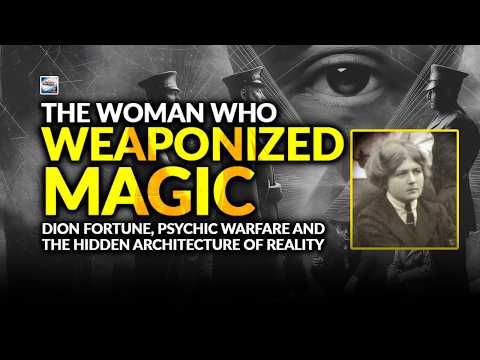
Dion Fortune: The Woman Who Weaponized Consciousness Against the Swastika


January 1940. The grim specter of Nazi bombers hung heavy over Britain. Yet, in a modest London flat at Three Queensborough Terrace, a different kind of battle was being waged. Dion Fortune, a woman of fierce conviction and profound magical insight, wielded a unique weapon: the focused intent of human consciousness. Every Wednesday, she penned letters to a clandestine network of occultists, detailing precise instructions for a synchronized meditation and visualization. Their target: to erect a psychic shield around the island, a bulwark of focused will aimed at deflecting the tide of war.

This extraordinary act was not born of sudden inspiration, but from a life dedicated to understanding and employing the hidden architecture of reality. Fortune's journey was fraught with challenges, including a devastating psychic attack at the age of 23 that left her incapacitated for weeks. Her path led her through the hallowed, yet fractured, lodges of the Hermetic Order of the Golden Dawn, to the mystically charged soil of Glastonbury, and into the development of a doctrine of magical polarity that would profoundly influence modern Wicca. She even shared a private audience with the infamous Aleister Crowley near the twilight of her life. For nearly 80 years after her passing, her extensive body of work remains a vital text for occultists and esoteric practitioners worldwide. Fortune’s seminal definition of magic—"the art of causing changes in consciousness in accordance with the will"—was not merely a theoretical construct, but a life’s work dedicated to its undeniable proof.

The Genesis of a Magical Mind: From Psychic Attack to Esoteric Mastery

Violet Mary Firth, the woman who would become Dion Fortune, was born in Llandudno, Wales. Her early life, however, was marked by a profound psychic disturbance. At Studleigh, a formative experience involving what she described as a devastating psychic attack, left her bedridden and shattered for an extended period. This harrowing encounter, rather than breaking her spirit, ignited a deep-seated quest for understanding and mastery over the unseen forces that had so profoundly impacted her.

Her path to esoteric knowledge led her to the Stella Matutina, a successor organization to the Hermetic Order of the Golden Dawn. It was within these circles that she honed her understanding of ceremonial magic and began to articulate her unique philosophical framework. Under the tutelage of Theodore Moriarty, she adopted the magical persona of Dion Fortune, a name that would become synonymous with practical occultism and psychic self-defense. This transition marked the birth of a formidable practitioner, ready to confront the world's challenges with spiritual fortitude.

Glastonbury and The Society of the Inner Light: Seeds of a Movement

Glastonbury, with its rich tapestry of myth and mystical energy, served as a crucial crucible for Dion Fortune's magical development. She recognized this ancient site not merely as a place of historical significance, but as a potent nexus of terrestrial power. It was here, drawing inspiration from the land itself, that she began to lay the groundwork for her own magical order: The Society of the Inner Light.

This society was envisioned as a vehicle for disseminating her teachings, emphasizing practical application and personal spiritual growth. It became the fertile ground from which many of her most influential ideas would blossom, shaping not only her own work but also the broader landscape of Western esotericism.

Psychic Self-Defense and The Mystical Qabalah: Cornerstones of Her Canon

Two works stand out in Dion Fortune’s extensive bibliography as particularly foundational: *Psychic Self-Defense* and *The Mystical Qabalah*. *Psychic Self-Defense*, a direct response to her own experiences and the anxieties of her time, provided a practical and accessible guide to navigating the often-treacherous terrain of psychic phenomena and interpersonal energetic dynamics. It offered practitioners a framework for understanding and protecting themselves from unwanted psychic influences, a skill honed during the wartime context of her later years.

*The Mystical Qabalah*, on the other hand, delved into the intricate cosmology of the Qabalah, presenting it through a uniquely Fortunean lens. Her masterful interpretation made this complex system of Jewish mysticism accessible to a wider audience, breaking down its dense symbolism and revealing its practical applications for spiritual development. These two books, in their distinct yet complementary ways, became essential reading for anyone seeking to understand both the perils and the potential of the inner life.

The Sea Priestess and Magical Polarity: Shaping Modern Spirituality

Dion Fortune's exploration of magical principles extended into the realm of relationships and the divine feminine. Through her novels, such as *The Sea Priestess*, she explored profound themes of spiritual partnership and the doctrine of magical polarity. This doctrine posited that complementary forces, often understood as masculine and feminine, are essential for both creation and magical efficacy.

This philosophy, imbued with archetypal imagery and narrative depth, resonated deeply with many and is widely considered to have laid significant groundwork for the development of modern Wicca and other Goddess-centric spiritual paths. Her fictional works were not mere stories; they were allegorical explorations of profound magical and psychological truths.

Dion Fortune and Aleister Crowley: A Complex Encounter

The esoteric landscape of early 20th-century Britain was a complex web, and Dion Fortune’s life intersected with many of its prominent figures, including Aleister Crowley. While Crowley was a controversial figure, known for his theatrical persona and his own unique brand of ceremonial magic, his influence was undeniable. Fortune, ever the pragmatist, engaged with him, understanding that even challenging figures could offer insights or serve as catalysts for one's own understanding.

Their interactions, though perhaps characterized by professional respect rather than deep camaraderie, highlight Fortune's willingness to engage with the full spectrum of the occult tradition, gleaning wisdom where she could find it, and charting her own distinct course. It's important to note that Crowley's relationship with the Golden Dawn was fraught with difficulty, leading to his eventual expulsion and subsequent independent magical endeavors.

The Magical Battle of Britain: Consciousness as a Weapon

The most compelling testament to Dion Fortune's conviction in the power of consciousness came during World War II. As Nazi bombers darkened the skies, she recognized that the war was not solely fought on the physical plane. Her "Magical Battle of Britain" was an audacious attempt to leverage collective will for national defense.

Through her network, she orchestrated synchronized meditations, aiming to create a psychic shield that would disrupt enemy intentions and bolster the morale of the British people. While the tangible effects of such an operation are difficult to quantify, the sheer audacity and unwavering belief behind it speak volumes about Fortune's understanding of the interconnectedness of mind, matter, and spirit. It was a profound assertion that consciousness itself is a potent force capable of influencing world events.

Her Legacy: Enduring Wisdom in a Shifting Reality

Dion Fortune's death in 1946, reportedly due to complications from dental gas, was a significant loss to the occult community. Tragically, many of her papers were subsequently lost or destroyed, leaving gaps in our understanding of her complete work. However, the wisdom she did disseminate continues to resonate.

Her emphasis on practical application, psychological insight, and the power of focused consciousness remains remarkably relevant. In an era increasingly defined by technological advancement and a growing awareness of the mind-body-spirit connection, Fortune’s teachings offer time-tested strategies for navigating the complexities of modern life. She reminds us that while external circumstances may shift, the power to shape our inner reality—and by extension, our outer world—lies within us. For those navigating the often-turbulent currents of modern existence, her work provides not just esoteric knowledge, but a practical toolkit for resilience and empowered living.

The Mage's Arsenal

* Books by Dion Fortune: *Psychic Self-Defense*, *The Mystical Qabalah*, *The Sea Priestess*, *The Goat and the Compasses*, *The Demon Lover*, *Secrets of Dr. Taverner*. * Books on the Golden Dawn and related traditions. * Unofficial Rider Waite Tarot: For those seeking to explore the archetypal language of the Tarot, this app offers a unique and intuitive platform for divination and self-reflection, allowing you to engage with the imagery of the cards in a deeply personal way.

FAQ

What was Dion Fortune's most significant contribution to occultism?

Dion Fortune's most significant contributions include her practical approach to magical training, her emphasis on psychic self-defense, and her accessible interpretations of Qabalistic teachings, particularly through *The Mystical Qabalah*.

How did Dion Fortune define magic?

Dion Fortune defined magic as "the art of causing changes in consciousness in accordance with the will."

Was Dion Fortune connected to Aleister Crowley?

Yes, Dion Fortune had a personal encounter with Aleister Crowley, though her primary magical lineage and organizational affiliations were distinct.

What is the doctrine of magical polarity?

The doctrine of magical polarity, explored in works like *The Sea Priestess*, suggests that complementary energetic forces (often understood as masculine and feminine archetypes) are essential for creation and the successful execution of magical workings.

Your Operation

Reflect on a time when you felt a strong sense of collective will at work, whether in a personal crisis, a community effort, or a national event. How might focused, synchronized intention have played a role, even if unseen? Consider how you can apply the principles of psychic self-defense in your own daily life.

---

We explore her deep dives into the Qabalah, her practical guide to *Psychic Self-Defense*, and the mystical influence of Glastonbury on her work. Fortune believed magic was the art of changing consciousness according to will, and she dedicated her life to proving it.

For practitioners seeking to harness these principles, the Unofficial Rider Waite Tarot app offers an intuitive way to explore the archetypal messages of the cards. You can find it here: <Unofficial Rider Waite Tarot>. Her legacy continues to inspire those who seek to understand and wield the hidden forces of reality.

Leah Hirsig's Lost Diaries: Unearthing the Truth of Thelemic History


Introduction: The Scarlet Woman's Voice Emerges

The air crackles with an almost tangible energy, not of incantation, but of historical rediscovery. For too long, the narratives of modern occultism have been dominated by a singular, often bombastic, voice. But what happens when the carefully constructed silence around a pivotal figure is shattered, revealing not just a practitioner, but a complex, independent thinker? This is the territory we explore today, diving deep into the recently unearthed Leah Hirsig's diaries, a treasure trove illuminating a turbulent chapter in Thelemic history. For years, the archetype of the "Scarlet Woman" has been a cipher, a projection of male desire and ambition. Now, her own words begin to speak, forcing us to re-examine the foundational myths of a modern magical system.

The Architects of Revelation: White and Bogdan

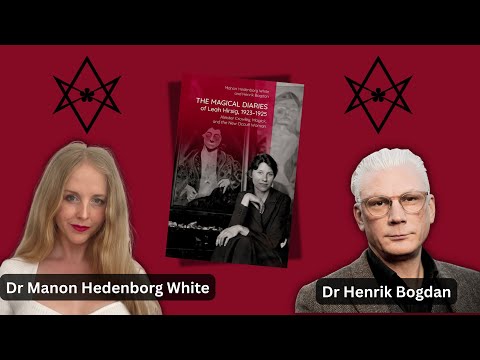
Behind every great archival discovery, there are diligent scholars. This exploration centers around the monumental work of Manon Hedenborg White and Henrik Bogdan, who have brought us "The Magical Diaries of Leah Hirsig, 1923 to 1925," a critical edition published by the esteemed Oxford University Press. Their meticulous editing and insightful commentary don't just present raw historical material; they reconstruct a lost world, offering a vital counter-narrative to established Thelemic lore. Their academic backgrounds, deeply rooted in the study of Western esotericism, provide the crucial framework for understanding the profound significance of these documents. This isn't just an academic exercise; it's an act of reclaiming a suppressed voice.

From Dust to Digital: The Genesis of the Diaries

The journey to publish these diaries was not a simple one. White and Bogdan navigated the labyrinthine challenges inherent in editing primary esoteric sources. These documents, surviving the ravages of time and obscurity, offer a rare, unvarnished glimpse into Hirsig's inner life and her active participation in the magical workings of her era. The painstaking process of transcription, annotation, and contextualization transforms fragmented entries into a coherent narrative, a testament to the power of dedicated scholarship in breathing life back into forgotten histories. This collaborative effort underscores the importance of such primary material for anyone serious about understanding the practical evolution of occult systems. For those who appreciate the depth of such foundational texts, delving into resources like Aleister Crowley's own compendiums, such as Magick in Theory and Practice, provides context for the environment Hirsig operated within.

Beyond the Myth: Leah Hirsig, Practitioner and Philosopher

The conventional portrayal of Leah Hirsig often reduces her to a mere accessory to Aleister Crowley, the archetypal "Scarlet Woman." However, these diaries peel back the layers of mystification, revealing a woman of considerable intellectual depth and independent magical practice. Her writings illuminate not only the daily operations of Crowley's elaborate magical system during a particularly volatile phase but also her own evolving spiritual philosophy. She emerges as a practitioner, a partner, and a fiercely independent thinker, challenging the male-dominated landscape of early 20th-century occultism. Her voice, often silenced or overshadowed, now demands attention, forcing a reckoning with the gendered power dynamics inherent in occult history. Understanding the complexities of such figures is paramount for anyone engaging with advanced magical theory.

Deconstructing Thelemic Practice: Sex Magick and the Scarlet Woman

At the heart of these diaries lies a candid exploration of Thelemic practice, particularly its more controversial aspects, such as sex magick. The diaries offer Hirsig's perspective on her role as the Scarlet Woman, a title laden with symbolic and practical implications within Crowley's framework. The conversations around these texts delve into the purpose and execution of such practices, examining how they were integrated into the daily lives and magical endeavors of both Crowley and Hirsig. While some find the explicit nature of these rituals unsettling, an honest engagement with the source material is crucial for grasping the full spectrum of Thelemic application. The explicit discussion of menstruation's role in Hirsig's magick further complicates established narratives, revealing a deeper, more embodied understanding of ritual power than often acknowledged. This exploration of energetic exchange and its role in magical manifestation is a critical area of study for serious practitioners.

Decoding Leah's Diaries: A New Perspective

The act of decoding Leah Hirsig's diaries is an intellectual and spiritual endeavor. White and Bogdan's critical edition provides the tools necessary to navigate Hirsig's personal language, her symbolic shorthand, and her emotional landscape. These documents reveal not just magical rituals but the profound emotional and intellectual labor Hirsig invested in her spiritual path. They illuminate the often-turbulent dynamics within the magical partnership she shared with Crowley, including their eventual estrangement. This unvarnished look at the lived experience of Thelemic practice offers invaluable insights for anyone seeking a more authentic understanding of occult traditions, moving beyond theoretical constructs to the messy, human reality of their application. The diaries also hint at the practical application of financial energies within Thelemic frameworks, a topic often whispered about but rarely detailed.

The Price of Admission: Gender, Authority, and Esoteric Scholarship

The significance of Hirsig's diaries extends far beyond the confines of Thelema. They offer a critical lens through which to examine broader historiographical questions about gender, authority, and the construction of occult knowledge in the early 20th century. Hirsig's independent thought and her active magical contributions challenge the patriarchal structures that have historically marginalized women's voices in esoteric traditions. Her eventual rejection of Crowley's prophetic status suggests a profound assertion of personal agency, a stark contrast to the often-cited "price of admission" involving self-degradation. This re-evaluation of historical narratives is vital for contemporary scholarship on Western esotericism, urging us to seek out and amplify marginalized perspectives. The very act of delving into such texts requires a commitment to rigorous inquiry, often demanding resources for deeper research and study. It's in these moments of intense research that one might appreciate the stability and potential for growth offered by exploring novel economic frontiers, such as .

Veredict of the Practitioner: Unlocking Subversive Histories

Veredict of the Practitioner: Unlocking Subversive Histories

Are Leah Hirsig's diaries essential reading? Absolutely. They are not merely historical documents; they are potent keys to unlocking a more nuanced and accurate understanding of modern occultism. For practitioners, they offer practical insights into ritual application, the complexities of magical partnerships, and the often-overlooked power of feminine magical currents. For scholars, they represent a critical primary source that demands a re-evaluation of established narratives surrounding figures like Aleister Crowley and the development of Thelema. The diaries reveal that true magical advancement often lies not in blind adherence to dogma, but in bold experimentation and the courage to question authority. They serve as a powerful reminder that history is written by the victors, but the true stories are often found in the margins, in the voices that refused to be silenced.

Arsenal of the Scholar-Practitioner

To truly grasp the context and implications of Leah Hirsig's work and the scholarship surrounding it, a curated selection of resources is invaluable:

  • Primary Texts: "The Magical Diaries of Leah Hirsig, 1923 to 1925" by Leah Hirsig, critically edited by Manon Hedenborg White and Henrik Bogdan. Aleister Crowley's "Magick in Theory and Practice" is essential for understanding the milieu.
  • Scholarly Works on Western Esotericism: Explore titles by Manon Hedenborg White and Henrik Bogdan themselves, as well as foundational texts on the history of magic and occultism.
  • Thelemic Resources: For those specifically engaging with Thelemic philosophy, delve into original sources and scholarly analyses that critically examine its development.
  • Historical Context: Books and articles detailing early 20th-century occult movements, the lives of key figures, and the social/cultural landscape of the time.
  • Tools for Deeper Understanding: Consider investing in high-quality editions of occult texts, specialized journals on esoteric studies, and maintaining a dedicated digital or physical research archive – much like one would maintain a magical journal. The rigor applied to magick should extend to its study. For those seeking advanced tools for organizing research and insights, exploring platforms designed for complex data management can be highly beneficial.

Frequently Asked Questions

  • Who was Leah Hirsig? Leah Hirsig was a practitioner of Aleister Crowley's Thelemic system, serving as his "Scarlet Woman" during a significant period of his magical career.
  • What is unique about her diaries? The diaries provide an unprecedented first-person account of her life, magical practices, and relationship with Crowley, offering a complex perspective that challenges established historical narratives.
  • Why are these diaries significant for Thelemic history? They offer critical primary source material that illuminates the practical workings of Thelema in the early 20th century, particularly from a female practitioner's viewpoint, and complicate established gender roles within the tradition.
  • What challenges did the editors face? Editing primary esoteric sources involves overcoming issues of obscure language, damaged texts, and the need for deep contextual knowledge to accurately interpret the material.
  • How do these diaries contribute to broader occult scholarship? They highlight the importance of marginalized voices, particularly women, in the history of Western esotericism and encourage a more critical examination of patriarchal narratives.

Your Operation: Challenge the Canon

Having absorbed this deep dive into Leah Hirsig's rediscovered voice, your operation is twofold. First, acquire and engage with the writings of Hirsig and the scholarship surrounding them. Do not rely solely on summaries. Second, reflect on the established narratives within your own magical or philosophical practice. Where do the voices of women, or other marginalized groups, appear in the history you've been taught? Where are they absent? Your task is to actively seek out these silenced voices and consider how their inclusion might fundamentally alter your understanding and practice. The true magic lies in confronting the accepted truths and forging your own informed path.

Practitioner's Note: True magick requires resources. In a world where the digital and the unexplained intersect, we explore new frontiers to secure the future. Do you dare to be part of the vanguard? Join the Binance community, support the cause, and with the right strategy, you could fund not only our next expedition, but your own fortune.