
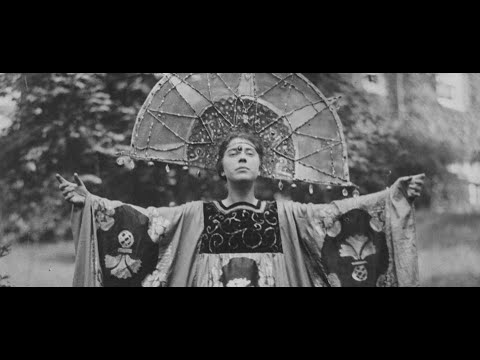
Dion Fortune remains a towering figure in Western occultism, her teachings a potent blend of psychic defense, esoteric symbolism, and the profound spiritual legacy of Ancient Egypt. For practitioners seeking to deepen their understanding and practice of ritual magic, her work offers an inexhaustible well of wisdom. This exploration delves into the core of her contributions, aiming to arm you with the practical insights needed to infuse your own magical workings with the power and precision she championed.
RitualWho Was Dion Fortune?
Dion Fortune, born Violet Mary Firth, was a prolific writer, occultist, and mystic who lived from 1890 to 1946. She founded the Fraternity of the Inner Light, an occult organization that continues to influence magical study today. Fortune’s approach was deeply rooted in both practical occultism and psychological understanding, a duality that lends her work enduring relevance. She didn't shy away from the complexities of the magical path, often grounding esoteric concepts in tangible principles that resonated with her contemporaries and continue to inspire seekers in the 21st century. Her life’s work revolved around demystifying occult principles and making them accessible, not as dogma, but as practical tools for spiritual growth and manifest change. Her foundational texts, like *The Cosmic Doctrine* and *Psychic Self-Defense*, are considered essential reading for anyone serious about the Western magical tradition.
Table of Contents
Psychic Defense and Esoteric Symbols: Fortifying Your Inner Sanctum
One of Dion Fortune's most crucial contributions to practical magic is her emphasis on psychic defense. In a world saturated with unseen energies and potential psychic intrusions, understanding how to shield yourself is not an act of paranoia, but of fundamental magical hygiene. Fortune viewed the human aura as a field of energy susceptible to both external influences and internal imbalance. Her teachings on psychic defense are not about building impenetrable walls, but about cultivating a robust, clear, and resilient energetic structure.
This involves understanding the nature of psychic attacks, which she often described as arising not necessarily from malicious intent, but from the uncontrolled psychic emissions of others or from psychic "vermin" – thought-forms and elemental forces that can attach themselves to an unprepared psyche. Her methods include visualization techniques, the use of protective symbols, and the cultivation of inner strength and mental clarity.
Central to this defense are esoteric symbols. Fortune understood that symbols are not mere representations but potent carriers of energetic charge and intent. They act as keys, unlocking specific forces or energies, and as shields, deflecting unwanted influences. The careful selection and application of symbols, whether drawn, visualized, or worn, form a critical part of her defensive and offensive magical framework. Her work often references ancient systems of symbolism, particularly those connected to Egyptian cosmology, suggesting that these ancient forms hold inherent power due to their deep resonance within the collective unconscious.
The Influence of Ancient Egypt: Echoes of the Pharaohs
The profound impact of Ancient Egypt on Dion Fortune’s mystical system cannot be overstated. She saw in Egyptian magic and religion a sophisticated and potent system of cosmology, symbolism, and ritual that contained universal truths applicable to modern occult practice. Her book, *The Egyptian Elements in the Western Tradition*, delves into how these ancient currents have flowed through Western esotericism.
Fortune was particularly drawn to the Egyptian understanding of deity, the afterlife, and the interconnectedness of the physical and spiritual realms. She interpreted Egyptian myths and symbols not as primitive superstition, but as allegorical representations of psychological and spiritual processes. The figure of the Winged Bull, for instance, which one of her readers mentioned as a favorite, can be seen as representing a powerful symbol of divine protection and cosmic awareness within this framework. Her interpretations encouraged practitioners to look beyond the superficial narrative of myths and uncover the underlying magical principles.
The Egyptian pantheon, with its complex relationships and archetypal significance, provided Fortune with a rich tapestry of divine forces that could be invoked and worked with in ritual. She emphasized that these deities represent fundamental aspects of consciousness and the cosmos, and that working with them is a form of engaging with these universal energies. This perspective grounds her approach, suggesting that the power of ritual magic is deeply connected to tapping into ancient currents of wisdom that have shaped human civilization for millennia.
Ritual Magic in Practice: Crafting Intent, Channeling Energy
For Dion Fortune, ritual magic was not about empty gestures or theatrical performances. It was a deliberate, disciplined craft of directing consciousness and will to effect change in accordance with divine law. Her approach to ritual is characterized by precision, intentionality, and a profound understanding of the interplay between the individual, the cosmos, and the subtle realms.
Key to her practice is the concept of building an inner temple. Before any external ritual can be truly effective, the practitioner must cultivate a balanced, centered, and fortified inner space. This involves practices like meditation, visualization, and self-awareness. Fortune understood that the external ritual is merely a projection of an internal state. If the inner temple is chaotic, the ritual’s energy will be scattered and ineffective.
When it comes to the mechanics of ritual, Fortune’s method emphasizes several core components:
* The Circle of Protection: Drawing or visualizing a magical circle is not merely symbolic; it creates a sacred space charged with protective and consecrating energies. This space acts as a buffer, containing the ritual forces and preventing unwanted intrusions. The effectiveness of the circle is directly tied to the practitioner's belief and intent. * Invocation and Evocation: Fortune explored both how to invoke divine forces and energies into oneself, and how to evoke them into a defined space or form. Both require careful preparation, clear intention, and the use of appropriate correspondences (colors, incense, symbols, divine names). * Intent and Will: The unwavering clarity of intent is paramount. A ritual without a well-defined purpose is like a ship without a rudder. Fortune stressed the importance of "will," not as brute force, but as focused directed energy, aligning one’s personal will with the higher will or the desired outcome. * Symbolism and Correspondences: Every element within a ritual – from the color of a robe to the type of incense burned – carries symbolic weight and energetic resonance. Understanding these correspondences allows the practitioner to build a rich tapestry of energy that amplifies the ritual’s intent. For example, working with Egyptian themes might involve specific colors, herbs, and divine names associated with that pantheon. * Closing the Circle: Just as vital as opening a ritual is properly closing it. This involves thanking the invoked forces, dissolving the circle, and ensuring that the energies raised are either grounded or directed towards the desired outcome, preventing residual energetic entanglements.
Final Thoughts: The Enduring Power of Ritual
Dion Fortune’s teachings on ritual magic offer a sophisticated and practical framework for understanding and engaging with the unseen forces that shape our existence. Her emphasis on psychic defense, the potent symbolism inherited from traditions like Ancient Egypt, and the disciplined practice of ritual itself, provides a holistic approach to magical development.
Her legacy encourages us to see magic not as a passive reception of cosmic gifts, but as an active, intelligent engagement with the universe. Whether you are crafting a simple sigil or performing a complex invocation, the principles she laid down – clarity of intent, disciplined will, energetic hygiene, and understanding of symbolism – remain as relevant today as they were when she first penned them. By studying her work and applying her methods, practitioners can forge a deeper connection with the subtle energies around and within them, leading to profound personal transformation and demonstrable results in their magical endeavors.
***
Mage's Arsenal
* Essential: Lunar Phase Calculator - Precisely track lunar cycles to time your rituals for maximum potency, aligning your magical work with celestial rhythms. * Recommended Reading: *The Cosmic Doctrine* by Dion Fortune. * Recommended Reading: *Psychic Self-Defense* by Dion Fortune. * Practical Tool: Journal for recording rituals, intents, and observations. * Reference: *The Golden Bough* by Sir James George Frazer (for comparative mythology).
FAQ: Frequently Asked Questions
What was Dion Fortune's main contribution to occultism?
Dion Fortune's primary contributions lie in her practical approach to occultism, emphasizing psychological understanding, psychic self-defense, and the integration of ancient wisdom traditions, particularly those of Ancient Egypt, into modern magical practice. She founded the Fraternity of the Inner Light, which continues to disseminate her teachings.How did Dion Fortune view ritual magic?
She viewed ritual magic as a disciplined craft requiring clear intent, focused will, energetic hygiene, and the intelligent use of symbolism and correspondences. For Fortune, ritual was a practical method for effecting change by aligning oneself with universal forces and cultivating inner strength.Did Dion Fortune believe in the reality of psychic attacks?
Yes, she did. Fortune extensively wrote about psychic defense, viewing psychic attacks not necessarily as malevolent assaults but as a consequence of psychic imbalance, uncontrolled energetic emissions, or the influence of psychic "vermin" or thought-forms. Her work provides methods for fortifying one's aura and mental space against such influences.What is the significance of Ancient Egypt in Dion Fortune's teachings?
Fortune saw Ancient Egyptian civilization as possessing a profound and sophisticated understanding of occult principles, cosmology, and symbolism. She believed that these ancient traditions contained universal truths that were foundational to Western esotericism and offered powerful archetypes and energies for magical work.About the author: Frater Alek0s is a veteran practitioner and researcher in the field of chaos magick. His work focuses on the practical and experimental application of occult techniques for self-development and reality exploration, demystifying esotericism for the modern practitioner.
How can a modern practitioner apply Dion Fortune's teachings on ritual?
Modern practitioners can apply Fortune's teachings by focusing on cultivating a strong inner sanctuary through meditation and self-awareness, practicing clear and precise ritual formulation, understanding and utilizing the power of symbols, and timing their workings according to celestial influences, such as lunar phases, using tools like the Lunar Phase Calculator.Referencias
- Carroll, P. J. (1987). Liber Null & Psychonaut. Weiser Books.
- Spare, A. O. (1913). The Book of Pleasure. Self-published.
- Hine, P. (1992). Condensed Chaos: An Introduction to Chaos Magic. New Falcon Publications.
- Crowley, A. (1904). The Book of the Law. Self-published.
- Sherwin, R. (2018). The Chaos Magic Handbook. CreateSpace.
- Kraig, D. M. (1988). Modern Magick: Eleven Lessons in the High Magickal Arts. Llewellyn Publications.
- Morrison, G. (2003). Pop Magic! The Art of Shaping Reality. Disinformation.
- DuQuette, L. M. (2003). The Chicken Qabalah of Rabbi Lamed Ben Clifford. Weiser Books.
- Webb, D. (2015). Chaos Magick: A Practical Guide. Self-published.
- Tyson, D. (2006). The Power of the Written Word. Llewellyn Publications.
- Bonewits, I. (1971). Real Magic. Creative Age Press.
- Greer, J. M. (2003). The New Encyclopedia of the Occult. Llewellyn Publications.
No hay comentarios:
Publicar un comentario