
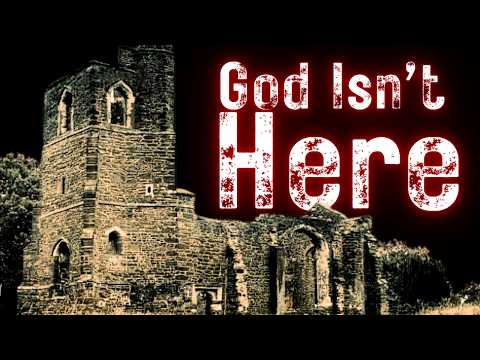
The ruins of St. Mary's Church, standing sentinel above the village of Clophill, have long been a focal point for unsettling whispers and chilling tales. For decades, this site has been shrouded in disturbing rumors—stories of black magic rituals, desecrated graves, spectral figures, and unsettling encounters lurking in the shadows. Locals, with a mixture of fear and morbid fascination, began to refer to it as "The Black Magic Church."
But the eerie reputation of Clophill is more than just folklore; it's rooted in real, albeit sensationalized, events and enduring mysteries. In the early 1960s, the parish, then overseen by Reverend Lewis Barker, found itself at the center of national headlines. Investigators discovered human remains arranged within the ruins of St. Mary's Church, believed by many to be part of an occult ritual. This discovery ignited a wave of fear and captivated public imagination, a fascination that has never truly waned.
Table of Contents
This page delves into the actual occurrences, the haunting legends, and the lingering enigmas behind the notoriety of "The Black Magic Church."
RitualOrigins of the "Black Magic Church" Legend
The seeds of Clophill's dark reputation were sown long before the sensational events of the 1960s. Abandoned and decaying, the medieval church provided fertile ground for local folklore and speculative narratives. Its isolated position and ruined state naturally drew attention, and as stories began to circulate, the site became a magnet for those interested in the occult or simply seeking a thrillingly spooky destination. The discovery of human remains, whether truly ritualistic or a sensationalized interpretation, served to solidify these burgeoning narratives into a persistent legend.
The transition from a derelict church to "The Black Magic Church" wasn't instantaneous but a gradual accretion of rumor, speculation, and genuine, albeit unusual, occurrences. The very isolation that made the church a place of worship also made it a perfect canvas for darker interpretations once its sacred function ceased.
The 1963 Incident: Ritual or Rumor?
The pivotal moment that cemented Clophill's infamous status occurred in the early 1960s. Human remains were discovered within the ruins of St. Mary's Church in a configuration that investigators suspected might be part of an occult ritual. This discovery catapulted the quiet village and its decaying church into the national spotlight.
While the official interpretation leaned towards a ritualistic arrangement, the sensationalism surrounding the event often overshadowed factual reporting. The media at the time, eager for a sensational story, likely amplified the occult angle, contributing to the widespread belief that nefarious magic was at play. The details of the discovery are often debated, with some suggesting careless teenagers and others insisting on genuine occult activity. Regardless of the definitive cause, the incident acted as a powerful catalyst, transforming local whispers into a widespread legend of a "black magic" site.
Beyond the Headlines: Reports of the Unexplained
The notoriety generated by the 1963 incident meant that Clophill, and specifically the ruined church, became a site for paranormal investigation and anecdotal accounts. Over the years, visitors and locals have reported a consistent pattern of strange phenomena:
* Hooded Figures: Numerous accounts describe seeing cloaked or hooded figures moving silently among the gravestones, often appearing and disappearing without explanation. These figures are frequently associated with the church's darker legends. * Unexplained Lights: Lights have been reported emanating from within the ruined church tower, flickering and shifting in ways that defy logical explanation. Some believe these are residual energies or spectral manifestations. * The Mysterious Monk: Perhaps one of the most persistent tales is the apparition of a mysterious monk seen on nearby roads. This figure is often described as solemn and ancient, adding a layer of historical spiritual unrest to the area.
These reports, while often dismissed as misinterpretation or imagination, contribute to the pervasive atmosphere of the uncanny that surrounds Clophill. They suggest a lingering presence or energy that continues to manifest in subtle, unsettling ways.
The Shadow of the A6 Murder
Adding another layer of grim notoriety to the Clophill area is its proximity to Deadman's Hill, the site of the infamous A6 murder. This notorious crime, one of the most controversial in British history, occurred not far from the church ruins. The chilling connection, even if geographical, amplifies the sense of dread associated with the Clophill landscape.
The A6 murder, involving the brutal killing of a young woman, preyed on the public's imagination and left a scar on the local psyche. When juxtaposed with the "black magic" rumors surrounding the church, it created an environment where dark interpretations were readily accepted. The area, already steeped in tales of occult rituals, now also bore the weight of a horrific violent crime, making it a potent symbol of malevolence in many people's minds.
Exploring the "Black Magic Church" in Practice
While the historical incidents and sensational headlines are well-documented, the true nature of Clophill remains a subject of debate. Is it a place truly haunted by dark energies and spirits? Or is it a site where folklore, sensationalism, and a vivid imagination have coalesced to create "The Black Magic Church"?
From a practical occult perspective, places that have experienced intense emotional events (fear, anger, devotion, or despair) can retain residual energies. The intense focus on supposed ritual, coupled with the notoriety of the A6 murder, could indeed create a potent psychic environment. Whether this manifests as genuine hauntings or merely perceived phenomena is a matter of individual experience and interpretation.
For practitioners interested in the darker aspects of ritual or exploring locations with strong residual energy, Clophill presents a fascinating case study. It highlights how belief and narrative can shape the perceived reality of a place. The very act of labeling it "The Black Magic Church" imbues it with that perceived energy.
Practical Considerations for Practitioners
If one were to visit Clophill with an intention of exploring its energies, several considerations are paramount:
* Respect the Site: Even in its ruined state, Clophill is a former place of worship and a historical site. Approach with respect, and avoid any actions that could be construed as desecration or disrespect. * Observe and Record: Instead of imposing beliefs, focus on observation. Document any unusual sensations, sights, or sounds. Journaling is crucial for tracking personal experiences and identifying patterns. * Safety First: Abandoned sites can be dangerous. Be aware of structural integrity, uneven terrain, and potential hazards. The legends of strange encounters should also be a reminder to practice caution and, ideally, not to visit alone, especially at night. * Intentionality: If you choose to perform any form of practical magical work, be clear about your intent. Is it to understand the energies present, to cleanse the site, or to engage in personal workings? Clarity of intention is key in any magical endeavor.
For those seeking to explore the potent symbolism and energies associated with ritualistic practices, tools can greatly enhance the experience. The Goetian Seals Generator app provides a direct avenue for creating and exploring the intricate seals of Goetic entities. These seals are not mere symbols but often serve as conduits or focal points for specific energies. By understanding and utilizing these tools, practitioners can engage with the deeper currents that may exist in places like Clophill, grounding their experiences in tangible magical practice rather than succumbing solely to folklore.
What Really Happened?
The definitive "what" of Clophill's dark history remains elusive, veiled by time, sensationalism, and the enduring power of legend. Was it a nexus of genuine black magic rituals, fueled by teenage rebellion or darker intentions? Was it a site where intense human tragedy, like the A6 murder, left an indelible psychic scar on the landscape? Or is it simply a place where a particularly compelling story took root and grew, fed by imagination and the natural human fascination with the macabre?
The truth, as is often the case with such legends, likely lies somewhere in between. The documented events, the persistent anecdotal evidence, and the sheer power of the narrative all contribute to the mystique. Clophill stands as a potent reminder of how places can become imbued with meaning, how stories can take on a life of their own, and how, for some, the shadows of the past can feel chillingly present.
Arsenal of the Modern Occultist
In navigating the complexities of occult history, ritual, and personal practice, the right tools can make a significant difference. While Clophill's history is steeped in tradition and rumor, modern practitioners have access to resources that can aid their exploration and practice.
* Essential: Goetian Seals Generator — For those interested in the symbolic language of ritual and entities, this app allows for the precise creation and exploration of Goetian seals, grounding practice in accurate representation. * Recommended Reading: *The Black Arts* by Richard Cavendish — A comprehensive exploration of historical occult practices, offering context to the traditions that might have influenced or been associated with such sites. * Investigative Tool: A high-quality digital voice recorder and camera — For documenting personal experiences and environmental anomalies during exploration. * Journal: A dedicated grimoire or notebook — Essential for recording observations, rituals, and personal insights.
FAQ: Navigating the Darkness of Clophill
Is Clophill Church genuinely haunted?
The question of whether Clophill is "haunted" is subjective and depends on one's definition of haunting. There are numerous anecdotal reports of spectral figures, unexplained lights, and unsettling phenomena. These could be attributed to residual energy from past events, mass suggestion, or genuine paranormal activity. From a magical perspective, places with strong historical narratives and intense emotional events can develop potent psychic imprints.
What constitutes "black magic" in the context of Clophill?
In the context of Clophill's legend, "black magic" typically refers to alleged occult rituals involving rituals, grave desecration, and malevolent intent. Historically, the term "black magic" has been applied broadly to practices deemed unorthodox or harmful by mainstream society. Whether the events at Clophill truly involved such practices or were simply sensationalized interpretations is debated; however, the label itself has profoundly shaped the site's reputation.
Are the stories of grave desecration true?
Reports of grave desecration at Clophill have been a significant part of its notoriety, particularly concerning the discovery of human remains in the ruins. While the exact circumstances and motivations behind these events are often unclear or debated, the incidents themselves are historically documented and contributed heavily to the site's dark reputation and the fear it instilled locally.
Can I visit Clophill Church ruins?
Yes, the ruins of St. Mary's Church at Clophill are accessible to visitors, though it's important to note that it is an abandoned and potentially hazardous site. It is advisable to visit during daylight hours and to proceed with caution. Respect for the historical and spiritual nature of the site is paramount.
How did the A6 murder connect to Clophill's reputation?
The proximity of Deadman's Hill, the site of the notorious A6 murder, to Clophill Church added another layer of dark association to the area. While not directly related to occult activities, the heinous nature of the crime intensified the perception of the surrounding landscape as a place of malevolence and tragedy, further cementing its sinister reputation in the public imagination.
About the author: Frater Alek0s is a veteran practitioner and researcher in the field of chaos magick. His work focuses on the practical and experimental application of occult techniques for self-development and reality exploration, demystifying esotericism for the modern practitioner.
Does the Goetian Seals Generator app relate to Clophill's history?
The Goetian Seals Generator app is not directly tied to the historical events of Clophill. However, it relates to the broader context of ritualistic symbolism and the exploration of energies that sites like Clophill are often associated with. For practitioners interested in the symbolic languages of magic and summoning, the app provides tools for accurate representation of seals, which can be a focus in personal workings or explorations of powerful locations.
Referencias
- Frazer, J. G. (1890). The Golden Bough: A Study in Comparative Religion. Macmillan.
- Eliade, M. (1958). Patterns in Comparative Religion. Sheed & Ward.
- Thomas, K. (1971). Religion and the Decline of Magic. Oxford University Press.
- Cohn, N. (1975). Europe's Inner Demons. Basic Books.
- Ginzburg, C. (1966). The Night Battles: Witchcraft and Agrarian Cults in the Sixteenth and Seventeenth Centuries. Johns Hopkins University Press.
- Hutton, R. (1999). The Triumph of the Moon. Oxford University Press.
- Kieckhefer, R. (1989). Magic in the Middle Ages. Cambridge University Press.
- Russell, J. B. (1972). Witchcraft in the Middle Ages. Cornell University Press.
- Ankarloo, B. (2002). Witchcraft and Magic in Europe: The Middle Ages. Athlone Press.
- Berger, H. (2005). Witchcraft and Magic: Contemporary North America. University of Pennsylvania Press.
- Caro Baroja, J. (1961). The World of the Witches. University of Chicago Press.
- Decker, R. (2008). The Witches of Warboys. Self-published.
No hay comentarios:
Publicar un comentario