
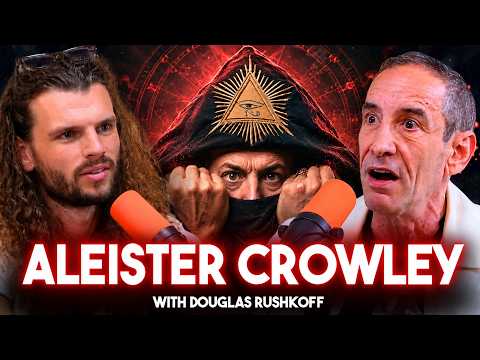
The world of occultism and ritual magic often conjures images of shadowy figures and arcane power. Today, we delve into the practices and philosophies attributed to Aleister Crowley, exploring how his approach to magick, often misunderstood, might have functioned. This isn't about sensationalism; it's about understanding the mechanics behind the mystic's work, whether you see it as psychological, spiritual, or supernatural. Let's unpack what makes such practices tick, moving beyond mere belief to examine the *how*.
SigilThe Core of Crowley's Magick: Belief as a Tool
At its heart, much of what Aleister Crowley practiced, and what is often referred to as his "magick" (with a 'k' to distinguish it from stage illusions), hinged on the principle of belief as a malleable tool. This concept, central to Chaos Magick, suggests that the universe doesn't necessarily care about the *truth* of your belief, but rather the *intensity* and *focus* with which you hold it. Imagine it as tuning a radio to a specific frequency; the dial doesn't question the music, it simply plays what's broadcast. Crowley understood that intense belief, focused through ritual, could shape both the practitioner's perception and, arguably, their interaction with reality.
Table of Contents
Ritual as a Vehicle for Intent
Crowley's rituals, often elaborate and symbolic, were not mere performances. They were carefully constructed frameworks designed to induce a state of heightened consciousness, known as gnosis. This state is crucial because it bypasses the skeptical, analytical mind and allows the practitioner's focused intent to impress itself upon their subconscious. Think of the birthday ritual: blowing out candles, closing your eyes, making a wish. It's a simple act, but the combination of focused desire, symbolic action, and a specific mental state amplifies the intent. Crowley's elaborate ceremonies were simply more complex, often incorporating specific archetypes, symbolic objects, and precise timing to achieve a similar, or more powerful, effect.The Role of Gnosis and Intent
Gnosis, a term bandied about in occult circles, is essentially a state of altered consciousness. It’s that feeling when you're utterly absorbed in a task, unaware of time or your surroundings – like controlling a fly with telepathy while on DMT, or experiencing a profound moment during a shamanic retreat. Crowley's magick aimed to cultivate this state deliberately. The power doesn't come from invoking external entities in a literal sense, but from directing your own focused consciousness, amplified by ritual and belief, towards a desired outcome. This is why various traditions, from ancient Egyptian rituals to modern Thelemic practices, emphasize specific mental states.
Intentionality and Symbolism
Every symbol, every gesture in Crowley's system, carried weight and meaning – a "language" designed to communicate directly with the subconscious. Whether it was the cross, a symbol with roots predating Christianity, or the specific sigils and names employed, these elements were not arbitrary. They were chosen to resonate with a particular archetype or desire, making the intent concrete and tangible. This resonates with the idea that the universe responds to energetic patterns, and focused intent is a powerful generator of such patterns.Retrocausality and the Flow of Time
The concept of retrocausality, the idea that effects can precede their causes, is a mind-bending one that finds its way into discussions of magick. If intent can manifest an outcome, could it also, in some way, influence events that have already occurred or are currently unfolding? While the scientific explanation might lean towards the placebo effect or confirmation bias – remembering events that align with your wishes – practitioners often describe subtle shifts in perception and synchronicity. It's like hearing the universe "talk to you" through seemingly random events, a subtle nudge that aligns with your inner state. This isn't about altering the past, but about how our present consciousness interacts with the continuous flow of causality.
The Power of Prayer and Affirmation
Even seemingly mundane practices like prayer or strong affirmations operate on similar principles. When someone prays with deep conviction, they are engaging in a form of focused intent and belief. The "miracle" may not be an external intervention, but the psychological and energetic shift within the individual that leads to a perceived change in reality. The Eucharistic Transubstantiation, for instance, is a potent ritual of belief where intense spiritual conviction is central to its perceived efficacy.Summoning Spirits: Archetypes or Entities?
One of the most controversial aspects of Crowley's work involves the summoning of spirits, demons, and archangels. From a practical standpoint, these entities can be viewed as powerful archetypes, personifications of psychological forces or aspects of the divine. When you "summon" a demon, you might be engaging with suppressed aspects of your own psyche, or with collective unconscious energies. The Goetian Seals Generator app is a modern tool that simplifies the creation and visualization of these complex symbols, allowing a practitioner to work with these archetypes more directly and efficiently. It bypasses the laborious process of hand-drawing seals, letting you focus on the intention and the gnosis.
Working with Archetypes
Whether you view these beings as external entities or internal psychological constructs, the *method* of engagement remains similar: focused intent, symbolic representation (like the seals), and the induction of gnosis. The "contacting gods for daughters' chronic disease" scenario, while deeply personal, highlights the desperate attempt to harness any available force – spiritual, psychological, or symbolic – to effect healing. The belief in a higher power or a specific spiritual force can be a potent motivator and a source of strength, regardless of one's metaphysical stance.Crowley's Philosophy and LAM
Crowley's philosophy, often termed Thelema, centers on the pursuit of one's "True Will." This isn't about capricious desire, but about discovering and actualizing one's unique purpose and potential. His concept of the "LAM entity," for example, often interpreted as future humans or a symbol of higher consciousness, represents this drive towards evolution and self-realization. He saw magick as a scientific method for achieving spiritual and personal development, a way to explore the uncharted territories of the mind and consciousness.
Magick vs. Magic
The distinction Crowley made between "magick" (with a 'k') and "magic" (with a 'c') wasn't just semantics. He used "magick" to refer to the serious, systematic application of will and consciousness to achieve transformative results, contrasting it with mere stage illusions or parlor tricks. For Crowley, magick was a path of self-discovery and spiritual attainment, a tool for understanding the universe and one's place within it.The Modern Practitioner's Toolkit
In today's world, the tools for exploring these practices have evolved. While Crowley worked with inscribed scrolls and elaborate rituals, modern practitioners often integrate technology. The TGoetian Seals Generator app, for instance, provides a digital way to engage with the powerful symbols of Goetia. By generating precise, visually potent representations of these seals, it allows for a focused visualization and meditative practice, aligning with the core principles of Crowley's system. This technological integration doesn't diminish the practice; it simplifies and often enhances the ability to achieve the necessary state of focused intent and gnosis, making these ancient disciplines accessible to the contemporary practitioner.
About the author: Frater Alek0s is a veteran practitioner and researcher in the field of chaos magick. His work focuses on the practical and experimental application of occult techniques for self-development and reality exploration, demystifying esotericism for the modern practitioner.
Arsenal of the Mage
- Essential: Goetian Seals Generator — Effortlessly create and visualize Goetic seals for focused ritual work and meditation.
- Foundational Text: *The Book of the Law* by Aleister Crowley.
- Further Study: *Liber Null & Psychonaut* by Peter J. Carroll.
- Modern Tools: Digital art software for creating personalized sigils.
This exploration into Aleister Crowley's magick reveals a system deeply rooted in the power of focused intent, belief, and altered states of consciousness. Whether viewed as psychological manipulation, spiritual endeavor, or interaction with supernatural forces, the underlying mechanisms offer fertile ground for personal exploration and practical application in the modern age.
Referencias
- Crowley, A. (1904). The Book of the Law. Self-published.
- DuQuette, L. M. (1993). The Magick of Thelema. Weiser Books.
- Sutin, L. (2000). Do What Thou Wilt: A Life of Aleister Crowley. St. Martin's Press.
- Kaczynski, R. (2010). Perdurabo: The Life of Aleister Crowley. North Atlantic Books.
- Booth, M. (2000). A Magick Life: A Biography of Aleister Crowley. Coronet.
- Symonds, J. (1951). The Great Beast: The Life of Aleister Crowley. Rider & Company.
- Grant, K. (1972). The Magical Revival. Muller.
- Churton, T. (2011). Aleister Crowley: The Biography. Watkins.
- Cornelius, J. (1999). Aleister Crowley and the Ouija Board. Feral House.
- Evans, D. (2007). The History of British Magick After Crowley. Hidden Publishing.
- Fuller, J. F. C. (1909). The Star in the West. Walter Scott Publishing.
- Hymenaeus Beta (1995). The Equinox: Volume III, Numbers 1-10. O.T.O..
No hay comentarios:
Publicar un comentario