
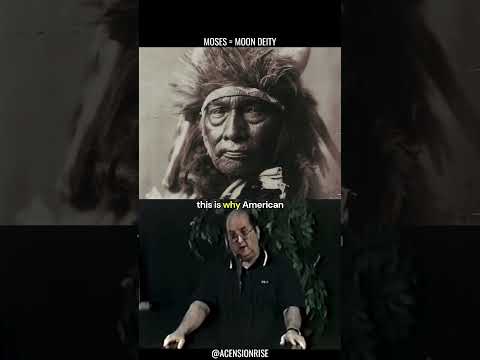
The figure of Moses is central to Abrahamic religions, revered as a prophet and lawgiver. However, a deeper dive into ancient symbolism and mythology reveals a fascinating connection between Moses and lunar deities, a perspective often overlooked in mainstream interpretation. This exploration moves beyond simple historical accounts to uncover the symbolic roots that can inform our magical practices today. Understanding these deeper layers can unlock new avenues for personal gnosis and ritualistic work.
LunarThe Moon Deity Hypothesis and Moses
The idea that Moses might be linked to a moon deity is not a new one, but it is one that deserves thorough examination through the lens of ancient Mesopotamian and Egyptian cultures. These civilizations heavily incorporated lunar symbolism into their religious and astrological frameworks. When we look at the narratives surrounding Moses, particularly his association with mountains, divine encounters, and periods of significant transformation, parallels with lunar cycles and deities begin to emerge.
Table of Contents
Mesopotamian Lunar Deities
Mesopotamia, a cradle of civilization, had a rich pantheon where the moon played a significant role. The primary moon deity was Sin (or Nanna in Sumerian), the father of Shamash (the sun god) and Ishtar (the morning star goddess of love and war). Sin was often depicted with a crescent or full moon symbol, representing wisdom, healing, and the passage of time. His influence was paramount in regulating calendars and agricultural cycles. The association of deities with specific celestial bodies was not merely ornamental; it was believed to imbue them with the characteristics and powers of those bodies. Many scholars have noted the thematic resonances between the cyclical nature of lunar worship and the narrative arcs of key figures in ancient religious texts.
Egyptian Lunar Symbolism
In ancient Egypt, lunar symbolism was equally potent, though often expressed through different deities. Iah was a god of the moon, sometimes depicted as a man wearing a lunar crescent. Khonsu, the god of time and the moon, was also a significant figure, often portrayed with a lunar disk on his head. The moon's phases were seen as a metaphor for life, death, and rebirth, a concept deeply embedded in Egyptian cosmology. The Egyptians meticulously observed the moon's cycles, integrating them into their religious rituals and their understanding of cosmic order. This profound connection between the moon and divine power in both cultures provides a fertile ground for re-examining figures like Moses, whose narratives often involve ascents to sacred mountains and divine revelations that can be ritually interpreted through a lunar lens.
Examining the 'Moses' Narrative Through a Lunar Lens
When we approach the story of Moses with an awareness of lunar symbolism, certain elements of his narrative take on new dimensions. His ascent to Mount Sinai, the reception of the Ten Commandments, and his prolonged presence in the wilderness all bear thematic resemblances to mythological cycles associated with moon deities. These are not literal interpretations, but symbolic resonances that our magical practice can leverage.
The Ascent to Mount Sinai as Lunar Journey
Mount Sinai itself is often depicted as a place of divine encounter and transformation. In many mythologies, sacred mountains are liminal spaces, bridges between the earthly and the divine, often associated with celestial events. The cyclical nature of the moon, its waxing and waning, mirrors themes of revelation and concealment, of the divine making itself manifest and then withdrawing. Moses's solitary ascent and his communion with the divine can be seen as a ritualistic journey, akin to how lunar deities were invoked or experienced during specific phases of the moon. The idea of receiving divine law from a mountaintop echoes archetypal narratives where celestial influence is at its peak.
The Two Tablets: Cycles of Revelation and Concealment
The Ten Commandments, inscribed on two tablets of stone, can be symbolically viewed through the lens of lunar cycles. The duality of the tablets might represent the two halves of the lunar cycle (waxing and waning) or the interplay of opposing forces, a common theme in esoteric traditions. The act of divine revelation, delivered in stages and then inscribed, mirrors the moon's gradual appearance and disappearance in the night sky. This cyclical pattern of manifestation and withdrawal is a fundamental aspect of lunar mythology and can inform how we approach the process of receiving and manifesting our own magical intentions.
Horns of Moses: A Misinterpretation of Lunar Radiance?
One of the most striking symbolic associations with Moses is the depiction of horns. While often attributed to mistranslations of the Vulgate Bible, which translated the Hebrew word "qaran" (rays of light) as "horns," this imagery also resonates with ancient lunar iconography. Many moon deities across various cultures were depicted with horns, symbolizing their celestial power and connection to the divine. For instance, the Egyptian god Khonsu was sometimes shown with ram's horns, and Mesopotamian deities were frequently associated with horned headdresses to denote divinity.
This apparent mistranslation could be seen as an echo of an older, more prevalent symbolism where divine radiance was represented by horns, a symbolism deeply tied to lunar deities. If Moses's encounter with the divine left him with a visible aura or radiance, as described, it's plausible that early interpretations or depictions linked this luminescence to the horned imagery common for divine entities, particularly those associated with the moon, which often appears as a radiant disk or crescent in the night sky. This connection suggests that the power Moses received was perceived as having a celestial, potentially lunar, quality.
Practical Applications for the Modern Practitioner
Understanding these symbolic connections isn't just academic; it can profoundly impact how we approach our magical work. By recognizing the archetypal patterns, we can consciously integrate them into our rituals and sigil creation.
Ritual Timing and Lunar Phases
The association of Moses with divine revelation from a mountaintop, potentially linked to lunar cycles, suggests the power of aligning magical workings with celestial timing. For practitioners, this means understanding the energetic significance of the moon's phases.
* New Moon: Ideal for setting intentions, initiating new projects, and planting seeds for future manifestation. This aligns with the phase of concealment and nascent power, mirroring the initial stages of Moses's divine commission. * Waxing Moon: A time for building energy, growth, and active manifestation. This phase can be used to charge sigils or power rituals aimed at bringing desires into reality, reflecting the progressive nature of divine revelation. * Full Moon: Represents peak energy, culmination, and illumination. This phase is potent for charging sigils to their fullest extent, performing rituals of empowerment, or seeking direct gnosis, echoing the moment of Moses's most profound communion. * Waning Moon: Best for banishing, releasing, and introspection. This phase aligns with the withdrawal of divine presence or the completion of a cycle, useful for rituals focused on shedding old habits or energetic blockages.
Sigil Creation: Incorporating Lunar and Symbolic Resonance
When creating sigils, especially those related to law, order, wisdom, or divine connection, consider incorporating lunar symbolism or themes that resonate with the Moses archetype.
1. Intent Clarity: As always, begin with a clear, declarative intent. If your intent is related to establishing order, seeking divine guidance, or initiating a transformation, frame it concisely. 2. Symbolic Integration: You can subtly integrate symbols associated with the moon (crescent, disk, specific deity symbols if you work with them) into your sigil design, or even the number two, representing the tablets. Alternatively, consider symbols of mountains or divine light. 3. Gnosis and Charge: The process of charging the sigil is crucial. Given the connection to divine encounter and revelation, consider using a gnosis technique that induces a state of heightened receptivity or ecstatic trance. This could involve rhythmic chanting, sensory deprivation, or ecstatic dance, aiming for a state where the self dissolves and the intention is directly impressed upon the subconscious. If you find yourself needing a quick, powerful method to crystallize your intention into a symbol, the Chaos Magick Sigil Generator can be an invaluable tool. It quickly synthesizes your intent into a unique glyph, allowing you to focus your energy on the charging phase rather than the design itself. 4. Release: After charging, the sigil must be forgotten. This act of releasing the desire allows the subconscious to bring it into manifestation without conscious interference.
The 'Moses' Sigil Archetype
For those looking to create a sigil that embodies the broader themes associated with this archetype—divine law, transformation, lunar influence, and mountain revelations—consider the following:
* Intent: "I manifest divine order and wisdom through lunar cycles." * Symbolic Elements: Combine letters from the intent, or use an artistic approach. Incorporate a crescent moon, a triangular element representing a mountain, or a radiating motif suggesting divine light. * Gnosis: A trance state achieved during the peak of the full moon, or through a "freeze" technique that mirrors the stillness of a mountain encounter. * Release: Visualize the sigil dissolving into the moonlight, or becoming part of a mountain's enduring structure.
About the author: Frater Alek0s is a veteran practitioner and researcher in the field of chaos magick. His work focuses on the practical and experimental application of occult techniques for self-development and reality exploration, demystifying esotericism for the modern practitioner.
Conclusion: Embracing Archetypal Power
The connection between Moses and lunar deities, while speculative from a purely historical perspective, offers a powerful symbolic framework for magical practice. By understanding these archetypes, we can tap into ancient currents of meaning, enriching our rituals and sigil work. The moon, with its cycles of revelation and concealment, its association with time, wisdom, and divine encounter, provides a potent backdrop for magical intention. Whether you choose to explicitly work with lunar symbolism or simply acknowledge the archetypal resonance, this deeper understanding can illuminate your path.
The practice of magic is an ongoing journey of discovery. By re-examining ancient narratives through a contemporary esoteric lens, we uncover layers of meaning that can serve as potent keys to unlocking our own inner power and manifesting our desires. The wilderness, the mountain, the divine light—all these, interwoven with the rhythm of the moon, await your exploration.
***
Referencias
- Cunningham, S. (1988). Wicca: A Guide for the Solitary Practitioner. Llewellyn Publications.
- Conway, D. J. (2002). Moon Magick: Myth & Magic, Crafts & Recipes, Rituals & Spells. Llewellyn Publications.
- Grimassi, R. (2000). Encyclopedia of Wicca & Witchcraft. Llewellyn Publications.
- Kynes, T. (2016). Lunar Living: Working with the Magic of the Moon Cycles. Llewellyn Publications.
- McCoy, E. (1995). The Witch's Circle: A Modern Practitioner's Guide to the Old Ways. Llewellyn Publications.
- Dugan, E. (2006). The Moon: Myth and Image. Four Winds Press.
- Matthews, C. (2002). The Celtic Tradition. Element Books.
- Beyer, R. (2000). The Goddess and the Moon. Llewellyn Publications.
- Bord, J. (1974). The Secret Country. Paul Elek.
- Campanelli, P. (2005). The Wheel of the Year. Llewellyn Publications.
- Farrar, J. (1984). The Witches' God: Lord of the Dance. Robert Hale.
- Franklin, A. (2008). The Art of Lunar Magick. Llewellyn Publications.
No hay comentarios:
Publicar un comentario