
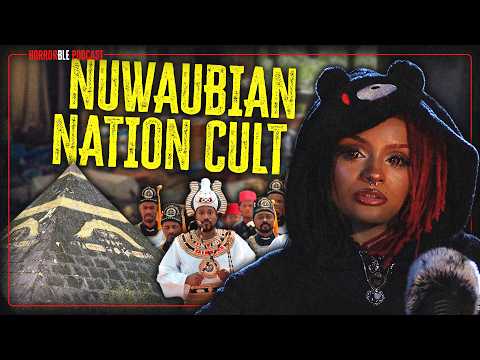
Exploring the depths of hoodoo magic, cult survivor Wensday the Vampire shares her extraordinary journey, blending chilling paranormal experiences with profound insights into authenticity.
This isn't just a tale of dark arts; it's a testament to resilience. From the restrictive confines of a secret black supremacy cult to the untamed power of manifestation and hoodoo, Wensday’s story unfolds a unique tapestry of belief systems and personal liberation.
Table of Contents
FolkThe Shadow of Malachi Z. York's Cult
Wensday’s childhood was far from ordinary. Raised within Malachi Z. York's Nuwaubian Nation, she was steeped in doctrines that spoke of alien rescues and apocalyptic prophecies. This intense upbringing, characterized by strict practices and pervasive restrictions, left an indelible mark. The journey to unlearn these deeply ingrained beliefs was arduous, a path many cult survivors navigate with profound courage. Escaping the psychological programming required a conscious dismantling of imposed realities, a process that often involves confronting the very foundations of one's worldview.
The Nuwaubian Nation, founded by Malachi Z. York, propagated a complex mythology involving extraterrestrial involvement in human history and a distinct eschatology centered on the salvation of Black people. York himself presented a multifaceted persona, claiming various spiritual and scientific credentials. Practices within the community were often regimented, dictating not only spiritual observances but also aspects of daily life. For individuals like Wensday, emerging from such an environment meant a significant period of deconstruction and rebuilding of personal identity and belief systems. This process is rarely straightforward, often necessitating support and a deliberate re-engagement with the outside world, free from the cult's pervasive influence.
The concept of "unlearning" is central to the experience of cult survivors. It involves questioning and discarding doctrines that were presented as absolute truths, often through coercive means. This can include challenging notions of chosenness, divine intervention, and the prescribed roles individuals were expected to play within the group. The psychological impact of such intense belief systems can be substantial, leading to difficulties in forming independent thought and trusting one's own judgment. Reclaiming agency involves a step-by-step process of critical evaluation and the gradual acceptance of alternative perspectives and personal truths.
Hoodoo Magic and Manifestation Practices
In stark contrast to the rigid dogma she grew up with, Wensday found liberation and power in hoodoo magic and manifestation. She details the practice of creating magical jars, a core element of rootwork, where ingredients are imbued with specific intentions. These practices, often misunderstood and sensationalized, represent a powerful tradition of spiritual folk magic deeply rooted in African diaspora culture. The intent behind these workings is crucial; whether it’s for protection, prosperity, or personal growth, the energy invested is what drives the manifestation.
Hoodoo, also known as rootwork, is a spiritual system that emerged in the Southern United States from West African magical traditions and folk Catholicism. It combines elements of divination, spellcasting, and the use of natural elements like herbs, roots, and oils to influence events. Making magical jars, often referred to as "mojo bags" or "gris-gris," is a common practice. These jars are carefully constructed with symbolic items corresponding to the practitioner's desire. For instance, a jar intended for financial gain might contain coins, cinnamon, and herbs associated with prosperity, sealed with intention and often consecrated or charged through ritual.
Manifestation, a concept that resonates across various spiritual paths, is the practice of bringing something tangible into your life through the focused power of your thoughts, beliefs, and emotions. It’s believed that by aligning one’s energy with a desired outcome, one can attract it. This can involve visualization techniques, affirmations, and the aforementioned spellcasting. Wensday's experience highlights how these practices can serve as tools for personal empowerment, offering a sense of control and agency, particularly for those who have felt disempowered by past experiences.
The practice of selling "jars of spit" for $300, as mentioned, points to the more esoteric and potentially controversial aspects of certain magical traditions. While some practitioners might view this as a form of energetic exchange or a highly specialized ritual, others might question its efficacy or ethics. This highlights the diverse interpretations and applications within magical practices, where intent, cultural context, and personal belief play significant roles in defining the perceived value and power of a working.
Paranormal Encounters and Haunted Houses
Beyond the realm of conscious magic, Wensday recounts terrifying experiences of living in a haunted house. These encounters blur the lines between folklore and genuine paranormal phenomena, adding a layer of chilling reality to her narrative. The fear of clowns, a seemingly common phobia, is also explored, connecting personal anxieties to broader cultural symbols of unease. Her insights into negative magic and her stance on its use offer a reflective perspective on the darker aspects of spiritual work, emphasizing the importance of intention and ethical considerations.
Living in a haunted house often involves a series of unexplained events, such as unexplained noises, moving objects, apparitions, or feelings of being watched. These experiences can be deeply unsettling and have been documented across various cultures and historical periods. From a psychological perspective, such phenomena can sometimes be attributed to infrasound, electromagnetic fields, or psychological suggestion. However, for those who experience them, the feeling of a paranormal presence is often undeniable and deeply impactful. Wensday's sharing of these stories adds a visceral element to her narrative, showcasing a different dimension of the supernatural that intersects with her broader spiritual journey.
The fear of clowns, or coulrophobia, is a well-documented phobia that often stems from the uncanny nature of their exaggerated features and concealed identities. This fear can be amplified by fictional portrayals in horror media, where clowns are frequently depicted as malevolent figures. Wensday’s personal fear suggests a deep-seated aversion that may be linked to childhood experiences or a subconscious perception of concealed danger. Exploring this phobia within the context of her other experiences highlights the multifaceted nature of individual fears and anxieties.
Her discussions around negative magic and her views on its use are particularly significant. Many magical traditions include protocols for protection and warding against unwanted energetic influences. The ethical debate surrounding offensive versus defensive magic, or the intentional infliction of harm versus protection, is a longstanding one within occult philosophy. Wensday’s perspective, likely shaped by her experiences, offers a valuable viewpoint on navigating these complex ethical landscapes within magical practice.
Finding Authenticity After Cult Programming
The overarching theme of Wensday’s journey is the profound process of finding authenticity after escaping cult programming. Her reflections offer a message of self-acceptance, encouraging others to embrace their true selves, regardless of their past or the labels society might impose. This pursuit of authenticity is a powerful undercurrent, guiding her from a life dictated by external dogma to one of self-discovery and personal empowerment, blending the esoteric with the deeply human struggle for identity and freedom.
The path to authenticity after escaping a cult is often a journey of reclaiming one's narrative and personal agency. It involves critically examining the beliefs and behaviors that were instilled during the cult experience and consciously choosing which ones to retain, adapt, or discard. This process can be challenging, as cults often foster dependency and discourage independent thought. Reconnecting with one's intuition, personal desires, and inherent sense of self is paramount. It often requires creating a safe space for self-exploration, where individuals can experiment with new beliefs, perspectives, and ways of being without fear of judgment or reprisal.
Self-acceptance is intrinsically linked to this journey. Cults can distort an individual's self-perception, leading to feelings of shame, guilt, or inadequacy. Relearning to accept oneself, flaws and all, is a crucial step towards healing and integration. This involves acknowledging past experiences without allowing them to define one's entire identity. It means recognizing one's own worth and capacity for growth, independent of the cult's ideology or external validation. Wensday’s message emphasizes that true freedom comes not just from escaping external control, but from achieving internal liberation and embracing one's unique path.
Arsenal of the Mage
- Essential: Goetia Seals Generator - Effortlessly create and charge Goetic seals for your magical workings.
- Recommended: Research into Hoodoo and Rootwork traditions for practical understanding.
- Useful: Journals for tracking manifestation efforts and paranormal observations.
- Insightful: Works by authors exploring cult dynamics and recovery (e.g., Steven Hassan's "Combating Cult Mind Control").
FAQ: Frequently Asked Questions
What are the core principles of Hoodoo magic?
Hoodoo magic, or rootwork, is a practical spiritual system focused on influencing outcomes through spellcasting, divination, and the use of natural elements. It emphasizes personal agency and the power of intention to bring about desired changes in one's life, often drawing from West African spiritual traditions and adapted to the context of the American South.
How does manifestation work in conjunction with Hoodoo?
Manifestation is the act of bringing desires into reality through focused thought and belief. In Hoodoo, this is often achieved through detailed spellwork, the creation of magical jars, and prayers, all imbued with a clear intention. The spells and rituals serve as tangible tools to focus energy and direct it towards a specific outcome, amplifying the practitioner's intent.
Is it common for people to transition from cults to practicing Hoodoo?
While not universally common, the transition from restrictive religious or cultic environments to more autonomous spiritual practices like Hoodoo can occur. For some, after experiencing rigid dogma, the practical, results-oriented, and adaptable nature of Hoodoo offers a sense of personal empowerment and a direct connection to their spiritual heritage and agency.
What are the ethical considerations when practicing Hoodoo, especially regarding "negative magic"?
Ethical considerations are paramount in Hoodoo, as in any magical practice. While defenses against negative influences are common, the intentional use of magic to harm others is often debated. Many practitioners emphasize the importance of maintaining spiritual balance, adhering to personal ethics, and understanding the potential karmic repercussions of one's actions. The focus is often on personal empowerment and protection rather than aggression.
Can experiences in a haunted house be linked to spiritual practices?
Paranormal experiences in haunted locations are often investigated through spiritual and magical lenses. Some believe such activity is residual energy, spirits of the deceased, or even spiritual entities. For practitioners, these locations might be seen as places where the veil between worlds is thin, offering unique opportunities for spiritual work, or conversely, posing risks that require protective measures.
About the author: Frater Alek0s is a veteran practitioner and researcher in the field of chaos magick. His work focuses on the practical and experimental application of occult techniques for self-development and reality exploration, demystifying esotericism for the modern practitioner.
Your Operation
Wensday's story underscores the power of personal narrative and the resilience of the human spirit. Her journey from the confines of a cult to the empowering practice of hoodoo magic and manifestation is a profound example of reclaiming one's life and identity. The experiences she shares, from paranormal encounters to the intentional creation of magical tools, invite us to consider the diverse ways we engage with the unseen forces that shape our reality.
If you are drawn to the idea of harnessing intention and exploring powerful spiritual tools, consider how the ancient wisdom of Hoodoo traditions could intersect with your personal path. Whether it’s through the creation of protective charms or dedicated manifestation rituals, understanding these practices can be a step towards your own empowerment.
For those interested in exploring the symbolic language of spirits and entities, the Goetia Seals Generator app offers a modern gateway into a complex and ancient system of magical seals. It allows practitioners to delve into the intricate world of Goetia, generating and visualizing seals with focused intention, thus facilitating a deeper connection to this tradition.
Referencias
- Carroll, P. J. (1987). Liber Null & Psychonaut. Weiser Books.
- Spare, A. O. (1913). The Book of Pleasure. Self-published.
- Hine, P. (1992). Condensed Chaos: An Introduction to Chaos Magic. New Falcon Publications.
- Crowley, A. (1904). The Book of the Law. Self-published.
- Sherwin, R. (2018). The Chaos Magic Handbook. CreateSpace.
- Kraig, D. M. (1988). Modern Magick: Eleven Lessons in the High Magickal Arts. Llewellyn Publications.
- Morrison, G. (2003). Pop Magic! The Art of Shaping Reality. Disinformation.
- DuQuette, L. M. (2003). The Chicken Qabalah of Rabbi Lamed Ben Clifford. Weiser Books.
- Webb, D. (2015). Chaos Magick: A Practical Guide. Self-published.
- Tyson, D. (2006). The Power of the Written Word. Llewellyn Publications.
- Bonewits, I. (1971). Real Magic. Creative Age Press.
- Greer, J. M. (2003). The New Encyclopedia of the Occult. Llewellyn Publications.
No hay comentarios:
Publicar un comentario