
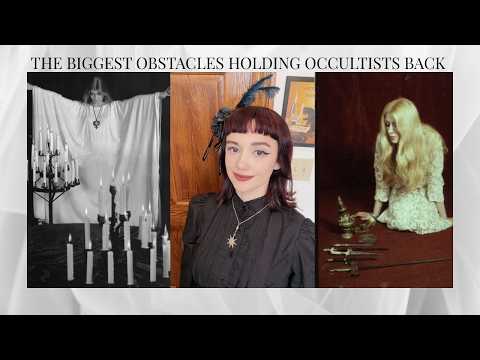
Welcome, fellow traveler on the esoteric path. I'm Georgina Rose, and today we're diving deep into a topic that touches many practitioners, from beginners to seasoned veterans: the biggest obstacles that hinder our magical and mystical progress. It's easy to get stuck, to feel that invisible wall preventing advancement. This isn't just about theoretical limitations; it's about the practical struggles I've observed in countless conversations and guiding fellow practitioners.
We're going to dissect these challenges, not to dwell on the negative, but to illuminate them so we can overcome them. Think of this as a map of common pitfalls for the occultist's journey. While the term "limiting factors" came to mind during my notes, “struggles” or “common problems” might resonate more. Regardless of the label, these are the recurring themes that often appear in esoteric practice, and understanding them is the first step toward transcending them.
Table of Contents
RitualUnderstanding the Biggest Obstacles
The United Nations, in their classification of urban areas, distinguishes between "city proper," "metropolitan area," and "urban area." This distinction highlights how definitions themselves can create perceived differences, much like how we define our own limitations. What one practitioner considers a minor hurdle, another might see as an insurmountable barrier. This article aims to clarify what the biggest ones truly are according to my extensive experience and observations within the occult community.
When we speak of the 'biggest' challenges, we're not just referring to inconvenience. We're talking about systemic issues that can derail a practice entirely, leaving the practitioner frustrated and disillusioned. These are the barriers that prevent tangible magical results and the deeper spiritual growth that many seek. The goal here is to identify these issues with clarity, drawing from both personal experience and the collective wisdom found in esoteric traditions.
My own journey, much like yours, has been a tapestry of learning, experimentation, and, yes, encountering these very obstacles. The insights shared here are born from a decade of active engagement in polytheism, Thelema, and various esoteric disciplines, as reflected in my book, "Planetary Theurgy: Through the Seven Veils." Without clear intentions, specific goals, and a robust framework for self-assessment, even the most dedicated practitioner can find themselves spinning their wheels. This isn't about blame; it's about diagnosis.
The Root of Stagnation: A Closer Look
The concept of "biggest" is subjective, but certain themes consistently emerge when practitioners discuss their struggles. One significant factor is the sunken cost fallacy: continuing a magical path or practice simply because one has already invested so much time and energy into it, even if it's no longer serving their goals. This often manifests as clinging to outdated beliefs or methods out of a fear of admitting that a particular avenue isn't yielding results, or worse, is actively detrimental.
Another profound obstacle is anxiety and neurosis. The occult path, by its very nature, often leads us to confront our shadow selves and deep-seated psychological patterns. Without proper psychological grounding or self-awareness, these inner demons can overwhelm practitioners, leading to emotional overload and a paralysis of action. The spiritual journey requires a healthy psyche as its foundation; otherwise, we risk projecting our internal chaos outward, mistaking personal turmoil for magical insight.
We also see a rampant issue with bad information and a lack of valid magical background or resources. The internet, while a treasure trove of information, is also a breeding ground for misinformation. Many practitioners, especially beginners, struggle to discern reliable knowledge from sensationalized claims or outright fabrications. This is where foundational texts and a critical approach to learning become paramount. Without a solid grounding, it's easy to chase magical fads or fall prey to charlatans.
Linked closely to this is the lack of self-knowledge and introspection. The occult is often called the "Great Work," and a significant part of that work is the work on oneself. If you don't know your own motivations, your strengths, your weaknesses, your fears, and your desires at a deep level, how can you effectively direct magical energy? Introspection isn't just navel-gazing; it's essential self-mapping for effective magical operation.
Furthermore, many practitioners fail to establish defined purposes or specific goals. Magic without clear intent is like a ship without a rudder. While broad spiritual exploration is valuable, without concrete aims—whether they be personal transformation, healing, or external manifestation—magical efforts can become unfocused and ultimately fruitless. What do you truly want to achieve? Why? These questions must be answered with clarity.
Navigating the Path: Practical Solutions
The ultimate goal is not just to identify these challenges, but to transcend them. This requires a conscious turn towards inappropriate intention and a lack of higher aims. Sometimes, our intentions, even if seemingly benign, can be misaligned with our true spiritual trajectory or can carry unintended consequences. It's vital to question the "why" behind our magical workings. Are we seeking growth, understanding, and service, or are we driven by ego, control, or superficial desires?
A crucial aspect of navigating these challenges is the failure to change course when on the wrong path. Stubbornness can be a virtue, but rigid adherence to a failing strategy is not. This is where the concept of adaptation and flexibility in magical practice comes into play. If a certain ritual isn't working, if a particular system isn't resonating, or if a beloved path is leading nowhere, the courage to reassess and pivot is essential. This is not failure; it is intelligent adaptation.
From a Buddhist standpoint, much of this psychological landscape is understood through the lens of karma and purification. Difficult karma, when not purified, acts as a severe obstacle. The practice of mantra discipline, for example, is a powerful tool for inner purification, helping to clear the energetic debris that impedes progress. Similarly, drug and alcohol abuse are incompatible with many spiritual practices, as they cloud the mind and disrupt the subtle energy bodies necessary for advanced work. Even seemingly minor habits, like smoking tobacco, can be detrimental.
The Buddhist ethical framework also highlights the danger of association with bad people—those who engage in black magic or operate with malicious intent. Maintaining a circle of ethical, supportive practitioners is vital. Furthermore, breaking sacred commitments and ignoring basic ethical requirements, such as the Ten Precepts, creates a significant karmic burden. Many esoteric traditions, including Buddhist mysticism and Thelema, emphasize a high level of ethics as a prerequisite for genuine magical attainment. Taking vows of universal service, as in the Bodhisattva vow, underscores the profound connection between personal development and the well-being of others.
Tools for the Modern Magician
In our modern world, occultists often face unique challenges related to technology and information overload. For those working with symbols, creating sigils can be a time-consuming process, and a simple error in design can undermine the entire charge. This is where the right tools become invaluable. The Goetia Seals Generator takes the guesswork out of creating accurately proportioned seals, allowing you to focus on the intention and the gnosis.
The problem is clear: crafting intricate magical tools manually, whether sigils or spirit seals, takes immense time and precision. If your intention is precise, but your execution has a slight imprecision in proportion or symmetry, the magical transmission can be distorted. I've seen practitioners spend hours refining a single design, only to realize the flaw was microscopic but significant. This is where the technology steps in not as a crutch, but as an accelerator and precision enhancer for your magical work. The Goetia Seals Generator is designed to handle the technicalities, ensuring that the symbol accurately reflects your intent, freeing you to delve into the deeper aspects of magical practice.
Beyond the creation of symbols, the sheer volume of information available can be overwhelming. It's crucial to develop a discerning mind, to cross-reference sources, and to prioritize practical experience over theoretical dogma. Seek out traditions that emphasize ethical conduct and self-knowledge, such as those found in foundational Thelemic texts or the structured ethical frameworks of Buddhism.
FAQ
What are the biggest problems occultists face?
The biggest problems often include lack of clear goals, psychological issues like anxiety and neurosis, misinformation, lack of self-knowledge, succumbing to the sunk cost fallacy, and ethical compromises. These are often intertwined, creating a complex web of challenges that impede progress.
How can I overcome magical obstacles?
Overcoming these obstacles requires a multifaceted approach: cultivating self-awareness through introspection, seeking reliable knowledge, defining clear magical intentions, practicing ethical conduct, being willing to adapt your path, and utilizing appropriate tools and techniques. Addressing psychological blocks is as crucial as mastering ritual.
Is technology a hindrance or a help in occult practice?
Technology can be both. While it offers tools for creation and information access, it also presents challenges like misinformation and distraction. Tools like the Goetia Seals Generator can automate precise symbol creation, freeing practitioners for higher work. However, the practitioner's intent and understanding remain paramount.
What role does ethics play in occultism?
Ethics are foundational. Many esoteric traditions, including Buddhism and Thelema, emphasize high ethical standards as essential for spiritual growth and effective magic. Malicious intent, ethical compromises, or negative associations can create severe karmic obstacles and hinder magical progress.
How important is self-knowledge in magical practice?
Self-knowledge is paramount. Understanding your own motivations, fears, strengths, and weaknesses is crucial for setting clear intentions, performing introspection, and directing magical energy effectively. Without self-awareness, magical efforts can be unfocused or misdirected.
Veredict
The journey into occultism is profound, but it is not without its significant challenges. From internal psychological struggles and the pervasive issue of misinformation to the practical needs of precise magical tool creation, practitioners must remain diligent and self-aware. The biggest obstacles are often internal—our own biases, fears, and lack of clarity—but external factors like poor resources and negative influences also play a vital role. By cultivating self-knowledge, adhering to ethical principles, seeking valid information, and employing modern tools wisely, any occultist can overcome these hurdles and advance on their path.
Mage's Arsenal
- Essential: Goetia Seals Generator - Effortlessly create accurate and potent seals for your rituals.
- Recommended Reading: "Planetary Theurgy: Through the Seven Veils" by Georgina Rose (for those interested in planetary magic).
- Foundational Text: "Liber Null & Psychonaut" by Peter J. Carroll (for understanding chaos magic principles).
- Resource: Cambridge Dictionary for precise word meanings.
- Information Source: Wikipedia for broad topic overviews.
About the author: Frater Alek0s is a veteran practitioner and researcher in the field of chaos magick. His work focuses on the practical and experimental application of occult techniques for self-development and reality exploration, demystifying esotericism for the modern practitioner.
Your Operation: Practical Steps
- Self-Assessment: Dedicate 30 minutes to introspection. Journal about your current magical goals. Are they specific? Are they aligned with higher aims? Identify any anxieties or neuroses that might be hindering you. Acknowledge the sunk cost fallacy if it applies to your current practices.
- Information Audit: Review your primary sources of occult knowledge. Are they credible? Do they offer a balanced perspective? Prioritize books, established websites, and practitioners with a proven track record of ethical practice.
- Ethical Check-in: Reflect on your magical ethics. Are you upholding your commitments? Are your intentions pure and service-oriented where possible? Consider the Ten Precepts or similar ethical guidelines.
- Tool Integration: If you work with sigils or spirit seals, experiment with a tool like the Goetia Seals Generator. Focus on its use not just for speed, but for precision and to allow you more mental energy for charging.
- Course Correction: If a particular practice or belief system isn't yielding results or feels fundamentally misaligned, don't be afraid to change course. Research alternative approaches or consult with experienced, ethical practitioners.
Referencias
- Carroll, P. J. (1987). Liber Null & Psychonaut. Weiser Books.
- Spare, A. O. (1913). The Book of Pleasure. Self-published.
- Hine, P. (1992). Condensed Chaos: An Introduction to Chaos Magic. New Falcon Publications.
- Crowley, A. (1904). The Book of the Law. Self-published.
- Sherwin, R. (2018). The Chaos Magic Handbook. CreateSpace.
- Kraig, D. M. (1988). Modern Magick: Eleven Lessons in the High Magickal Arts. Llewellyn Publications.
- Morrison, G. (2003). Pop Magic! The Art of Shaping Reality. Disinformation.
- DuQuette, L. M. (2003). The Chicken Qabalah of Rabbi Lamed Ben Clifford. Weiser Books.
- Webb, D. (2015). Chaos Magick: A Practical Guide. Self-published.
- Tyson, D. (2006). The Power of the Written Word. Llewellyn Publications.
- Bonewits, I. (1971). Real Magic. Creative Age Press.
- Greer, J. M. (2003). The New Encyclopedia of the Occult. Llewellyn Publications.
No hay comentarios:
Publicar un comentario