
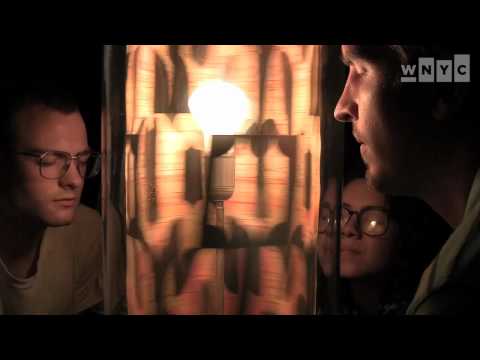
The Brion Gysin Dream Machine is an object that demands exploration. It’s not just a kinetic sculpture; it's a gateway. When you first encounter it, the question isn’t *what* it is, but *what it does to you*. As one observer noted, their experience was a "very restful State honestly it just made me sick" – a testament to its potent, often disorienting, effects. This exploration delves into the heart of that experience, dissecting what happens when you stare into the flicker.
The Genesis of Flicker Vision
Brion Gysin, a visionary artist, writer, and performer, conceived of the Dream Machine as a stroboscopic device intended to induce altered states of consciousness. Unlike conventional art pieces that demand passive observation, the Dream Machine requires active engagement, a willingness to surrender your visual field to its pulsating light. Gysin himself was deeply interested in the mind's capacity for hallucination and visionary experience, and the Dream Machine was his attempt to create an accessible, technological means to access these states without the need for narcotics. He envisioned it as a tool for self-discovery, a way to "see" without eyes, to explore the inner landscape.
The premise is deceptively simple: a cylinder with randomly placed black shapes, motorized to rotate at a specific speed (ideally between 45-78 RPM, though variations exist), illuminated from within by a bare light bulb. The flickering light, filtered through the cutouts, casts a pattern on closed eyelids, bypassing the usual visual cortex and directly stimulating the optic nerve. This is where the magic, or the "flicker vertigo," as some have called it, truly begins. It's not about seeing external patterns, but about the mind’s response to sensory deprivation and rhythmic stimulation, creating internal visions.
Experiencing the Flicker Vertigo
The anecdotal evidence surrounding the Dream Machine is as varied as the consciousness it aims to unlock. Some report vivid, geometric patterns, swirls of color, and a sense of entering a dreamlike state. One WNYC radio listener described seeing "kind of like blue and white Speckles like a four corner shape that would stretch out and then back in pattern moving." Others find the experience intensely restful, while for some, it’s disquieting, even nauseating. As one participant put it, "It just made me sick." This visceral reaction speaks to the raw power of the device to bypass conscious filtering.
The community comments offer a fascinating, if chaotic, glimpse into these subjective experiences. Some interpret the "high" as a direct result of the light stimulating the pineal gland, which produces DMT, the body's own endogenous psychedelic. Others dismiss Gysin as "just another stoner" who put a lampshade on his record player. Yet, beneath the colorful interpretations lies a shared acknowledgment that the machine *does something*. The key isn't the technology itself, but how the mind interacts with it. The speed of rotation, the intensity of the light bulb, the viewer's own mental state—all these factors contribute to the unique, often unpredictable, outcome.
The mention of "flicker vertigo" is particularly telling. It’s a phenomenon akin to what you might experience as a passenger in a car, passing through dappled sunlight from trees. The rapid alternation of light and shadow can induce a sense of disorientation, nausea, and even a strange paralysis of the eyelids. Applying this to the Dream Machine, the constant, rhythmic flickering is intended to push the viewer beyond this initial discomfort into a more profound state of vision. It’s a deliberate manipulation of sensory input to unlock internal experiences.
The Dream Machine as a Tool for Exploration
"Flicker Vertigo" is admittedly a negative framing of a potentially profound experience. Gysin, and those who champion the Dream Machine, see it not as a pathology, but as a tool for consciousness exploration. The goal isn't to get "high" in a recreational sense, but to access altered states of consciousness that can offer insights and visionary experiences. It can be used to induce trance states, fostering creativity and self-reflection.
For those seeking to delve deeper, the process of building and operating the machine itself can be a ritual. Finding the right record player to achieve the precise RPM is often cited as a challenge, as is wiring the bulb correctly. This hands-on approach transforms the device from a mere object into an active participant in magical work. One comment highlights the more extreme applications: a "hippie lady" in Ireland who used a handmade Dream Machine within a sweat lodge, combined with narcotics, to induce "intense, f00ked up scary experiences." While not recommended for the faint of heart, it underscores the machine's versatility.
Integrating the Dream Machine into Practice
How does one integrate the Dream Machine into their magical practice? The core lies in its ability to induce a focused, altered state.
1. Preparation: Find or build your Dream Machine. Ensure it spins at the correct speed (experimentation is key!). Set up a comfortable, quiet space where you won't be disturbed. Dim the lights, save for the machine's bulb. 2. Approach: Sit or lie down comfortably, a safe distance from the machine. Close your eyes. As the machine spins, allow its flickering light to penetrate your closed eyelids. 3. Focus (or Lack Thereof): Don't try to *force* visions. This is not about concentration but about surrender. Allow the patterns to emerge and recede on their own. Breathe deeply, focusing on your breath to anchor yourself if the experience becomes overwhelming. 4. Integration: After your session, do not immediately jump back into mundane reality. Spend a few minutes in quiet reflection. Note down any images, feelings, or insights you experienced, even if they seem nonsensical. The Dream Machine app can be invaluable for logging these experiences, helping you track patterns and progress over time.
The intentionality behind the Dream Machine is crucial. It’s not about escaping reality, but about exploring the vast, often untapped, landscape of your own consciousness. Whether you experience restful calm, vivid visions, or a touch of disquiet, the Dream Machine offers a unique portal.
FAQ: Unlocking the Flicker
How do you use the Dream Machine for dreaming?
While the name suggests a direct link to sleep, the Dream Machine is more commonly used for inducing visionary states *before* sleep, or as a standalone meditation tool. You can meditate with it for a few minutes to reach a relaxed, receptive state, and then transition into sleep. The lingering sensory input might influence your dreams.Is the Dream Machine satanic?
The Dream Machine is a tool, and like any tool, its perceived nature depends on the user's intent and belief system. Gysin, a member of the Beat Generation and associated with figures like William Burroughs, was exploring consciousness through art and technology. While some might interpret altered states of consciousness as 'satanic' through a narrow lens, its primary intention is self-exploration, not adherence to any specific religious practice.What is the correct speed for the Dream Machine?
Brion Gysin intended the machine to spin at speeds between 45 and 78 RPM. This range is crucial for achieving the strobing effect that bypasses conscious visual processing. Experimentation is key, as individual sensitivity can vary. Some have found speeds closer to 45 RPM to be more conducive to trance, while others prefer the faster, more intense flicker of 78 RPM.Where can I find one of these?
Original Dream Machines are rare and can be expensive collector's items. However, many enthusiasts build their own using instructions found online. You’ll typically need a record player motor, a lampshade or cylinder, black cardstock or similar material, and a light bulb. Kits and detailed plans are available from various online sources catering to art and experimental technology.Doesn't this just make you feel flicker vertigo?
While some individuals do experience "flicker vertigo," which can manifest as nausea or disorientation, this is often a temporary reaction. For many, it’s a sign that the device is working as intended, pushing the boundaries of normal perception. The goal is to move beyond this initial discomfort into a state of trance or visionary experience.About the author: Frater Alek0s is a veteran practitioner and researcher in the field of chaos magick. His work focuses on the practical and experimental application of occult techniques for self-development and reality exploration, demystifying esotericism for the modern practitioner.
Can the Dream Machine stimulate the pineal gland?
There's a theory that the specific light frequencies and patterns produced by the Dream Machine can stimulate the pineal gland, which is associated with the production of DMT (Dimethyltryptamine). DMT is a powerful psychedelic compound naturally produced in small amounts in the brain, particularly during dreaming and near-death experiences. While scientific consensus is lacking, many users report profound, dream-like visions consistent with DMT experiences.Referencias
- Jung, C. G. (1964). Man and His Symbols. Doubleday.
- Freud, S. (1900). The Interpretation of Dreams. Macmillan.
- LaBerge, S. (1985). Lucid Dreaming. Ballantine Books.
- Castaneda, C. (1968). The Teachings of Don Juan. University of California Press.
- Bulkeley, K. (2008). Dreaming in the World's Religions. New York University Press.
- Castañon, A. (2016). Dream Magic: Night Spells and Rituals for Love, Prosperity, and Personal Power. Weiser Books.
- Hartmann, E. (1998). Dreams and Nightmares: The New Theory on the Origin and Meaning of Dreams. Plenum Press.
- Hall, C. S. (1966). The Content Analysis of Dreams. Appleton-Century-Crofts.
- Mallon, B. (2009). Dreams, Dreaming, and the Origins of the Psyche. Inner Traditions.
- Barrett, D. (2001). The Committee of Sleep. Crown.
- Bohr, N. (2002). The Dream Frontier. Analytic Press.
- Boss, M. (1958). The Analysis of Dreams. Rider.
No hay comentarios:
Publicar un comentario