
Table of Contents
- MagitechThe Archetype of the False Savior: A Historical and Esoteric Dissection
- The Mechanics of Deception: How False Saviors Operate
- The Inner Divinity: Self-Saviourship in Esoteric Practice
- Practical Application: Reclaiming Your Inner Authority
- Arsenal of the Mage: Tools for Inner Sovereignty
- FAQ: Deconstructing External Salvation
- The Esoteric Archives Connection: Unearthing Inner Power
- The Nature of "False": Navigating Truth and Illusion
- Beyond External Salvation: The Practice of Inner Alchemy
- Interdisciplinary Connections: Psychology, Philosophy, and Esoteric Truth
- Conclusion: The Unveiling of the Inner Sovereign
The concept of a "savior" is deeply embedded in human consciousness, manifesting across cultures, religions, and philosophical systems. From ancient deities to modern messianic figures, the narrative of an external force offering salvation, enlightenment, or liberation is a potent archetype. However, within the arcane traditions, particularly those focused on personal gnosis and self-empowerment, this archetype is often viewed with a critical, scrutinizing eye. It’s not a matter of outright rejection, but a profound re-evaluation of where true power and salvation reside. This exploration delves into the nature of "false saviors"—those external figures or systems that promise liberation but often lead to dependence and disillusionment—and champions the radical truth that the ultimate savior is, and always has been, within.
The seeds of this understanding are often sown in the early stages of esoteric study. Many traditions, from Hermeticism to Chaos Magic, emphasize the principle of "As Above, So Below," a concept that suggests the macrocosm (the universe) is mirrored in the microcosm (the individual). This principle inherently points inward, implying that the divine, the ultimate truth, or the source of salvation, is not an external entity to be worshipped or appeased, but an inherent quality of one's own being, waiting to be recognized and activated. The journey, therefore, is not one of seeking an external rescuer, but of excavating the divine within.
The allure of a false savior lies in its simplicity. It offers a readily packaged belief system, a set of rules, a promised reward, and, crucially, an abdication of personal responsibility. It’s easier to believe that someone else—a prophet, a guru, a cosmic entity—will rectify your perceived shortcomings or usher in a golden age, than to undertake the arduous, often lonely, path of self-mastery. This psychological shortcut is precisely what makes the archetype of the false savior so enduring and insidious. It preys on our deepest desires for comfort, certainty, and release from the burdens of self-awareness and free will.
The vast tapestry of human history is rife with examples, both ancient and modern, of figures and movements that have claimed to offer salvation, often with devastating consequences. These "false saviors" can range from charismatic religious leaders who amass cult-like followings to political ideologies promising utopian futures through absolute adherence, to even subtler forms of external validation and reliance that drain personal agency. The common thread is always the redirection of power and authority away from the individual and towards an external source.
The critical examination of these external saviors is not an act of cynicism, but a necessary step in the development of true magical and spiritual autonomy. It is about discernment, about recognizing the patterns of manipulation, and about understanding the fundamental principle that true liberation is an inside job. The path of the magician, the sorcerer, the mystic, is one of self-deification, of recognizing and embodying the divine spark that already exists within. It is a path that demands rigor, introspection, and the courage to face oneself without the comforting illusion of an external rescuer.
This exploration will dissect the mechanisms by which false saviors operate, draw parallels to esoteric traditions, and ultimately redirect the seeker's gaze back to the boundless power and divinity that resides within each individual. The awakening is not coming; it is already here, within you, waiting to be recognized.
MagitechThe Archetype of the False Savior: A Historical and Esoteric Dissection
The notion of a savior figure is ancient, appearing in myriad forms across global mythologies. These figures—often divine messengers, enlightened beings, or charismatic leaders—promise deliverance from suffering, ignorance, or oppression. While the archetype can inspire hope and mobilize collective action, it also carries a shadow: the potential for manipulation and the abdication of personal agency. Examining this archetype requires a deep dive into historical narratives and esoteric philosophies that challenge the very premise of external salvation.
Historically, the concept of a messiah or divine intervener is prevalent in many religious traditions. Zoroastrianism anticipated a Saoshyant, Judaism awaits the Messiah, Christianity centers on Jesus Christ as the savior, and Islam views Muhammad foremost as a prophet, with Jesus also holding a significant salvific role. These narratives, while offering profound spiritual comfort and moral guidance to billions, can, when misinterpreted or weaponized, foster a dependency on divine intervention rather than personal transformation. The promise of an afterlife where earthly suffering is rectified can diminish the perceived importance of actively shaping one's present reality through self-directed action.
From an esoteric perspective, particularly within the Hermetic tradition, the concept of "As Above, So Below" is central. This principle suggests that the universe is a reflection of the individual, and vice versa. Hermes Trismegistus, attributed author of the Emerald Tablet, stated, "That Which Is Below Is Like That Which Is Above." This dictum implies that the divine, the ultimate truth, or the source of salvation, is not an external entity but an intrinsic part of one's own being. To seek salvation externally is to look away from the divine within. The Great Work, in many esoteric traditions, is the process of recognizing and integrating this inner divinity.
Peter J. Carroll, a foundational figure in Chaos Magic, articulated a philosophy that radically decentralizes external authority. In works like *Liber Null & Psychonaut*, Carroll emphasizes the practical application of belief as a tool, the importance of personal experimentation, and the notion that reality is malleable to the conscious will of the practitioner. This perspective inherently dismisses the need for external "saviors." The magician is their own god, their own savior, their own source of power. Concepts like "belief as a tool" and the subjective nature of reality empower the individual by placing the locus of control firmly within.
Austin Osman Spare, another pivotal figure in modern occultism, focused on the power of the subconscious and the creation of sigils as a means of bypassing the conscious mind to manifest desires. His work, particularly *The Book of Pleasure*, advocates for self-realization and the reclaiming of primal energies. This is not a path of seeking external salvation but of unleashing and directing the latent powers already present within the self. The individual is the ultimate arbiter of their reality and their destiny.
The allure of the false savior often lies in its simplicity and the promise of an easy solution. It offers comfort by externalizing responsibility. If an external force is in charge of salvation, then the individual is absolved of the difficult, often painful, work of self-transformation. This psychological comfort can be deeply seductive, leading individuals to surrender their critical thinking and personal agency in exchange for a promised reward or a comfortable dogma.
The historical record is replete with examples of figures who claimed a unique connection to the divine, promising salvation, only to lead their followers into spiritual, financial, or social ruin. These movements, often characterized by charismatic leadership, rigid doctrines, and the suppression of dissent, offer a stark warning. The "Great Awakening" or the "end times" scenarios often propagated by such figures are temporal promises that distract from the immediate, ongoing work of spiritual awakening that can happen NOW, within the individual.
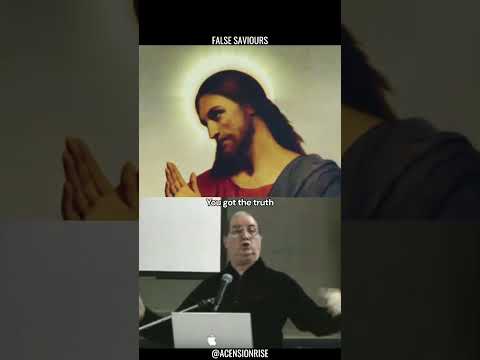
The comments associated with the original material hint at this very dynamic. Phrases like "nobody come to save because is nobody up there..." and the questioning of established religious narratives ("He never discredit jesus, the false christ he kept calling out," "If his name is fake, What else about him is fake?") suggest a community grappling with discerning truth from deception, questioning figures and institutions that promise salvation but may be built on fundamentally false premises. The mention of "The Illuminati" controlling mainstream religions points to an awareness of hidden structures and agendas that seek to control belief systems and, by extension, the masses. This awareness, while sometimes veering into conspiracy, taps into a genuine esoteric concern: the manipulation of sacred knowledge and spiritual pathways for external control rather than internal liberation.
The concept of "false idols" extends beyond religious figures. Any system—political, social, or even scientific—that demands unquestioning faith and discourages personal inquiry can function as a false savior. It offers a structured ideology that promises order and meaning, but at the cost of individual freedom and critical thought. The true spiritual path, particularly in magical traditions, is one of continuous questioning, experimentation, and self-discovery. It is a path that requires the individual to become their own authority, their own source of truth, and, ultimately, their own savior. The journey inward is the only true path to liberation, and any external figure or system that diverts from this path, no matter how appealing, can be considered a "false savior."
The Mechanics of Deception: How False Saviors Operate
Understanding the allure and mechanism of false saviors is crucial for any practitioner seeking genuine liberation and self-empowerment. These external figures or systems rarely operate through outright force, but rather through subtle psychological and spiritual manipulation. Their effectiveness stems from tapping into fundamental human desires and vulnerabilities: the yearning for certainty, the fear of the unknown, the desire for comfort, and the deep-seated hope for external validation or rescue.
One of the primary tools of a false savior is the promise of exclusive truth or salvation. They present themselves as having a unique pipeline to ultimate knowledge, divine favor, or a guaranteed path to liberation. This exclusivity creates an "us vs. them" mentality, isolating followers from external perspectives and fostering a deep reliance on the group and its leader for truth. The follower is taught that only within this specific belief system can true salvation be found, thereby discouraging critical thinking and independent inquiry. This is a classic tactic of cults and dogmatic systems, creating a closed loop where the leader is the sole interpreter of reality.
Another potent mechanism is the abdication of personal responsibility. By offering a clear set of rules, rituals, or sacrifices that, if followed, will purportedly lead to salvation, the false savior allows followers to bypass the often challenging and ambiguous work of self-reflection and personal growth. Instead of confronting one's own shadow, insecurities, or limitations, the follower can project these onto an external entity or blame external forces should the promised salvation fail to materialize. This is a comfortable illusion; it absolves the individual of the arduous yet ultimately rewarding task of becoming their own master. The comments from the original material hint at this, questioning why external deities or figures are absent during times of crisis, and implying that perhaps the responsibility for change lies not "up there," but within.
Charisma and emotional manipulation are indispensable. False saviors are often highly charismatic, capable of evoking strong emotional responses in their followers. They may employ tactics such as love bombing (overwhelming new recruits with affection and attention), guilt-tripping (using shame to enforce compliance), or instilling fear (of divine punishment, damnation, or excommunication). This emotional leverage overrides rational thought processes, making followers more susceptible to the leader's agenda. The original material's comments, "Brainwashed with mainstream religion.. Who controls all mainstream religions? The Illuminati," suggest an awareness of these manipulative structures, even if framed as conspiracy. The core idea—that established systems can distort truth for control—is valid.
Furthermore, false saviors often present a heavily distorted or incomplete version of reality. They may selectively interpret sacred texts, historical events, or scientific data to fit their narrative, while dismissing or demonizing any information that contradicts their claims. This can involve the creation of "fake news" or "false narratives," as alluded to in the source material's commentary. The aim is to create an echo chamber where the leader's version of truth is the only one presented and reinforced. As one comment points out, "He knows so much about the ancient mystery schools because he is one of them, he speaks truth mixed with deception." This highlights the danger of leaders who blend genuine insights with carefully crafted falsehoods to maintain control.
The promise of external rewards, whether in this life or an afterlife, is a powerful motivator. This can manifest as promises of wealth, power, divine favor, eternal bliss, or even simple social acceptance within the group. These rewards serve as incentives for continued devotion and obedience, reinforcing the follower's commitment to the false savior's system. Conversely, the threat of punishment or eternal damnation serves as a powerful deterrent against questioning or leaving.
Finally, the subtle erosion of critical thinking is a hallmark. Over time, followers are conditioned to accept the leader's pronouncements without question. Independent research is discouraged, and questioning the dogma is often framed as a lack of faith or a sign of spiritual weakness. This creates a dependency where the individual loses the ability to discern truth for themselves, becoming utterly reliant on the external authority for guidance. The comment "most people just hate doing research" speaks to this passive acceptance that false saviors exploit.
The original material’s reference to "fake saviours" and questioning the authenticity of figures like Jesus ("If his name is fake, What else about him is fake?") directly addresses this critical discernment. It’s not about discrediting religious figures per se, but about understanding their historical context, the evolution of their narratives, and the potential for those narratives to be co-opted and distorted. The idea that "the true teachings of God and all good spiritual teachings have been rewritten for mainstream public" by controlling entities is a perennial theme in esoteric thought, suggesting that established religions can indeed become conduits for external control rather than pathways to inner liberation.
To counter these mechanisms, the practitioner must cultivate a strong inner locus of control. This involves rigorous self-inquiry, a commitment to personal experimentation, and the development of independent discernment. It means recognizing that while external teachings and traditions can offer valuable insights and tools, they should always serve as guides, not as ultimate authorities. The true path to salvation or liberation is a journey of self-discovery, where the seeker becomes their own master, their own authority, and their own savior.
The Inner Divinity: Self-Saviourship in Esoteric Practice
The core tenet that distinguishes genuine esoteric paths from the seductive allure of external dogma is the concept of inner divinity. This is the radical idea that the ultimate source of power, truth, and liberation—the divine spark, the Godhead, the perfected self—is not something to be sought outside, but rather something to be recognized, cultivated, and embodied from within. This concept is the antidote to the false savior archetype, empowering the individual to become their own rescuer, their own enlightened master, and their own ultimate authority.
At the heart of many esoteric traditions lies the principle of "Know Thyself." This ancient maxim, often attributed to the Oracle of Delphi and central to Hermetic philosophy, is not merely an intellectual exercise but a practical directive for self-exploration. It implies that the universe—its mysteries, its powers, its divinity—is contained within the individual. To truly know oneself is to uncover the divine potential that lies dormant. This is the foundation of self-saviourship: the understanding that the answers, the power, and the salvation sought are not external gifts but internal realizations.
In Chaos Magic, this principle is embodied through practices like belief as a tool and the cultivation of gnosis. Peter J. Carroll's philosophy encourages practitioners to adopt any belief system that yields results, demonstrating that the universe bends to the magic-user's will, not to the dictates of an external deity. This empowerment is radical: *you* are the source of your magic, *you* are the creator of your reality. Gnosis, states of altered consciousness that bypass the censor of the conscious mind, is the gateway through which this inner power is accessed and directed. It is not a divine force bestowed from above, but a state of being accessible through personal discipline and exploration.
Austin Osman Spare's work on the subconscious and sigil magic also points towards inner divinity. By creating symbols that represent desires and charging them through intense states of awareness, Spare demonstrated how the individual could directly influence their reality without recourse to external intermediaries. The power lies in the practitioner's intent, their ability to harness their own psychic energy, and their willingness to forget the sigil, allowing the subconscious to work its will. This is a profound act of self-empowerment, where the individual's inner landscape is the fertile ground for manifestation.
Within Hermeticism, the concept of "The Light of the World" refers to the divine spark within every individual. The spiritual path is one of illuminating this light, of reclaiming one's divine heritage. Texts like the Kybalion, while presenting complex symbolic systems, ultimately guide the seeker toward understanding universal laws and their own connection to the All. The goal of the Hermetic adept is often described as becoming "one with the All," not by merging with an external God, but by realizing their inherent unity with the divine principle that permeates all existence.
The contemplation of "false saviors" from the original material's context—questioning religious figures and institutional narratives—serves as a potent reminder that the external promises of salvation are often distractions from this inner work. The very act of questioning these external authorities is an exercise in self-saviourship. It is the assertion of one's right to discern truth, to question dogma, and to seek answers from within. The comments implying that "nobody come to save because is nobody up there" and "the fastest growing religion is winning" are not necessarily nihilistic statements but can be interpreted as calls for individual responsibility, urging people to look inward when external systems fail or prove to be deceptive.
The Goetian Seals Generator app, for instance, can be reframed not just as a tool for invoking spirits, but as a means to understand symbolic power and its connection to the human psyche. While the traditional use of Goetic seals involves invoking specific entities, a practitioner can also use them as focal points for inner exploration, meditating on the symbolism, exploring the archetypal energies they represent, and understanding how these archetypes resonate within their own psyche. This transforms an external invocation practice into an internal journey of mapping one's own inner pantheon and shadow aspects. The app facilitates this by providing precise, error-free representations of these complex symbols, freeing the practitioner to focus on the internal work of understanding and integration.
Self-saviourship, therefore, is not about arrogantly dismissing all external guidance. It is about critically evaluating it, using it as a mirror to understand oneself better, and ultimately integrating only that which resonates with one's own inner truth. It is about recognizing that:
* You are the authority: Your lived experience, your gnosis, and your personal experimentation are the ultimate arbiters of truth. * You hold the keys: The powers, insights, and liberation you seek are accessible through your own inner work. * You are already divine: The spark of the All, the divine essence, resides within you, waiting to be acknowledged and expressed.
This internal orientation is the most potent defense against the seductive promises of false saviors. It fosters resilience, autonomy, and a profound sense of empowered agency. The greatest magic, the truest salvation, is not found in a distant heaven or a charismatic leader, but in the courageous exploration and embrace of one's own intrinsic divinity.
Practical Application: Reclaiming Your Inner Authority
The concept of inner divinity and self-saviourship is not merely philosophical; it is a practical framework for navigating life and one's magical path. It requires a conscious shift in perspective, moving away from seeking external validation or rescue towards recognizing and harnessing the power that already resides within. This section outlines actionable steps to cultivate this inner authority, transforming the passive recipient of fate into the active architect of one's reality.
The first step is radical self-inquiry. This goes beyond casual introspection. It involves a deep, honest, and fearless examination of one's beliefs, motivations, fears, and desires. Ask yourself:
* Which of my deeply held beliefs are adopted from external sources (religion, society, family) versus those arrived at through personal experience and reasoning? * Am I relying on external figures or systems for validation or to make decisions for me? * What fears are preventing me from taking personal responsibility for my life and my spiritual path? * What external "saviors" (people, ideologies, substances, products) do I unconsciously turn to for comfort or direction?
By identifying these dependencies, you gain the awareness needed to dismantle them. This process can be challenging, as it often involves confronting uncomfortable truths or past traumas. However, the insights gained are invaluable for breaking free from external manipulation.
Secondly, cultivate critical discernment. When presented with new ideas, teachings, or charismatic figures, develop a habit of critical evaluation. Ask:
* Does this resonate with my inner sense of truth or does it feel "off"? * Does it empower me to take action and responsibility, or does it encourage passivity and dependence? * Does it demand unquestioning faith, or does it encourage personal experimentation and verification? * Is it consistent with the principles of "As Above, So Below," suggesting an inward path rather than an outward one?
This also means critically examining established religious or spiritual narratives. The original material's discussions about "false christs" and "rewritten teachings" highlight the importance of understanding historical context and potential distortions. It is not about rejecting all spiritual traditions but about understanding them from a place of empowered discernment, rather than blind acceptance.
Thirdly, actively practice personal experimentation and self-directed action. This is the cornerstone of Chaos Magic and many other esoteric paths. Instead of waiting for divine intervention or external guidance, initiate your own actions based on your will and intention.
* Sigil work: Instead of solely relying on external figures for blessings or interventions, create your own sigils for specific intentions. Use tools like the Goetian Seals Generator not just to replicate ancient symbols, but to understand the *principles* of symbolic power and self-directed manifestation. The app provides precise representations of powerful archetypal symbols, allowing you to focus on the *intent* and *gnosis* that drive manifestation, rather than the manual accuracy of drawing. * Problem: Traditional sigil creation can be time-consuming, and errors in drawing complex symbols can lead to doubt or distraction. * Agitation: The frustration of painstakingly crafting a symbol, only to second-guess its accuracy or efficacy, can break the flow of gnosis and weaken the magical charge. This uncertainty can lead practitioners to seek external validation or "correct" methods, perpetuating dependency. * Solution: The Goetian Seals Generator streamlines this process. It offers precise, error-free representations of powerful sigils, allowing you to select, customize, and dedicate them efficiently. This empowers you to focus your energy on the crucial steps of intention-setting and gnosis, ensuring your sigils are charged with *your* will, not a pre-packaged spiritual doctrine. * Ritual creation: Design your own rituals tailored to your specific needs and understanding, rather than blindly following prescribed rites. Experiment with different forms of gnosis—inhibitory (like trance states, meditation) or excitatory (like chanting, ecstatic dance). * Goal setting and execution: Apply the principle of self-saviourship to everyday life. Instead of wishing for things to change, create actionable plans and take deliberate steps towards your goals, drawing upon your inner resources.
Fourthly, embrace self-empowerment through knowledge and deconstruction of dogma. When engaging with religious or spiritual texts, approach them with a critical lens. Understand their historical context, identify potential distortions or manipulations (as suggested by the original material's comments on rewritten teachings), and extract principles that resonate with your inner truth. This is not about desecration, but about reclaiming agency over your spiritual understanding. The idea of figures being "fake" or narratives "rewritten" is a call to engage with these traditions not as passive recipients but as active interpreters.
Finally, cultivate inner silence and intuition. In the constant noise of external information and societal pressures, make time for stillness. Meditation, deep contemplation, or simply moments of quiet observation can help you tune into your own inner voice, your intuition. This inner guidance is the most reliable compass, far more trustworthy than any external pronouncement. The original material's comments questioning external deities during crises ("Where is God now...") can be seen as a manifestation of this need for inner guidance when external authorities prove absent or silent.
By consistently applying these practices, you gradually dismantle the architecture of external dependence and build a robust inner foundation of authority and self-reliance. This is the essence of becoming your own savior: recognizing that the power to transform, to liberate, and to find meaning resides not in a distant figure or an ancient text, but within the sovereign space of your own being.
Arsenal of the Mage: Tools for Inner Sovereignty
To further empower your journey of self-saviourship and to critically engage with archetypes of external salvation, the following tools are essential. They facilitate the precise execution of magical operations and the discerning exploration of symbolic systems from a place of personal authority.
* Essential: Goetian Seals Generator This application provides a meticulously accurate digital representation of the Goetic seals. When used in the context of self-saviourship, it’s not merely about invoking entities, but about understanding and harnessing the potent archetypal energies they represent, integrating them into your personal magical framework rather than submitting to them externally. It allows for precise customization and utilization of these powerful symbols, empowering your personal rites of passage and self-discovery.
* Recommended Reading: * Peter J. Carroll's *Liber Null & Psychonaut*: For a foundational understanding of Chaos Magic principles, including belief as a tool and subjective reality. * Austin Osman Spare's *The Book of Pleasure (Self-Love)*: For insights into self-realization, subconscious power, and reclaiming personal energies. * The Kybalion: For Hermetic principles and the concept of the All, emphasizing the divine within. * Jordan Maxwell's works (as referenced in the original material): For critical analysis of religious and societal control structures, prompting deeper inquiry into inherited beliefs.
* Tools for Critical Analysis: * Journal: A dedicated notebook for tracking beliefs, fears, external dependencies, and insights gained from self-inquiry. Record your discoveries about where you might be unconsciously seeking external saviors. * Mind Mapping Software/Tools: To visually deconstruct complex belief systems, identify logical fallacies, and map out relationships between external doctrines and your personal understanding. * Access to Diverse Information Sources: Beyond your preferred esoteric texts, engage with historical accounts, diverse philosophical viewpoints, and even scientific perspectives to foster a well-rounded and critical understanding of reality.
* Practices: * Daily Gnosis Practice: Dedicate time each day to entering a state of gnosis, using techniques that resonate with you, whether inhibitory (meditation, trance) or excitatory (chanting, rhythmic movement). * Self-Ritual Creation: Regularly design and perform your own rituals for intention setting, banishing, or self-dedication, consciously omitting any external divine figures and focusing solely on your own Will. * Mindfulness & Self-Observation: Cultivate a constant awareness of your own thoughts, emotions, and reactions, particularly in situations where you might tend to seek external validation or blame external forces.
By integrating these tools and practices, you actively reinforce your inner authority, becoming less susceptible to the illusions of false saviors and more empowered to forge your own path towards genuine liberation.
FAQ: Deconstructing External Salvation
Here, we address common queries that arise when questioning the paradigm of external saviors and embracing the path of inner divinity.
What if I feel I *need* an external authority or divine figure to guide me?
This feeling is a deeply ingrained psychological and cultural phenomenon, often amplified by societal structures and religious upbringing. It's not a sign of personal failing, but rather an indication of where you might be holding onto external dependencies. The first step is awareness – acknowledging this feeling without judgment. Then, begin to gently question its origins: "Why do I feel this need? What am I afraid of if I rely solely on myself? What would it mean to trust my own inner guidance?" You can also begin to practice small acts of self-reliance, gradually building confidence in your own capacity to make decisions and find your own answers. Think of it as strengthening a muscle that may have been underutilized.How can I discern between helpful external guidance and manipulative dogma?
Discerning genuine wisdom from manipulative dogma involves critical evaluation. Ask yourself: Does the guidance empower you to think for yourself, or does it demand unquestioning obedience? Does it encourage personal experimentation and investigation, or does it dismiss all other perspectives? Does it foster a sense of personal agency and responsibility, or does it encourage dependency and abdication? True spiritual or magical traditions offer tools and insights to aid your *own* journey; manipulative dogma seeks to control your path and your beliefs for the benefit of the authority figure or system. The principle of "As Above, So Below" suggests internalizing wisdom rather than passively receiving it.Can religious figures like Jesus, Buddha, or Muhammad be considered "false saviors"?
This is a complex question that touches on historical context, interpretation, and individual belief. From an esoteric perspective that champions self-deification and inner authority, the *figure* of the savior—as an external entity who performs salvation *for* you—can become a focal point for misplaced reliance. The danger lies not necessarily in the historical or spiritual significance of these figures, but in how their narratives have been co-opted by institutions to foster dependency and external authority. The original material alluded to "false christs" and rewritten teachings, highlighting the potential for distortion. The goal is not to disparage these figures, but to understand their teachings as guides towards *inner* awareness, rather than as deities to whom salvation is outsourced. The quest for inner divinity means seeing the divine spark within these figures reflected within oneself.If I stop believing in an external savior, won't I lose my moral compass or purpose?
This is a common fear, but it stems from a misconception that morality and purpose are externally imposed. In reality, a robust personal ethical framework and a profound sense of purpose can and should be cultivated from within. When you stop relying on externally dictated rules, you are free to develop a personal code of ethics based on your own understanding of compassion, integrity, and wisdom. Your purpose becomes not about fulfilling an external mandate, but about actively creating meaning in your life through your choices, actions, and self-expression. The journey of self-discovery inherently provides a rich and deeply personal sense of purpose.How does the Goetian Seals Generator fit into self-saviourship if it's about invoking entities?
The Goetian Seals Generator can be a powerful tool for self-saviourship when reframed. Instead of viewing the seals as external commands for spirits, see them as archetypal keys. Each seal represents a complex psychological or spiritual force, an aspect of the universe or oneself. By using the app to precisely generate and customize these seals, you are engaging with these archetypes directly, integrating their energies into your own psyche. The focus shifts from "commanding X" to "understanding and embodying the principle of X within myself." It becomes an act of inner exploration and integration, rather than external manipulation. You are the magician, the conductor, and the entity being influenced, all at once.What are the dangers of blindly following "truth" presented by institutions or gurus?
The primary danger is the surrender of your own critical thinking and personal agency. When you outsource your discernment, you become susceptible to manipulation, dogma, and the potential for spiritual, emotional, or even physical harm. Institutions and gurus, even those with good intentions, can perpetuate outdated beliefs, enforce rigid doctrines, and inadvertently (or sometimes intentionally) create dependency. Blind faith inhibits personal growth and prevents the discovery of one's own inherent divinity and power, which is the ultimate path to true liberation. History is full of cautionary tales of movements that promised salvation but led to destruction due to unquestioning adherence.The Esoteric Archives Connection: Unearthing Inner Power
Within the vast landscape of esoteric knowledge, the concept of self-saviourship, the rejection of external dogma, and the quest for inner divinity are recurring themes, albeit often veiled in symbolic language. The Esoteric Archives and similar repositories of occult texts serve as invaluable resources for those seeking to understand these profound principles, moving beyond superficial interpretations to grasp the underlying currents of personal empowerment.
When engaging with texts that speak of divine beings, angelic hierarchies, or even demonic forces, a practitioner focused on self-saviourship adopts a unique lens. Instead of viewing these entities as external powers to be appeased or commanded, they are understood as archetypal forces that exist both without and within the individual psyche. The power attributed to these entities—their domains of influence, their supposed abilities—can be seen as symbolic representations of latent human potentials.
For instance, exploring the lore surrounding various angelic or divine figures, one might ask: What human qualities or aspirations does this archetype embody? If an entity is said to grant wisdom, what aspects of the human mind are associated with wisdom, and how can I cultivate those within myself? If a being represents power, what does "power" truly mean from an internal perspective—self-mastery, creative force, or the ability to shape one's reality?
Similarly, when examining texts that discuss beings often labeled as "demonic" or "fallen," the esoteric practitioner seeks not to ward them off as external threats, but to understand the shadow aspects of the human psyche they might represent. These figures can symbolize primal drives, suppressed desires, or destructive tendencies that, when acknowledged and integrated rather than projected or denied, can be transformed into potent sources of personal power. The Goetian Seals Generator can be instrumental here, offering precise symbols to meditate upon, not to summon a being *outside* yourself, but to consciously engage with the archetypal forces *within* that these symbols represent. The act of generating and dedicating a symbol with intent becomes a powerful ritual of self-integration, where the practitioner is both the magician and the object of transformation.
The idea that "true teachings have been rewritten for mainstream public" resonates deeply with esoteric traditions. Many occult philosophies suggest that the exoteric (public, literal) interpretations of religious and spiritual doctrines often obscure or corrupt the esoteric (inner, symbolic) truths. The original material's critical stance against "false saviors" is, in essence, a call to deconstruct these mainstream narratives and retrieve the hidden, inner meaning. The commenter who stated, "The true teachings of God and all good spiritual teachings have been rewritten for mainstream public by the Illuminati," while potentially conspiratorial, points to a genuine esoteric concern: the deliberate obfuscation of truth by controlling forces to maintain external authority. The practitioner's task is to excavate this obscured truth from within.
Engaging with the Esoteric Archives or similar resources is an act of self-saviourship. It is not about passively consuming information but actively researching, cross-referencing, and most importantly, applying the insights derived to one's own inner landscape. The goal is always to recognize that the powers, the wisdom, and the salvation being described are not external attributes to be granted, but inherent qualities of the Self to be realized. The divine is not "up there"; it is "in here." The savior you await is the awakened consciousness that already resides within you.
The Nature of "False": Navigating Truth and Illusion
The very concept of "false" is, in itself, a complex philosophical and esoteric subject. What does it mean for something to be false, especially when dealing with subjective realities, belief systems, and the fluid nature of truth in esoteric practice? Understanding the nuances of "false" is critical to discerning authentic paths from manipulative ones, and for recognizing how external systems can distort reality to maintain control.
In its most basic English definition, "false" means not real, or not true. It can refer to something artificial, man-made, or deliberately deceptive. The Cambridge Dictionary defines it as "not real, but made to look or seem real," or "not true, but made to seem true in order to deceive people." This dual meaning is crucial: something can be physically artificial (like false eyelashes or a false floor concealing wires) or intentionally misleading (like false evidence or a false name). Both aspects are relevant to the study of false saviors.
From an esoteric perspective, the "false" often arises when there is a disconnect between appearance and reality, or when external constructs are presented as ultimate truths. For instance, a religious doctrine that claims exclusive salvation through a specific external figure might be considered "false" from an esoteric viewpoint if it denies the inherent divinity and salvific potential within each individual. The doctrine *appears* to offer truth and salvation, but it is made to seem true in order to foster dependency and external authority, thus deceiving the seeker away from their inner power.
Consider the discussion around historical figures like Jesus or Muhammad. The question posed in the comments, "If his name is fake, What else about him is fake?" delves into the very foundations of belief. In esoteric circles, it's not uncommon to explore the historical and linguistic layers of religious narratives. The idea that names or titles might have symbolic or even altered meanings is not new. This questioning is not necessarily about discrediting the spiritual significance of these figures, but about deconstructing the narratives around them to discern their core esoteric message, often obscured by institutional dogma. The "false" might not be the core teaching, but the layers of interpretation and control built atop it.
The concept of a "false flag" operation, where an event is disguised as having been caused by one party when, in reality, it was caused by another, mirrors how manipulative systems can operate. A spiritual movement might claim to offer liberation through adherence to a specific dogma, but the underlying agenda might be control, power, or even spiritual disempowerment, masking its true nature. The practitioner must learn to look beneath the surface, to question appearances, and to trust their own intuition and gnosis as a guide to discerning the true nature of things.
The phrase "false sense of security," mentioned in the Cambridge definition, is particularly relevant. Many systems promising salvation or divine protection can lull followers into a false sense of security, making them complacent and less vigilant. They believe they are protected by an external force, thus neglecting the development of their own inner resilience, critical thinking, and personal magical defenses. When the promised protection inevitably fails or proves illusory, the followers are left vulnerable and disoriented, often blaming themselves rather than the flawed system they trusted.
The original material’s mention of "brainwashing with mainstream religion" and the idea of "rewritten teachings" by controlling entities like "The Illuminati" taps into this concern about systematically disseminated falsehoods. Esoterically, this is understood as the creation of a collective illusion, a shared "false reality" that distracts from individual gnosis and self-empowerment. The challenge for the practitioner is to pierce this veil of illusion, to deconstruct the "false" narratives presented by mainstream paradigms, and to reconstruct a reality based on personal truth and inner authority.
Ultimately, navigating the realm of "false" requires a commitment to rigorous self-inquiry, critical thinking, and personal experimentation. It means understanding that what *appears* true on the surface may be a construct designed to maintain a particular order or belief system. The true path lies in seeking the underlying reality, the esoteric essence, and in trusting one's own inner authority—the divine spark within—as the ultimate arbiter of what is real and what is merely a sophisticated illusion. The goal is to become so adept at recognizing the "false" that we can effortlessly see the "true," not as an external dogma, but as the living reality of our own awakened consciousness.
Beyond External Salvation: The Practice of Inner Alchemy
The journey away from the seductive promise of external saviors and towards the realization of inner divinity is not a passive one. It is an active, alchemical process of transformation—an inner transmutation that reclaims lost power and redefines the very nature of salvation. This is the path of inner alchemy, where the practitioner becomes their own catalyst, their own philosopher’s stone, and their own ultimate liberator.
Inner alchemy is about reframing every aspect of one's existence through the lens of self-empowerment. It means understanding that:
* Challenges are not punishments, but crucibles: Difficulties in life are not divine tests or external judgments, but opportunities for alchemical transformation. Just as base metals are subjected to heat and pressure to be refined, our trials forge our inner strength, resilience, and wisdom. When faced with adversity, instead of asking "Why is this happening *to* me?" the alchemist asks, "What can this situation teach me about myself? How can I use this to refine my inner power?" * Desires are not needs to be fulfilled by external forces, but directives for inner work: When you find yourself craving external validation, material possessions, or even relational salvation, pause. Instead of immediately seeking to acquire the external, explore the inner void or unmet need that this desire represents. What aspect of yourself do you feel is lacking, and how can you cultivate that quality internally? If you desire recognition, perhaps you need to cultivate self-acceptance and self-appreciation first. If you crave peace, explore where true peace resides within your own consciousness. * Knowledge is not information to be absorbed, but power to be integrated: Reading esoteric texts, studying spiritual traditions, or even researching the claims of false saviors is only the beginning. True knowledge is integrated through practice and subjective experience—through gnosis and personal experimentation. The symbols from the Goetian Seals Generator, when meditated upon, are not just abstract designs; they are keys to unlocking latent psychological or archetypal energies within. The process of generating, dedicating, and internalizing the meaning of a seal transforms external information into embodied power. * Salvation is not an end-state, but an ongoing process of realization: The idea of being "saved" by an external force implies a destination—a point where the work is done and you are delivered. Inner alchemy, however, understands salvation as a continuous path of self-discovery, integration, and embodiment. It is the ongoing realization of one's own divinity, the shedding of illusions, and the mastery of one's inner and outer worlds. Each challenge overcome, each layer of deception peeled back, is a step in this continuous alchemical process.
The original material's critique of "false saviors" and questioning of established religious narratives directly supports this alchemical approach. By deconstructing external doctrines and questioning the authenticity of figures who promise salvation, the practitioner is engaging in an act of inner purification. They are burning away the dross of externally imposed beliefs to reveal the pure gold of their own inherent divinity. The comments about "rewritten teachings" and "brainwashing" highlight the need for this internal alchemical process to cleanse the mind of distorted information.
The journey of inner alchemy demands courage. It means willingly stepping away from the comforting illusions of external salvation, even when the path ahead seems uncertain. It requires the discipline to consistently turn inward, to face oneself without flinching, and to trust the inherent power and wisdom that resides within. This is the ultimate act of self-saviourship: the bold declaration that you are not a supplicant waiting for rescue, but a divine alchemist capable of transforming your own being and, by extension, your reality. The true savior is the awakened self, the alchemist within, who has learned to master the elements of their own consciousness.
The path of inner alchemy is the path of radical self-reliance, of personal sovereignty, and of the continuous discovery and embodiment of one's own divine nature. It is the ultimate rebellion against external control and the ultimate embrace of one's own infinite potential.
Interdisciplinary Connections: Psychology, Philosophy, and Esoteric Truth
The exploration of false saviors, inner divinity, and the critique of external authority is not confined to esoteric traditions alone. These themes resonate deeply across disciplines such as psychology, philosophy, and even fields like sociology and political science, underscoring the universal human struggle with agency, belief, and the search for meaning.
From a psychological perspective, the appeal of external saviors can be understood through concepts like dependency, projection, and the desire for perceived control. Humans often project their own unmet needs or idealized qualities onto external figures or systems, seeking validation and relief from the burdens of self-determination. Cult behavior, for instance, often exploits these psychological tendencies, creating environments where followers abdicate personal responsibility and attribute undue authority to leaders. The process of "Know Thyself" is central to therapies focused on self-actualization, emphasizing that true psychological well-being and autonomy arise from understanding and integrating one's own internal landscape—shadow aspects, core beliefs, and inherent strengths. The fear of losing a moral compass or purpose when external authorities are questioned is also a psychological concern, rooted in the need for structure and meaning—a need that can be fulfilled through internal ethical frameworks and self-defined purpose.
Philosophically, the debate mirrors ancient discussions on epistemology (how we know what we know) and ontology (the nature of being). The esoteric principle of "As Above, So Below" can be seen as a philosophical assertion of interconnectedness, suggesting that the macrocosmic divine is mirrored in the microcosmic individual. This contrasts sharply with dualistic philosophies that posit a fundamental separation between the divine and the human, often leading to a hierarchical structure where external divine figures hold ultimate authority. Existentialist philosophy, with its emphasis on radical freedom and responsibility, aligns strongly with the concept of self-saviourship. Thinkers like Jean-Paul Sartre argued that "existence precedes essence," meaning individuals are born without inherent purpose or nature and must define themselves through their choices and actions—an idea that directly challenges the notion of a predetermined salvation or externally defined identity. The very definition of "false" also engages philosophical inquiry, particularly in logic and epistemology, questioning how we verify truth and identify deception.
In sociology and political science, the archetype of the false savior is a recurring motif in the study of power dynamics, ideology, and social control. Charismatic leaders, cults of personality, and dogmatic political movements often employ strategies eerily similar to those of spiritual false saviors: promising utopian futures, demanding unquestioning loyalty, demonizing dissent, and controlling information flow. The "rewritten teachings" and "brainwashing" mentioned in the original material's comments are real-world phenomena studied under concepts like propaganda, ideological indoctrination, and the manipulation of collective consciousness. Sociologists analyze how these external narratives shape group identity and behavior, often at the expense of individual critical thinking.
The esoteric tradition, in its own unique language of archetypes, symbols, and gnosis, often arrives at similar conclusions about the human condition and the nature of power. Where psychology might speak of projection, esotericism speaks of archetypes and shadow work. Where philosophy discusses subjective reality, magic speaks of belief as a tool and the malleability of consensus reality. And where sociology analyzes social control, esoteric traditions often describe the "Great Deception" or the "Veil of Illusion."
The key takeaway from these interdisciplinary connections is that the struggle to discern truth from falsehood, to resist external manipulation, and to realize one's own inherent power and authority is a fundamental aspect of the human experience, manifesting across diverse fields of inquiry. The esoteric path, with its emphasis on personal gnosis and inner exploration, offers a direct, experiential methodology for navigating these challenges and embodying the truth of one's own divine nature. It provides practical techniques—like those facilitated by the Goetian Seals Generator—to actively engage with and integrate these universal truths, transforming philosophical understanding into lived reality.
About the author: Frater Alek0s is a veteran practitioner and researcher in the field of chaos magick. His work focuses on the practical and experimental application of occult techniques for self-development and reality exploration, demystifying esotericism for the modern practitioner.
Conclusion: The Unveiling of the Inner Sovereign
The persistent archetype of the "savior" has long promised liberation from suffering, ignorance, and the perceived limitations of human existence. Yet, a critical examination, particularly through the lens of esoteric traditions and practical self-mastery, reveals a profound truth: the most potent and authentic salvation is not an external gift, but an internal realization. The concept of "false saviors"—whether religious, cultic, political, or subtly woven into societal norms—highlights the dangers of outsourcing our discernment, our agency, and our inherent divinity to external authorities.
The journey from seeking an external rescuer to becoming one's own sovereign self is an alchemical process. It involves the rigorous deconstruction of adopted beliefs, the critical interrogation of external doctrines, and the cultivation of inner authority through self-inquiry, personal experimentation, and the embracement of one's own gnosis. Tools like the Goetian Seals Generator, when reframed as facilitators of inner archetypal integration rather than mere invocation aids, become powerful allies in this process. They allow the practitioner to engage with potent symbolic energies from a place of personal mastery, transforming outward-focused practices into inward-directed alchemical work.
The interconnectedness of themes—the psychological need for certainty, the philosophical debate on truth and being, the sociological analysis of power and control, and the esoteric focus on inner divinity—all converge on a single, empowering message: the source of true liberation lies within. The "Great Awakening" is not a future event to be bestowed by an outside force, but an ongoing, active process of unveiling the divine spark that already resides within each individual.
To embrace self-saviourship is to step into one's power as a conscious creator of reality, to trust one's own inner compass, and to recognize that the ultimate authority—and the ultimate salvation—is one's own awakened consciousness. The path demands courage, discernment, and a steadfast commitment to inner work. But the reward is immeasurable: the full realization of one's own divine potential and the dignified sovereignty of the Self.
Referencias
- Carroll, P. J. (1987). Liber Null & Psychonaut. Weiser Books.
- Spare, A. O. (1913). The Book of Pleasure. Self-published.
- Hine, P. (1992). Condensed Chaos: An Introduction to Chaos Magic. New Falcon Publications.
- Crowley, A. (1904). The Book of the Law. Self-published.
- Sherwin, R. (2018). The Chaos Magic Handbook. CreateSpace.
- Kraig, D. M. (1988). Modern Magick: Eleven Lessons in the High Magickal Arts. Llewellyn Publications.
- Morrison, G. (2003). Pop Magic! The Art of Shaping Reality. Disinformation.
- DuQuette, L. M. (2003). The Chicken Qabalah of Rabbi Lamed Ben Clifford. Weiser Books.
- Webb, D. (2015). Chaos Magick: A Practical Guide. Self-published.
- Tyson, D. (2006). The Power of the Written Word. Llewellyn Publications.
- Bonewits, I. (1971). Real Magic. Creative Age Press.
- Greer, J. M. (2003). The New Encyclopedia of the Occult. Llewellyn Publications.
No hay comentarios:
Publicar un comentario