
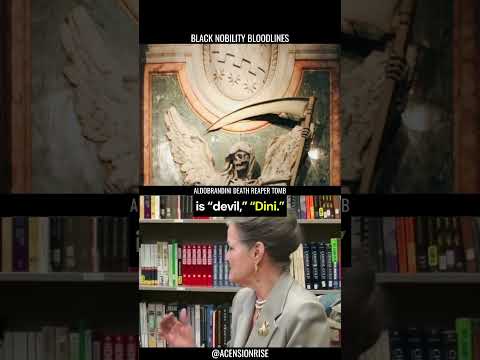
The term "black" in esoteric circles often refers to a hidden lineage, a deeply influential network that operates beneath the surface of global affairs. This isn't about literal skin pigmentation, but about a coded concept of hidden power, often associated with what some call the "Black Nobility." These are not your everyday aristocrats; they are figures whispered about in hushed tones, linked to ancient bloodlines and secret societies that have, according to many researchers, subtly shaped history for millennia. If you're looking to understand the deeper currents influencing our world, or if you're simply curious about the symbolic use of the word "black" in occult contexts, you've found the right place. This exploration delves into the origins, associations, and potential implications of these hidden power structures.
NumerologíaThe Concept of "Black Nobility"
The idea of a "Black Nobility" is not a recent invention. It often traces back to ancient civilizations and their hidden hierarchies. Think of the legendary origins of power, the families that claimed divine right or possessed esoteric knowledge passed down through generations. These groups, often cloaked in mystery, allegedly wielded influence not through overt political maneuvering, but through a subtler, more insidious control of information, resources, and societal norms. The "black" in this context signifies obscurity, hidden influence, and a lineage that predates modern nation-states, often associated with esoteric practices and a distinct worldview.
Table of Contents
- NumerologíaThe Concept of "Black Nobility"
- Ancient Roots and Bloodline Continuity
- The Role of Symbolism and Esoteric Knowledge
- Geographical Connections and Migratory Patterns
- The Khazarian Connection and Other Interpretations
- Color Symbolism and Affiliations
- The Myth of the Devil and Universal Laws
- The Rothschilds and Rockefeller Connections
- The "Children of Eclipse" and Saturn Worship
- Critiques and Disagreements
- The Power of Belief and Personal Reality
- Mage's Arsenal
- FAQ: Frequently Asked Questions
Ancient Roots and Bloodline Continuity
Many researchers suggest that the origins of what is termed "Black Nobility" can be found in ancient power centers like Alba Longa or early Rome, and that these bloodlines have, through various historical epochs and migrations, maintained a degree of continuity. The idea is that certain families, through strategic alliances, marriages, and the preservation of ancient knowledge (gematria, symbolism, etc.), have managed to retain a significant, albeit often unseen, influence over global events. This continuity is often the focus of intense study, with proponents looking for consistent patterns of behavior, shared symbology, and recurring names across historical periods.
The Role of Symbolism and Esoteric Knowledge
The "black nobility" is often associated with a sophisticated understanding and use of symbolism. Many theories propose that these groups communicate and operate through a shared language of symbols embedded in art, architecture, media, and even corporate logos. This symbolism, it is argued, serves not only as a form of communication among the initiated but also as a way to subtly imprint ideas and commands onto the collective consciousness, a practice closely tied to the occult concept of "warping reality" which, as some believe, universal laws forbid, hence the need for coded communication. Understanding this symbolic language is presented as a key to deciphering their actions and intentions.
Geographical Connections and Migratory Patterns
Certain geographical locations and historical migrations are frequently cited in discussions about these hidden power structures. Cities like Venice, Amsterdam, and the City of London are often mentioned as historical hubs where influential families consolidated their power and influence, creating networks that have since spread globally. The movement of these families and their associated knowledge has been traced through various historical events, forming intricate webs of influence that span continents and centuries.
The Khazarian Connection and Other Interpretations
The "Black Nobility" concept often intersects with other theories regarding hidden powers. One such theory involves the Khazarian Mafia, a group purportedly descended from the Khazars, a Turkic people who converted to Judaism. While this theory is highly contested and often considered conspiratorial, it illustrates the tendency to link perceived ancient power structures to specific ethnic or religious groups. Similarly, discussions about "Iranian bloodlines" or perceived Jewish origins highlight the complex and often controversial ways these theories attempt to identify the concrete identities behind the abstract concept of hidden power.
Color Symbolism and Affiliations
The use of colors, beyond the general concept of "black," is also significant in these symbolic interpretations. The mention of black, red, blue, yellow, and green suggests a system of associations and affiliations, where each color might denote a specific lineage, faction, or type of influence within this alleged network. This color-coding is believed to be a fundamental aspect of their symbolic language, used for identification and operational signaling.
The Myth of the Devil and Universal Laws
Some interpretations suggest that figures often demonized in historical narratives or religious texts may, in fact, be misunderstood entities or even misunderstood aspects of universal law. The idea that "the devil is God's firstborn" or that "God's firstborn is God's firstborn" hints at a reinterpretation of ancient power dynamics, suggesting that what is perceived as evil might be a fundamental, albeit challenging, aspect of the cosmos. This perspective encourages confronting perceived truths rather than fearing them.
The Rothschilds and Rockefeller Connections
While often speculative, some accounts link prominent families like the Rothschilds and Rockefellers to these alleged bloodlines. Anecdotal claims suggest intricate interconnections, with individuals purportedly born into one family belonging to the other, or having numerous heirs kept out of public view. These claims, while difficult to verify, contribute to the narrative of a deeply entrenched and intermarried elite with vast, hidden resources and influence.
The "Children of Eclipse" and Saturn Worship
Another layer of interpretation involves associating these groups with the worship of celestial events, particularly eclipses, and with Saturn. The "hidden code" of Saturn worship is presented as a key to understanding their motivations. This symbolism, deeply rooted in ancient astrology and esotericism, is seen by some as a marker of their allegiance and a way they signify their power and connection to ancient forces.
Critiques and Disagreements
It's important to acknowledge that these theories are not universally accepted and often face significant criticism. Some find them to be obsessive, mixing disparate ideas into a convoluted narrative. Disagreements arise regarding the interpretation of symbols, the validity of alleged bloodline continuity, and the very existence of a unified "black nobility" operating with conscious intent. Skeptics often point to the lack of concrete, verifiable evidence and the tendency for these theories to fall into broad generalizations and conspiracy narratives.
The Power of Belief and Personal Reality
Ultimately, how one interprets the concept of the "black nobility" and its associated bloodlines often reflects personal beliefs and the reality one chooses to perceive. Whether viewed as a controlling force, a historical curiosity, or a symbolic representation of hidden archetypes, the exploration of these ideas can be a catalyst for deeper thinking about power, history, and the unseen forces that may shape our world. The key, as some suggest, is not to fear these hidden aspects but to understand them, to study their symbols, and to confront the truths they reveal about yourselves and the world.
Mage's Arsenal
* Essential: Chaos Magick Sigil Generator - For instant sigil creation and charging, bypassing the need for complex manual design when you need to manifest concepts quickly. * Research: Books on Gematria and Kabbalah. * Exploration: Documentaries and academic papers on ancient history and secret societies.
FAQ: Frequently Asked Questions
What is the "Black Nobility"?
The term "Black Nobility" refers to a theorized group of ancient, powerful bloodlines that are believed to have secretly influenced global events for centuries, often operating through esoteric knowledge and symbolism.Are these theories related to race?
The term "black" in this context is typically not about race, but about hiddenness, obscurity, and esoteric lineage. It's a coded term used in occult and conspiracy circles to refer to a specific type of hidden power structure.How do symbolism and color associations play a role?
Many theories suggest that these groups use a sophisticated language of symbols and color associations (black, red, blue, yellow, green) to communicate, signal affiliations, and influence perceptions, often by embedding these symbols in media and popular culture.Isn't this just a conspiracy theory?
The concept of "Black Nobility" is often considered within the realm of conspiracy theories due to the lack of definitive, verifiable proof. However, it draws on historical research, esoteric traditions, and analyses of symbolism that some practitioners find compelling.About the author: Frater Alek0s is a veteran practitioner and researcher in the field of chaos magick. His work focuses on the practical and experimental application of occult techniques for self-development and reality exploration, demystifying esotericism for the modern practitioner.
Should I be scared of this "Black Nobility"?
Fear is rarely a productive response in magical or investigative work. Understanding these concepts, rather than fearing them, is often presented as the more effective approach. Studying their alleged methods and symbolism can be a path to understanding, not necessarily to fear.Referencias
- Carroll, P. J. (1987). Liber Null & Psychonaut. Weiser Books.
- Spare, A. O. (1913). The Book of Pleasure. Self-published.
- Hine, P. (1992). Condensed Chaos: An Introduction to Chaos Magic. New Falcon Publications.
- Crowley, A. (1904). The Book of the Law. Self-published.
- Sherwin, R. (2018). The Chaos Magic Handbook. CreateSpace.
- Kraig, D. M. (1988). Modern Magick: Eleven Lessons in the High Magickal Arts. Llewellyn Publications.
- Morrison, G. (2003). Pop Magic! The Art of Shaping Reality. Disinformation.
- DuQuette, L. M. (2003). The Chicken Qabalah of Rabbi Lamed Ben Clifford. Weiser Books.
- Webb, D. (2015). Chaos Magick: A Practical Guide. Self-published.
- Tyson, D. (2006). The Power of the Written Word. Llewellyn Publications.
- Bonewits, I. (1971). Real Magic. Creative Age Press.
- Greer, J. M. (2003). The New Encyclopedia of the Occult. Llewellyn Publications.
No hay comentarios:
Publicar un comentario