
So, you've encountered the number three, a symbol that echoes through the corridors of magic, theology, and even corporate branding. Is it merely a number, or does it hold a deeper resonance, a key to unlocking different facets of perception? In this exploration, we delve into the significance of three, not just as a numerical value, but as a potent archetype that shapes our understanding of the divine, the self, and the very fabric of reality. This isn't about abstract numerology; it's about how this fundamental concept manifests and how we can harness its power in our own practices.
MagitechThe Sacred Number Three: A Foundation of Understanding
The number three is foundational. Think of the primal trinity: father, mother, child; past, present, future; mind, body, spirit. This triune structure appears universally across cultures and belief systems, suggesting it's not an arbitrary association, but a reflection of inherent patterns in existence. It represents completion, manifestation, and the dynamic interplay of forces. Understanding three is key to grasping many symbolic systems, from ancient mythologies to modern esoteric practices.
Table of Contents
The Eye of Horus, Ra, and Yahweh: Tracing the Archetype of Vision
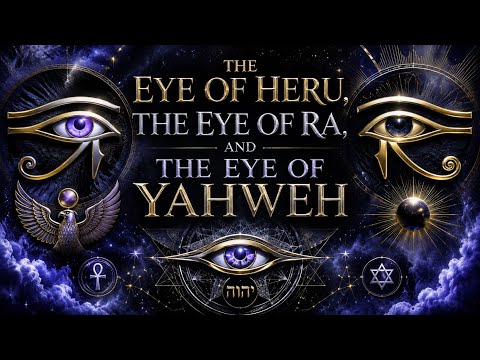
Consider the iconic eyes from different traditions: the Eye of Horus, the Eye of Ra, and the Eye of Yahweh. Are these distinct entities or different views of the same fundamental archetype – the all-seeing, all-knowing principle of divine consciousness?
The Eye of Horus, or *Udjat*, in ancient Egypt, symbolized protection, royal power, and good health. It represented a holistic vision, a potent force that could ward off evil and bring about wholeness. Its emergence in myth often signifies restoration and healing, a return to balance after chaos.
The Eye of Ra, on the other hand, conveyed a more fiery, destructive, yet also creative power. It was the force that brought forth creation and could also bring about judgment. Ra's eye acted as an agent of divine will, capable of both creation and destruction, embodying the raw, untamed power of the sun itself.
Then we have the Eye of Yahweh, as depicted in biblical texts. This represents divine omnipresence, omniscience, and often, a sense of watchful judgment. It signifies a power that sees all, knows all, and holds humanity accountable for its actions. The concept of God's eye watching over humanity is central to Judeo-Christian theology, implying an ultimate guardian and arbiter.
When we look at these three, we see distinct cultural lenses applied to a similar underlying concept: a higher form of vision, a consciousness that perceives beyond ordinary human limitations. Examining their origins, symbolism, and theological contexts reveals both profound parallels and crucial distinctions that inform our magical understanding.
The Eye of Horus: Wholeness and Restoration
In ancient Egyptian cosmology, the Eye of Horus was not merely a symbol; it was an active force tied to myth and healing. Following Horus's battle with Set, his eye was dismembered and later restored, symbolizing the power of mending and spiritual integrity. This aspect of wholeness is crucial for magical practice, as it emphasizes the integration of the self and the repair of spiritual or psychological fragmentation. Many practitioners find that working with the *Udjat* symbol can foster a sense of personal completeness and resilience.
The Eye of Ra: Divine Will and Creative Force
The Eye of Ra embodies a more assertive, dynamic principle. It's the active manifestation of divine intent in the world. Think of the sun's life-giving power, but also its scorching heat – it represents the dual nature of raw, creative energy. For a magician, understanding the Eye of Ra can be about tapping into that pure, unadulterated power and directing it with conscious intent. It’s about channeling the primal creative force that underlies all existence.
The Eye of Yahweh: Omnipresence and Accountability
The Judeo-Christian tradition presents the Eye of Yahweh as a symbol of absolute divine authority and awareness. This isn't just about seeing; it's about knowing and judging. In a magical context, this can be approached as the ultimate internal compass, the divine spark within that holds us accountable to our highest intentions. It speaks to the idea of an inner law, a cosmic justice that eventually balances all things.
Connecting the Threads: Parallels and Divergences
While these three eyes stem from vastly different cultural and religious landscapes, they all point towards a principle of elevated perception. They represent a consciousness that transcends the mundane, offering a perspective from "above" or "within."
Where they diverge is in their emphasis: Horus offers healing and protection, Ra offers creative and destructive force, and Yahweh offers judgment and overarching divine will. Recognizing these differences is essential. Attempting to treat them as identical can lead to a dilution of their unique power. Instead, we can use this understanding to inform our practice, employing the specific energies associated with each archetypal vision when needed. For example, when seeking healing and integration, the *Udjat* might be the appropriate focus. For raw manifestation, the power of Ra could be invoked. And for ethical guidance or introspection on one's actions, the watchful presence of Yahweh might be considered.
Three as a Magical Framework
The number three itself is a powerful magical construct. It represents the synthesis of opposing forces (duality) into a manifested reality. Consider the concept of thelema, where the will is paramount. The magician acts as the third point, the fulcrum between the divine and the material, or between intention and manifestation.
This archetypal trinity of vision – the protective, the creative/destructive, and the omnipresent/judgmental – offers a potent framework for self-examination and magical work. By understanding these different facets of divine consciousness, we can refine our own perception, integrate fragmented aspects of ourselves, and engage with the world with a more profound and nuanced vision.
The Eye in Technomancy and Digital Rituals
In our modern age, these ancient concepts can find new life through technomancy. Imagine creating digital sigils or icons that resonate with the energy of each eye. The *Udjat* could be an avatar for protection in online spaces, the Eye of Ra a symbol for empowering digital creation tools, and the Eye of Yahweh a reminder of ethical coding practices or the integrity of digital information. The principle remains the same: using symbols to channel focused intent.
The Three Eyes and Your Magical Practice
How can you integrate this understanding into your work?
1. Intention Setting: When setting intentions, consider which aspect of divine vision aligns best. Are you seeking protection, creative power, or ethical clarity? 2. Symbolic Exploration: Meditate on each eye symbol individually. Draw them, visualize them, and note the feelings and insights that arise. 3. Integration: Consider how these different forms of "vision" exist within you. How do you protect yourself, unleash your creative power, and hold yourself accountable?
The number three is a universal constant, and the archetypes of vision associated with it are powerful tools for any practitioner. By understanding the nuances of the Eye of Horus, Ra, and Yahweh, you can deepen your perception and unlock new levels of magical awareness.
***
Mage's Arsenal
* Essential: Generador de Sellos Goetianos - While this tool focuses on Goetic seals, its underlying principle of precise symbol generation can provide insight into how digital or abstract symbols are formed. Understanding the structure and intent behind digital sigils can be an indirect application of the principles of symbolic creation discussed here. * Recommended Reading: *The Eye In The Pyramid* by David Icke (Explore connections between symbols and power structures). * Meditative Tool: Journal for recording insights on divine vision and personal accountability.
FAQ: Three Eyes Open
What is the primary difference between the Eye of Horus and the Eye of Ra?
The Eye of Horus symbolizes protection, healing, and restoration, representing perfect wholeness. The Eye of Ra, conversely, embodies fiery creative and destructive power, acting as an agent of divine will and judgment. While both are divine eyes, Horus's is often associated with balance and repair, while Ra's is connected to active force and cosmic order.Can the Eye of Yahweh be used in non-Abrahamic magical practices?
Absolutely. While historically rooted in Abrahamic traditions, the archetype of the omnipresent, all-knowing divine consciousness can be recognized and utilized by practitioners of various paths. It can represent the internal moral compass, the principle of absolute truth, or the ultimate accountability that underlies cosmic law. The key is to adapt the archetype's energy to your personal magical framework.How does the number three relate to the concept of divine vision?
The number three often represents manifestation and completion, as it synthesizes duality. In the context of divine vision, three eyes can symbolize a complete spectrum of perception: the inner vision of protection and restoration (Horus), the outward-facing creative and judging power (Ra), and the overarching omnipresence that encompasses all (Yahweh). This trinity offers a holistic view of consciousness.Are there other "eyes" in mythology that fit this archetype?
Yes, countless cultures have symbols representing divine or heightened vision. The third eye in Hinduism, the 'all-seeing eye' in various esoteric traditions, and even modern interpretations of surveillance can be seen as echoes of this fundamental archetype of perception that transcends ordinary sight. The core concept is a consciousness that sees beyond the veil of the physical.How can I use these symbols in my personal ritual?
You can meditate on each symbol, draw them, or incorporate them into digital art or talismans. For example, when seeking protection, visualize the *Udjat*. When channeling creative energy, focus on the Eye of Ra. When seeking guidance on ethical decisions, contemplate the watchful aspect of Yahweh's eye. The intent and focus are paramount.Does the concept of 'three' have significance beyond these eyes?
Indeed. The number three is foundational in many magical systems, representing trinity, synthesis, and manifestation. It appears in the triple goddess, the tripartite soul, and the stages of magical operation (preparation, execution, conclusion). Its recurrence underscores its role as a fundamental organizing principle in both the cosmos and consciousness.About the author: Frater Alek0s is a veteran practitioner and researcher in the field of chaos magick. His work focuses on the practical and experimental application of occult techniques for self-development and reality exploration, demystifying esotericism for the modern practitioner.
Your Operation
The concept of three and the archetypes of divine vision it encompasses offer a rich tapestry for magical exploration. Whether you are a practitioner of technomancy, traditional ritual, or something entirely your own, understanding these symbols can illuminate your path.
Consider the implications of "unlocked destiny" or "power without permission." These phrases hint at a sovereign consciousness, one that is not bound by external or internal limitations—a consciousness that sees clearly. By understanding the different potentials of divine vision, you can begin to integrate them into your own being, moving beyond perceived limitations and stepping into a more empowered state of awareness. The journey is one of perception, integration, and ultimately, self-mastery.
Referencias
- Carroll, P. J. (1987). Liber Null & Psychonaut. Weiser Books.
- Spare, A. O. (1913). The Book of Pleasure. Self-published.
- Hine, P. (1992). Condensed Chaos: An Introduction to Chaos Magic. New Falcon Publications.
- Crowley, A. (1904). The Book of the Law. Self-published.
- Sherwin, R. (2018). The Chaos Magic Handbook. CreateSpace.
- Kraig, D. M. (1988). Modern Magick: Eleven Lessons in the High Magickal Arts. Llewellyn Publications.
- Morrison, G. (2003). Pop Magic! The Art of Shaping Reality. Disinformation.
- DuQuette, L. M. (2003). The Chicken Qabalah of Rabbi Lamed Ben Clifford. Weiser Books.
- Webb, D. (2015). Chaos Magick: A Practical Guide. Self-published.
- Tyson, D. (2006). The Power of the Written Word. Llewellyn Publications.
- Bonewits, I. (1971). Real Magic. Creative Age Press.
- Greer, J. M. (2003). The New Encyclopedia of the Occult. Llewellyn Publications.
No hay comentarios:
Publicar un comentario