
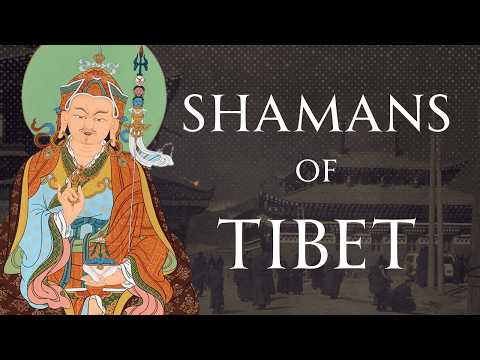
In the traditional understanding of Tibet, one is never truly alone. The spiritual realm is a constant presence, interwoven with the fabric of daily life. Mountains, springs, hearths, mountain passes, and even lingering illnesses are all governed by conscious, purposeful beings—entities that demand acknowledgment and respect. Failure to provide this can result in immediate and tangible consequences. This enduring cosmology, one of Asia's oldest continuously practiced spirit traditions, still holds sway across the Tibetan Plateau, the valleys of Nepal and Bhutan, and among exile communities in India. Its resilience is remarkable, particularly its dynamic integration with Buddhism, which absorbed and reshaped the old spirits, enlisting them as protectors of the new teachings. This unique synthesis, resulting in practices found nowhere else, is profoundly fascinating. Join me for an in-depth exploration of Tibetan shamanism.
MagitechThe Pre-Buddhist Landscape: Bon and the Spirit Realm
When we think of Tibet, Buddhism immediately comes to mind. However, long before Buddhism's arrival, the indigenous religious tradition known as Bon flourished. The Bonpos (adherents of Bon) assert that their tradition predates Buddhism by many millennia. While scholars debate the exact antiquity and precise nature of Bon, its influence is undeniable. The extant form of Bon today bears the deep imprint of Buddhism, making the task of distinguishing the original pre-Buddhist Bon from its later, Buddhistized iteration a complex challenge.
Table of Contents
- MagitechThe Pre-Buddhist Landscape: Bon and the Spirit Realm
- A Taxonomy of Spirits: Lha, Btsan, Klu, and the Invisible Hierarchy
- The Oracle Tradition: Trance, Possession, and the Voice of the Gods
- Padmasambhava and the Taming of the Spirits
- Ritual Practice: Smoke Offerings, Thread Crosses, and Spirit Management Technology
- Death, Dying, and the Bardo: The Shamanic Journey Beyond Life
- The Bön Tradition Today: Parallel Transmission and the Oldest Thread
- FAQ: Questions and Answers on Tibetan Shamanism
- Comparison of Spirit Taxonomies
- Key Figures in Tibetan Spiritual History
- Practical Application: Integrating Principles into Modern Practice
- Connecting Disciplines: Shamanism, Psychology, and Technology
- Bibliography
According to Bon tradition, the faith was founded by Tonpa Shenrab Mibo, an enlightened master who, it is claimed, lived 18,000 years ago in Olmo Lungring, a mythical land west of Tibet, sometimes associated with Persia or Central Asia. Western scholars, while skeptical of this extreme dating, do recognize that Bon incorporates ancient elements that predate the 7th-century introduction of Buddhism. These elements connect Tibet to a broader shamanic tradition prevalent across Inner Asia. Evidence for the pre-Buddhist Tibetan world can be partially reconstructed from the Dunhuang manuscripts. This significant cache of documents, discovered in a sealed cave in China's Gansu province and dating from the 8th to the 10th centuries, paints a vivid picture of a landscape saturated with spirits.
These manuscripts detail a world where every geographical feature possessed its own spirit or guardian. Each valley, pass, and river crossing was believed to be under the dominion of specific spiritual beings, categorized as ha, btsan, klu, or dud. The proper navigation of this spirit-infused landscape was paramount for survival and well-being. This intricate cosmology underscores a worldview where the spiritual and material realms were seamlessly integrated, requiring constant negotiation and awareness of the unseen forces at play. The sheer density of spiritual entities described suggests that acknowledging and respecting these beings was not merely a ritualistic formality but a fundamental aspect of existence, deeply embedded in the daily lives and perilous journeys of the early Tibetans. This pervasive spiritual presence formed the bedrock upon which later religious and cultural developments, including the amalgamation with Buddhism, would be built, shaping the unique spiritual tapestry of the region.
A Taxonomy of Spirits: Lha, Btsan, Klu, and the Invisible Hierarchy
The pre-Buddhist Tibetan spiritual landscape, as illuminated by the Dunhuang manuscripts, was populated by a diverse hierarchy of beings. These entities were not abstract concepts but active participants in the daily lives of the people, influencing everything from weather patterns to personal fortune. Understanding this taxonomy is crucial to grasping the shamanic worldview.
The Lha are generally considered celestial or divine beings, often associated with the heavens and possessing benevolent or neutral dispositions. They represent a higher order of spirits, sometimes embodying natural phenomena like mountains or prominent landmarks. Their favor could be sought through offerings and respectful adherence to spiritual laws, while their displeasure could manifest as natural disasters or misfortune. The Btsan, on the other hand, are often depicted as more powerful and potentially volatile spirits, frequently inhabiting mountains, passes, and borders. They can be fierce protectors but also formidable adversaries if offended. Rituals directed towards the Btsan often involved elaborate smoke offerings and propitiations aimed at appeasing their potentially disruptive nature. The Klu, or Nagas, are serpentine beings associated with water sources—rivers, lakes, and subterranean waters. They held sway over fertility, rainfall, and underground treasures but could also cause floods, droughts, and diseases related to water imbalance. Their appeasement was vital for agricultural success and preventing water-related calamities. Finally, the Dud are often described as malevolent or demonic spirits, sometimes associated with chaos, disease, and death. They represent the darker forces within the cosmology, requiring exorcism, containment, or banishment through potent shamanic rituals. This intricate web of spirits formed an invisible hierarchy that mediated between the human world and the cosmic order, dictating the rhythm of life and demanding constant spiritual engagement.
Navigating this complex spiritual ecosystem required specialized knowledge and practices. Shamanic practitioners, or oracles, served as crucial intermediaries, capable of communicating with these beings, interpreting their will, and performing rituals to ensure harmony. The success of these interactions depended on a deep understanding of the specific characteristics, domains, and propensities of each class of spirit. For instance, a ritual intended to appease a mountain spirit (a type of Lha or Btsan) would differ significantly from one designed to pacify a water spirit (Klu). The Dunhuang manuscripts provide invaluable glimpses into these practices, hinting at a sophisticated system of spiritual management that sought to integrate human activity harmoniously within a dynamic, sentient environment. The acknowledgment of these diverse spirit classes reflects a worldview where the natural world was imbued with consciousness and agency, necessitating a participatory relationship rather than passive observation.
The Oracle Tradition: Trance, Possession, and the Voice of the Gods
Central to Tibetan shamanism is the role of the oracle, individuals who serve as conduits for spiritual communication. This practice often involves states of trance or spirit possession, allowing the oracle to channel the pronouncements and will of deities or spirits directly to the community. These oracular sessions were not mere performances; they were vital mechanisms for governance, healing, and divination, providing guidance on everything from state affairs to personal dilemmas.
The process of entering a trance state could be facilitated through various means, including chanting, drumming, the use of sacred substances, and intense meditation. Once in a divinely altered state of consciousness, the oracle would embody the spirit or deity, speaking with its voice and conveying messages. This phenomenon was crucial for understanding the intentions of the Lha, Btsan, and Klu, offering insights into potential threats, blessings, or necessary actions. The messages delivered were often cryptic, requiring interpretation by experienced advisors or the community elders, adding another layer to the spiritual consultation process. The oracles were seen as possessing a unique connection to the divine, capable of perceiving truths hidden from ordinary mortals.
The Oracle tradition was not merely about receiving messages; it was also about mediating spiritual power. Through possession, the oracle could wield the authority and influence of the possessed spirit, lending weight to their pronouncements and directives. This dynamic was particularly evident in the context of warfare or significant political decisions, where appealing to the power of the spirits through an oracle could bolster morale and legitimize actions. Furthermore, oracles played a significant role in healing practices, diagnosing spiritual causes of illness and prescribing remedies often involving appeasement rituals or the extraction of malevolent influences. The rigorous training and spiritual discipline required of an oracle underscore the seriousness and sacredness of their role. They were intermediaries who bridged the gap between the human and the divine, ensuring that the community remained in balance with the powerful forces that shaped their world. The authenticity of the trance and the clarity of the divine message were paramount, often tested and verified through community consensus and the discernment of senior practitioners. This reliance on direct spiritual communication highlights the deeply animistic and participatory nature of early Tibetan spiritual practices, where the unseen world was as real and influential as the physical one.
Padmasambhava and the Taming of the Spirits
The arrival of Buddhism in Tibet, particularly in the 7th century CE, marked a pivotal moment in its spiritual history. While Buddhism introduced a new philosophical and doctrinal framework, it did not eradicate the existing indigenous traditions. Instead, a process of syncretism occurred, most powerfully embodied by the legendary figure of Padmasambhava (Guru Rinpoche). Padmasambhava is credited with subduing and converting many of the powerful native spirits and deities, binding them by oath to protect Buddhism and its practitioners.
According to tradition, Padmasambhava, an Indian tantric master, traveled to Tibet to help establish Buddhism. He encountered fierce resistance from local spirits and deities who guarded their traditional territories and spiritual influence. Rather than destroying these entities, Padmasambhava employed tantric methods, including spells, visualizations, and sacred oaths, to bring them under control. These subjugated spirits were then often re-contextualized within the Buddhist pantheon, becoming fierce protectors (dharmapalas) of the new religion. This act of "taming" was crucial for the widespread acceptance of Buddhism in Tibet. It allowed the existing spiritual landscape to persist, albeit under a new ideological umbrella. The power of the old spirits was harnessed, redirected, and integrated, preventing a complete cultural and spiritual rupture.
This integration is evident in many Tibetan Buddhist rituals and iconography. Deities that were once worshipped independently are now depicted as wrathful manifestations or guardians serving the Buddhas and Bodhisattvas. The shamanic practices, including spirit negotiation and trance, were also reshaped. While the core interaction with the spirit world remained, it was now often framed within a Buddhist context, with practitioners aiming to achieve enlightenment or benefit sentient beings rather than solely focusing on local appeasement. Padmasambhava's role in this process is central to Tibetan Buddhist lore, symbolizing the triumph of spiritual insight and compassionate action over potentially destructive forces. The narrative of the taming of the spirits is not merely a historical account but a living myth that informs Tibetan Buddhist practice, emphasizing the power of the Dharma to transform all beings, including formidable spiritual entities, into allies of the path to liberation. This unique synthesis created a distinct form of Tibetan Buddhism, one deeply interwoven with the ancient shamanic consciousness of the land.
Ritual Practice: Smoke Offerings, Thread Crosses, and Spirit Management Technology
Tibetan shamanism, even in its Buddhist-influenced forms, relies heavily on practical rituals designed to interact with, appease, and manage the spirit world. These practices are often referred to as the "technology of spirit management," reflecting a pragmatic approach to maintaining balance and invoking spiritual assistance.
One of the most common and visually striking rituals is the smoke offering, or sang ceremony. This involves burning aromatic herbs, resins, and other natural substances in a special vessel. The rising smoke is believed to purify the environment, offer sustenance to spirits (particularly Btsan and Lha), and carry prayers and intentions to the spiritual realms. The specific ingredients used often carry symbolic meanings and are chosen based on the intended recipient spirit or the purpose of the offering. It is a way to create a sacred atmosphere, purify negative energies, and establish a positive connection with the spirit world. Another practice involves the use of sacred threads, often tied into intricate knots or woven into crosses, known as tsa-tsa or prayer flags if larger. These are imbued with mantras and blessings, serving as protective talismans or markers of sacred space. Thread crosses, in particular, can be used to demarcate boundaries, create protective barriers, or act as focal points for invoking specific spiritual energies. They represent a tangible manifestation of spiritual power, designed to influence the unseen forces at play.
Beyond these, various other rituals are employed. These might include libations of water or alcohol offered to local deities, the use of bowls filled with barley grains as symbolic offerings, or specific ceremonies for exorcising malevolent entities. The practice of drelpo, or spirit negotiation, involves direct communication with local spirits to request their cooperation or to resolve conflicts. In more Buddhist-infused practice, these elements are integrated into tantric sadhanas, where practitioners visualize themselves as deities and invoke protective spirits as manifestations of their own enlightened nature. The underlying principle remains consistent: a conscious and active engagement with the spirit world, employing specific techniques to ensure favorable outcomes and maintain cosmic harmony. The diversity of these practices underscores the adaptive nature of Tibetan shamanism, capable of incorporating new elements while retaining its core shamanic function of mediating between the mundane and the spiritual.
Death, Dying, and the Bardo: The Shamanic Journey Beyond Life
Tibetan spiritual traditions, particularly as articulated in texts like the Bardo Thodol (The Tibetan Book of the Dead), offer profound insights into the process of death and the journey of consciousness through the intermediate states, or bardos. This understanding is deeply rooted in shamanic concepts of soul travel and the afterlife.
The Bardo Thodol is essentially a guide for the deceased, intended to be read aloud to them during the period following death. It describes the various stages the consciousness will experience, including the moment of death itself, the appearance of radiant visionary experiences (peaceful and wrathful deities), and the subsequent challenges of rebirth. This journey is viewed as a critical opportunity for liberation from the cycle of rebirth (samsara). The text details how the consciousness, stripped of its physical form, will encounter these phenomena, which are understood as manifestations of one's own mind, purified and intensified. Recognizing these visions as projections of the enlightened mind, rather than external entities, is key to achieving enlightenment.
From a shamanic perspective, the Bardo is akin to a profound soul journey, a spiritual odyssey undertaken by the consciousness. The peaceful and wrathful deities encountered are analogous to the spirits and guardians that a shaman might navigate in altered states of consciousness. The shamanic practitioner's training in altered states and spirit interaction is seen as preparation for this ultimate journey. The goal is not merely to survive the Bardo but to consciously navigate it, understand its nature, and ultimately transcend the cycle of samsara. The rituals and practices associated with death in Tibet, including funerary rites and the recitation of mantras, are designed to support the deceased in this transition, ensuring a favorable rebirth or, ideally, liberation.
The concept of the Bardo also highlights the interconnectedness of life and death within the Tibetan spiritual framework. Death is not an end but a transition, a crucial phase where the accumulated karma and spiritual development of a lifetime come to fruition. The practices associated with the Bardo emphasize mindfulness, recognition of the nature of reality, and the cultivation of compassion, all elements that are central to both Buddhist philosophy and shamanic traditions. The ability to consciously navigate the Bardo is seen as the ultimate test of one's spiritual attainment, demonstrating a profound understanding of the mind and the nature of existence. This shamanic interpretation of the afterlife offers a unique perspective on mortality, transforming the fear of death into an opportunity for spiritual realization and freedom.
The Bön Tradition Today: Parallel Transmission and the Oldest Thread
Despite centuries of interaction with Buddhism, the Bön tradition persists as Tibet's indigenous spiritual lineage. While heavily influenced by Buddhism, Bön maintains distinct teachings, practices, and a unique historical narrative. Today, Bön is practiced in various forms, both within Tibet and in diaspora communities, representing the oldest continuous spiritual thread in Tibetan culture.
The modern Bön tradition is often divided into two main branches: Bönpo (following the teachings of Tonpa Shenrab Mibo) and Yungdrung Bön (Eternal Bön). While both share many similarities with Tibetan Buddhism in terms of monastic structure, meditative practices, and even deities, Bön often emphasizes different aspects or interprets them through its own lens. For example, Bön has its own canon of scriptures, its own lineage of enlightened masters, and its own unique cosmologies and meditative techniques, such as Dzogchen (Great Perfection), which it claims predates the Buddhist version. The ritual practices, while sometimes superficially similar to Buddhist ones, often carry distinct Bönpo meanings and origins, rooted in the pre-Buddhist shamanic traditions.
The survival and continued practice of Bön represent a remarkable testament to cultural and spiritual resilience. In exile communities, particularly in India, Bön monasteries and institutions have been re-established, diligently preserving and transmitting their teachings. Scholars continue to study Bön, attempting to unravel its precise historical relationship with Buddhism and to understand the unique contributions it has made to the spiritual landscape of Tibet. The ongoing study and practice of Bön offer invaluable insights into the deep shamanic roots of Tibetan spirituality, demonstrating how ancient traditions can adapt, integrate, and endure through millennia, often existing in parallel alongside dominant religious systems. Bön stands as a living link to Tibet's pre-Buddhist past, a vital custodian of ancient esoteric knowledge and shamanic wisdom.
FAQ: Questions and Answers on Tibetan Shamanism
What are the main differences between Tibetan shamanism and Buddhism?
While Tibetan Buddhism has assimilated many elements of indigenous shamanism (Bon), key differences remain. Shamanism often focuses on direct interaction with local spirits, nature deities, and ancestral spirits for immediate practical concerns like healing, protection, and divination. Buddhism, while acknowledging spirits, generally places ultimate emphasis on achieving enlightenment for all sentient beings through its own philosophical paths and practices, such as the Four Noble Truths and the Eightfold Path. Padmasambhava's role exemplifies this integration, where native deities were "tamed" and bound to protect the Buddhist Dharma.
Are spirit possessions common in Tibetan practice today?
Spirit possession, particularly through oracles, continues to be a recognized phenomenon in Tibetan culture, though its prevalence and form can vary. State-sponsored oracles, such as the Nechung Oracle, still play a significant role in Tibetan Buddhism, advising the Dalai Lama and the Tibetan government-in-exile. In more remote areas or within certain lineages, individuals may still act as spirit mediums. However, the interpretation and integration of these experiences are often framed within Buddhist philosophy, viewing the possessed state as a manifestation of mind or a temporary vehicle for enlightened wisdom.
How does Tibetan shamanism view death and the afterlife?
Tibetan traditions, heavily influenced by shamanic beliefs, view death not as an end but as a transition. The concept of the Bardo, detailed in texts like the Bardo Thodol, describes intermediate states the consciousness passes through after death, offering opportunities for liberation or rebirth. This perspective is deeply rooted in shamanic journeys of the soul. The journey through the Bardo is often seen as a dangerous yet crucial phase requiring conscious navigation, guided by spiritual practices and teachings, to achieve a favorable outcome or ultimate freedom from the cycle of rebirth.
What is Bön and how does it relate to Tibetan shamanism?
Bön is the indigenous spiritual tradition of Tibet, predating the arrival of Buddhism. It is considered the oldest continuously practiced shamanic tradition in Asia. Bön is deeply intertwined with shamanic practices, animistic beliefs, and the veneration of local spirits and nature deities. While Bön has been heavily influenced by and integrated with Buddhism over centuries, it retains distinct teachings, scriptures, and a unique cosmology that reflects its ancient shamanic origins. Many scholars view Bön as the foundational spiritual system upon which later Tibetan Buddhism was built.
Can I use the Chaos Magick Sigil Generator for Tibetan-inspired symbols?
While the Chaos Magick Sigil Generator is designed for creating sigils based on Western magickal principles (like those of Austin Osman Spare), its underlying function is to codify intent into a unique symbol. You could potentially adapt its principles by inputting Tibetan mantras or sacred phrases into its text-to-sigil conversion function. However, for authentic Tibetan symbols, it's advisable to consult traditional sources and learn the specific iconography and symbolic meanings within Bön or Tibetan Buddhism. The Generator excels at rapid symbol creation for personal intent, which can be a powerful aspect of any magical practice, but traditional Tibetan symbols carry deep cultural and spiritual lineage that requires specific study.
Comparison of Spirit Taxonomies
| Spirit Class | Associated Domain | Typical Nature | Buddhist Integration | Shamanic Role |
|---|---|---|---|---|
| Lha | Heavens, celestial bodies, mountains, natural phenomena | Divine, celestial, benevolent to neutral | Often integrated as deities or protectors within Buddhist pantheon | Beings to be appeased for natural order, protection, good fortune |
| Btsan | Mountains, passes, borders, rocks, military | Powerful, fierce, potentially volatile | Often become wrathful deities or guardians (Dharmapalas) | Spirits requiring appeasement and negotiation; can be allies or adversaries |
| Klu (Nagas) | Water bodies (rivers, lakes), underworld, hidden treasures | Serpentine, associated with fertility, wealth, disease | Maintained roles related to water and earth; sometimes subjugated | Control rain, fertility, water sources; can cause floods or illness if angered |
| Dud | Chaos, disease, death, negative forces | Malevolent, demonic, disruptive | Often subdued or exorcised by Buddhist masters; may become lower-level demons | Entities to be banished, pacified, or controlled through exorcism and protection rituals |
| Ancestors | Family lineage, hearth | Varying dispositions (benevolent, demanding) | Revered, can receive offerings; importance may diminish in Buddhist focus | Guardians of the home and lineage; require ongoing remembrance and offerings |
Key Figures in Tibetan Spiritual History
- Tonpa Shenrab Mibo: Legendary founder of the Bon tradition, claimed to have lived 18,000 years ago.
- Padmasambhava (Guru Rinpoche): Indian tantric master credited with subduing native spirits and establishing Buddhism in Tibet.
- Peter J. Carroll: Influential figure in Chaos Magick, author of Liber Null & Psychonaut, whose principles can be adapted to various symbolic systems.
- René de Nebesky-Wojkowitz: Author of "Oracles and Demons of Tibet," a foundational scholarly work on Tibetan protective deities and cults.
- Giuseppe Tucci: Prominent Italian scholar of Tibetan culture and religion, author of "The Religions of Tibet."
- Robert Thurman: Leading translator and scholar of Tibetan Buddhism, known for his translation of the Bardo Thodol.
- Geoffrey Samuel: Anthropologist whose work, such as his translation of Tucci's "The Religions of Tibet," provides ethnographic and scholarly context.
“In traditional Tibetan understanding, you're never truly alone. The spirits are always there. It could be the mountain, the spring, the hearth in your home, the pass you cross to reach the next valley, or even that illness that just won't go away. These are all governed by conscious, purposeful beings who have to be acknowledged and respected.”
“Buddhism absorbed it, reshaped it, and bound the old spirits by oath to defend the new teaching. And the old spirits apparently agreed. What emerged from all of this exists nowhere else, and it's all quite fascinating.”
“Bon, as it exists today, has been so thoroughly influenced by Buddhism that separating the original pre-Buddhist Bon from its latter Buddhistized form is quite a difficult task.”
“Every little place had its spirit or guardian. Each valley, pass, and river crossing the domain of a specific spiritual being, whether that be a eh ha, bi zan, klu, or dud.”
“The Bardo Thodol is essentially a guide for the deceased, intended to be read aloud to them during the period following death.”
Practical Application: Integrating Principles into Modern Practice
While the specific deities and cultural context of Tibetan shamanism are unique, the underlying principles offer valuable insights for contemporary practitioners across various traditions, including Chaos Magick. The core concepts of acknowledging consciousness in the environment, respecting unseen forces, and employing ritual technology for spirit management can be adapted.
1. Environmental Awareness: Cultivate a heightened sense of awareness regarding the "spirits" or consciousness inherent in your surroundings. This could mean acknowledging the character of your home, your workspace, or even digital environments. This isn't about literal animism unless that aligns with your beliefs, but about recognizing that places and objects can hold energetic imprints or "personalities."
2. Intentional Offerings: While traditional smoke offerings are specific, the principle of "offering" can be translated. This might involve setting intentions, dedicating ritual work to a specific outcome that benefits more than just yourself, or performing acts of energetic cleansing in your space. For example, dedicating the successful creation of a sigil to the well-being of your local environment or community.
3. Spirit Negotiation Analogues: In Chaos Magick, servitors and familiars can be seen as modern analogues to mediated spirits. The principle of clear communication, setting boundaries, and ensuring mutual benefit (or at least utility) applies. When working with digital tools or AI, consider them as entities with specific functions that require clear "instructions" and respect for their operational parameters, much like negotiating with a spirit.
4. Bardo as Metaphor for Transition: The shamanic journey through the Bardo can serve as a powerful metaphor for navigating significant life transitions, periods of uncertainty, or creative blocks. Understanding that these phases involve encountering intense inner projections and require conscious discernment can empower practitioners to approach change with greater equanimity and insight. Treat periods of intense personal change or creative stagnation as your own "Bardo," a space for transformation and eventual rebirth into a new state.
5. Symbol Creation for Intent: Tibetan traditions utilize complex iconography and mantras. Modern practitioners can learn from this by developing powerful personal symbols. Tools like the Chaos Magick Sigil Generator can help codify personal desires into unique symbols, much like ancient Tibetans used their own sacred icons for specific purposes. Remember that the power lies in the focused intent and the belief invested in the symbol, regardless of its origin.
Connecting Disciplines: Shamanism, Psychology, and Technology
The practices described in Tibetan shamanism offer fascinating parallels with modern psychological concepts and technological applications. The shamanic trance, for instance, can be understood through the lens of altered states of consciousness studied in psychology and neuroscience. The ability of shamans to navigate these states, communicate with perceived entities, and influence reality mirrors concepts like dissociation, hypnotic states, and the power of belief in shaping perception and experience.
Furthermore, the "spirit management technology" employed by Tibetan shamans—rituals, offerings, and symbolic actions—can be seen as early forms of psycho-spiritual technology. These rituals served to structure belief, reinforce social cohesion, provide psychological comfort, and create a sense of agency in the face of the unknown. Today, practitioners might employ digital tools for similar purposes. For example, creating and charging sigils using software, or using AI-generated imagery as focal points for meditation, can be seen as modern technological adaptations of ancient shamanic principles. The Chaos Magick Sigil Generator, for instance, allows for rapid symbol creation, much like ancient artifacts might have been imbued with power. This highlights how the fundamental human drive to interact with, understand, and influence unseen forces or internal states can manifest across vastly different cultural and technological contexts.
About the author: Frater Alek0s is a veteran practitioner and researcher in the field of chaos magick. His work focuses on the practical and experimental application of occult techniques for self-development and reality exploration, demystifying esotericism for the modern practitioner.
Referencias
- Carroll, P. J. (1987). Liber Null & Psychonaut. Weiser Books.
- Spare, A. O. (1913). The Book of Pleasure. Self-published.
- Hine, P. (1992). Condensed Chaos: An Introduction to Chaos Magic. New Falcon Publications.
- Crowley, A. (1904). The Book of the Law. Self-published.
- Levi, E. (1856). Dogma and Ritual of High Magic. Rider & Company.
- Jung, C. G. (1951). Aion: Researches into the Phenomenology of the Self. Princeton University Press.
- Regardie, I. (1937). The Golden Dawn. Llewellyn Publications.
- Fortune, D. (1930). The Mystical Qabalah. Weiser Books.
- Eliade, M. (1951). Shamanism: Archaic Techniques of Ecstasy. Princeton University Press.
- Bardon, F. (1956). Initiation into Hermetics. Dieter Ruggeberg.
No hay comentarios:
Publicar un comentario