
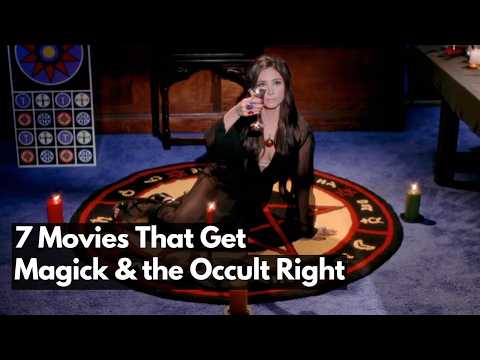
When most movies tackle the occult, they resort to cheap tricks: a hastily drawn pentagram, a jumble of Latin phrases. But what if a film could delve deeper, exploring genuine esoteric concepts with respect and insight? This article uncovers seven films that don't just dabble in the dark arts but actually depict real occult ideas with surprising accuracy, from Gnosticism and witchcraft to Vodou and the power of belief. Prepare to see your favorite dark cinema in a new light.
They Live: A Gnostic Awakening Through Media Satire
Many occult films treat their subject matter superficially. However, John Carpenter's *They Live* (1988) offers a potent allegorical exploration of Gnosticism, media control, and societal awakening. The film's central premise—that hidden messages embedded in media manipulate the population—mirrors Gnostic ideas of *archons* (rulers of the material world) blinding humanity to the true spiritual reality. The protagonist's discovery of special sunglasses that reveal the truth behind the illusion serves as a metaphor for Gnostic *gnosis*, or direct knowledge, leading to an awakening from illusion and a call to resist the unseen forces controlling society. It’s a powerful reminder that our perception of reality can be a construct, and true magic lies in seeing beyond the veil.
The Craft: Teenage Pain, Power, and the Dual Nature of Witchcraft
*The Craft* (1996) resonates deeply with audiences because it authentically captures the allure and dangers of witchcraft through the lens of teenage angst and burgeoning power. It moves beyond superficial depictions to explore the psychological and ethical dimensions of magic. The film highlights how the pursuit of power, especially when driven by personal pain and a desire for control, can lead to corruption. The iconic quote, "True magic is neither black nor white – it's both because nature is both. Loving and cruel, all at the same time," perfectly encapsulates the dualistic nature of the universe and the ethical tightrope walk inherent in practicing magic. The film's portrayal of a coven's dynamic, the invocation of elemental forces, and the consequences of unchecked magical ambition make it a compelling study of agency and responsibility in the craft.
The Love Witch: Ritual Glamour and the Choreography of Desire
Anna Biller's *The Love Witch* (2016) is a visually stunning and meticulously crafted film that dives deep into the principles of ritual magic, particularly glamour and ceremonial rites. Elaine, the protagonist, uses enchantments and potions not as mere plot devices but as true magical workings aimed at manipulating desire and crafting her reality. The film showcases the deliberate use of symbolism, the power of focused intent, and the intricate choreography involved in ceremonial magic. From the symbolic use of Thoth Tarot imagery to the echoes of Enochian sigils, *The Love Witch* demonstrates how carefully constructed rituals can be potent tools for achieving specific outcomes, albeit with significant personal cost. It’s a masterful exploration of how external presentation and internal will can intertwine to create potent magical effects.
In the Mouth of Madness: Hyperstition and the Creation of Reality
John Carpenter returns with *In the Mouth of Madness* (1994), a film that masterfully visualizes the concept of *hyperstition*. This is the idea that collective belief and imagination can manifest into tangible reality, effectively making fiction a self-fulfilling prophecy. The film portrays characters becoming ensnared in a narrative that seems to bleed from the pages of a horror novelist's work into the real world. As the protagonist delves deeper into the mystery, the lines between sanity and delusion blur, and the reader's belief in the fictional world becomes the very force that perpetuates it. It’s a chilling depiction of how shared narratives and potent ideas can shape our existence, blurring the lines between what is imagined and what is real.
Angel Heart: Occult Noir, Vodou, and the Faustian Bargain
*Angel Heart* (1987) is a dark and atmospheric occult noir that offers a compelling, albeit nightmarish, exploration of Haitian Vodou, curses, and the enduring resonance of the Faustian bargain. The film follows a private investigator hired to locate a missing singer, a case that spirals into a descent into a spiritual underworld. It vividly portrays the rituals, symbolism, and spiritual power associated with Vodou, grounding the supernatural elements in a palpable sense of dread and consequence. The narrative serves as a modern American interpretation of the Faust legend, where a deal with dark forces leads to a soul-shattering reckoning. The film’s depiction of guilt, identity, and the inescapable nature of one's past actions makes it a potent cinematic ritual in itself.
Pan's Labyrinth: Fairy Faith, Initiation, and Imagination as Resistance
Guillermo del Toro's *Pan's Labyrinth* (2006) is a profound fairy tale set against the brutal backdrop of post-Civil War Spain. While ostensibly a fantasy, it functions as a powerful allegory for spiritual initiation and the enduring strength of imagination as a form of resistance. The young protagonist's encounters with the faun and the fantastical underworld can be interpreted as trials and tests, leading her through a process of spiritual awakening and self-discovery. The film champions the idea of "fairy faith"—belief in the unseen and the magical—as a vital force against oppression and the disenchanting forces of conformity and fascism. It suggests that embracing the imaginative realm is not an escape but a crucial act of survival and self-realization.
The Serpent and the Rainbow: Haitian Vodou, Zombies, and Political Dread
Wes Craven's *The Serpent and the Rainbow* (1988) stands apart for its serious engagement with Haitian Vodou. Based on a real-life scientific investigation into the phenomena of zombies, the film treats Vodou not as a cinematic cliché but as a complex, deeply rooted spiritual and cultural practice. It delves into the socio-political context of Haiti, exploring themes of fear, control, and the psychological impact of trauma. The film's depiction of the powdered drug believed to induce a zombified state raises profound questions about consciousness, belief, and the potential for manipulation. It offers a chilling perspective on how cultural belief systems can be intertwined with power structures and the very definition of life and death.
Mage's Arsenal
* Unofficial Rider Waite Tarot: For intuitive insights and divinatory exploration, this digital deck offers a flexible and accessible way to connect with archetypal energies. * Chaos Magick Sigil Generator: Automate the creation of powerful symbols for your workings, saving time and focusing your intent. * Books: *Liber Null/Psychonaut* by Peter J. Carroll, *The Kybalion*, *Advanced Tarot Secrets* by Dusty White. * Films: *They Live*, *The Craft*, *The Love Witch*, *In the Mouth of Madness*, *Angel Heart*, *Pan's Labyrinth*, *The Serpent and the Rainbow*.
FAQ
What is Gnosticism and how is it depicted in 'They Live'? Gnosticism is an ancient spiritual philosophy emphasizing personal spiritual knowledge (*gnosis*) for salvation. In 'They Live,' it's shown through the protagonist's awakening to hidden truths about societal control, paralleling the Gnostic concept of *archons* who blind humanity.
How does 'The Craft' portray witchcraft accurately? 'The Craft' portrays witchcraft through themes of teenage empowerment, the concentration of will, and the ethical considerations of seeking power. It highlights the potential for magic to corrupt when driven by negative emotions or without wisdom.
What is 'hyperstition' as seen in 'In the Mouth of Madness'? Hyperstition is the concept that belief can create reality. In 'In the Mouth of Madness,' fictional narratives from a writer's books begin to manifest in the real world, demonstrating how shared belief can give shape to existence.
Is 'The Serpent and the Rainbow' based on real events? Yes, the film is inspired by the research of ethnobotanist Wade Davis, who investigated the alleged creation of zombies in Haiti. It draws from his experiences and theories regarding psychoactive substances.
Your Operation: Uncover the Magic Within
Now that you've explored these cinematic journeys into the occult, it's time to integrate this knowledge. Which of these films resonated most with your personal understanding or practice of magic? Reflect on how their themes—from Gnostic awakening and the nature of power to the manifestation of belief and the depth of ritual—can inform your own magical path. Consider rewatching one of these films with this new perspective.
What hidden realities do you seek to uncover in your own life?
⚡ Exploration & Magical Technology: This article is part of the cha0smagicklabs.com ecosystem, Frater Alek0s' digital laboratory where technology and occultism converge. Explore tools, apps, and resources for the 21st-century magician.
--- `GEMINI_METADESC: Explore 7 occult movies like 'They Live', 'The Craft', & 'Pan's Labyrinth' that accurately depict real magic, Gnosticism, witchcraft, Vodou, and hyperstition.` `GEMINI_LABELS: Occult Movies, Real Magic, Gnosticism, Witchcraft, Vodou, Hyperstition, Cinema, Esotericism, Film Analysis` `GEMINI_TELEGRAM: Ever felt like movies get magic all wrong? Prepare to have your mind expanded. I've broken down 7 occult films that actually nail real magic, from Gnosticism in 'They Live' to the potent rituals in 'The Love Witch' and the chilling folklore of 'The Serpent and the Rainbow'. These aren't your typical Hollywood spell-slinging fests; they delve into genuine esoteric concepts. If you're ready to see cinema through a magical lens, this is for you. For practical magic steps and a deeper dive into esoteric traditions, you can start my FREE course at https://magick.me/p/why-magick. See you on the other side.`
No hay comentarios:
Publicar un comentario