
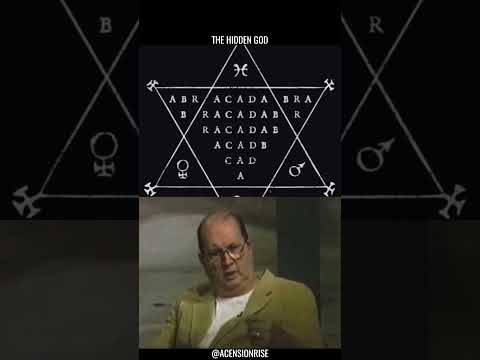
The planet Saturn, often overlooked or misunderstood, has a profoundly hidden influence woven throughout human history, religion, and culture. Many spiritual traditions, unknowingly, pay homage to this celestial body. From the sacred black stone of Mecca to the ubiquitous Star of David, Saturn's symbolism is deeply embedded in our collective consciousness. This exploration aims to pull back the veil, revealing how this 'hidden god' has shaped our understanding of the divine and the elite.
AstrologíaSaturn: The Celestial Elder of Religions
The connection between Saturn and various religious systems is far more pervasive than commonly acknowledged. The name 'Saturn' itself hints at its role as an elder or a foundational entity. In many belief systems, the concept of 'elders' or 'elites' often traces back to Saturnian archetypes. Words like 'elder,' 'elected,' and even 'elite' carry occult significance. For instance, to be 'elected' is to be 'placed' or chosen, often by those who embody the Saturnian principle of authority and hierarchy. This concept is deeply entwined with ancient religious practices where planetary deities held sway over human affairs.
Table of Contents
- AstrologíaSaturn: The Celestial Elder of Religions
- Mecca's Black Square: A Saturnian Connection
- The Star of David: More Than a Religious Emblem
- Saturnian Etymology and the 'Elite'
- The Hidden Worship of Saturn
- The Name of Saturn and its Echoes
- Saturnian Symbols in Modern Culture
- Navigating the Hidden Current
- FAQ: Unveiling Hidden Meanings
- Mage's Arsenal
- Veredict: The Enduring Shadow of Saturn
Mecca's Black Square: A Saturnian Connection
Consider the Kaaba in Mecca, a hallowed site for Muslims. Its iconic black square, the focal point of pilgrimage, is a potent symbol directly linked to the planet Saturn. This is not mere coincidence. The Kaaba's black stone is understood by many esoteric traditions as a representation of Saturn, a celestial body often associated with blackness and the primal structures of reality. The veneration of this black square echoes similar ancient practices where celestial bodies were embodied in sacred objects. Further evidence of this symbolism can be traced in cultural remnants, such as streets in England bearing names like 'Kaaba Stone Streets,' and the symbolic black squares awarded upon university graduation, both hinting at a deeper, Saturnian root.
The Star of David: More Than a Religious Emblem
The symbol widely recognized today as the Star of David, a hexagram formed by two interlaced triangles, has a hidden history that connects it directly to Saturn. Historically, this symbol was known as the 'Star of Saturn.' The ancient peoples understood the interlacing of triangles not just as a geometric form, but as a potent symbol, sometimes referred to as putting a 'hex' on someone. This historical context challenges the common perception of the Star of David as solely a religious emblem of Judaism. It suggests a deeper, potentially pre-Judeo-Christian origin for certain symbolic expressions within the faith. The continuation of this connection is evident in the religious practice of Jews attending services on 'Saturn's Day,' which corresponds to Saturday, further underscoring the planet's enduring symbolic influence.
Saturnian Etymology and the 'Elite'
The linguistic roots of many terms related to power, authority, and the divine reveal a consistent thread back to Saturn. The council of 'El' or 'Elohim' in various mythologies and religious texts signifies a pantheon or a ruling body, often associated with Saturn. The prefix 'El-' itself, found in names like 'El-on' (a modern tech giant's name, hinting at 'Saturn's On') and 'El-shadai,' suggests a connection to this celestial entity or its principles. This etymological lineage points to the idea that the 'elite' or the 'elders' in many societies were historically designated or recognized through a Saturnian framework. The very act of being 'elected' implies a placement or ordination by forces that resonate with Saturn's archetypal significance.
The Hidden Worship of Saturn
The fascinating aspect of Saturn's influence is that much of its worship and symbolism occurs unconsciously. People engage with Saturnian symbols and concepts daily without realizing their origin or the underlying spiritual significance. From the naming of the days of the week (Saturday) to corporate logos and university insignia, the signs are pervasive. The modern fascination with the 'elite,' the 'elders,' and those who seem to hold hidden knowledge or power often reflects an unconscious re-emergence of the Saturnian archetype. It is a testament to the enduring power of this celestial body that its influence continues to manifest, even when its origins are obscured from common knowledge.
The Name of Saturn and its Echoes
Consider the linguistic connections. The word 'Saturn' itself resonates with concepts of seniority and foundational principles. The community comments highlight intriguing linguistic parallels, such as 'Saturn' sounding similar to 'Satan,' and the presence of 'El' (meaning 'the' in Spanish, but also a divine name) in various contexts like 'El-on' and 'Elohim.' In Albanian, 'El' can mean 'Star.' This linguistic tapestry suggests that 'El' or 'Al' might be ancient terms for celestial bodies or divine entities, with Saturn being a prominent one. The mention of 'Star of Remphan' in Acts 7:43, which is historically linked to Saturn, further solidifies this hidden connection, suggesting that the object of veneration was indeed the planet Saturn. Even the names of the planets in our week—Sunday, Moon Day, Mars Day, Mercury Day, Jupiter Day, Venus Day, and Saturn Day—implicitly acknowledge their ancient planetary deities, a practice more evident in Romance languages than in English, but present nonetheless.
Saturnian Symbols in Modern Culture
The symbolism associated with Saturn extends beyond religious iconography. The 'black cube,' a recurring motif in various contexts, from ancient rituals to modern fiction like the Tesseract in Marvel movies, is often interpreted as a representation of Saturn. This symbol, associated with authority, structure, and sometimes confinement, reflects Saturn's complex nature as both a disciplinarian and a revealer of hidden truths. The comments also touch upon the duality of symbols: the pentagram as an enemy of the cube, suggesting a cosmic tension where Saturnian order is challenged by other forces. This duality is common in esoteric thought, where opposing forces are often in play.
Navigating the Hidden Current
Recognizing these hidden connections is the first step towards a more profound understanding of the forces that shape our world. The elders and elites, whether consciously or unconsciously, are often aligned with the Saturnian principle of order, hierarchy, and hidden knowledge. This is not to demonize Saturn, but to understand its archetypal role in the cosmic drama. The challenges and truths presented by this ancient deity continue to resonate, inviting practitioners to explore these hidden currents and integrate them into their understanding of magic and spirituality.
FAQ: Unveiling Hidden Meanings
What is the historical significance of Saturn in ancient religions?
In ancient religions, Saturn was often revered as a foundational deity, representing time, agriculture, structure, and cosmic order. It was frequently associated with the concept of the 'elder' or the 'primeval god' from which other deities or principles emanated. Many cultures observed its slow, deliberate movement across the sky, linking it to destiny, karma, and the inevitable passage of time.
How is the black square in Mecca connected to Saturn?
Esoteric traditions interpret the black square of the Kaaba as a direct symbol of the planet Saturn. This association stems from Saturn's frequent depiction in black or its connection to the underworld and primal, foundational energies. The Kaaba's veneration demonstrates how ancient planetary worship can persist, often in disguised forms, within major religions.
Is the Star of David historically linked to Saturn?
Yes, historical and esoteric texts indicate that the hexagram, commonly known as the Star of David, was historically referred to as the 'Star of Saturn.' Its two interlaced triangles symbolize cosmic balance, masculine and feminine principles, and are sometimes associated with powerful symbolic energies, or 'hexes,' in ancient contexts.
Why are words like 'elite' and 'elder' considered to have hidden religious significance related to Saturn?
These words often retain echoes of ancient hierarchies where 'elders' or 'elites' were those who held positions of authority, knowledge, or spiritual leadership, often linked to Saturnian archetypes. The concept of being 'elected' also carries an occult undertone of being divinely placed or ordained, aligning with Saturn's role as a celestial arbiter.
Are there modern examples of Saturn's hidden influence beyond religious practices?
Absolutely. Saturn's influence is seen in the naming of Saturday, in corporate logos (like the black cube often associated with Saturn), university insignia, and even in the archetypal representation of 'elders' or 'leaders' in various fields. The pervasive use of the black cube in media and technology also points to Saturn's enduring symbolic presence.
Mage's Arsenal
- Essential: Chaos Magick Sigil Generator — While not directly for Saturnian research, this tool allows you to create powerful symbols rooted in your intent, a practice that resonates with the ancient art of symbolic manifestation, a core principle in understanding hidden deities.
- Recommended: Research into ancient Mesopotamian, Egyptian, and Greco-Roman mythologies concerning chronos/Kronos and Saturn.
- Reference: Historical texts discussing the origins of the hexagram and planetary symbolism in Abrahamic religions.
About the author: Frater Alek0s is a veteran practitioner and researcher in the field of chaos magick. His work focuses on the practical and experimental application of occult techniques for self-development and reality exploration, demystifying esotericism for the modern practitioner.
Veredict: The Enduring Shadow of Saturn
The evidence for Saturn's clandestine influence is compelling, spanning millennia and cultures. From the sacred stones of Mecca to the geometric symbols adorning religious and secular institutions, the planet's presence is undeniable. While often shrouded in mystery, recognizing these connections allows practitioners to engage with a deeper layer of symbolic understanding. The 'hidden god' is not necessarily malevolent, but rather a cosmic force representing structure, discipline, time, and often, hidden knowledge. Its persistent presence in our lives, whether acknowledged or not, invites further exploration into the esoteric currents that shape our reality.
Referencias
- Carroll, P. J. (1987). Liber Null & Psychonaut. Weiser Books.
- Spare, A. O. (1913). The Book of Pleasure. Self-published.
- Hine, P. (1992). Condensed Chaos: An Introduction to Chaos Magic. New Falcon Publications.
- Crowley, A. (1904). The Book of the Law. Self-published.
- Sherwin, R. (2018). The Chaos Magic Handbook. CreateSpace.
- Kraig, D. M. (1988). Modern Magick: Eleven Lessons in the High Magickal Arts. Llewellyn Publications.
- Morrison, G. (2003). Pop Magic! The Art of Shaping Reality. Disinformation.
- DuQuette, L. M. (2003). The Chicken Qabalah of Rabbi Lamed Ben Clifford. Weiser Books.
- Webb, D. (2015). Chaos Magick: A Practical Guide. Self-published.
- Tyson, D. (2006). The Power of the Written Word. Llewellyn Publications.
- Bonewits, I. (1971). Real Magic. Creative Age Press.
- Greer, J. M. (2003). The New Encyclopedia of the Occult. Llewellyn Publications.
No hay comentarios:
Publicar un comentario