
Table of Contents
- Introduction: The Scarlet Woman's Voice Emerges
- The Architects of Revelation: White and Bogdan
- From Dust to Digital: The Genesis of the Diaries
- Beyond the Myth: Leah Hirsig, Practitioner and Philosopher
- Deconstructing Thelemic Practice: Sex Magick and the Scarlet Woman
- Decoding Leah's Diaries: A New Perspective
- The Price of Admission: Gender, Authority, and Esoteric Scholarship
- Veredict of the Practitioner: Unlocking Subversive Histories
- Arsenal of the Scholar-Practitioner
- Frequently Asked Questions
- Your Operation: Challenge the Canon
Introduction: The Scarlet Woman's Voice Emerges
The air crackles with an almost tangible energy, not of incantation, but of historical rediscovery. For too long, the narratives of modern occultism have been dominated by a singular, often bombastic, voice. But what happens when the carefully constructed silence around a pivotal figure is shattered, revealing not just a practitioner, but a complex, independent thinker? This is the territory we explore today, diving deep into the recently unearthed Leah Hirsig's diaries, a treasure trove illuminating a turbulent chapter in Thelemic history. For years, the archetype of the "Scarlet Woman" has been a cipher, a projection of male desire and ambition. Now, her own words begin to speak, forcing us to re-examine the foundational myths of a modern magical system.The Architects of Revelation: White and Bogdan
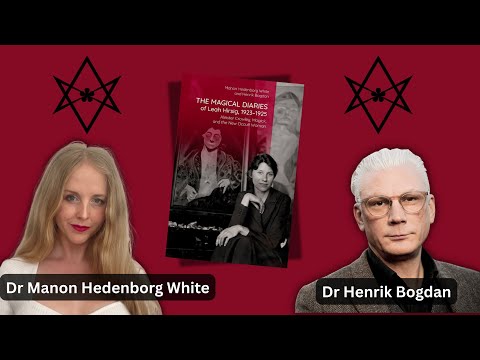
Behind every great archival discovery, there are diligent scholars. This exploration centers around the monumental work of Manon Hedenborg White and Henrik Bogdan, who have brought us "The Magical Diaries of Leah Hirsig, 1923 to 1925," a critical edition published by the esteemed Oxford University Press. Their meticulous editing and insightful commentary don't just present raw historical material; they reconstruct a lost world, offering a vital counter-narrative to established Thelemic lore. Their academic backgrounds, deeply rooted in the study of Western esotericism, provide the crucial framework for understanding the profound significance of these documents. This isn't just an academic exercise; it's an act of reclaiming a suppressed voice.From Dust to Digital: The Genesis of the Diaries
The journey to publish these diaries was not a simple one. White and Bogdan navigated the labyrinthine challenges inherent in editing primary esoteric sources. These documents, surviving the ravages of time and obscurity, offer a rare, unvarnished glimpse into Hirsig's inner life and her active participation in the magical workings of her era. The painstaking process of transcription, annotation, and contextualization transforms fragmented entries into a coherent narrative, a testament to the power of dedicated scholarship in breathing life back into forgotten histories. This collaborative effort underscores the importance of such primary material for anyone serious about understanding the practical evolution of occult systems. For those who appreciate the depth of such foundational texts, delving into resources like Aleister Crowley's own compendiums, such as Magick in Theory and Practice, provides context for the environment Hirsig operated within.Beyond the Myth: Leah Hirsig, Practitioner and Philosopher
The conventional portrayal of Leah Hirsig often reduces her to a mere accessory to Aleister Crowley, the archetypal "Scarlet Woman." However, these diaries peel back the layers of mystification, revealing a woman of considerable intellectual depth and independent magical practice. Her writings illuminate not only the daily operations of Crowley's elaborate magical system during a particularly volatile phase but also her own evolving spiritual philosophy. She emerges as a practitioner, a partner, and a fiercely independent thinker, challenging the male-dominated landscape of early 20th-century occultism. Her voice, often silenced or overshadowed, now demands attention, forcing a reckoning with the gendered power dynamics inherent in occult history. Understanding the complexities of such figures is paramount for anyone engaging with advanced magical theory.Deconstructing Thelemic Practice: Sex Magick and the Scarlet Woman
At the heart of these diaries lies a candid exploration of Thelemic practice, particularly its more controversial aspects, such as sex magick. The diaries offer Hirsig's perspective on her role as the Scarlet Woman, a title laden with symbolic and practical implications within Crowley's framework. The conversations around these texts delve into the purpose and execution of such practices, examining how they were integrated into the daily lives and magical endeavors of both Crowley and Hirsig. While some find the explicit nature of these rituals unsettling, an honest engagement with the source material is crucial for grasping the full spectrum of Thelemic application. The explicit discussion of menstruation's role in Hirsig's magick further complicates established narratives, revealing a deeper, more embodied understanding of ritual power than often acknowledged. This exploration of energetic exchange and its role in magical manifestation is a critical area of study for serious practitioners.Decoding Leah's Diaries: A New Perspective
The act of decoding Leah Hirsig's diaries is an intellectual and spiritual endeavor. White and Bogdan's critical edition provides the tools necessary to navigate Hirsig's personal language, her symbolic shorthand, and her emotional landscape. These documents reveal not just magical rituals but the profound emotional and intellectual labor Hirsig invested in her spiritual path. They illuminate the often-turbulent dynamics within the magical partnership she shared with Crowley, including their eventual estrangement. This unvarnished look at the lived experience of Thelemic practice offers invaluable insights for anyone seeking a more authentic understanding of occult traditions, moving beyond theoretical constructs to the messy, human reality of their application. The diaries also hint at the practical application of financial energies within Thelemic frameworks, a topic often whispered about but rarely detailed.The Price of Admission: Gender, Authority, and Esoteric Scholarship
The significance of Hirsig's diaries extends far beyond the confines of Thelema. They offer a critical lens through which to examine broader historiographical questions about gender, authority, and the construction of occult knowledge in the early 20th century. Hirsig's independent thought and her active magical contributions challenge the patriarchal structures that have historically marginalized women's voices in esoteric traditions. Her eventual rejection of Crowley's prophetic status suggests a profound assertion of personal agency, a stark contrast to the often-cited "price of admission" involving self-degradation. This re-evaluation of historical narratives is vital for contemporary scholarship on Western esotericism, urging us to seek out and amplify marginalized perspectives. The very act of delving into such texts requires a commitment to rigorous inquiry, often demanding resources for deeper research and study. It's in these moments of intense research that one might appreciate the stability and potential for growth offered by exploring novel economic frontiers, such as .Veredict of the Practitioner: Unlocking Subversive Histories
Veredict of the Practitioner: Unlocking Subversive Histories
Are Leah Hirsig's diaries essential reading? Absolutely. They are not merely historical documents; they are potent keys to unlocking a more nuanced and accurate understanding of modern occultism. For practitioners, they offer practical insights into ritual application, the complexities of magical partnerships, and the often-overlooked power of feminine magical currents. For scholars, they represent a critical primary source that demands a re-evaluation of established narratives surrounding figures like Aleister Crowley and the development of Thelema. The diaries reveal that true magical advancement often lies not in blind adherence to dogma, but in bold experimentation and the courage to question authority. They serve as a powerful reminder that history is written by the victors, but the true stories are often found in the margins, in the voices that refused to be silenced.
Arsenal of the Scholar-Practitioner
To truly grasp the context and implications of Leah Hirsig's work and the scholarship surrounding it, a curated selection of resources is invaluable:
- Primary Texts: "The Magical Diaries of Leah Hirsig, 1923 to 1925" by Leah Hirsig, critically edited by Manon Hedenborg White and Henrik Bogdan. Aleister Crowley's "Magick in Theory and Practice" is essential for understanding the milieu.
- Scholarly Works on Western Esotericism: Explore titles by Manon Hedenborg White and Henrik Bogdan themselves, as well as foundational texts on the history of magic and occultism.
- Thelemic Resources: For those specifically engaging with Thelemic philosophy, delve into original sources and scholarly analyses that critically examine its development.
- Historical Context: Books and articles detailing early 20th-century occult movements, the lives of key figures, and the social/cultural landscape of the time.
- Tools for Deeper Understanding: Consider investing in high-quality editions of occult texts, specialized journals on esoteric studies, and maintaining a dedicated digital or physical research archive – much like one would maintain a magical journal. The rigor applied to magick should extend to its study. For those seeking advanced tools for organizing research and insights, exploring platforms designed for complex data management can be highly beneficial.
Frequently Asked Questions
- Who was Leah Hirsig? Leah Hirsig was a practitioner of Aleister Crowley's Thelemic system, serving as his "Scarlet Woman" during a significant period of his magical career.
- What is unique about her diaries? The diaries provide an unprecedented first-person account of her life, magical practices, and relationship with Crowley, offering a complex perspective that challenges established historical narratives.
- Why are these diaries significant for Thelemic history? They offer critical primary source material that illuminates the practical workings of Thelema in the early 20th century, particularly from a female practitioner's viewpoint, and complicate established gender roles within the tradition.
- What challenges did the editors face? Editing primary esoteric sources involves overcoming issues of obscure language, damaged texts, and the need for deep contextual knowledge to accurately interpret the material.
- How do these diaries contribute to broader occult scholarship? They highlight the importance of marginalized voices, particularly women, in the history of Western esotericism and encourage a more critical examination of patriarchal narratives.
Your Operation: Challenge the Canon
Having absorbed this deep dive into Leah Hirsig's rediscovered voice, your operation is twofold. First, acquire and engage with the writings of Hirsig and the scholarship surrounding them. Do not rely solely on summaries. Second, reflect on the established narratives within your own magical or philosophical practice. Where do the voices of women, or other marginalized groups, appear in the history you've been taught? Where are they absent? Your task is to actively seek out these silenced voices and consider how their inclusion might fundamentally alter your understanding and practice. The true magic lies in confronting the accepted truths and forging your own informed path.
Practitioner's Note: True magick requires resources. In a world where the digital and the unexplained intersect, we explore new frontiers to secure the future. Do you dare to be part of the vanguard? Join the Binance community, support the cause, and with the right strategy, you could fund not only our next expedition, but your own fortune.
No hay comentarios:
Publicar un comentario