
Table of Contents
- The Ghost in the Machine: Magic's Enduring Influence on Conflict
- Echoes of Power: Ancient War Magic and Divination
- Sacred Steel and Shadow Arts: Medieval and Early Modern Warfare
- John Dee and the Armada's Hidden Gambit
- The Third Reich's Esoteric Obsession
- The Magical Battle of Britain: A Psychic Shield
- Operation Cone of Power: When Witches Stood Against Tyranny
- The Evolving Landscape: Modern War Magic and Digital Sigils
- The Unseen Edge: Psychological Warfare and Talismans
- Arsenal of the Occult Practitioner
- Frequently Asked Questions
- Practitioner's Verdict: Is War Magic Still Relevant?
- Your Operation: Crafting Your Personal Defensive Sigil
The Ghost in the Machine: Magic's Enduring Influence on Conflict
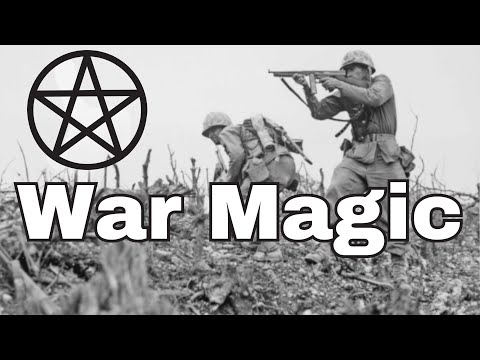
The clatter of steel on steel, the roar of cannons, the digital hum of cyber warfare – these are the sounds we associate with conflict. But beneath the visible theaters of war, a subtler, more ancient current has always flowed: the influence of the occult. For millennia, supernatural beliefs and practices have been woven into the very fabric of warfare, shaping not just strategies and tactics, but the very morale and perceived destiny of armies. This isn't just about superstition; it's about the profound psychological impact of the unseen. From ancient diviners deciphering omens to modern practitioners employing digital sigils, the human drive to control the uncontrollable has consistently led to the integration of esoteric arts into military endeavors. The question isn't *if* magic has played a role, but rather, how deeply has it shaped our history, and how can we leverage these ancient principles for contemporary defense?
Echoes of Power: Ancient War Magic and Divination
Long before the advent of gunpowder, civilizations looked to the divine and the mystical for an edge in conflict. In Mesopotamia, priests would meticulously consult entrails of sacrificed animals or star charts, seeking divine guidance on troop movements and battle outcomes. The Greeks, too, placed immense faith in seers and omens, interpreting bird flights or the entrails of birds to gauge divine favor before engaging the enemy. These were not mere symbolic gestures; they were deeply ingrained practices that influenced decision-making, bolstered warrior confidence, and provided a framework for understanding and confronting the chaos of war. If the gods favored a campaign, soldiers would fight with renewed fervor. If the omens were dire, caution—or even retreat—would be advised. This established a powerful psychological advantage, turning belief into a tangible force on the battlefield. The ancient civilizations understood that a unified, confident force, believing itself divinely sanctioned, was already halfway to victory.
Sacred Steel and Shadow Arts: Medieval and Early Modern Warfare
The fervor of the Crusades exemplifies the potent blend of religious zeal and military action. Relics of saints were carried into battle, believed to offer divine protection and inspire righteous fury. Medieval chronicles are replete with accounts of battlefield sorcery, where cunning folk and mystics were employed to curse enemies, create wards, and influence the outcome of skirmishes. These practices, often bordering on what would be deemed heresy, were nevertheless acknowledged and sometimes even utilized by commanders. Soldiers themselves often employed personal talismans and amulets, imbued with prayers or symbols, seeking to deflect blades and arrows. The line between spiritual warfare and physical combat blurred considerably, demonstrating that the efficacy of arms was often seen as intrinsically linked to supernatural favor and manipulation. The resilience and morale of soldiers were frequently bolstered by these esoteric practices, turning fear into faith and doubt into conviction.
John Dee and the Armada's Hidden Gambit
The year 1588. The formidable Spanish Armada sails towards English shores, a threat of unprecedented scale. While history books focus on naval tactics and English courage, a more esoteric dimension is often overlooked. John Dee, Queen Elizabeth I's trusted advisor, court magician, and scholar, was deeply involved in matters of state and defense. His work with Enochian magic, a complex system purportedly revealed to him through angelic communication, aimed to provide supernatural intelligence and protection for England. Did Dee's rituals, his invocations, and his attempts to commune with celestial intelligences directly sabotage the Armada? While concrete proof remains elusive and controversial, the historical record shows Dee actively advising the Queen on matters of national security, including counsel on the Armada. This period highlights how even at the highest levels of statecraft, occult knowledge was considered a viable, if secret, strategic asset.
The Third Reich's Esoteric Obsession
Perhaps no regime has been more infamously linked to occultism than Nazi Germany. Driven by a twisted pseudo-intellectualism and a hunger for esoteric power, high-ranking Nazi officials actively pursued various occult disciplines. From Himmler's Ahnenerbe, dedicated to researching Aryan history and occult lore, to alleged experiments with astrology and geomancy, the Third Reich harbored a deep fascination with the supernatural. The belief was that by harnessing ancient, 'Aryan' magical traditions, they could gain a decisive advantage and fulfill their imperial ambitions. While many accounts are sensationalized, the sheer number of documented individuals and organizations involved in occult pursuits within the Nazi regime suggests a deliberate integration of esoteric beliefs into their ideology and, potentially, their strategic thinking, even if the practical outcomes were dubious. This era serves as a stark reminder of the dangerous allure of occult power when fused with unchecked ambition.
The Magical Battle of Britain: A Psychic Shield
The darkest days of World War II saw Britain standing alone against the Nazi onslaught. While RAF pilots fought valiantly in the skies, a less visible defense was allegedly mounted on the psychic plane. It's believed that a cabal of British witches, led by figures like Mollie Whitby, performed a powerful ritual aimed at creating a psychic barrier—a "cone of power"—to deter Hitler from invading. Accounts suggest they focused collective will and intention to induce fear and confusion in the minds of the Nazi leadership. This legendary "Magical Battle of Britain" speaks to the profound belief in collective magical action as a means of defense. While historians debate its efficacy, the narrative itself underscores the human impulse to employ every available tool, visible or invisible, in times of existential threat. The power of belief, amplified through ritual, can become a formidable weapon.
Operation Cone of Power: When Witches Stood Against Tyranny
Building upon the legend of the Magical Battle of Britain, "Operation Cone of Power" has become a touchstone for modern discussions on war magic. The concept centers on a collective ritualistic effort, drawing on focused intent and visualization to create a psychic defense. It posits that a sustained magical operation could influence enemy morale, sow discord, and ultimately deter aggression. This isn't about conjuring demons; it's about harnessing the power of collective consciousness and directed will, a principle that echoes through many magical traditions. The idea, popularized by authors like Peter Heselton, suggests that even in the face of overwhelming military might, coordinated magical action could offer a crucial psychological and energetic countermeasure. It challenges us to consider that not all battles are fought with bullets and bombs.
The Evolving Landscape: Modern War Magic and Digital Sigils
The principles of war magic have not vanished; they have merely evolved. In the 21st century, these arts manifest in sophisticated ways, often indistinguishable from psychological operations. The manipulation of information, the cultivation of specific narratives, and the use of symbols designed to evoke powerful emotional responses are all forms of modern esoteric warfare. Consider the concept of 'digital sigils' – symbols created and charged within the digital realm, intended to influence online discourse, sow division, or bolster specific agendas. Furthermore, the power of belief and ritual persists even within military institutions, often in less overt forms. Talismans, blessed objects, and even whispered prayers continue to be part of soldiers' kits, offering psychological comfort and a sense of control in highly stressful environments. The underlying principles of intention, belief, and symbolic representation remain potent forces.
The Unseen Edge: Psychological Warfare and Talismans
At its core, much of what we categorize as "war magic" can be understood through the lens of psychological warfare, amplified by esoteric belief systems. A soldier carrying a blessed scapula or a laminated prayer card is not just holding an object; they are anchoring their belief in protection, resilience, and hope. This psychological reinforcement is invaluable. It can transform hesitancy into confidence, fear into resolve. Personal rituals, talismans, and even the collective performance of rites are powerful tools for boosting morale and fostering a sense of agency in situations that are otherwise terrifyingly beyond individual control. Even secular military leaders have recognized the power of symbols and rituals to unify troops and harden them against the psychological attrition of war. The "invisible world" of spiritual beliefs profoundly shapes the visible outcomes on the battlefield.
Arsenal of the Occult Practitioner
For those seeking to delve deeper into the intersection of magic and conflict, or simply to enhance personal defense, certain resources and tools prove invaluable.
- Foundational Texts: "Liber Null & Psychonaut" by Peter J. Carroll offers a radical, results-oriented approach to Chaos Magic, essential for understanding modern magical theory. "Condensed Chaos" by the same author provides a more accessible entry point. For historical context on traditional practices, "Popular Magic: Cunning Folk in English History" by Owen Davies is illuminating.
- Strategic Thought: "The Metaphysics of War: Battle, Victory & Death in the World of Tradition" by Julius Evola offers a philosophical perspective on the martial spirit and its esoteric underpinnings.
- Specialized Operations: For specific historical accounts, "Operation Cone of Power" by Peter Heselton delves into the alleged magical defense of Britain. "The Magical Battle of Britain" by Dion Fortune provides a firsthand esoteric perspective.
- Essential Tools: While not strictly magic, tools that aid focus and ritual are paramount. This can range from a well-crafted dagger for channeling intent, to high-quality notebooks for recording operations, or even specialized software for astrological charting or sigil generation.
- Digital Integration: For practitioners working in the modern age, understanding how to create and charge digital sigils or use online platforms for group rituals is increasingly important.
Frequently Asked Questions
- Can modern military forces use magic? While not openly acknowledged, psychological operations, symbolism, and the cultivation of morale draw heavily on principles that overlap with esoteric practices.
- Is magic effective in real warfare? The effectiveness is debated, but its psychological impact and influence on morale are undeniable. Historical accounts and anecdotal evidence suggest tangible results, though direct causation is often hard to prove.
- How can I use war magic for personal defense? By understanding the principles of intention, symbolism, and focused will, you can create personal talismans or sigils for protection, resilience, and enhanced situational awareness, much like soldiers historically relied on protective charms.
- Is there a difference between war magic and psychological operations? War magic often incorporates belief in supernatural forces, while psychological operations focus on manipulating perception and emotion through more conventional means. However, the outcomes can be strikingly similar.
Practitioner's Verdict: Is War Magic Still Relevant?
The battlefield has evolved, but the human element—fear, courage, belief, and the desperate need for control—remains constant. War magic, in its broadest sense, is not a relic of the past but a continuous thread running through human conflict. Whether it's the ancient priest interpreting omens, the medieval knight invoking divine aid, or a modern operator crafting a digital sigil, the underlying principle is the same: to gain an advantage through means beyond the purely material. Its current relevance lies not necessarily in predicting outcomes of geopolitical conflicts, but in empowering the individual. In an age where external forces often feel overwhelming, understanding and applying principles of focused intent and symbolic action can provide a potent sense of agency and personal resilience. It’s about harnessing your inner power against the external chaos.
Your Operation: Crafting Your Personal Defensive Sigil
Now, it's your turn to tap into the power of symbolic warfare. This is not about defending a nation, but about fortifying your personal energetic space against unwanted influences, stress, or psychic intrusion.
- Define Your Intent: Clearly articulate what you need to defend against. Is it general anxiety? Specific negative energies? Psychic bombardment from media? Be precise. For example: "I am protected from all external negative psychic influences."
- Create Your Symbol: Condense your intent into a simple, unique symbol. You can combine letters from your statement, abstract shapes, or elements that resonate personally with you. The key is uniqueness and personal resonance.
- Charge the Sigil: This is where you imbue the sigil with energy. You can do this through:
- Intense Focus: Stare at the sigil until it becomes vibrant in your mind's eye, holding your intent with absolute clarity.
- Emotional Peak: Channel a strong emotion (joy, anger, determination) while focusing on the sigil.
- Ritualistic Action: Burn the sigil, bury it, or tear it up, releasing the charged intent into the ether.
- Forget It: Once charged and released, consciously try to forget the sigil and its specific intent. This allows the subconscious to work without interference.
This simple act of intentional creation is your personal "Operation Cone of Power." Experiment with it, refine it, and trust your intuition. The power lies in your will and your execution.
Practitioner's Note: True magick requires resources. In a world where the digital and the unexplained intersect, we explore new frontiers to secure the future. Do you dare to be part of the vanguard? Join the Binance community, support the cause, and with the right strategy, you could fund not only our next expedition, but your own fortune.
No hay comentarios:
Publicar un comentario