
Table of Contents
- The Unseen Architects of Reality
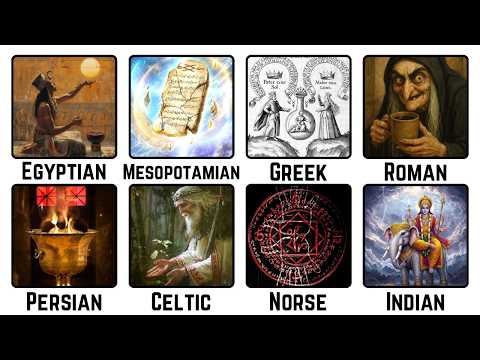
- Egyptian Heka: The Breath of Creation
- Mesopotamian Demonology: Navigating the Underworld
- Greek Theurgy: Ascension Through Divine Art
- Roman Curse Tablets: The Dark Side of Intentionality
- Persian Zoroastrian Rituals: The War Against Darkness
- Celtic Druidic Prophecy: Whispers of Nature's Will
- Viking Seidr and Rune Sorcery: Weaving Fate's Threads
- Ancient China's Taoist Alchemy: The Pursuit of Immortality
- Ancient India's Vedic Mantra Power: The Sound of Creation
- Mayan Astral Blood Magic: Cosmic Alignment and Sacrifice
- Practitioner's Verdict: The Enduring Echoes of Ancient Power
- Arsenal of the Mage
- Frequently Asked Questions
- Your Operation: Choose Your Path
The Unseen Architects of Reality
Forget dusty tomes and academic detachment. The true history of civilization is etched not in stone monuments, but in the persistent hum of forgotten energies. Every ancient culture, from the sun-baked sands of Egypt to the misty shores of the Celts, understood this fundamental truth: the universe is not a cold, indifferent void, but a vibrant tapestry woven by hidden forces, sacred energies, and beings beyond our mundane perception. Their practitioners—magicians, priests, shamans—were not charlatans but engineers of the psyche, wielding potent rituals, symbols, and spiritual technologies to bend destiny, shield their tribes, mend the broken, or forge direct connections with the divine and the spectral.
This exploration isn't about blind faith; it's about dissecting the mechanics of belief and intention. We’re peeling back the layers of millennia to understand how these mystical traditions functioned, the tangible impact they had on shaping empires, and the undeniable magnetic pull they continue to exert on seekers of deeper truths today. This is a pragmatic dive into the "how" and "why" of ancient magic, stripped of dogma and focused on the raw application of will.
Egyptian Heka: The Breath of Creation
In ancient Egypt, Heka was not merely magic; it was the generative force of creation itself, the divine energy that brought the cosmos into being and sustained it. It was personified as a god, a sentient power inherent in all things. Egyptian magicians, or priests wielding Heka, understood that the universe responded to precise articulation and symbolic representation. Their rituals were intricate performances designed to align with cosmic order (Ma'at), invoking divine forces through potent hymns, sacred gestures, and inscribed hieroglyphs that were believed to possess intrinsic power. They used amulets, spells, and sophisticated astronomical observations to manipulate events, protect against malevolent spirits (Apep being the prime antagonist), and ensure the pharaoh's divine mandate. This wasn't about casting spells; it was about participating in the fundamental workings of existence. Understanding the principles of Heka can inform modern approaches to intent manifestation, emphasizing the power of precise language and symbolic resonance.
Mesopotamian Demonology: Navigating the Underworld
Mesopotamia, the cradle of civilization, viewed the world as a battleground between divine order and a teeming underworld of demons and malevolent spirits. Their magic, deeply intertwined with astrology and divination, was primarily concerned with warding off these entities and appeasing the gods who held sway over them. Rituals involved elaborate incantations recited by priests to diagnose spiritual afflictions, perform exorcisms, and create protective amulets. The focus was often therapeutic; authentic Mesopotamian magic sought to treat diseases believed to be caused by demonic possession or divine displeasure. However, as some scholars and community voices suggest, the manipulation of these forces could also be twisted. This demonstrates a critical aspect of ancient practice: the double-edged nature of intent and the profound responsibility that comes with wielding such power. Exploring these darker aspects requires a robust understanding of protective rituals, which can be found in texts discussing protective rituals.
Greek Theurgy: Ascension Through Divine Art
Ancient Greek magic, particularly later developments like Theurgy, was a complex system aimed at spiritual purification and union with the divine. Unlike more coercive forms of magic, Theurgy emphasized reverence, contemplative practices, and symbolic rituals to achieve ecstatic states and divine communion. Thinkers like Iamblichus saw Theurgy as a Divine Art, a way to ascend beyond the material world through invoking angels, archangels, and the gods themselves. This involved precise invocations, purification rites, and the use of sacred materials believed to bridge the gap between the human and the divine. It's a testament to the idea that magic isn't always about commanding, but sometimes about aligning and ascending. For those interested in the more esoteric aspects, exploring esoteric philosophy can provide further context.
Roman Curse Tablets: The Dark Side of Intentionality
The Romans, known for their pragmatism, displayed it even in their sorcery. Curse tablets, or *defixiones*, were thin sheets of lead or pewter inscribed with spells intended to harm enemies, lovers, or rivals. These were ritually buried or placed in tombs, binding the curse to the underworld and the spirits residing there. The messages were often brutal, invoking deities and demons to afflict their targets with pain, misfortune, or impotence. This stark example highlights the raw power of focused intention, particularly when charged with negative emotion. It serves as a potent reminder of responsibility in magic; the energy you project, intended for good or ill, inevitably seeks manifestation. The creation and use of such artifacts underscores the need for rigorous ethical frameworks in modern occult practice, much like one would find in discussions about ethical magic.
Persian Zoroastrian Rituals: The War Against Darkness
Zoroastrianism, one of the world's oldest monotheistic religions, viewed reality as a cosmic struggle between the forces of good (Ahura Mazda) and evil (Angra Mainyu). Its magical practices were deeply embedded within this dualistic framework, focusing on rituals, prayers, and purification rites to strengthen the good and repel the forces of darkness and deception. Offerings, sacred fires, and the recitation of sacred texts (Avesta) were paramount. The magician's role was to act as a warrior for light, using spiritual technologies to support the cosmic battle and protect the community from malevolent influences. This philosophy resonates with the idea that focused spiritual effort can actively influence the balance of forces, a concept explored in the realm of spiritual warfare.
Celtic Druidic Prophecy: Whispers of Nature's Will
The Druids, the priestly class of ancient Celtic societies, were deeply connected to the natural world, seeing divine essence in trees, rivers, and celestial bodies. Their magic was intrinsically linked to prophecy, divination, and the understanding of natural cycles. They likely utilized sacred groves, standing stones, and elements like water and fire for scrying and communication with spirits. Their practices involved understanding the unseen currents of destiny, often expressed through elaborate rituals and possibly ecstatic states induced by natural means. The emphasis was on harmonizing with the spiritual forces inherent in the environment rather than imposing will upon it. This deep ecological spirituality can inform modern practitioners interested in nature magic and animism.
Viking Seidr and Rune Sorcery: Weaving Fate's Threads
Norse magic was a potent mix of practical sorcery and cosmic understanding. Seidr, often practiced by women called Völva, involved trance states, prophecy, and the manipulation of fate (Wyrd). It was a complex art of weaving destiny, often seen as a dangerous but powerful force. Rune sorcery, on the other hand, utilized the angular symbols of the Elder Futhark, each imbued with potent meaning and magical potential. Runes were carved, inscribed, and invoked for various purposes, from protection and healing to curses and empowerment. The Vikings understood that symbols were not mere representations but conduits of power. Their approach was direct, often gritty, and deeply effective. For those drawn to this path, understanding rune divination is a foundational step.
Ancient China's Taoist Alchemy: The Pursuit of Immortality
Taoist alchemy in ancient China was a sophisticated system that sought not just material transformation but, more profoundly, the transformation of the practitioner themselves. It encompassed both external alchemy (waidan), involving elixirs and herbs, and internal alchemy (neidan), which focused on refining one's own vital energies (Qi) through meditation, breathwork, and sexual practices. The ultimate goal was often longevity or even immortality—achieving a state of harmonious alignment with the Tao, the fundamental principle of the universe. This pursuit of spiritual and physical perfection through energetic manipulation remains a potent area of study for those interested in Taoism and energetic cultivation.
Ancient India's Vedic Mantra Power: The Sound of Creation
In ancient India, Vedic priests wielded the power of mantra—sacred syllables and verses believed to be the fundamental building blocks of reality. They understood that sound vibration held immense creative and transformative power. Through precise intonation and recitation, these priests could invoke deities, manifest desired outcomes, and achieve altered states of consciousness. Mantras were not just words; they were sonic keys to unlocking cosmic energies. This tradition highlights the profound impact of vibration and focused sound in magical practice, a principle that echoes in modern sound healing and mantra meditation.
Mayan Astral Blood Magic: Cosmic Alignment and Sacrifice
The Maya possessed a remarkably advanced understanding of astronomy and cosmology, which they integrated into their magical practices. Their system often involved bloodletting rituals, where rulers and priests would offer their own blood as a potent offering to the gods and the cosmos. This act was believed to nourish the divine, open channels of communication with the spirit world, and ensure the continuation of cosmic cycles. Their magic was deeply tied to celestial events, intricately mapping time and destiny onto the movements of stars and planets. This practice, while intense, demonstrates a willingness to engage physically and energetically with the forces governing reality, a concept that can be viewed alongside discussions on astral projection and cosmic energy.
Practitioner's Verdict: The Enduring Echoes of Ancient Power
What becomes clear when you strip away the dogma and look at the underlying principles is that ancient magic was fundamentally about understanding and interacting with subtle energies, intention, and consciousness itself. Each civilization developed its unique technological interface for this interaction, be it through hieroglyphs, incantations, runes, or celestial alignments. These systems were not mere superstition; they were sophisticated spiritual technologies that shaped societies, influenced thought, and provided a framework for understanding one's place in the cosmos. The fascination endures because these methods tap into fundamental aspects of the human psyche and our innate drive to influence our reality. While the specific forms may change, the core principles of focused will, symbolic representation, and energetic manipulation remain timeless. The challenge for the modern practitioner is to learn from these ancient blueprints, adapt them to contemporary contexts, and wield them with intelligence and responsibility.
Arsenal of the Mage
- Key Texts:
- "The Egyptian Book of the Dead"
- "A History of Magic in the Early Middle Ages" by Richard Kieckhefer (for context on Western traditions)
- "The Secret Teachings of All Ages" by Manly P. Hall (for broad esoteric overviews)
- "The Epic of Gilgamesh" (for Mesopotamian context)
- "The Poetic Edda" and "The Prose Edda" (for Norse lore)
- Tools & Practices:
- Symbolic journals for recording sigils, runes, or hieroglyphs.
- High-quality representations of ancient scripts (e.g., accurate rune charts, hieroglyph guides).
- Tools for divination: runes, scrying bowls, accurate astronomical charting software.
- Focusing aids: crystals, specific woods, natural elements that hold symbolic meaning.
- Research subscription services for academic papers on ancient religions and magic.
- Modern Resources:
- Online courses focusing on comparative mythology and ancient religion.
- Academic journals specializing in ancient history and religious studies.
- Workshops on symbolic language and ritual construction.
Frequently Asked Questions
- Q: Is ancient magic dangerous to practice today?
A: Like any powerful tool, ancient magic carries risks. Practicing without proper understanding, respect, and ethical considerations can lead to unintended consequences. Focus on learning the principles and starting with simpler, foundational techniques. - Q: How can I verify the authenticity of ancient magical texts or practices?
A: Authenticity is a complex issue. Cross-reference information from multiple scholarly sources, archeological findings, and respected esoteric researchers. Be wary of overly sensationalized claims or commercialized interpretations. - Q: Can I combine practices from different ancient cultures?
A: Yes, but with caution. Understanding the core principles of each system is crucial before attempting to blend them. A deep understanding of one tradition before integrating another often leads to more potent results. - Q: What's the difference between historical magic and modern occultism?
A: Historical magic offers blueprints and context, showing how our ancestors interacted with unseen forces. Modern occultism often adapts and reinterprets these ancient systems through contemporary psychological and philosophical lenses.
Your Operation: Choose Your Path
The echoes of ancient power resonate through the ages, not as relics of the past, but as living blueprints for consciousness. Now, it's your turn to engage with this legacy. Choose one of the civilizations explored above and commit to a small, focused act of exploration within the next seven days:
- Egyptian Heka focus: Craft a short, powerful affirmation in clear, deliberate language, and repeat it with focused intent three times daily.
- Mesopotamian focus: Dedicate a moment to consciously warding off any negative influences or intrusive thoughts that arise during your day. Visualize a protective barrier.
- Greek Theurgy focus: Engage in a brief period of contemplative silence, focusing on invoking a sense of higher harmony within yourself.
- Roman focus: Write down one specific intention you wish to manifest clearly, and seal it symbolically (e.g., by drawing a simple sigil for it or folding the paper in a specific way).
- Persian focus: Identify one small, habitual "darkness" in your life (e.g., procrastination, negative self-talk) and perform a brief ritual to actively dispel it.
- Celtic focus: Spend time in nature, observing its patterns and listening for any intuitive whispers of insight or guidance.
- Viking focus: Meditate on a single runic symbol that resonates with you, contemplating its potential applications in your life.
- Chinese focus: Practice a short breathing exercise, focusing on the cultivation and circulation of your internal energy (Qi).
- Indian focus: Select a simple mantra (or create your own) and recite it with focused intent for a few minutes.
- Mayan focus: Reflect on a significant celestial event (past or future) and consider its potential energetic influence on your life.
Document your experience. Did you notice anything? Was there a shift in your perception or energy? Share your findings in the comments below. The true exploration begins with your direct experience.
Practitioner's Note: True magick requires resources. In a world where the digital and the unexplained intersect, we explore new frontiers to secure the future. Do you dare to be part of the vanguard? Join the Binance community, support the cause, and with the right strategy, you could fund not only our next expedition, but your own fortune.
No hay comentarios:
Publicar un comentario