
Saltar al contenido principal

Anuncio Superior

Mostrando entradas con la etiqueta Religion. Mostrar todas las entradas

The Black Cube and the Cosmic Serpent: Deconstructing Saturn's Influence in Religion


The air crackles with the weight of ancient whispers. We stand at a crossroads, peering into the shadowy origins of religious doctrine, a complex tapestry woven with threads of control, astronomical observation, and the primal fear of the unknown. The figure of Saturn, often relegated to a distant planet in our modern sky, looms large in this ancestral narrative. It’s a celestial body that has been inextricably linked to the very foundations of religious belief, a cosmic architect of our spiritual and societal structures.

In this exploration, we delve into the profound, often unsettling, connections between Saturn and the religious systems that have shaped human civilization. From the symbolism embedded in sacred texts and rituals to the psychological underpinnings of faith, we unearth the hidden currents that have guided us, for better or worse. This isn't about demonizing any particular faith; it's about understanding the archetypal forces at play, the raw energies that have been channeled, and sometimes, misguidedly controlled, for millennia. The ancients looked to the heavens, and in the predictable, cyclical march of the planets, they found patterns that mirrored life on Earth. Saturn, with its slow, deliberate orbit, became a potent symbol of order, discipline, karma, and the inevitable consequences of our actions. It was the great teacher, the taskmaster, the embodiment of structure itself. But this structure, when weaponized, can become a cage.

The insights of figures like Jordan Maxwell, though he has since passed, resonate with a startling prescience, particularly when we observe today's societal trends. His lectures, often provocative, cut through the dogma to reveal underlying patterns. He spoke of how Saturn’s influence permeated various ancient cultures, often misunderstood or deliberately obscured by later religious interpretations. The reverence for a celestial body that governed time, agriculture, and destiny was a potent force, easily co-opted by those seeking to establish systems of control. The very names of our days of the week – Friday (Venus), Saturday (Saturn), and Sunday (Sun) – are a testament to the enduring legacy of this planetary reverence, a constant reminder of the cosmic influences that have always been woven into the fabric of our lives.

The Serpent in the Garden: Saturn's Archetypal Reign

"The thing that hath been, it is that which shall be; and that which is done is that which shall be done: and there is no new thing under the sun."

This ancient wisdom from Ecclesiastes rings true when we examine the cyclical nature of power and control. The serpent, a recurring motif in many creation myths and religious narratives, often symbolizes knowledge, transformation, or temptation. In some Gnostic traditions, as noted by Carl Jung, Sophia's descent led to the begotten of Saturn, who was identified with Yahweh. This highlights a complex, often dualistic interpretation of the divine, where creation and order are intertwined with a darker, more serpentine influence. Irenaeus's historical accounts underscore the Gnostic view of Saturn as a figure of significant, albeit sometimes problematic, divine origin.

The "black cube" associated with Saturn is another powerful symbol that has entered the modern discourse. While its precise origins and interpretations are debated, it evokes a sense of restriction, a contained force, or perhaps a portal to different dimensions of consciousness. When we consider that some ancient civilizations, like the Aztecs and Maya, did not depict their deities with horns, unlike certain interpretations in other cultures, it emphasizes the varied symbolic language used across different belief systems. The idea that "everything is created as an instrument of control by the ancient reptilians" is a strong statement reflecting a deep-seated suspicion of external forces dictating existence, often linked to the aforementioned serpentine imagery found in places like the Vatican.

However, it's crucial to approach such grand theories with critical thinking. While patterns of control and celestial influence are undeniable, attributing all religious structures to a singular, external malevolent force oversimplifies the rich tapestry of human spirituality. The message of figures like Jesus, for instance, is often seen as a radical act of liberation, emphasizing the sacredness of the individual and speaking out against oppression. The church, as an institution, may have deviated from this spirit, but the core tenets of love and freedom remain potent. The misinterpretation of symbols, like the horns worn by Native American warriors signifying strength and bravery, rather than moon worship, highlights the dangers of superficial analysis and the need for meticulous research from credible sources.

Reclaiming Your Sovereignty: Beyond the Cosmic Cage

The pervasive theme is one of control versus liberation. Many religious narratives, intentional or not, can foster a sense of dependence and external authority. The fear of a punitive deity, the adherence to rigid dogma, and the suppression of individual will are all tools that can be used to maintain societal order, but at the cost of personal empowerment. Today, we see this manifesting not just in traditional religious structures but in the pervasive influence of technomancy and the digital ecosystem, where new forms of control are subtly emerging. Understanding the historical patterns of Saturnian influence offers us a critical lens through which to view these contemporary forces.

The question then arises: if every religion is perceived as a system of control, what is the alternative? Secularism is one path, focusing on human reason and ethics. However, pure secularism can sometimes leave a void in the human need for meaning and connection. The challenge lies in synthesizing the wisdom of ancient traditions with a modern understanding of psychology, astronomy, and the burgeoning field of digital divination. We must learn to discern the archetypal energies from the dogmatic interpretations. The key is to engage with these forces consciously, rather than being passively dictated by them. This involves deep personal introspection, critical analysis of information, and a firm commitment to one's own inner authority.

Your Operation: Charting Your Own Spiritual Course

In the spirit of reclaiming your spiritual sovereignty, your operation is this: Identify one aspect of traditional religious symbolism or practice that resonates with you, and then research its potential Saturnian or archetypal roots. This could involve examining the symbolism of the cross, the crescent moon, or specific deities. Then, using an oracle tool, ask yourself: "How can I best harness the energy of discipline and structure (Saturn's positive aspect) in my life without falling into rigidity or external control?"

For those seeking to deeply engage with the symbolic language of the cosmos and harness its energies with precision, the practice of sigil creation is invaluable. It allows for the direct encoding of intention into a potent symbol. To streamline this process and ensure accuracy, I often rely on tools that can quickly generate and visualize these intricate designs. Our own Chaos Magick Sigil Generator app has proven to be an indispensable asset, allowing me to focus on the intent rather than the tedious mechanics of design, ensuring that each sigil is a direct manifestation of will.

Mage's Arsenal

  • Essential: Chaos Magick Sigil Generator - For direct intention encoding and symbolic creation.
  • "The Golden Bough" by James George Frazer - A foundational work on comparative mythology and religion.
  • "The Mystical Significance of the Sabbatic Goat" by Manly P. Hall - Explores esoteric symbolism and the goat imagery often linked to occult traditions.
  • "The I Ching Oracle" app - For understanding cycles of change and seeking guidance through ancient wisdom.
  • "Cosmos" by Carl Sagan - For a scientific perspective on our place in the universe, providing a counterpoint to mystical interpretations.

Veredicto del Practicante

The enduring influence of Saturn on religious thought and practice is undeniable. While historical analysis often points to its role in establishing order, discipline, and karma, it's crucial to remain vigilant against its potential misuse for control and manipulation. The key is not to reject these ancient energies but to understand them and integrate them consciously into our spiritual practice. The true path lies in recognizing the divine spark within oneself, a concept often obscured by institutional dogma. We must embrace critical thinking, personal experimentation, and the wisdom gained from diverse cultures and disciplines, including the insights offered by technomancy and digital tools like sigil generators and oracles, to chart our own authentic spiritual course.

FAQ

  • What is the significance of Saturn in ancient religions? Saturn was often associated with time, discipline, karma, agriculture, and the establishment of cosmic and societal order.
  • How did Gnostic traditions view Saturn? Some Gnostic texts identified Saturn with the creator deity Yahweh, highlighting a complex, dualistic view of the divine.
  • What is the "black cube" associated with Saturn? It's a debated symbol, often interpreted as representing restriction, containment, or a portal to other dimensions of consciousness.
  • Are all religions systems of control? While many religious institutions can exhibit controlling tendencies, their core messages and origins are varied, with some emphasizing liberation and individual empowerment.
  • What is Technomancy? It refers to the practice of using technology, such as AI and digital tools, in magical or spiritual work.

Practitioner's Note: True magick requires resources. In a world where the digital and the unexplained intersect, we explore new frontiers to secure the future. Do you dare to be part of the vanguard? Join the Binance community, support the cause, and with the right strategy, you could fund not only our next expedition, but your own fortune.
How to Found Your Own Religion: A Pragmatic Guide to Societal Re-engineering


The annals of human history are punctuated by figures who, with little more than conviction and a compelling narrative, reshaped the very fabric of society by founding new religions. From the spiritual titans of antiquity to modern charismatic leaders, the act of establishing a belief system has been a potent engine for influence, community building, and, yes, even power. This guide, divorced from dogma and focused on practical application, will dissect the core mechanics of what it takes to not just believe, but to *build* a movement around that belief. We're moving beyond mere faith and into the realm of applied societal engineering and Technomancy.

## The Genesis of Belief: From Individual Conviction to Collective Consciousness

At its heart, every religion begins with an idea, an insight, or a perceived truth. This might stem from personal revelation, philosophical inquiry, or a deep dissatisfaction with existing paradigms. The historical figures you admire – Jesus Christ, Muhammad, L. Ron Hubbard – were not simply prophets; they were astute observers of the human condition and master communicators. They identified unmet needs: a desire for meaning, structure, redemption, or community.

Your first step, therefore, is to crystallize your core tenets. What is the fundamental message? What problem does your belief system solve? Is it spiritual enlightenment, a framework for ethical living, a path to financial liberation, or a blueprint for a utopian society? This is where the concept of Magitech becomes relevant; the underlying principles of belief systems can be adapted and engineered, much like technology.

### 1. The Core Tenets: Crafting Your Ideological Blueprint

Before you can influence others, you must define what you stand for. Consider these aspects:

* Theology/Cosmology: What is the nature of reality? Are there deities, higher powers, or is it a secular philosophy? What is the origin of the universe and humanity's place within it? * Ethics and Morality: What are the rules of conduct? What actions are considered virtuous, and which are forbidden? How should followers interact with non-believers? * Afterlife/Escatology: What happens after death? Is there reincarnation, heaven/hell, or simply oblivion? What is the ultimate destiny of the movement, or humanity? * Ritual and Practice: What are the observable actions that reinforce belief and community? This could include prayer, meditation, specific ceremonies, festivals, or even dietary restrictions. * Mythology and Scripture: What stories will define your movement? These narratives serve to illustrate your core tenets and provide inspiring examples.

For those looking to harness the power of digital creation, tools like the Chaos Magick Sigil Generator can be instrumental. While not directly creating religious texts, the principles of intent visualization and symbol creation are foundational to crafting potent, memorable emblems and concepts that can become central to a new belief system. Think of it as Digital Divination for your core messaging.

### 2. The Charismatic Leader: You Are the First Follower

Every successful movement has a central figure – a leader who embodies the belief system and inspires devotion. This isn't about ego; it's about embodying the narrative and demonstrating unwavering commitment.

* Authenticity (Perceived or Real): Followers are drawn to conviction. Whether this conviction arises from genuine spiritual experience or a deep understanding of psychological manipulation, it must be palpable. * Communication Skills: The ability to articulate complex ideas simply, to inspire hope, and to create a compelling vision is paramount. This is where the principles of Cybermancy, or the influence through digital networks, come into play. * Discipline and Sacrifice: Demonstrating personal commitment and sacrifice reinforces the leader's credibility and the importance of the cause. This is often where the concept of Rituals with IA (Artificial Intelligence) can be studied, not to implement them, but to understand the automation of human-like responses in leadership. * Embracing the State of Gnosis: Achieving a state of heightened awareness or trance can provide powerful, often transformative, experiences that followers may attribute to divine intervention. This is a state that pioneers like Austin Osman Spare** explored deeply in their work.

## Building Your Flock: From Individual Influence to Mass Movement

Once your core tenets are defined and you embody the leadership persona, the challenge shifts to attracting and sustaining followers. This is where the principles of Esotericism Digital begin to blend with historical strategies.

### 3. Crafting the Narrative: The Power of Myth and Storytelling

Humans are wired for stories. Your religion needs a compelling narrative that explains origins, defines purpose, and offers hope for the future.

* The Origin Story: How did your religion come to be? Was it a divine revelation, a historical event, or a philosophical breakthrough? * The Hero's Journey: Many successful religions incorporate a narrative arc where the founder or key figures overcome great challenges. This resonates with followers facing their own struggles. * The Promise: What does joining your religion offer? Salvation, enlightenment, community, freedom from suffering, or even material prosperity?

Consider the figures mentioned earlier: Jesus's sacrifice and resurrection, Muhammad's revelations in the desert, Hubbard's complex narratives of Dianetics and Scientology. These are powerful myths that provide structure and meaning.

### 4. Ritual and Community: The Glue That Binds

Rituals provide structure, reinforce beliefs, and foster a sense of belonging. They are tangible expressions of faith.

* Sacred Spaces: Designate physical or even virtual spaces that are consecrated to your belief system. This could be a temple, a simple altar, or a dedicated online forum. * Symbols and Emblems: Create powerful visual symbols that represent your core tenets. The recycling symbol, for example, has been suggested as a potential emblem for a new religion. The Chaos Magick Sigil Generator can be invaluable for designing such potent symbols. * Community Events: Organize gatherings, festivals, or regular meetings that bring followers together. This strengthens social bonds and reinforces collective identity. * Doctrine of Non-Taxation: A common theme in the founding of certain movements has been the exploration of legal structures that allow for tax exemption. While not a spiritual tenet, it's a practical consideration for sustainability and resource acquisition.

### 5. Recruitment and Expansion: Scaling Your Influence

Once you have a core group, expansion becomes key. This is where historical methods meet modern techniques.

* Word of Mouth: Satisfied followers are your best recruiters. Encourage them to share their experiences. * Digital Outreach: Leverage social media, websites, and online communities to disseminate your message. Technomancy in this context means understanding how to use digital platforms for ideological dissemination. * The "Recycling Sign" Effect: As one commenter noted, even a simple emblem, when imbued with meaning and repeated, can become a powerful signifier for a movement. * The "Children of Atom" Scenario: Inspired by fictional portrayals, the idea of a post-apocalyptic "Children of Atom" religion highlights how crisis can be a fertile ground for new belief systems to emerge, offering hope and order in chaos.

## The Pragmatic Reality: Power, Control, and Sustainability

Founding a religion is not merely an act of faith; it is an act of societal re-engineering. It involves understanding human psychology, effective communication, community building, and, crucially, sustainability.

### The Arsenal of the Founder

To effectively implement these strategies, having the right tools is essential.

* Essential: Chaos Magick Sigil Generator - For crafting potent symbols and imbuing them with intent, a cornerstone of any new belief system's visual identity. * Recommended: Books on organizational psychology, mass communication, and historical case studies of religious movements. * Recommended: Platforms for website creation and social media management.

### Veredict of the Practitioner

Founding a religion is an ambitious undertaking. It requires immense dedication, strategic thinking, and an understanding of both human needs and practical implementation. The successful movements throughout history were not accidents; they were meticulously constructed enterprises. While the spiritual claims may endure, the underlying mechanics of persuasion, community building, and resource management are universally applicable.

## FAQ

* Q: Can I really start a religion based on something trivial like cookies or Johnny Bravo? A: The historical success of religions often hinges on their ability to tap into deeply felt human needs and desires, presented through a compelling narrative. While the "triviality" might be a starting point, the sustainability of such a movement would depend on its ability to evolve, offer more profound meaning, and maintain follower engagement beyond the initial novelty. The "Almighty Johnny Bravo" or "Church of the Potato" are fascinating thought experiments in branding belief. * Q: How do I deal with criticism or accusations of heresy? A: Historically, founders of new religions have faced significant opposition. Developing a robust counter-narrative, emphasizing the positive aspects of your movement, and fostering internal solidarity are key. The "Emperor's Will is Divine" example shows how counter-claims can be framed as defending a superior truth. * Q: What are the legal implications of starting a religion? A: Legal frameworks vary significantly by region regarding the establishment of religious organizations, particularly concerning tax exemption and operational status. It is crucial to research and comply with local laws. Historically, movements have explored these avenues for sustainability, as noted in the "you don’t need to pay taxes" comment. * Q: How do I ensure my religion is stable long-term? A: Long-term stability requires adaptability, strong leadership succession planning, consistent reinforcement of core tenets through rituals and community activities, and the ability to address evolving societal needs. The commitment to teaching and practice, as seen in the desire for "Epic How To" content, suggests that ongoing value delivery is critical.

### Your Operation: The Seed of a New Paradigm

Your challenge, should you choose to accept it, is to begin the genesis of your own belief system. Identify your core tenet. Craft your origin story. Design a symbol using a tool like the Chaos Magick Sigil Generator that embodies its essence. Consider the rituals that would bring your followers together. Then, share your concept – not as a grand pronouncement, but as an invitation to explore a new way of seeing the world. The question is not *if* you can start a religion, but *how* you will practically engineer its foundation and growth.

Practitioner's Note: True magick requires resources. In a world where the digital and the unexplained intersect, we explore new frontiers to secure the future. Do you dare to be part of the vanguard? Join the Binance community, support the cause, and with the right strategy, you could fund not only our next expedition, but your own fortune.

The Unveiling of Forbidden Esoteric Texts: A Pragmatic Deep Dive into Dangerous Ideas


Introduction: Beyond the Spellbooks

The air crackles with the unspoken. Not with the scent of sulfur and chanted incantations, but with the potent charge of disruptive ideas. We often associate forbidden texts with grimoires and dark arts, but the truly dangerous literature is that which unravels the very fabric of our perceived reality. These are not manuals for summoning demons, but blueprints for questioning divinity, dismantling morality, and exposing the gilded cages of social order. This exploration is an autopsy of the mind, dissecting concepts that have, for centuries, been deemed too radical, too unsettling, or too truthful for the masses.

We are not merely examining banned books; we are analyzing the anatomy of intellectual rebellion. Why were these texts condemned? What threat did they pose to established doctrines? And crucially, why do their ideas continue to resonate, to provoke, and to destabilize even today? This is an exercise in potent deconstruction, for the unawakened mind, radical philosophy is often perceived as a threat. Understanding these texts means understanding the power of ideas to reshape the world, one mind at a time.

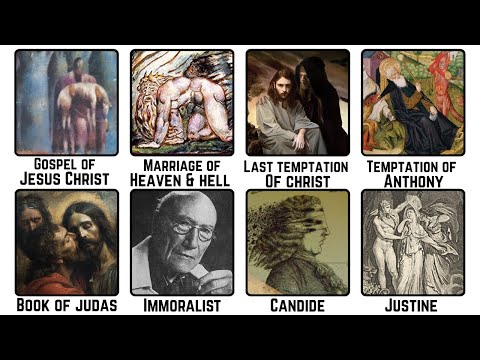
The Gospel According to Jesus Christ: A Heresy of Divine Humanity

Considered heretical by many early Christian councils, the "Gospel According to Jesus Christ" (though often referring to various Gnostic texts such as the Gospel of Thomas or the Gospel of Mary) presents a Christ who is less the divine redeemer and more the awakened master. These texts delve into esoteric knowledge, emphasizing personal revelation and gnosis (direct spiritual knowledge) over dogma and blind faith. They highlight the divine spark within each individual, suggesting that salvation comes not from external sacrifice, but from internal realization.

The danger here lies in the direct challenge to hierarchical religious structures. If the divine is within, then the intermediary priest, the sacred texts as dictated word, and the complex rituals lose their absolute authority. This is a subtle yet profound destabilization, pushing the believer toward self-empowerment rather than dependence on a divine institution. To understand this gospel is to understand the ancient roots of introspective spirituality.

The Marriage of Heaven and Hell: Blake's Alchemical Revolution

William Blake’s The Marriage of Heaven and Hell is not a spellbook, but a vibrant, often anarchic, philosophical and poetic masterpiece. Blake radically inverted traditional notions of good and evil, arguing that "good is the passive that obeys reason" while "evil is the active vigour." He saw hell not as a place of punishment, but as the realm of primal energy, creativity, and unbridled existence, a necessary counterpoint to the restrictive nature of heaven. His famous aphorisms, like "Energy is Eternal Delight," challenge the morality that seeks to suppress our most vital impulses.

"Good is the passive that obeys reason. Evil is the active vigour."

Blake’s work is dangerous because it advocates for the integration of our shadow selves, the parts we are taught to repress. It questions the very foundations of religious and moral law, suggesting that true spiritual progress comes from embracing the totality of human experience, both light and dark. For those seeking a deeper understanding of esoteric notions, Blake provides fertile ground, much like the introspective nature of ordinary human journals.

The Last Temptation of Christ: Faith on the Precipice

Nikos Kazantzakis' novel, The Last Temptation of Christ, offers a profoundly human portrait of Jesus. It is not a heresy in the theological sense, but a powerful exploration of the internal struggle of a man wrestling with his divine and human natures. The "temptation" is not an external demonic force, but Jesus's own doubt, his desire for a normal human life, a family, and peace, a path he must ultimately reject to fulfill his divine mission. This narrative forced readers to confront the vulnerability and humanity of a figure often presented as purely divine and infallible.

The outrage it sparked stemmed from its portrayal of Christ as a being who genuinely suffered the pangs of doubt and desire. This made him relatable, yes, but also, to many, blasphemous. It demystified the sacred, bringing the divine down to a level where it could be questioned, making it profoundly unnerving for those who relied on the traditional, unassailable image of Christ. This resonates with the radical nature of philosophy to the unawakened.

The Temptation of Saint Anthony: A Psychological Battlefield

Gustave Flaubert's The Temptation of Saint Anthony is a literary and artistic tour de force, depicting the saint's hallucinatory visions and encounters with demons, pagan gods, and various manifestations of temptation. It's less a narrative and more a descent into a fevered, dreamlike state where the boundaries between the sacred and the profane, the real and the imagined, blur into an overwhelming spectacle of spiritual warfare.

The book’s danger lies in its immersive depiction of psychological turmoil. It doesn't offer easy answers or clear moral victories. Instead, it forces the reader into Anthony's subjective experience, making them question the nature of faith, doubt, and the very reality of spiritual forces. It’s a testament to the power of the mind and imagination, a landscape where one’s own inner demons can manifest as external horrors. This exploration of the mind is crucial for anyone looking to understand the origins and interpretations of esoteric notions.

The Gospel of Judas: A Re-evaluation of Betrayal

The discovery and translation of the Gospel of Judas provided a startlingly different perspective on the biblical narrative. This Coptic text portrays Judas Iscariot not as a villain, but as the favored disciple of Jesus, tasked with a specific, crucial role: to liberate Jesus's spiritual essence from his physical body. In this telling, Judas’s betrayal is an act of obedience to Jesus’s own divine command, a means to achieve spiritual transcendence.

The controversy surrounding this gospel is immense. It directly challenges centuries of Christian doctrine that has demonized Judas. It forces a re-examination of good and evil, of divine will versus human interpretation, and the very reliability of the accepted biblical canon. Such texts highlight how easily narratives can be shaped and how a single reinterpretation can shatter established beliefs. This is a prime example of how radical philosophy challenges the status quo.

The Immortalist: The Unending Quest for Life

While not a historical or religious text in the same vein as the others, Alan Harrington's The Immortalist taps into a primal, dangerous human desire: immortality. Harrington, a journalist, famously sought out individuals who claimed to have achieved or who were actively pursuing radical life extension, including the concept of radical life extension through understanding the body's biological processes. The book explores not just the biological but the philosophical and psychological implications of cheating death.

The danger of this idea is rooted in its potential to overturn fundamental human understandings of life, death, and purpose. If death is not inevitable, what then becomes of our values, our societies, our understanding of existence? It poses the ultimate question: what does it truly mean to be human if the end is no longer guaranteed? This pursuit touches upon themes of self-preservation and the limitless potential that often fuels esoteric pursuits.

Candide: Voltaire's Satirical Crusade

Voltaire’s novella Candide, or Optimism is a blistering satire aimed squarely at the philosophical optimism prevalent in his time, particularly the idea that "all is for the best in the best of all possible worlds." Through the misfortune-plagued adventures of the titular character, Voltaire systematically dismantled this comforting but, in his view, naive philosophy. Candide endures earthquakes, inquisitions, wars, and personal tragedies, all while his tutor, Pangloss, insists on the inherent goodness of creation.

  • Candide’s journey exposes the absurdity of blind optimism in the face of undeniable suffering.
  • The work challenged religious and philosophical complacency, highlighting hypocrisy and cruelty.
  • Voltaire advocated for practical engagement with the world—"cultivating our garden"—rather than passive acceptance of fate.

Its danger lies in its humor and wit, which serve as Trojan horses for profound critiques of religious dogma, political power, and societal injustice. It's a call to critical thinking and active participation, a stark contrast to unexamined faith. This satirical approach questions established norms in a way that can be deeply unsettling.

Justine, or The Misfortunes of Virtue: The Brutal Logic of Morality

Marquis de Sade's Justine, or The Misfortunes of Virtue is perhaps one of the most notorious and reviled works in literature. It tells the story of Justine, a virtuous young woman who, despite her unwavering adherence to moral principles, is relentlessly subjected to extreme suffering, abuse, and degradation. In stark contrast, her sister Juliette, who embraces vice, thrives.

"What I fear is that the good people will be too much pleased with the book."

De Sade seems to argue that virtue is a weakness in a corrupt world, and that morality is a construct used by the powerful to oppress. The text is dangerous because it brutally questions whether goodness is rewarded or punished, and whether there is any inherent justice in the universe. As one reader related, "what I learned it doesn't matter morally good you are that is a weakness but instead have strong sense of self and be entitled to what you want." It's a deeply disturbing exploration of the world stripped of comforting illusions. For those focused on self-interest and personal gain, this narrative offers dark, provocative lessons.

Practitioner's Verdict: Are These Books Worth Your Energy?

These texts are not for the faint of heart or the dogmatically inclined. They are essential for the practitioner who understands that true esoteric work, much like radical philosophy, requires confronting uncomfortable truths and challenging deeply ingrained beliefs. Their value lies not in providing spells, but in forging a more resilient, critical, and potent mindset.

  • Pros: They offer profound insights into human psychology, societal structures, and the nature of belief. They are potent catalysts for intellectual and spiritual growth, forcing introspection and deconstruction of ingrained assumptions. They provide historical context for radical thought, showcasing the enduring power of challenging ideas.
  • Cons: Their content can be disturbing and confrontational. They may lead to questioning fundamental beliefs, which can be disorienting without a strong personal framework. They are not practical guides for immediate magical results but rather tools for refining the magician's internal landscape.

If your goal is to simply acquire magical power through rote memorization of rituals, these books will likely frustrate you. However, if your aim is to understand the deeper currents of consciousness, to deconstruct the illusions that bind perception, and to fortify your will against prevailing narratives, then engaging with these "idea books" is not just recommended; it’s imperative.

The Mage's Arsenal: Essential Texts for the Dedicated Explorer

To truly understand the landscape of forbidden ideas and their impact, a solid foundation and diverse toolkit are indispensable. While the texts discussed offer profound intellectual challenges, complementing them with other works can provide a more comprehensive view of esoteric thought and its practical applications. For those serious about deconstructing reality and building their own, consider these additions:

  • "The Secret History of the World" by Jonathan Black: Offers a sweeping, alternative narrative of history that delves into esoteric traditions, providing a good starting point for beginners to grasp interconnectedness of ancient myths and hidden knowledge.
  • "A Human's Journey" by Elvis Alexandru: This journal-like account offers reflections on esoteric notions and mythology from an ordinary human perspective, making complex ideas more accessible and relatable.
  • "The Kybalion" by Three Initiates: A foundational text on Hermetic philosophy, it introduces universal principles that underpin much of esoteric thought.
  • "Liber Null & Psychonaut" by Peter J. Carroll: A seminal work in Chaos Magick, it provides practical techniques for manipulating reality through belief and intention, often by deconstructing traditional paradigms.
  • A high-quality Tarot deck (e.g., Thoth or Rider-Waite): Essential for symbolic interpretation and divination, honing intuition, and understanding archetypal patterns.

Frequently Asked Questions

What makes these books "dangerous"?

They are dangerous because they challenge established religious, moral, and social orders. They offer alternative perspectives that can destabilize deeply held beliefs and encourage critical, often subversive, thinking.

Are these books practical for performing magic?

While not traditional spellbooks, their danger lies in their power to shift perception and belief. This psychological and philosophical impact is the magician's truest tool. Understanding these ideas can profoundly enhance magical practice by refining intent and will.

Should I read these books if I am easily disturbed?

These texts can be confronting. It's advisable to approach them with a prepared mind and a commitment to critical self-reflection. If you are sensitive to disturbing themes of suffering and philosophical challenge, proceed with caution.

Your Operation: Deconstruct an Idea

Select one of the "idea books" discussed or a concept central to them. Your operation is to conduct a personal "autopsy" on that idea. Identify its core premise, the established belief it challenges, and the *real-world implications* if that idea were universally accepted or rejected. Write down these points. Then, consider: how does this idea exist, even in subtlety, within your own belief system or the society you inhabit? This is not about judgment, but about pragmatic analysis of how potent concepts shape our reality.

Practitioner's Note: True magick requires resources. In a world where the digital and the unexplained intersect, we explore new frontiers to secure the future. Do you dare to be part of the vanguard? Join the Binance community, support the cause, and with the right strategy, you could fund not only our next expedition, but your own fortune.