
Table of Contents
- Introduction: Beyond the Spellbooks
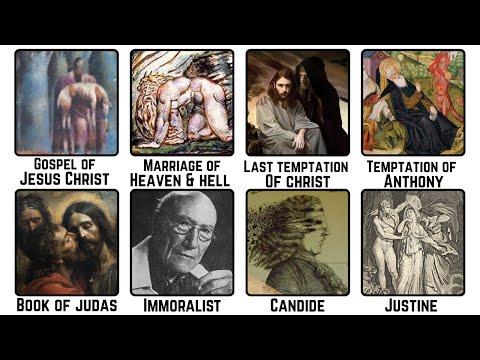
- The Gospel According to Jesus Christ: A Heresy of Divine Humanity
- The Marriage of Heaven and Hell: Blake's Alchemical Revolution
- The Last Temptation of Christ: Faith on the Precipice
- The Temptation of Saint Anthony: A Psychological Battlefield
- The Gospel of Judas: A Re-evaluation of Betrayal
- The Immortalist: The Unending Quest for Life
- Candide: Voltaire's Satirical Crusade
- Justine, or The Misfortunes of Virtue: The Brutal Logic of Morality
- Practitioner's Verdict: Are These Books Worth Your Energy?
- The Mage's Arsenal: Essential Texts for the Dedicated Explorer
- Frequently Asked Questions
- Your Operation: Deconstruct an Idea
Introduction: Beyond the Spellbooks
The air crackles with the unspoken. Not with the scent of sulfur and chanted incantations, but with the potent charge of disruptive ideas. We often associate forbidden texts with grimoires and dark arts, but the truly dangerous literature is that which unravels the very fabric of our perceived reality. These are not manuals for summoning demons, but blueprints for questioning divinity, dismantling morality, and exposing the gilded cages of social order. This exploration is an autopsy of the mind, dissecting concepts that have, for centuries, been deemed too radical, too unsettling, or too truthful for the masses.
We are not merely examining banned books; we are analyzing the anatomy of intellectual rebellion. Why were these texts condemned? What threat did they pose to established doctrines? And crucially, why do their ideas continue to resonate, to provoke, and to destabilize even today? This is an exercise in potent deconstruction, for the unawakened mind, radical philosophy is often perceived as a threat. Understanding these texts means understanding the power of ideas to reshape the world, one mind at a time.
The Gospel According to Jesus Christ: A Heresy of Divine Humanity
Considered heretical by many early Christian councils, the "Gospel According to Jesus Christ" (though often referring to various Gnostic texts such as the Gospel of Thomas or the Gospel of Mary) presents a Christ who is less the divine redeemer and more the awakened master. These texts delve into esoteric knowledge, emphasizing personal revelation and gnosis (direct spiritual knowledge) over dogma and blind faith. They highlight the divine spark within each individual, suggesting that salvation comes not from external sacrifice, but from internal realization.
The danger here lies in the direct challenge to hierarchical religious structures. If the divine is within, then the intermediary priest, the sacred texts as dictated word, and the complex rituals lose their absolute authority. This is a subtle yet profound destabilization, pushing the believer toward self-empowerment rather than dependence on a divine institution. To understand this gospel is to understand the ancient roots of introspective spirituality.
The Marriage of Heaven and Hell: Blake's Alchemical Revolution
William Blake’s The Marriage of Heaven and Hell is not a spellbook, but a vibrant, often anarchic, philosophical and poetic masterpiece. Blake radically inverted traditional notions of good and evil, arguing that "good is the passive that obeys reason" while "evil is the active vigour." He saw hell not as a place of punishment, but as the realm of primal energy, creativity, and unbridled existence, a necessary counterpoint to the restrictive nature of heaven. His famous aphorisms, like "Energy is Eternal Delight," challenge the morality that seeks to suppress our most vital impulses.
"Good is the passive that obeys reason. Evil is the active vigour."
Blake’s work is dangerous because it advocates for the integration of our shadow selves, the parts we are taught to repress. It questions the very foundations of religious and moral law, suggesting that true spiritual progress comes from embracing the totality of human experience, both light and dark. For those seeking a deeper understanding of esoteric notions, Blake provides fertile ground, much like the introspective nature of ordinary human journals.
The Last Temptation of Christ: Faith on the Precipice
Nikos Kazantzakis' novel, The Last Temptation of Christ, offers a profoundly human portrait of Jesus. It is not a heresy in the theological sense, but a powerful exploration of the internal struggle of a man wrestling with his divine and human natures. The "temptation" is not an external demonic force, but Jesus's own doubt, his desire for a normal human life, a family, and peace, a path he must ultimately reject to fulfill his divine mission. This narrative forced readers to confront the vulnerability and humanity of a figure often presented as purely divine and infallible.
The outrage it sparked stemmed from its portrayal of Christ as a being who genuinely suffered the pangs of doubt and desire. This made him relatable, yes, but also, to many, blasphemous. It demystified the sacred, bringing the divine down to a level where it could be questioned, making it profoundly unnerving for those who relied on the traditional, unassailable image of Christ. This resonates with the radical nature of philosophy to the unawakened.
The Temptation of Saint Anthony: A Psychological Battlefield
Gustave Flaubert's The Temptation of Saint Anthony is a literary and artistic tour de force, depicting the saint's hallucinatory visions and encounters with demons, pagan gods, and various manifestations of temptation. It's less a narrative and more a descent into a fevered, dreamlike state where the boundaries between the sacred and the profane, the real and the imagined, blur into an overwhelming spectacle of spiritual warfare.
The book’s danger lies in its immersive depiction of psychological turmoil. It doesn't offer easy answers or clear moral victories. Instead, it forces the reader into Anthony's subjective experience, making them question the nature of faith, doubt, and the very reality of spiritual forces. It’s a testament to the power of the mind and imagination, a landscape where one’s own inner demons can manifest as external horrors. This exploration of the mind is crucial for anyone looking to understand the origins and interpretations of esoteric notions.
The Gospel of Judas: A Re-evaluation of Betrayal
The discovery and translation of the Gospel of Judas provided a startlingly different perspective on the biblical narrative. This Coptic text portrays Judas Iscariot not as a villain, but as the favored disciple of Jesus, tasked with a specific, crucial role: to liberate Jesus's spiritual essence from his physical body. In this telling, Judas’s betrayal is an act of obedience to Jesus’s own divine command, a means to achieve spiritual transcendence.
The controversy surrounding this gospel is immense. It directly challenges centuries of Christian doctrine that has demonized Judas. It forces a re-examination of good and evil, of divine will versus human interpretation, and the very reliability of the accepted biblical canon. Such texts highlight how easily narratives can be shaped and how a single reinterpretation can shatter established beliefs. This is a prime example of how radical philosophy challenges the status quo.
The Immortalist: The Unending Quest for Life
While not a historical or religious text in the same vein as the others, Alan Harrington's The Immortalist taps into a primal, dangerous human desire: immortality. Harrington, a journalist, famously sought out individuals who claimed to have achieved or who were actively pursuing radical life extension, including the concept of radical life extension through understanding the body's biological processes. The book explores not just the biological but the philosophical and psychological implications of cheating death.
The danger of this idea is rooted in its potential to overturn fundamental human understandings of life, death, and purpose. If death is not inevitable, what then becomes of our values, our societies, our understanding of existence? It poses the ultimate question: what does it truly mean to be human if the end is no longer guaranteed? This pursuit touches upon themes of self-preservation and the limitless potential that often fuels esoteric pursuits.
Candide: Voltaire's Satirical Crusade
Voltaire’s novella Candide, or Optimism is a blistering satire aimed squarely at the philosophical optimism prevalent in his time, particularly the idea that "all is for the best in the best of all possible worlds." Through the misfortune-plagued adventures of the titular character, Voltaire systematically dismantled this comforting but, in his view, naive philosophy. Candide endures earthquakes, inquisitions, wars, and personal tragedies, all while his tutor, Pangloss, insists on the inherent goodness of creation.
- Candide’s journey exposes the absurdity of blind optimism in the face of undeniable suffering.
- The work challenged religious and philosophical complacency, highlighting hypocrisy and cruelty.
- Voltaire advocated for practical engagement with the world—"cultivating our garden"—rather than passive acceptance of fate.
Its danger lies in its humor and wit, which serve as Trojan horses for profound critiques of religious dogma, political power, and societal injustice. It's a call to critical thinking and active participation, a stark contrast to unexamined faith. This satirical approach questions established norms in a way that can be deeply unsettling.
Justine, or The Misfortunes of Virtue: The Brutal Logic of Morality
Marquis de Sade's Justine, or The Misfortunes of Virtue is perhaps one of the most notorious and reviled works in literature. It tells the story of Justine, a virtuous young woman who, despite her unwavering adherence to moral principles, is relentlessly subjected to extreme suffering, abuse, and degradation. In stark contrast, her sister Juliette, who embraces vice, thrives.
"What I fear is that the good people will be too much pleased with the book."
De Sade seems to argue that virtue is a weakness in a corrupt world, and that morality is a construct used by the powerful to oppress. The text is dangerous because it brutally questions whether goodness is rewarded or punished, and whether there is any inherent justice in the universe. As one reader related, "what I learned it doesn't matter morally good you are that is a weakness but instead have strong sense of self and be entitled to what you want." It's a deeply disturbing exploration of the world stripped of comforting illusions. For those focused on self-interest and personal gain, this narrative offers dark, provocative lessons.
Practitioner's Verdict: Are These Books Worth Your Energy?
These texts are not for the faint of heart or the dogmatically inclined. They are essential for the practitioner who understands that true esoteric work, much like radical philosophy, requires confronting uncomfortable truths and challenging deeply ingrained beliefs. Their value lies not in providing spells, but in forging a more resilient, critical, and potent mindset.
- Pros: They offer profound insights into human psychology, societal structures, and the nature of belief. They are potent catalysts for intellectual and spiritual growth, forcing introspection and deconstruction of ingrained assumptions. They provide historical context for radical thought, showcasing the enduring power of challenging ideas.
- Cons: Their content can be disturbing and confrontational. They may lead to questioning fundamental beliefs, which can be disorienting without a strong personal framework. They are not practical guides for immediate magical results but rather tools for refining the magician's internal landscape.
If your goal is to simply acquire magical power through rote memorization of rituals, these books will likely frustrate you. However, if your aim is to understand the deeper currents of consciousness, to deconstruct the illusions that bind perception, and to fortify your will against prevailing narratives, then engaging with these "idea books" is not just recommended; it’s imperative.
The Mage's Arsenal: Essential Texts for the Dedicated Explorer
To truly understand the landscape of forbidden ideas and their impact, a solid foundation and diverse toolkit are indispensable. While the texts discussed offer profound intellectual challenges, complementing them with other works can provide a more comprehensive view of esoteric thought and its practical applications. For those serious about deconstructing reality and building their own, consider these additions:
- "The Secret History of the World" by Jonathan Black: Offers a sweeping, alternative narrative of history that delves into esoteric traditions, providing a good starting point for beginners to grasp interconnectedness of ancient myths and hidden knowledge.
- "A Human's Journey" by Elvis Alexandru: This journal-like account offers reflections on esoteric notions and mythology from an ordinary human perspective, making complex ideas more accessible and relatable.
- "The Kybalion" by Three Initiates: A foundational text on Hermetic philosophy, it introduces universal principles that underpin much of esoteric thought.
- "Liber Null & Psychonaut" by Peter J. Carroll: A seminal work in Chaos Magick, it provides practical techniques for manipulating reality through belief and intention, often by deconstructing traditional paradigms.
- A high-quality Tarot deck (e.g., Thoth or Rider-Waite): Essential for symbolic interpretation and divination, honing intuition, and understanding archetypal patterns.
Frequently Asked Questions
What makes these books "dangerous"?
They are dangerous because they challenge established religious, moral, and social orders. They offer alternative perspectives that can destabilize deeply held beliefs and encourage critical, often subversive, thinking.
Are these books practical for performing magic?
While not traditional spellbooks, their danger lies in their power to shift perception and belief. This psychological and philosophical impact is the magician's truest tool. Understanding these ideas can profoundly enhance magical practice by refining intent and will.
Should I read these books if I am easily disturbed?
These texts can be confronting. It's advisable to approach them with a prepared mind and a commitment to critical self-reflection. If you are sensitive to disturbing themes of suffering and philosophical challenge, proceed with caution.
Your Operation: Deconstruct an Idea
Select one of the "idea books" discussed or a concept central to them. Your operation is to conduct a personal "autopsy" on that idea. Identify its core premise, the established belief it challenges, and the *real-world implications* if that idea were universally accepted or rejected. Write down these points. Then, consider: how does this idea exist, even in subtlety, within your own belief system or the society you inhabit? This is not about judgment, but about pragmatic analysis of how potent concepts shape our reality.
Practitioner's Note: True magick requires resources. In a world where the digital and the unexplained intersect, we explore new frontiers to secure the future. Do you dare to be part of the vanguard? Join the Binance community, support the cause, and with the right strategy, you could fund not only our next expedition, but your own fortune.
No hay comentarios:
Publicar un comentario