
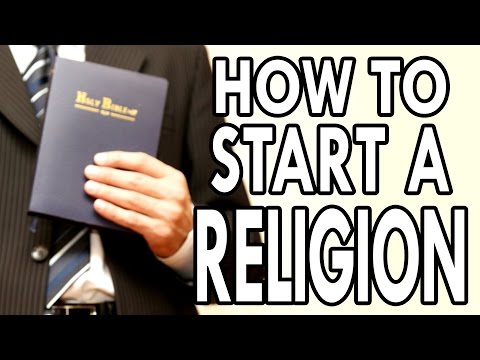
The annals of human history are punctuated by figures who, with little more than conviction and a compelling narrative, reshaped the very fabric of society by founding new religions. From the spiritual titans of antiquity to modern charismatic leaders, the act of establishing a belief system has been a potent engine for influence, community building, and, yes, even power. This guide, divorced from dogma and focused on practical application, will dissect the core mechanics of what it takes to not just believe, but to *build* a movement around that belief. We're moving beyond mere faith and into the realm of applied societal engineering and Technomancy.
## The Genesis of Belief: From Individual Conviction to Collective Consciousness
At its heart, every religion begins with an idea, an insight, or a perceived truth. This might stem from personal revelation, philosophical inquiry, or a deep dissatisfaction with existing paradigms. The historical figures you admire – Jesus Christ, Muhammad, L. Ron Hubbard – were not simply prophets; they were astute observers of the human condition and master communicators. They identified unmet needs: a desire for meaning, structure, redemption, or community.
Your first step, therefore, is to crystallize your core tenets. What is the fundamental message? What problem does your belief system solve? Is it spiritual enlightenment, a framework for ethical living, a path to financial liberation, or a blueprint for a utopian society? This is where the concept of Magitech becomes relevant; the underlying principles of belief systems can be adapted and engineered, much like technology.
### 1. The Core Tenets: Crafting Your Ideological Blueprint
Before you can influence others, you must define what you stand for. Consider these aspects:
* Theology/Cosmology: What is the nature of reality? Are there deities, higher powers, or is it a secular philosophy? What is the origin of the universe and humanity's place within it? * Ethics and Morality: What are the rules of conduct? What actions are considered virtuous, and which are forbidden? How should followers interact with non-believers? * Afterlife/Escatology: What happens after death? Is there reincarnation, heaven/hell, or simply oblivion? What is the ultimate destiny of the movement, or humanity? * Ritual and Practice: What are the observable actions that reinforce belief and community? This could include prayer, meditation, specific ceremonies, festivals, or even dietary restrictions. * Mythology and Scripture: What stories will define your movement? These narratives serve to illustrate your core tenets and provide inspiring examples.
For those looking to harness the power of digital creation, tools like the Chaos Magick Sigil Generator can be instrumental. While not directly creating religious texts, the principles of intent visualization and symbol creation are foundational to crafting potent, memorable emblems and concepts that can become central to a new belief system. Think of it as Digital Divination for your core messaging.
### 2. The Charismatic Leader: You Are the First Follower
Every successful movement has a central figure – a leader who embodies the belief system and inspires devotion. This isn't about ego; it's about embodying the narrative and demonstrating unwavering commitment.
* Authenticity (Perceived or Real): Followers are drawn to conviction. Whether this conviction arises from genuine spiritual experience or a deep understanding of psychological manipulation, it must be palpable. * Communication Skills: The ability to articulate complex ideas simply, to inspire hope, and to create a compelling vision is paramount. This is where the principles of Cybermancy, or the influence through digital networks, come into play. * Discipline and Sacrifice: Demonstrating personal commitment and sacrifice reinforces the leader's credibility and the importance of the cause. This is often where the concept of Rituals with IA (Artificial Intelligence) can be studied, not to implement them, but to understand the automation of human-like responses in leadership. * Embracing the State of Gnosis: Achieving a state of heightened awareness or trance can provide powerful, often transformative, experiences that followers may attribute to divine intervention. This is a state that pioneers like Austin Osman Spare** explored deeply in their work.
## Building Your Flock: From Individual Influence to Mass Movement
Once your core tenets are defined and you embody the leadership persona, the challenge shifts to attracting and sustaining followers. This is where the principles of Esotericism Digital begin to blend with historical strategies.
### 3. Crafting the Narrative: The Power of Myth and Storytelling
Humans are wired for stories. Your religion needs a compelling narrative that explains origins, defines purpose, and offers hope for the future.
* The Origin Story: How did your religion come to be? Was it a divine revelation, a historical event, or a philosophical breakthrough? * The Hero's Journey: Many successful religions incorporate a narrative arc where the founder or key figures overcome great challenges. This resonates with followers facing their own struggles. * The Promise: What does joining your religion offer? Salvation, enlightenment, community, freedom from suffering, or even material prosperity?
Consider the figures mentioned earlier: Jesus's sacrifice and resurrection, Muhammad's revelations in the desert, Hubbard's complex narratives of Dianetics and Scientology. These are powerful myths that provide structure and meaning.
### 4. Ritual and Community: The Glue That Binds
Rituals provide structure, reinforce beliefs, and foster a sense of belonging. They are tangible expressions of faith.
* Sacred Spaces: Designate physical or even virtual spaces that are consecrated to your belief system. This could be a temple, a simple altar, or a dedicated online forum. * Symbols and Emblems: Create powerful visual symbols that represent your core tenets. The recycling symbol, for example, has been suggested as a potential emblem for a new religion. The Chaos Magick Sigil Generator can be invaluable for designing such potent symbols. * Community Events: Organize gatherings, festivals, or regular meetings that bring followers together. This strengthens social bonds and reinforces collective identity. * Doctrine of Non-Taxation: A common theme in the founding of certain movements has been the exploration of legal structures that allow for tax exemption. While not a spiritual tenet, it's a practical consideration for sustainability and resource acquisition.
### 5. Recruitment and Expansion: Scaling Your Influence
Once you have a core group, expansion becomes key. This is where historical methods meet modern techniques.
* Word of Mouth: Satisfied followers are your best recruiters. Encourage them to share their experiences. * Digital Outreach: Leverage social media, websites, and online communities to disseminate your message. Technomancy in this context means understanding how to use digital platforms for ideological dissemination. * The "Recycling Sign" Effect: As one commenter noted, even a simple emblem, when imbued with meaning and repeated, can become a powerful signifier for a movement. * The "Children of Atom" Scenario: Inspired by fictional portrayals, the idea of a post-apocalyptic "Children of Atom" religion highlights how crisis can be a fertile ground for new belief systems to emerge, offering hope and order in chaos.
## The Pragmatic Reality: Power, Control, and Sustainability
Founding a religion is not merely an act of faith; it is an act of societal re-engineering. It involves understanding human psychology, effective communication, community building, and, crucially, sustainability.
### The Arsenal of the Founder
To effectively implement these strategies, having the right tools is essential.
* Essential: Chaos Magick Sigil Generator - For crafting potent symbols and imbuing them with intent, a cornerstone of any new belief system's visual identity. * Recommended: Books on organizational psychology, mass communication, and historical case studies of religious movements. * Recommended: Platforms for website creation and social media management.
### Veredict of the Practitioner
Founding a religion is an ambitious undertaking. It requires immense dedication, strategic thinking, and an understanding of both human needs and practical implementation. The successful movements throughout history were not accidents; they were meticulously constructed enterprises. While the spiritual claims may endure, the underlying mechanics of persuasion, community building, and resource management are universally applicable.
## FAQ
* Q: Can I really start a religion based on something trivial like cookies or Johnny Bravo? A: The historical success of religions often hinges on their ability to tap into deeply felt human needs and desires, presented through a compelling narrative. While the "triviality" might be a starting point, the sustainability of such a movement would depend on its ability to evolve, offer more profound meaning, and maintain follower engagement beyond the initial novelty. The "Almighty Johnny Bravo" or "Church of the Potato" are fascinating thought experiments in branding belief. * Q: How do I deal with criticism or accusations of heresy? A: Historically, founders of new religions have faced significant opposition. Developing a robust counter-narrative, emphasizing the positive aspects of your movement, and fostering internal solidarity are key. The "Emperor's Will is Divine" example shows how counter-claims can be framed as defending a superior truth. * Q: What are the legal implications of starting a religion? A: Legal frameworks vary significantly by region regarding the establishment of religious organizations, particularly concerning tax exemption and operational status. It is crucial to research and comply with local laws. Historically, movements have explored these avenues for sustainability, as noted in the "you don’t need to pay taxes" comment. * Q: How do I ensure my religion is stable long-term? A: Long-term stability requires adaptability, strong leadership succession planning, consistent reinforcement of core tenets through rituals and community activities, and the ability to address evolving societal needs. The commitment to teaching and practice, as seen in the desire for "Epic How To" content, suggests that ongoing value delivery is critical.
### Your Operation: The Seed of a New Paradigm
Your challenge, should you choose to accept it, is to begin the genesis of your own belief system. Identify your core tenet. Craft your origin story. Design a symbol using a tool like the Chaos Magick Sigil Generator that embodies its essence. Consider the rituals that would bring your followers together. Then, share your concept – not as a grand pronouncement, but as an invitation to explore a new way of seeing the world. The question is not *if* you can start a religion, but *how* you will practically engineer its foundation and growth.
Practitioner's Note: True magick requires resources. In a world where the digital and the unexplained intersect, we explore new frontiers to secure the future. Do you dare to be part of the vanguard? Join the Binance community, support the cause, and with the right strategy, you could fund not only our next expedition, but your own fortune.
No hay comentarios:
Publicar un comentario