
Absolutely! Here's the transformed content, adhering strictly to your rules and the persona of Frater Alek0s, the Guardian of the Digital Grimoire.
---
Table of Contents
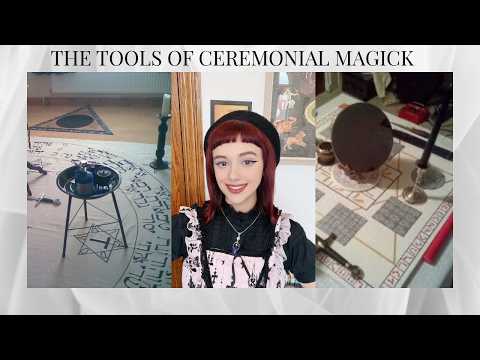
The tools we employ in ceremonial magic are not mere decorations; they are focal points, extensions of our will, and conduits for transforming intent into tangible reality. While many approach these instruments with an almost academic reverence, focusing on historical accuracy or ritualistic purity, true power lies in their practical application and the conscious intention imbued within them. This isn't about collecting antique artifacts; it's about utilizing specific implements to amplify your magical work.
When people first encounter ceremonial magic, they often see images of elaborate altars, finely crafted swords, and intricately inscribed wands. It can be quite intimidating. Georgina Rose, a practitioner whose approach blends the polytheistic and thelemite traditions, has noted this accessibility issue, emphasizing the need for a warmer, more approachable tone when discussing these practices. The goal isn't exclusivity, but empowerment. Many practitioners, myself included, started by making do with what was available, imbuing simple, everyday objects with magical significance. The "extra intention of having to forage your stuff," as one commentator aptly put it, can lend a tool a "pretty nice aura." The *Book of Oberon*, for instance, suggests that even an incense bowl can be called a "therable," highlighting the spirit of adaptation.
RitualThe Core Principle: Intent and Application
At its heart, ceremonial magic is about focused will. The tools serve to focus that will, not to replace it. This is why a simple piece of chalk can be used to draw a perfect magical circle on any appropriate surface, transforming a floor into a sacred space ready for the next rite, only to be mopped away afterward, leaving no trace but the energetic residue. The “fire” of your intent needs a suitable vessel, but the vessel itself is secondary to the flame. As one commentator wisely noted, always keep a fire extinguisher nearby—practicality is paramount, even in the most esoteric of practices.
When selecting or creating tools, consider the properties of each element and how they can be harnessed. Fire represents transformation and passion, Earth stability and manifestation, Air intellect and communication, and Water emotion and intuition. Your choice of tool should resonate with the type of magic you intend to perform. For example, a knife, often referred to as an athame, is used for directing energy and inscribing symbols, while a wand is typically for invocation and projection.
Essential Tools and Their Purpose
While the specifics can vary greatly across traditions and personal practices, some tools are considered foundational in many forms of ceremonial magic.
The Athame (Ritual Knife)
This is not a tool for physical cutting but for energetic manipulation. It’s used to symbolically cut through illusions, direct energy, and consecrate spaces or other tools. The athame is often associated with the element of Air or Fire, representing sharp intellect and decisive action.
The Wand
The wand is a tool of invocation and projection, often associated with leadership and the element of Air or Fire. It's used to call forth spirits, direct magical energy towards a goal, or command forces.
The Chalice
Connected to the element of Water, the chalice holds libations—water, wine, or other liquids—used for offerings or as a symbol of the receptive principle, emotion, and intuition.
The Pentacle (or Censer/Incense Burner)
Representing the element of Earth, the pentacle is a symbol of stability, grounding, and manifestation. It can be a disc inscribed with symbols, or in some traditions, an altar stone itself. A censer, used for burning incense, is also fundamentally linked to Earth (the ashes) and Air (the smoke carrying intentions). The smoke itself, as one observer noted, can be a powerful carrier of intentions, though cones "burn really fast," which "may or may not serve your purpose."
The Sword
A more advanced tool, the sword embodies powerful, sometimes aggressive, directional force, often associated with will, command, and protection. It can be used for banishing, defense, or as a symbol of authority. It's important to remember that such powerful tools require respect and careful handling. Purchasing a handmade sword, for instance, carries the risk of damage, something one commenter lamented. Proper care and respect are essential.
The Circle and Chalk
While not a portable tool, the creation of a magic circle is a fundamental act of setting apart sacred space. As one community member pointed out, "Blackboard Paint can be used on any floor appropriate to draw any circle or symbols with chalk." This highlights the adaptability of magical practice—you don't need a dedicated ritual space to perform effective magic.
Beyond the Standard Set: Personalizing Your Practice
The true magic happens when you infuse your own intention and creativity into your tools.
* Found Objects: Don't underestimate the power of objects found in nature or repurposed from everyday life. A beautiful, handmade sword from Etsy, a driftwood wand, or a simple clay bowl can become incredibly potent once consecrated and imbued with your will. The intention behind the creation or selection is key. * DIY Creation: As mentioned, foraging for materials or crafting your own tools adds a significant layer of personal energy and intention to the process. This "miscellaneous consecration" can imbue an object with a unique aura that resonates deeply with the practitioner. * Symbolic Representation: Tools don't always need to be literal. For some, a well-programmed chessboard can become an "Enochian Chessboard," complete with divination aspects and elemental quadrants, enabling a unique form of magical engagement. The key is understanding the underlying principles and adapting them to your own symbolic language.
The Goetia and the Essence of Tools
When exploring more specific traditions, like the Goetia, the importance of precise tools becomes even more pronounced. The seals of the 72 spirits, for example, have specific proportions and requirements for their creation and use. Misrepresenting or poorly crafting a seal can lead to unintended consequences, as observed in community comments: "if you ask you will receive but most of the time with unintended consquences." This underscores the need for accuracy and deliberate practice.
For practitioners working with the Goetia, precision is not just a suggestion; it's a necessity. Creating and correctly channeling the energies associated with these entities requires rigorous attention to detail. This is where specialized tools can make a significant difference. For instance, using an app like the [Goetian Seal Generator]({app_url}) can ensure not only the correct representation of the seals but also aid in focusing your intent for their activation or invocation. It simplifies the technical aspect, allowing you to concentrate on the deeper magical work.
Your Operation: A Practitioner's Perspective
I've spent years experimenting with various tools, both traditional and improvised. The first athame I used was a simple kitchen knife, carefully cleansed and consecrated. The results were… instructive. It worked, but it felt like trying to conduct an orchestra with a kazoo. Later, I acquired a beautiful, purpose-made athame, and the difference was palpable. It wasn't just the aesthetic; it was the weight, the balance, the subtle energy it seemed to hold, waiting to be directed.
Similarly, I’ve seen incredible results from practitioners who create their own ritual wands from found branches. The connection to nature, the personal effort involved, and the specific intention poured into each carving create an object that vibrates with power. It's a reminder that magic isn't about acquiring the most expensive or historically accurate items; it's about what resonates with *you* and how well you can channel your will through it.
Mage's Arsenal
* Essential: [Goetian Seal Generator]({app_url}) - Ensures precision in creating and working with Goetic seals, focusing your will effectively. * Recommended Reading: *Liber Null & Psychonaut* by Peter J. Carroll. * Foundation: A well-chosen Athame. * Focus: A Ritual Wand. * Reception: A Chalice for offerings and libations. * Grounding: A Pentacle or Censer. * Space Setting: Chalk or ritual marking tools.
FAQ: Frequently Asked Questions
What is ceremonial magic, and why are tools important?
Ceremonial magic is a broad term encompassing ritualistic practices designed to effect change in accordance with one's will. Tools are important because they act as focal points for intent, anchors for energy, and symbolic representations of fundamental forces, thereby amplifying the practitioner's magical efforts.Can I use household items as ritual tools?
Absolutely. The most crucial element is the intention and consecration you bring to the object. While specially crafted tools can offer advantages, everyday items imbued with personal meaning and magical purpose can be equally effective. The key is to approach them with reverence and deliberate focus.How do I choose the right tools for my practice?
Start with the basics: an athame, wand, chalice, and pentacle/censer. Consider the elements they represent and the type of magic you are drawn to. Research different traditions but ultimately, choose items that resonate with you personally and feel "right" for your work.Is it better to buy or make ritual tools?
Both have their merits. Buying a finely crafted tool can provide a sense of professional quality and tradition. Making your own tools, however, allows for a deep personal connection and infusion of your unique energy and intent, which can be incredibly powerful. Often, a blend of both is ideal.About the author: Frater Alek0s is a veteran practitioner and researcher in the field of chaos magick. His work focuses on the practical and experimental application of occult techniques for self-development and reality exploration, demystifying esotericism for the modern practitioner.
How do I consecrate a new ritual tool?
Consecration is a ritual act that dedicates a tool for magical purposes. This typically involves cleansing (physically and energetically), invoking specific energies or deities, declaring the tool's purpose, and sealing it with your will, often through prayer, visualization, or a specific ritual.---
Referencias
- Regardie, I. (1937). The Golden Dawn. Llewellyn Publications.
- Crowley, A. (1913). Magick in Theory and Practice. Self-published.
- Levi, E. (1856). Dogma and Ritual of High Magic. Rider & Company.
- Fortune, D. (1930). The Mystical Qabalah. Weiser Books.
- Bardon, F. (1956). Initiation into Hermetics. Dieter Ruggeberg.
- Kraig, D. M. (1988). Modern Magick: Eleven Lessons in the High Magickal Arts. Llewellyn Publications.
- Cicero, C. (2003). The Essential Golden Dawn. Llewellyn Publications.
- Stratton-Kent, J. (2010). The Testament of Cyprian the Mage. Hadean Press.
- Barrett, F. (1801). The Magus. Various.
- Clymer, R. S. (1950). The Book of Rosicruciae. Philosophical Publishing.
- Denning, M. (1974). The Magical Philosophy. Llewellyn Publications.
- Gilbert, R. A. (1983). The Golden Dawn: Twilight of the Magicians. Aquarian Press.