Saltar al contenido principal
Mostrando entradas con la etiqueta comparative religion. Mostrar todas las entradas

Astrotheology: Unveiling the Cosmic Roots of Religion

Religion = Astrotheology | Jordan Maxwell


EMERALD TABLE — Grimoire Record Magitech
⚔️ TypeSpell
📅 Date2026-07-19
📜 FileMC-2026-0070
⭐ Difficulty★★★★☆ Avanzado
⏱ Read time17 min
🔗 Related AppChaos Magick Sigil Generator
cha0smagicklabs.com — Digital Grimoire of Chaos Magick

As Frater Alek0s, custodian of the Digital Grimoire, I understand the mission. Let's transform this raw data into a proper grimoire page, adhering strictly to the established rules, with English as the output language.

***

The very fabric of what we perceive as "religion" often traces back to celestial observations and the awe-inspiring dance of the cosmos. This exploration delves into the concept of Astrotheology, positing that many ancient and modern religious systems are, at their core, interpretations of astronomical phenomena. We will dissect this perspective, examining how planetary movements, stellar cycles, and celestial events have been mythologized, deified, and woven into the foundational narratives of human spiritual expression. Prepare to see familiar religious tenets through a stellar, rather than terrestrial, lens.

MagitechThe Stars as the First Sacred Texts

Before papyrus scrolls, stone tablets, or even oral traditions became the primary vessels of sacred knowledge, the night sky served as humanity's first illuminated manuscript. For millennia, our ancestors gazed upwards, charting the predictable yet mysterious movements of the sun, moon, and stars. These observations were not mere curiosities; they were vital for survival. The sun's cycle dictated planting and harvesting seasons, the moon's phases influenced tides and perhaps even human behavior, and the appearance of certain constellations signaled important astronomical events. It is within this context of profound dependence and wonder that the seeds of astrotheology were sown.

Consider the reverence shown to the sun. Its daily rising and setting, its apparent journey across the sky, and its role in bringing light and warmth made it a natural candidate for deification. Many early pantheons feature solar deities, from Ra in ancient Egypt to Apollo in Greek mythology. Similarly, the moon, with its waxing and waning phases, its association with the night, and its often subtler influence, also found its place among the celestial pantheon. These celestial bodies were not just distant lights; they were perceived as divine entities, their movements interpreted as expressions of will, power, and cosmic order. The patterns observed in the heavens were seen as reflections of earthly events and, more importantly, as a divine blueprint for human life and society.

The constellations, too, played a significant role. The ancient Greeks, for example, identified specific mythical figures and animals within the star patterns, linking them to their epic tales and genealogies. These celestial narratives served as a cosmic theater, reenacting timeless dramas of creation, destruction, love, and war. The arrangement of stars was not random; it was believed to be a deliberate composition, imbued with meaning and purpose. This profound recognition of the sky as a source of divine instruction and narrative is the bedrock of astrotheology. It suggests that our oldest religious stories are not just allegorical tales, but sophisticated, albeit ancient, astronomical calendars and cosmographical charts.

The enduring presence of certain symbols and archetypes across disparate cultures further supports this. The depiction of deities with solar halos, the prevalence of lunar symbolism, and the recurring motif of a "black sun" or a "hidden light" can all be interpreted through an astrotheological framework. These symbols, rather than being merely decorative or abstract, may represent specific astronomical occurrences or cycles that were central to the spiritual understanding of ancient peoples. The ancient Babylonians, for instance, charted the movements of the planets with remarkable precision, associating them with specific gods and believing their positions held sway over earthly affairs.

The concept of a "Great Year," a cyclical period after which celestial bodies return to their original positions, also influenced ancient religious thought. This cyclical understanding of time, mirrored in the endless journey of the sun and the predictable rhythm of the seasons, permeated religious philosophies, suggesting a cosmic order that was both eternal and recurring. The idea of rebirth, resurrection, and reincarnation found in many religions can be seen as earthly echoes of these celestial cycles of renewal.

In essence, astrotheology proposes that human spirituality is deeply intertwined with our relationship to the cosmos. The celestial sphere was not just a backdrop to human existence; it was an active participant, a source of divine wisdom, and the very origin of many of our most sacred stories and symbols. By studying these celestial roots, we can gain a profound new perspective on the origins and evolution of religion itself.

The Genesis of Religious Mythology: Celestial Narratives

The ancient world was a canvas upon which celestial events were painted with mythological fervor. When we examine the narratives that form the backbone of many religious traditions, a striking pattern emerges: these stories often mirror astronomical phenomena. The cyclical nature of the sun's journey, from its death at sunset to its rebirth at dawn, is a powerful archetype that finds expression in tales of resurrection and divine triumph over darkness. The death and rebirth of solar deities, such as the Egyptian Osiris or the Greek Adonis, can be seen as dramatic reenactments of the sun's daily and annual cycles.

Consider the story of Jesus Christ. While deeply theological in its interpretation, an astrotheological perspective suggests parallels with the sun's journey. His birth around the winter solstice, his crucifixion during Passover (which often falls near the spring equinox), and his resurrection represent a cosmic drama of death and rebirth that mirrors the sun's path through the year. The twelve disciples, too, can be seen as echoes of the twelve zodiacal constellations through which the sun appears to travel over the course of a year.

Similarly, the veneration of the moon and its phases is deeply embedded in many religious practices. The biblical narratives often mention lunar festivals and observances. The Canaanites and Hebrews, for instance, were notably lunar worshippers, associating the moon with deities like 'Amm and Asherah, who could be seen as lunar goddesses. This contrasts with the solar worship prominent in later Roman traditions, where deities like Mithras, closely associated with the sun, gained prominence. The concept of the "black sun," often associated with lunar deities or hidden solar power, also appears in various esoteric traditions, suggesting a deeper understanding of celestial cycles beyond just the visible light.

The biblical figure of Moses, often depicted with horns, presents another fascinating astrotheological puzzle. While often explained through mistranslations or symbolic interpretations, some theories link these horns to ancient depictions of horned solar deities or lunar symbolism. The idea of "passing children through the fire" to deities like Molech, as condemned in the Hebrew Bible, can also be viewed through a lens of distorted celestial worship or ritualistic astronomical observation linked to fiery celestial events or deities. The condemnation itself highlights the extreme practices that could arise from misinterpretations or perversions of celestial reverence.

The very concept of "God" can be deconstructed astrotheologically. The acronym GOD (Generate, Operate, Destroy/Transform) reflects functions that can be mapped onto natural processes: the sun generates life-giving energy, the cosmos operates through predictable cycles, and the universe undergoes constant cycles of creation and dissolution. The Aramaic word for God, "El," shares roots with ancient Semitic terms for deities, often associated with celestial bodies. This linguistic connection further reinforces the idea that early conceptions of the divine were intimately tied to the observable heavens.

The historical evolution of religious practices also reveals the influence of astrotheology. Christianity, for example, emerged within the Roman Empire, a culture deeply influenced by solar worship. Many scholars propose that Christian doctrines and festivals were, in part, syncretized with existing pagan traditions, including those centered around the sun. The Roman Catholic Church, in this context, has been referred to by critics as a continuation of ancient Babylonian practices, suggesting that the core rituals and symbolism may have been adapted rather than entirely new.

Ultimately, the astrotheological perspective suggests that the Abrahamic narratives, while rich in theological meaning, also contain layers of meaning derived from ancient astronomical observation and worship. The "God of the Bible" called Moses as his prophet, but the representations of these figures in European art, some argue, have been distorted through pagan lenses, leading to confusing depictions of figures like Moses or Jesus that do not align with the original biblical accounts. This highlights how cultural and religious syncretism can alter the perception and worship of even the most foundational figures.

The Astrotheological Interpretation of Key Religious Symbols

Religious iconography is a rich tapestry of symbols, each imbued with layers of meaning that have evolved over millennia. From an astrotheological viewpoint, many of these potent symbols can be decoded as representations of celestial bodies, cycles, and events. Understanding these symbols through a cosmic lens can unlock new insights into the origins and intended meanings of religious doctrines.

The solar halo or nimbus, a ubiquitous feature in religious art, is perhaps the most direct visual link. It is almost universally understood as a symbol of divinity, enlightenment, or sacredness. From an astrotheological perspective, it is a clear representation of the sun, the primary source of light and life, and often the most revered celestial body in early cultures. The sun’s radiant crown was a natural metaphor for the divine presence and spiritual illumination. Deities depicted with halos are, in essence, being equated with the life-giving power of the sun.

The cross, a central symbol in Christianity, also lends itself to astrotheological interpretation. While its theological meanings are profound, its geometry can be seen as representing the intersection of earthly and celestial planes, or the four cardinal directions aligned with celestial movements. The solar cross, an ancient symbol predating Christianity, directly links the circle of the sun to the cross, representing the sun's journey through the four seasons or its path across the sky. The crucifixion itself, occurring during a solar event (often near the vernal equinox), further intertwines the symbol with solar cycles of death and rebirth.

The crescent moon often accompanies depictions of deities, particularly goddesses, in many cultures. This symbol is a direct representation of the moon in its waxing phase, signifying cyclical renewal, intuition, and the feminine principle. In many ancient religions, the moon was associated with goddesses and was crucial for tracking time, particularly for agricultural communities. The lunar cycle, with its predictable yet observable changes, provided an early form of sacred calendar and influenced rituals and festivals. The association of lunar deities with the "black sun" or "dark side of the moon" speaks to the esoteric understanding of celestial forces, where even the absence of light or the hidden aspect of a celestial body holds profound symbolic power.

The horned figure, as seen in some depictions of Moses or even in pagan deities like Pan or the Green Man, can be interpreted through an astrotheological lens. Horns, in ancient symbolism, often represented power, divinity, and the divine connection to the animalistic and natural world. Some scholars suggest that horned deities were often linked to solar bull symbolism, where the constellation Taurus, representing a bull, was prominent in ancient celestial calendars. The bull's horns could then be seen as mirroring the rays of the sun, or the bull itself as a powerful solar symbol representing strength and fertility, tied to the spring season.

The serpent or dragon is another pervasive symbol across religious and mythological traditions. In an astrotheological context, the serpent can represent the path of celestial bodies. The ecliptic, the apparent path of the sun across the sky, is often depicted as a serpent or dragon, particularly in relation to the constellations that form the zodiac. The serpent’s shedding of skin can also symbolize renewal, mirroring the cyclical nature of celestial events and the promise of rebirth. It can also represent the chaotic forces of the primordial universe from which order (represented by celestial bodies and predictable cycles) emerged.

The concept of the "Black Sun" itself, mentioned in various contexts, often refers to a hidden or esoteric solar force. Astrotheologically, this could represent the sun during the winter solstice, when its power is seemingly at its lowest, yet it holds the promise of return. It could also refer to the sun as perceived from the underworld or hidden realms in creation myths. This duality of light and darkness, of manifestation and concealment, is a fundamental aspect of celestial observation and a potent source of religious symbolism.

These interpretations are not meant to dismiss the theological or spiritual depths of religious symbols but to offer a complementary understanding. By recognizing the astronomical underpinnings, we can appreciate how ancient peoples translated their profound observations of the heavens into a rich symbolic language that continues to resonate today. The stars, it seems, have always been a primary source of divine inspiration and sacred storytelling.

Astrotheology in Practice: Modern Interpretations and Tools

While astrotheology offers a compelling framework for understanding the origins of religion, its application extends beyond historical analysis. Modern practitioners and researchers are using contemporary tools and methodologies to explore and validate these ancient connections. The digital age has opened new avenues for studying celestial patterns and their purported influence on human belief systems, making the once esoteric field more accessible.

One of the most practical ways to engage with astrotheology today is through the use of digital tools that map celestial positions and movements with incredible accuracy. Software like Chaos Magick Sigil Generator offers a unique approach. While primarily designed for creating sigils, the underlying principle of translating intent into symbolic form can be applied to astrological charting. By understanding the complex interplay of planetary energies and their symbolic representations, one can generate unique symbols or "sigils" that resonate with specific astrological configurations. For example, a practitioner might create a sigil designed to harness the harmonizing influence of Venus or the communicative energy of Mercury by incorporating their planetary symbols and numerical correspondences into a sigil design. The generator acts as a digital forge, allowing the practitioner to manifest complex celestial archetypes into tangible, albeit digital, symbols for focused magical work. This bypasses the need for manual chart calculations and opens up creative possibilities for personal ritual and meditation.

Astrology itself, the ancient art of interpreting planetary positions and their influence, is a direct descendant of astrotheological thought. Modern astrological software and online resources allow for the generation of detailed birth charts and transit predictions. By analyzing the placement of planets in zodiac signs and houses, and the aspects they form, practitioners can gain insights into archetypal energies influencing individuals and collective events. This analytical approach can reveal how mythological narratives might have been inspired by specific planetary alignments or the perceived characteristics of celestial bodies. The correspondence between mythological figures and planetary rulers is a cornerstone of this practice.

Furthermore, archaeoastronomy, the study of how ancient peoples understood celestial phenomena and used them in their constructions and rituals, provides tangible evidence. Sites like Stonehenge, the Egyptian pyramids, and Mayan observatories are meticulously aligned with solar, lunar, and stellar events. Studying these alignments allows us to reconstruct the astronomical knowledge of ancient cultures and understand how this knowledge was integrated into their religious and societal structures. It provides empirical support for the idea that celestial observation was not peripheral but central to the development of religious thought.

The concept of "The Black Sun," while often shrouded in mystery, is also being explored through modern lenses. It can be interpreted not just as a symbolic representation of hidden solar power or a specific astronomical event, but as a metaphor for the subconscious mind, the unexplored depths of consciousness that hold immense creative potential. Understanding these archetypes, whether viewed through a historical, astrological, or psychological lens, allows for a more integrated approach to personal development and spiritual exploration. The "black sun" might represent the generative power within, waiting to be consciously directed, much like the sun's energy governs the visible world.

In essence, modern astrotheology is a multidisciplinary endeavor. It combines historical research, mythological analysis, astrological interpretation, and even technological tools. It encourages a holistic view of religion, recognizing that our deepest spiritual impulses may be, in part, an echo of our ancient fascination with the grand cosmic theater unfolding above us. By using the tools available today, whether it's a sigil generator or an astronomical charting program, individuals can actively engage with these celestial archetypes, fostering a deeper connection to the cosmos and potentially uncovering new layers of meaning in their own spiritual practices.

FAQ: Questions on Astrotheology

What is the fundamental principle of Astrotheology?

The core principle of astrotheology is the belief that many religious myths, symbols, and rituals are direct interpretations or allegories of astronomical phenomena, celestial cycles, and the observable movements of the sun, moon, planets, and stars. It posits that early religions were deeply rooted in observing and understanding the cosmos.

Are modern religions still influenced by Astrotheology?

Yes, arguably. While overt solar or lunar worship may have diminished in many mainstream traditions, astrotheological principles suggest that underlying symbolism, festival timings (like Christmas aligning with the winter solstice or Easter with the spring equinox), and archetypal narratives continue to carry echoes of celestial influence. Esoteric and occult traditions, in particular, often retain explicit astrological and astrotheological elements.

How does the "Black Sun" concept relate to Astrotheology?

In astrotheology, the "Black Sun" can represent various things: the sun at its lowest point during the winter solstice, symbolizing death and the promise of rebirth; a hidden or esoteric solar force; or even the sun as perceived from subterranean realms in creation myths. It speaks to the duality of celestial power – the visible and the hidden, the bright and the dark aspects of cosmic cycles.

Can I practice Astrotheology without being religious?

Absolutely. Astrotheology can be approached from a secular, mythological, psychological, or even scientific perspective. It's about understanding the historical influences of celestial observation on human culture and belief, rather than adhering to a specific religious doctrine. Many explore it for personal insight into archetypes and natural cycles.

What is the connection between Astrotheology and astrology?

They are closely related. Astrology developed from astrotheological observations, seeking to interpret the supposed influence of celestial bodies and their configurations on earthly events and human lives. While astrotheology focuses on the origins and symbolic meanings within religion, astrology applies these celestial interpretations to divination and personal charting.

Is Astrotheology a recognized academic field?

Yes, fields like archaeoastronomy, comparative mythology, and the history of religion often incorporate astrotheological perspectives. While not always a standalone discipline, its insights are valuable for understanding ancient cultures, the development of symbolism, and the roots of religious thought across civilizations.

How can tools like the Chaos Magick Sigil Generator be used in Astrotheology?

These tools can be used to visually represent and imbue with intent specific astrological configurations or celestial archetypes. By translating planetary symbols, zodiacal signs, or cyclical concepts into sigils, practitioners can create personal talismans or focal points for meditation and magical work that resonate with astrotheological principles.

Did Abrahamic religions originate from sun worship?

Astrotheology suggests that while the Abrahamic traditions evolved theologically, their origins and early practices were influenced by surrounding cultures that practiced solar and lunar worship. Elements like festival timings, symbolism (e.g., halos), and divine narratives can be interpreted as having astrotheological roots, though the theological interpretations within these religions are distinct and paramount to their adherents.

The Mage's Arsenal

  • Essential: Chaos Magick Sigil Generator — Effortlessly translate astrological archetypes and intentions into potent digital symbols for ritual and meditation.
  • Recommended Reading: Works by Jordan Maxwell (though specific book titles vary, his lectures and essays are key), and texts on comparative mythology and archaeoastronomy.
  • Tools for Exploration: Astrological charting software, archaeoastronomy resources, and comparative religion encyclopedias.

About the author: Frater Alek0s is a veteran practitioner and researcher in the field of chaos magick. His work focuses on the practical and experimental application of occult techniques for self-development and reality exploration, demystifying esotericism for the modern practitioner.

Your Operation: Integrating Astrotheological Insights

To truly integrate the insights of astrotheology into your practice, move beyond mere intellectual understanding. Begin by looking at the sky with a new eye. Observe the sun's daily journey, the moon's phase transformations, and the predictable dance of the visible planets. Note how these cycles align with traditional religious festivals or personal milestones in your life. Consider creating simple sigils using the Chaos Magick Sigil Generator that represent these celestial archetypes – perhaps a sigil for the sun's rebirth at the winter solstice, or for lunar intuition during the new moon.

Furthermore, examine the religious or mythological symbols that resonate with you. Research their potential astrotheological connections. Does a solar halo appear in your iconography? Does a crescent moon feature prominently? Does the story of a divine birth coincide with a solstice or equinox? Use these observations as prompts for journaling or meditation. You might find that focusing on the sun's consistent return each morning, or the moon's steady cycle, can ground your magical intent and bring a new dimension of cosmic connection to your practice. The universe is speaking to us through its celestial movements; astrotheology is simply learning to read that ancient, starry language.

***


Referencias

  1. Carroll, P. J. (1987). Liber Null & Psychonaut. Weiser Books.
  2. Spare, A. O. (1913). The Book of Pleasure. Self-published.
  3. Hine, P. (1992). Condensed Chaos: An Introduction to Chaos Magic. New Falcon Publications.
  4. Crowley, A. (1904). The Book of the Law. Self-published.
  5. Sherwin, R. (2018). The Chaos Magic Handbook. CreateSpace.
  6. Kraig, D. M. (1988). Modern Magick: Eleven Lessons in the High Magickal Arts. Llewellyn Publications.
  7. Morrison, G. (2003). Pop Magic! The Art of Shaping Reality. Disinformation.
  8. DuQuette, L. M. (2003). The Chicken Qabalah of Rabbi Lamed Ben Clifford. Weiser Books.
  9. Webb, D. (2015). Chaos Magick: A Practical Guide. Self-published.
  10. Tyson, D. (2006). The Power of the Written Word. Llewellyn Publications.
  11. Bonewits, I. (1971). Real Magic. Creative Age Press.
  12. Greer, J. M. (2003). The New Encyclopedia of the Occult. Llewellyn Publications.

The Esoteric Origins of Abrahamic Faiths


Introduction: Beyond the Veil of Dogma

The scent of ozone and ancient incense fills the air. The symbols, freshly invoked, hum with a palpable energy, a prelude to unlocking realities previously hidden. We stand at the precipice of understanding, not just the origins of faiths, but the underlying mechanisms that have shaped human belief and consciousness for millennia. Forget the sanitized histories taught in institutions; we are about to embark on a deep dive into the esoteric underpinnings of Abrahamic religions, stripping away dogma to reveal the potent forces at play. This isn't about accepting or rejecting; it's about dissecting the architecture of belief systems and understanding their practical, often hidden, implications. The intent is not to demonize but to demystify, to equip you with the knowledge to wield these archetypal energies rather than be swayed by them. Many are quick to dismiss these connections as mere "waffle" or "stretching the truth," but the astute practitioner knows that pattern recognition, especially when correlating celestial events with earthly power structures, is the bedrock of true understanding. As Jordan Maxwell himself suggested, "The world is a hologram," and by understanding its code, we can begin to interact with its mechanics.

The Primordial Sun: Saturn and the Black Sun Cult

Before the familiar narratives took hold, ancient cultures revered celestial bodies with an almost symbiotic relationship. The comment about Saturn being the "first sun or a proto star" isn't as outlandish as it sounds. Esoteric traditions worldwide speak of a primordial sun, often associated with Saturn, a dualistic entity representing both order and restriction, darkness and hidden knowledge. This ancient sun, at times referred to as the "Black Sun" in certain traditions, was seen as a source of power, a celestial governor that influenced earthly affairs. Its cyclical nature, its perceived dominion over time, and its stark, powerful presence in the night sky likely formed the bedrock of early cosmic worship.

The concept of the "Black Sun" appears in various mythologies, not always as a malevolent force, but often as a symbol of hidden potential, the underworld, or the primordial state before creation. The Aztecs' "Turquoise Sun" or China's "Jade Emperor" hint at a cross-cultural recognition of a powerful, possibly non-solar, celestial influence that predated the current solar paradigm. This primordial celestial body, and the myths surrounding it, became woven into the fabric of early religious thought, laying a foundation for later solar and astral cults, and eventually influencing the symbolic language of the faiths that would arise. It's crucial to understand that these ancient cosmic alignments weren't mere superstitions; they were the first attempts at mapping the energetic currents of the cosmos and understanding their impact on terrestrial manifestation – a proto-form of technomancy, if you will.

Chaldean Echoes: Abraham's Esoteric Pedigree

The narrative of Abraham, the patriarch of Judaism, Christianity, and Islam, is central to Western religious thought. However, his origins are often glossed over. The comment "Abraham was a Chaldean" points to a crucial piece of his historical and spiritual context. The Chaldeans, an ancient people of Mesopotamia, were renowned for their advanced understanding of astrology, astronomy, mathematics, and numerology. Their civilization was a hotbed of esoteric knowledge, where the celestial bodies were not just observed but actively interpreted as divine forces influencing human destiny.

Abraham's upbringing in Ur, a prominent Chaldean city, suggests he was steeped in this rich tradition. This context implies that his covenant with the divine was not a sudden revelation but likely an integration of existing mystical practices. The Chaldean worldview, with its emphasis on celestial cycles and symbolic correspondences, provided fertile ground for the development of monotheistic concepts, but these concepts were likely infused with the symbolic language and energetic understanding inherited from his Mesopotamian roots. To truly grasp the foundations of Judaism, we must acknowledge this deep Chaldean influence, which understood spiritual power as intrinsically linked to cosmic order and divine mathematical principles – a precursor to what we now explore through magitech.

The Phoenician Thread: Maritime Mysticism

The Phoenicians, master mariners and traders of the ancient world, were far more than mere merchants. Their extensive trade networks spread not only goods but also ideas, symbols, and religious concepts across the Mediterranean and beyond. The question, "What evidence is there that the Phoenicians ever reached India or were in contact with ancient Indians?" touches upon a less explored aspect of their influence. While direct evidence of widespread contact with India might be debated, their reach was undeniably vast.

Their seafaring prowess allowed them to act as conduits for esoteric knowledge, potentially connecting Mesopotamian traditions with those of Egypt and other cultures. The Phoenicians are credited with developing a sophisticated alphabet, a crucial tool for codifying and transmitting complex ideas, a cornerstone of any systematic magical practice. Their maritime ventures can be viewed as a form of energetic expansion, carrying symbolic frequencies and archetypal patterns across vast distances. This exchange of ideas, facilitated by their global reach, undoubtedly contributed to the syncretic nature of early religious and magical systems, weaving together threads from disparate cultures into a more complex tapestry of belief, much like how different data streams can coalesce into a coherent understanding in digital divination.

Egyptian Shadows: The Serpent Seed and the Pyramid Code

Ancient Egypt, with its sophisticated cosmology, monumental architecture, and intricate mythology, casts a long shadow over many subsequent belief systems. The concept of the "serpent seed," a recurring theme in some esoteric circles, often points towards Egyptian cosmology and its dualistic narratives of creation, order (Ma'at), and chaos (Apophis). The serpent, a potent symbol of transformation, wisdom, and sometimes dangerous primal energy, was central to Egyptian thought.

Furthermore, the pyramids themselves are more than just tombs; they are colossal engines of symbolic and energetic resonance. Their precise alignment with celestial bodies, their internal geometry, and the rituals associated with them suggest a profound understanding of how to harness cosmic energies. The comment about "triangles" and "pyramids" hinting at connections to Mayan civilization is a reflection of how universal geometric principles, when applied with intent, can manifest in seemingly disparate cultures. This suggests an underlying universal language of form and energy, a "Pyramid Code" that, when understood, can unlock layers of esoteric truth. This echoes modern efforts in magitech to create symbolic architectures that resonate with specific energetic frequencies.

Astro-Theology: Celestial Maps of Power

At the heart of many ancient religions lies astro-theology – the understanding that celestial movements and configurations hold divine significance and exert influence over earthly events. The comment regarding "Saturn as the first sun" and its "turquoise glow" hints at ancient cosmologies that differed significantly from our current understanding. These ancient models often depicted a sky different from the one we observe today, with celestial bodies playing roles that were both literal and deeply symbolic.

The "Black Sun" concept, the association of specific deities with planetary bodies, and the detailed tracking of astronomical cycles all point to a worldview where the heavens were a divine text, a map of power and destiny. Religions, in their nascent stages, often encoded these celestial observations into their myths, rituals, and calendrical systems. Understanding these astro-theological underpinnings is vital, as it reveals how early spiritual leaders and practitioners sought to align earthly practices with cosmic forces for the purpose of influence and manifestation. This ancient practice of reading the heavens is the ancestor of modern applications like the Lunar Phase Calculator, allowing for precise timing of rituals and a deeper connection to celestial rhythms.

The Language of the Gods: Numerology and the Star of David

Symbols and numbers are the building blocks of any magical system. The comment about the "David star" being "only the rising part of the David star" suggests an awareness of the deeper geometric and energetic implications of potent symbols. The Star of David, or hexagram, is formed by two interlocking triangles. This geometry is not arbitrary; it represents the union of opposing forces, the divine masculine and feminine, fire and water, heaven and earth – a fundamental principle of energetic equilibrium.

The mention of "666" and its connection to King Solomon and the King of Tyre is significant. Esoteric traditions often reinterpret numbers not as inherently good or evil, but as representations of specific energies or forces. 666, when viewed through this lens, can be seen as a complex encoding of terrestrial manifestation, material power, and perhaps the pinnacle of earthly achievement, or its potential pitfalls. The comment about "three 60 degrees of a Triangle" leading to 360 degrees and its connection to the "Circle that's also a 360 degrees, encompassing everything" highlights the ancient understanding of geometry as a sacred science, where numbers and forms are not abstract but deeply symbolic keys to understanding the cosmos. The ability to generate and understand these symbols is paramount. For creating potent sigils that resonate with these ancient principles, a tool like the Chaos Magick Sigil Generator is invaluable, allowing practitioners to craft their own symbolic keys.

Technomantic Application: Harnessing Ancient Wisdom for Modern Manifestation

The insights gleaned from these ancient traditions are not mere historical curiosities; they are potent tools for contemporary practice. The underlying principles of Technomancy, the art of weaving technology with magical intent, are deeply rooted in these ancient systems. Understanding the symbolic language, the numerological significance, and the celestial alignments of the past allows us to imbue our digital creations with potent energy.

For instance, the concept of creating personalized symbols, like the Sigils Digitales born from the original practices of Austin Osman Spare, is a direct descendant of ancient sigilization. The pursuit of a State Gnóstico to achieve altered states of consciousness, essential for charging sigils and performing rituals, remains a core practice in Magia del Caos. Even the historical analysis of figures like Abraham and the interpretations of texts like the Old Testament can be viewed through the lens of Cybermancy, understanding how narratives and archetypes are propagated and influence collective consciousness. The ancient priests and shamans were the original programmers of reality, using ritual and symbol as their code. We, as modern practitioners, can leverage the digital realm to amplify these ancient techniques, creating powerful Rituales con IA and engaging in Digital Divination with unprecedented reach and precision. Exploring these connections is vital for anyone serious about understanding the intersection of the esoteric and the technological.

Practitioner's Verdict

The exploration into the origins of Abrahamic faiths and their esoteric roots reveals a consistent pattern: powerful archetypes, celestial influences, and symbolic languages have been fundamental to shaping human belief and practice. Jordan Maxwell, alongside other truth-seekers like James Tucker and Jim Marrs, challenged conventional narratives by connecting seemingly disparate elements. While some may dismiss these connections as "bullshit" or "yapology," the disciplined practitioner recognizes the validity of synthesizing information from historical, mythic, and symbolic realms.

Pros: * Provides a de-dogmatized framework for understanding major world religions. * Highlights the universal nature of cosmic symbolism and numerology. * Empowers individuals to see beyond religious dogma and engage with underlying energetic principles. * Connects ancient practices to modern technological applications (Technomancy, Digital Divination).

Cons: * Can be challenging for those accustomed to rigid, literal interpretations of scripture. * Requires a willingness to embrace abstract and symbolic thinking. * Some connections may appear speculative without rigorous academic backing, but this is often the nature of esoteric research.

Ultimately, this perspective encourages critical thinking and personal exploration, moving away from blind faith towards informed gnosis.

Mage's Arsenal

* Esencial: Chaos Magick Sigil Generator - For crafting potent digital sigils and symbolic keys. * Recomendado: Lunar Phase Calculator - Essential for timing rituals and aligning with celestial energies. * Libro Clave: "The Golden Bough" by James George Frazer - For understanding the comparative mythology and anthropological roots of ritual. * Libro Clave: "The Emerald Tablet" - For foundational understanding of Hermetic principles. * Recurso Online: Academic databases for research into ancient Near Eastern civilizations (e.g., Assyriology, Egyptology).

Frequently Asked Questions

  • Is this an attempt to discredit religions? No, this is an exploration of the underlying symbolic and energetic currents that informed their development, aiming for deeper understanding rather than dismissal.
  • What is "Technomancy"? Technomancy is the practice of using technology as a medium or amplifier for magical intent and ritual.
  • How can I verify these historical claims? Cross-reference information with scholarly works on ancient history, mythology, and comparative religion. Utilize academic search engines and historical archives.
  • Why focus on "conspiracy theories" like this? These are not necessarily "conspiracies" but often suppressed or overlooked esoteric interpretations that hold practical value for those seeking to understand deeper patterns of influence and manifestation.

Your Operation: The Seed of Intent

This exploration into the esoteric origins of faiths often leads to a fundamental question: how do these ancient archetypes and celestial influences affect our modern lives? Your operation is to identify one specific symbol or concept discussed in this post (e.g., the hexagram, the Black Sun archetype, the idea of Chaldean astrology) and spend one lunar cycle observing its potential manifestations in your daily life. Keep a detailed journal of coincidences, synchronicities, and energetic shifts you notice. Do not interpret, simply observe and record. This is the beginning of your personal Magitech journey – understanding the 'code' of reality by observing its output.

Practitioner's Note: True magick requires resources. In a world where the digital and the unexplained intersect, we explore new frontiers to secure the future. Do you dare to be part of the vanguard? Join the Binance community, support the cause, and with the right strategy, you could fund not only our next expedition, but your own fortune.

How Ancient Deities Became Demons: A Historical Deep Dive


The whispers of forgotten gods echo through the halls of history, their forms once radiant and revered, now shrouded in shadows of demonization. It's a narrative as old as conquest itself: the victors rewrite the spiritual landscape, transforming the divine figures of the vanquished into instruments of terror. This exploration delves into the intricate tapestry of religious conflict, cultural metamorphosis, and theological evolution that led to the vilification of ancient pagan gods and potent esoteric symbols.

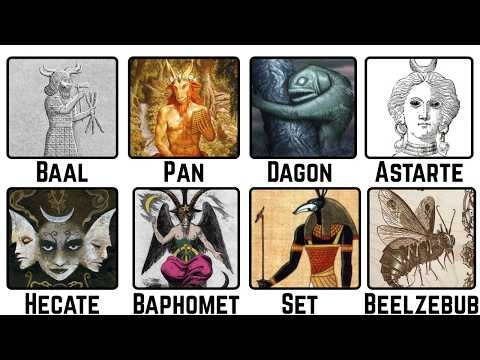
We will dissect the historical journeys of figures like Baal, Pan, Dagon, Astarte, Hecate, Set, and even Baphomet. Witness how storm gods, the embodiment of primal power, and fertility goddesses, creators of life, were twisted into demonic archetypes. Trace the descent of nature spirits, once benevolent guides, into figures of corruption, and how powerful occult symbols became synonymous with malevolence in later Jewish and Christian narratives. Our journey spans from the ancient fervor of Canaanite religion and the rich mythology of Mesopotamia, through the philosophical depths of Greek mythology and the enigmatic pantheon of Egyptian mythology, reaching into the crucible of medieval Europe and the mysterious dawn of 19th-century occultism. This is an analytical expedition, revealing how the relentless march of political power, the ascendancy of monotheism, the ambitions of empire building, and the fierce competition between faiths reshaped the spiritual iconography across millennia, all without succumbing to sensationalism.

The Fall of Baal: A Storm God's Demise

Baal, often depicted as a powerful storm god, was central to the pantheons of many ancient Near Eastern cultures, including the Canaanites. His worship was deeply intertwined with agricultural cycles and the promise of rain and fertility. However, as monotheistic faiths like Judaism began to solidify their theological frameworks, Baal became a prime target. The narrative presented in texts like the Hebrew Bible often portrays Baal worship as idolatrous and corrupt, directly opposing the worship of Yahweh. This wasn't merely a theological disagreement; it was a political and cultural struggle for dominance. By demonizing Baal, early Israelite leaders effectively delegitimized the religious practices of surrounding peoples, consolidating their own spiritual authority. The fervent attacks on Baal as a false idol set a precedent for the later demonization of other deities.

Consider the complexities of early Hebrew religion. The idea that Yahweh and El were initially distinct storm gods, later synthesized amidst Babylonian influence to forge monotheism, provides a fascinating lens. The concept of Ashtaroth as a divine consort, a representation of the divine mother, highlights the ancient patriarchal shift that often accompanies the rise of singular male deities. This echoes the broader historical trend of masculine deities supplanting feminine principles in positions of ultimate power. The justifications for violence often attributed to these deities in later epochs seem to underscore a human construct of the divine, reflecting our basest traits rather than a loving creator.

Pan's Shadow: From Nature's Embrace to Demonic Wildness

Pan, the goat-footed god of the Greeks, embodied the wild, untamed spirit of nature. His domain was the forests, mountains, and pastoral life, often associated with revelry, music, and primal instincts. As Christianity spread throughout the Roman Empire, figures like Pan became emblematic of paganism's allure and perceived licentiousness. His association with sensuality, wildness, and ecstatic states was reinterpreted through a lens of sin and corruption. The hoofs, the horns, and his association with music and dance were gradually twisted into devilish attributes. The fear of the wild and the unknown, inherent in many human societies, was projected onto Pan, transforming him from a spirit of nature into a symbol of untamed, dangerous forces.

The Hellenistic interpretations of older deities often serve as fertile ground for demonization. When these symbols cross cultural boundaries and encounter new theological systems, their original meanings can be drastically altered. The discomfort with untamed nature and primal urges, often seen in more ascetic or disciplined religious traditions, finds a convenient scapegoat in figures like Pan.

Dagon's Transformation: A Semitic Deity's Descent

Dagon was a prominent Mesopotamian and Canaanite deity, often associated with grain, agriculture, and possibly storms. As a significant god in Philistine culture, his temples and worship were well-established. His prominence made him a direct rival to the rising power of Yahweh in early Israelite narratives. The biblical accounts frequently depict Dagon in opposition to the Ark of the Covenant, portraying his statue falling before it, symbolizing the superiority of the Israelite God. This narrative effectively diminished Dagon's stature, casting him as a lesser, ultimately defeated, idol. The association of sea-dwelling or fish-like imagery sometimes linked to Dagon further lent itself to later interpretations associating him with monstrous or sub-aquatic entities within demonological lore.

It's crucial to acknowledge that "Israelite monotheism" as a fully formed concept likely developed later, primarily within the Kingdom of Judah. Early Semitic peoples, including the Israelites themselves, had a history of polytheism. The integration of deities like Baal Hadad was not "new" to the Israelites, as they were part of the same cultural sphere. Jezebel, often blamed for introducing Baal worship, was in fact bringing back a deity whose worship was already extant.

Astarte's Reimagining: A Goddess of Love and War Corrupted

Astarte (or Ishtar in Babylonian and Assyrian traditions) was a major deity across the ancient Near East, revered as a goddess of love, beauty, sex, fertility, war, and political power. Her worship was widespread and deeply ingrained in the cultural fabric of many societies. In the biblical narratives, Astarte is often equated with Asherah, another goddess whose worship was suppressed by proponents of strict monotheism. The Hebrew Bible frequently condemns the worship of Asherah and Astarte as an abomination, directly linking them to idolatry and spiritual defilement. Her powerful and multifaceted nature, encompassing both eroticism and martial prowess, made her a potent symbol of the "other" that needed to be eradicated by emerging monotheistic systems.

The divine mother figure represented by Astarte and Asherah often clashed with the ascendant patriarchal structures that favored singular male deities. Eradicating the worship of these powerful feminine deities was not just about religious purity; it was about asserting a new social and political order where masculine principles dominated.

Hecate's Midnight: The Sorceress of the Crossroads

Hecate, a goddess from the pre-Hellenic pantheon, later integrated into Greek mythology, was associated with magic, witchcraft, the night, moon, ghosts, and crossroads. She was often depicted as a powerful, enigmatic figure, sometimes with three faces or bodies, presiding over liminal spaces and transitions. As Christianity became the dominant religion in Europe, Hecate, with her strong ties to magic and the nocturnal realm, became an easy target for demonization. She was increasingly conflated with witches and demonic entities, her traditional domains of shadowy places and mystical knowledge becoming associated with malevolent sorcery and pacts with the devil. Her complex nature, existing on the fringes of the Olympian pantheon, made her a convenient symbol for all that was considered dark and forbidden.

The association of Hecate with liminal spaces—crossroads, boundaries, the threshold between worlds—is a potent metaphor for her position in religious history. She represents the "other," the power that exists outside the established order, making her an ideal figure to be cast as demonic when that order shifts.

Set's Rebellion: The Egyptian God of Chaos

In ancient Egyptian mythology, Set was the god of chaos, deserts, storms, and foreigners. He was a complex deity, often depicted as an antagonist to Osiris and Horus, representing the untamed forces that threatened the ordered cosmos represented by the pharaoh and the established religious system. While an integral part of the Egyptian pantheon, Set's disruptive nature made him a symbol of disorder. When foreign powers or religious ideas gained influence in Egypt, figures like Set, representing chaos and the "other," could be more easily demonized or reinterpreted as malevolent. Later traditions, particularly those influenced by Abrahamic religions, sometimes drew parallels between Set and demonic figures due to his role as an antagonist and his association with disruptive, "unclean" domains like the desert.

The concept of an "Egyptian monotheism" under Akhenaten, though brief, highlights the fluidity of religious thought in the ancient world. The eventual return to polytheism, and the subsequent re-establishment of traditional deities, shows how religious identities were constructed and contested, often by absorbing or reinterpreting elements from neighboring cultures.

The Enigma of Baphomet: A Symbol's Perilous Evolution

Baphomet is a figure that first gained notoriety during the trials of the Knights Templar in the early 14th century. Accused of heresy, the Templars were alleged to have worshipped an idol known as Baphomet. The exact nature of this idol remains obscure, but it became a potent symbol of heresy and devil worship in the Christian imagination. Centuries later, in the 19th century, occultists like Éliphas Lévi reinterpreted Baphomet as a symbolic representation of the reconciliation of opposites—male and female, good and evil, light and dark—often depicted with a human body, goat's head, and wings. This symbolic, esoteric interpretation, however, did not erase the earlier association with devil worship. In modern popular culture and certain fringe interpretations, Baphomet continues to be linked with Satanism and demonic forces, illustrating how symbols can acquire new, often darker, meanings through historical association and cultural fear.

The perception of Baphomet illustrates how a symbol's meaning can be violently re-written. From a potentially misunderstood idol of a disgraced military order to a complex arcane sigil, its journey is a testament to the power of narrative and fear in shaping our understanding of the "other."

The Alchemy of Divinity: Why Gods Become Demons

The transformation of pagan deities into demons is not merely an artifact of religious history; it is a recurring pattern woven into the fabric of human civilization. It is a powerful illustration of how power structures, cultural dominance, and the fear of the unknown can reshape our spiritual narratives. The demonization of ancient gods served multiple purposes: it legitimized the conquering religion, consolidated theological and political power, and provided a framework for understanding and controlling perceived threats—whether they were external cultures or internal anxieties.

Ultimately, figures like Baal, Pan, Dagon, Astarte, Hecate, Set, and Baphomet remind us that the divine is not static. It is a fluid concept, constantly being reinterpreted, redefined, and, at times, actively suppressed by the forces that seek to impose their own spiritual order. Understanding this process is crucial for anyone seeking true esoteric knowledge, moving beyond simplistic good-versus-evil binaries to appreciate the complex interplay of history, power, and belief.

Your Operation: Reclaiming the Narrative

The historical demonization of ancient deities reveals a pattern of control and redefinition. Consider a deity or spiritual figure from your own cultural background or one that resonates with you. How has their portrayal evolved over time? What forces might have influenced this evolution? Your task is to investigate one such figure, looking beyond simplistic interpretations to understand the historical, political, and cultural factors that shaped their perception. Document your findings, noting where the original meaning might have been obscured or intentionally corrupted. This is an exercise in critical thinking and reclaiming the richness of spiritual heritage from the shadows of imposed dogma.


Arsenal del Mago

  • Esencial: Magickal Seals Generator - Para visualizar y generar la esencia de figuras arquetípicas, independientemente de su connotación.
  • *Liber Null & Psychonaut* por Peter J. Carroll - La biblia de la Magia del Caos, fundamental para entender la manipulación de la realidad.
  • *The Golden Bough* por James George Frazer - Un compendio exhaustivo de mitología y rituales comparados a través de culturas.
  • *The Kybalion* - Principios herméticos que subyacen en muchas de estas transformaciones y arquetipos.
  • Un diario de estudio detallado - Para registrar tus propias investigaciones y reflexiones sobre estas figuras.

Preguntas Frecuentes

  • ¿Por qué las religiones monoteístas tienden a demonizar a las deidades de religiones politeístas?
    La demonización sirve para desacreditar las creencias rivales, consolidar la autoridad del nuevo sistema de creencias y marcar una clara distinción entre "lo sagrado" y "lo profano" según la visión del vencedor.
  • ¿Podrían figuras como Satanás ser interpretaciones posteriores de deidades antiguas?
    Existe una fuerte teoría académica que sugiere que el concepto de Satanás en las religiones abrahámicas se desarrolló en parte a partir de la demonización de deidades extranjeras y figuras adversariales de mitologías anteriores, adaptándose a nuevas narrativas teológicas.
  • ¿El Baphomet de los Templarios es el mismo que el Baphomet moderno?
    No necesariamente. El Baphomet de los Templarios es una figura histórica oscura ligada a acusaciones de herejía. El Baphomet moderno, popularizado por ocultistas del siglo XIX, es una representación simbólica compleja con significados esotéricos distintos, aunque la asociación con lo "demoníaco" persiste en la cultura popular.
  • ¿Cómo puedo usar este conocimiento para mi propia práctica mágica?
    Comprender cómo las energías y los arquetipos son manipulados y redefinidos históricamente te da poder. Te permite identificar las capas de significado en los símbolos, deconstruir dogmas y trabajar de forma más consciente con las fuerzas arquetípicas, reconociendo cómo su "naturaleza" puede ser percibida de maneras muy diferentes.

Practitioner's Note: True magick requires resources. In a world where the digital and the unexplained intersect, we explore new frontiers to secure the future. Do you dare to be part of the vanguard? Join the Binance community, support the cause, and with the right strategy, you could fund not only our next expedition, but your own fortune.

Deconstructing Sacred Texts Without Sentiment


Sacred Texts Transformed

No ritual is complete without a foundational understanding of its components. Likewise, no true exploration of the world's spiritual architectures can occur without a clear-eyed dissection of their original blueprints. We are not here to kneel, nor are we here to scoff. We are here to excavate. To understand the raw power, the human intent, and the societal impact embedded within the most influential texts ever conceived.

Imagine peering into the forge where creation itself was hammered into existence, not with divine reverence, but with the cold, sharp tools of historical analysis, anthropological insight, and sheer intellectual curiosity. This is not an act of desecration; it is an act of profound respect for the power of ideas and the enduring human quest for meaning. We will dismantle the pillars of faith, not to topple them, but to understand the engineering behind them. Prepare to see the familiar through a lens unclouded by dogma.

Tabla de Contenidos

The Genesis of Meaning: Why Deconstruct the Sacred?

The world's most potent texts are not static relics. They are dynamic forces that have shaped civilizations, ignited wars, inspired countless acts of altruism, and fueled an equal number of atrocities. To approach them "without sentiment" is to strip away generations of interpretation, cultural overlay, and emotional baggage. It is to confront the bare bones of the message, the historical context of its creation, and the undeniable human biases that inevitably seep into any narrative, no matter how divinely inspired.

The very act of questioning, of seeking an unvarnished view, is a practice of profound self-empowerment. It's akin to examining the energetic imprint of a powerful sigil – understanding its construction allows for greater control over its manifestation, or at least a clearer perception of its effects. This is about building a more robust understanding of the forces that have molded our collective consciousness, enabling us to navigate the present and future with greater clarity.

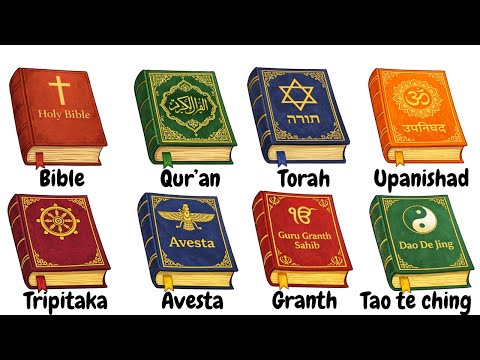
The Bible: A Tapestry of Prophecy and Politics

The Bible, a colossal collection of scrolls, is less a single book and more a library. Its narrative arc spans millennia, weaving together law, prophecy, poetry, and history. Its origins are shrouded in the oral traditions of ancient Israel, gradually codified by various scribes and edited by influential figures over centuries. The tension between divine pronouncements and political maneuvering is palpable. Prophecies, written as far back as a thousand years before the common era, are indeed striking, but understanding their composition requires acknowledging the societal pressures and interpretive frameworks of the time.

The New Testament, with its gospels, presents a fascinating case study. While the precise dating remains a scholarly debate, with Mark often placed around 70 CE and John closer to 100 CE, these texts were – in their own way – firsthand accounts from those who followed Jesus, witnessed his teachings, and experienced his life. However, the transmission of these stories, initially oral, inevitably involved shaping and recollection, a point often misunderstood. The idea that the divine version of historical figures could appear "Germanic" rather than reflecting their likely Middle Eastern features is a testament to how interpretations evolve and, at times, distort. The Bible’s influence is undeniable, but its interpretation has been a constant battleground, often wielded as much for earthly power as for spiritual enlightenment.

"The Bible is a collection of divine truths, clothed in human language." - William E. Gladstone

The Quran: Divine Revelation and Linguistic Purity

The Quran, considered by Muslims to be the literal word of God (Allah) revealed to the Prophet Muhammad, stands as a testament to linguistic perfection and theological consistency. Unlike texts that underwent extensive compilation and editing over long periods, the Quran is believed by adherents to be a direct, unadulterated dictation. Muhammad, who was illiterate, recited verses revealed by the Archangel Jibril (Gabriel), which were then meticulously recorded by his companions.

A key distinction from the Bible is the Quran's stance on Jesus (Isa, peace be upon him). While revered as a highly important prophet, he is unequivocally not considered the Son of God. The Quran emphasizes the oneness of God (Tawhid) and views the Bible as divinely inspired, but believes its original message was altered over time. This is why many passages prompt reflection: "Remember when..." The Quran is seen as a clarification and a final testament, a "remembrance of God" designed to guide humanity back to its pristine, intended path. Its compilation under Uthman, the third Caliph, aimed to standardize the text and prevent any divergence, a crucial act in preserving its perceived purity.

The Torah: The Law's Foundation and Its Fractures

The Torah, comprising the first five books of the Hebrew Bible, lays down the foundational laws and narratives of Judaism. Its roots are ancient, tracing back to Moses, who is traditionally credited with receiving its tenets directly from God on Mount Sinai. However, critical scholarship suggests a complex editorial history, with different sources likely integrated over time.

The inclusion of the Talmud on such a list is a pointed question that raises significant debate. While the Torah is the central sacred text, the Talmud, a vast compendium of rabbinic laws, ethical teachings, and historical discussions, serves as a vital commentary and interpretation of the Torah, deeply influencing Jewish life and practice. The notion that "politicians who are Masons serve" the Talmud is a conspiratorial leap, conflating distinct traditions and demonstrating how easily narratives can be twisted to fit pre-existing biases. The intricate legalistic and ethical framework of the Talmud, while profound, is also a testament to the human endeavor of interpreting divine will in a complex world.

The Vedas and Upanishads: The Echoes of Ancient Wisdom

The Vedas, considered among the oldest sacred texts in Hinduism, are vast collections of hymns, rituals, and philosophical insights originating from ancient India. They are characterized by their abstract and often poetic language, forming the bedrock of Hindu thought. The Upanishads, which emerged later, are philosophical texts that delve deeper into the metaphysical understandings presented in the Vedas, acting as both commentary and a continuation of these profound ideas.

The relationship between the Vedas and Upanishads is not one of opposition, but of layered development. The Upanishads explore the esoteric meanings and ultimate realities hinted at in the Vedic hymns, offering profound discussions on Brahman (the ultimate reality) and Atman (the self). This layered approach reflects a tradition that values continuous inquiry and philosophical refinement, where later texts build upon and clarify the insights of earlier ones, rather than contradicting them.

The Tripitaka: The Buddha's Path to Liberation

The Tripitaka, also known as the Pali Canon, is the foundational scripture of Theravada Buddhism. It's a comprehensive collection divided into three "baskets": the Vinaya Pitaka (monastic rules), the Sutta Pitaka (discourses of the Buddha), and the Abhidhamma Pitaka (philosophical and psychological analysis).

The Buddha's teachings, initially transmitted orally, were eventually compiled by monastic communities. The oral tradition emphasizes the importance of accurate recitation and memorization, a process that, over time, involves human memory and interpretation, much like the whispered game in your analogy. While the goal is to preserve the core teachings of liberation from suffering, the very act of transmission and codification introduces points of potential divergence and requires rigorous discipline to maintain fidelity to the original intent.

The Avesta: The Light and Shadow of Zoroastrianism

The Avesta is the primary sacred text of Zoroastrianism, one of the world's oldest monotheistic religions. Attributed to the prophet Zoroaster (Zarathustra), it contains hymns (Gathas) considered to be his direct words, along with later liturgical texts. The religion's core tenet is the cosmic struggle between good (Ahura Mazda) and evil (Angra Mainyu), a dualistic worldview that has influenced subsequent major religions.

The Avesta's teachings emphasize free will and individual responsibility, where every person is an active participant in the cosmic battle between light and darkness. Its historical impact is significant, offering insights into the development of theological concepts like heaven, hell, and a final judgment. However, like all ancient texts, its interpretation and the societal structures it influenced are subject to historical scrutiny, revealing both its moments of enlightenment and its darker applications.

The Guru Granth Sahib: A Symphony of Devotion and Unity

The Guru Granth Sahib is the central religious scripture of Sikhism. It is revered not merely as a book, but as the eternal living Guru. Compiled by the Sikh Gurus, it contains hymns and teachings from the Sikh Gurus themselves, as well as selections from saints of other faiths whose messages aligned with Sikh principles of universal love, devotion, and equality.

The compilation of the Guru Granth Sahib was a deliberate act to consolidate the spiritual teachings and prevent the dilution or misinterpretation of Sikhism by later, less enlightened individuals or external influences. Its message is one of profound unity, transcending sectarian divides and emphasizing the inherent divinity within all beings. It stands as a beacon against religious exclusivism, offering a path of devotion grounded in service and ethical living.

The Dao De Jing: The Uncarved Block of Natural Order

The Dao De Jing, attributed to the ancient Chinese philosopher Lao Tzu, is a foundational text of Taoism. It is known for its profound yet deceptively simple verses that explore the concept of the Dao – the ineffable, natural order of the universe. It advocates for living in harmony with this natural flow, embracing simplicity, humility, and non-action (wu wei).

Unlike texts that dictate specific rituals or theological doctrines, the Dao De Jing offers a philosophy for living. Its wisdom lies in its paradoxes and its gentle guidance towards aligning oneself with the natural rhythms of existence. It encourages introspection and a letting go of artificial constructs, urging the practitioner to return to an authentic, unadorned state of being, much like an "uncarved block" ready to reveal its inherent form.

Veredict of the Pragmatist: The Enduring Power of Texts

These sacred books, varied as they are in origin and content, share a common thread: their monumental impact on human history and individual lives. They provided frameworks for understanding existence, dictated moral codes, and offered solace in times of despair. To analyze them without sentiment is to appreciate their functional power as blueprints for belief, social cohesion, and, yes, conflict.

However, the "without sentiment" approach has its limitations. The very "sentiment" – devotion, faith, awe – is what imbues these texts with their perceived power for billions. A purely clinical dissection misses the lived experience. The key is to understand both: the historical, societal, and psychological mechanics, *and* the subjective, transformative power they hold for adherents. Our goal is not to diminish their significance, but to understand its origins and its mechanisms, thereby empowering our own conscious engagement with meaning-making systems. The influence of these texts is undeniable, and understanding them is a crucial step in understanding ourselves and the societies we inhabit.

Arsenal of the Seeker: Essential Tools for Deeper Study

To truly engage with the depth of these ancient narratives requires more than casual reading. A practitioner seeking to dissect and understand these foundational texts would be wise to equip themselves with a robust arsenal:

  • "The Bible" (Various translations and critical editions are essential for comparative analysis)
  • "The Quran" (English translations by reputable scholars like M.A.S. Abdel Haleem)
  • "The Torah" (The Five Books of Moses, often found within larger Bible editions)
  • "The Upanishads" (Translations by scholars like Swami Nikilananda or Eknath Easwaran)
  • "The Vedas" (Selections and scholarly interpretations are more practical than the full collection for most)
  • "The Dhammapada" (A key text within the Tripitaka, offering core Buddhist teachings)
  • "The Avesta" (Selections, particularly the Gathas, for understanding Zoroastrian core)
  • "The Guru Granth Sahib" (English translations)
  • "The Dao De Jing" (Translations by Stephen Mitchell or Ursula K. Le Guin offer accessible philosophical insights)
  • A comprehensive encyclopedia of comparative religion.
  • Scholarly works on the history of religion and textual criticism.

Taller Práctico: The Art of Textual Dissection

Engaging with sacred texts is a ritual in itself, one that requires discipline and a structured approach. Here’s how to begin your own textual dissection:

  1. Select Your Text: Choose one of the major texts discussed or another of interest.
  2. Acquire a Reputable Translation: Opt for scholarly translations that provide historical context and annotations. Avoid overly devotional or simplistic versions for this initial dissection.
  3. Understand the Historical Context: Before diving into the text itself, research the period and culture in which it was created. Who were the authors or compilers? What were the prevailing social, political, and philosophical ideas of their time?
  4. Identify the Core Messages: Read through the text with a critical eye. What are the central narratives, laws, prophecies, or philosophical arguments? Try to summarize them in neutral, objective language.
  5. Note Areas of Ambiguity and Controversy: Where does the text seem contradictory? What passages have led to significant debate or conflict throughout history? What are the common criticisms or alternative interpretations?
  6. Analyze the Language and Structure: Pay attention to recurring themes, metaphors, and rhetorical devices. How is the text organized? Does it use narrative, legalistic, poetic, or philosophical modes?
  7. Compare with Other Texts (Optional but Recommended): If possible, compare similar themes or concepts across different religious traditions. This highlights both unique elements and common threads in human spiritual thought.
  8. Journal Your Findings: Keep a detailed record of your observations, questions, and preliminary conclusions. This journal becomes your personal grimoire of understanding.

This process isn't about finding "truth" or "lies," but about understanding the architecture of belief systems and their impact on the human psyche and society.

Preguntas Frecuentes

  • Is it disrespectful to analyze sacred texts critically? True respect lies in understanding, not in blind adherence. Critical analysis, when approached with intellectual honesty, deepens comprehension and can reveal the profound human endeavor behind these texts.
  • Can these texts still be relevant today? Absolutely. These texts have shaped millennia of thought, ethics, and culture. Understanding their origins and evolution is crucial for navigating contemporary societal structures and individual belief systems.
  • What is the difference between a sacred text and a historical document? Sacred texts are often considered divinely inspired or authoritative by their adherents, carrying religious and spiritual weight. Historical documents are primarily analyzed for their factual accounts of past events. However, the line can blur, as sacred texts also function as historical documents, offering insights into the past of the societies that produced them.
  • How do I avoid imposing my own biases when analyzing these texts? This is a continuous challenge. Practice active listening to the text itself, research the historical and cultural context thoroughly, be aware of your own preconceptions, and engage with diverse scholarly interpretations.

Tu Operación: Unraveling Your Own Narrative

Now, turn your gaze inward. Every individual, by virtue of their experiences, beliefs, and societal conditioning, constructs their own personal narrative – their own "sacred text." Consider the core beliefs and convictions that shape your reality.

List the top five foundational "truths" that guide your decisions and perceptions. For each "truth," ask yourself:

  • Where did this belief originate?
  • What experiences or influences reinforced it?
  • Are there alternative perspectives that challenge it?
  • How does this belief serve you, and how might it limit you?

This exercise is not about discarding your core beliefs, but about understanding their construction, their "authorship" by your own life experiences and external influences. By dissecting your own narrative with the same critical rigor you would apply to an ancient scripture, you begin to possess a more potent form of self-mastery. The uncarved block of your own being awaits your conscious shaping.

Practitioner's Note: True magick requires resources. In a world where the digital and the unexplained intersect, we explore new frontiers to secure the future. Do you dare to be part of the vanguard? Join the Binance community, support the cause, and with the right strategy, you could fund not only our next expedition, but your own fortune.

Ancient Magic: A Pragmatic Explorer's Guide to the Lost


The Unseen Architects of Reality

Forget dusty tomes and academic detachment. The true history of civilization is etched not in stone monuments, but in the persistent hum of forgotten energies. Every ancient culture, from the sun-baked sands of Egypt to the misty shores of the Celts, understood this fundamental truth: the universe is not a cold, indifferent void, but a vibrant tapestry woven by hidden forces, sacred energies, and beings beyond our mundane perception. Their practitioners—magicians, priests, shamans—were not charlatans but engineers of the psyche, wielding potent rituals, symbols, and spiritual technologies to bend destiny, shield their tribes, mend the broken, or forge direct connections with the divine and the spectral.

This exploration isn't about blind faith; it's about dissecting the mechanics of belief and intention. We’re peeling back the layers of millennia to understand how these mystical traditions functioned, the tangible impact they had on shaping empires, and the undeniable magnetic pull they continue to exert on seekers of deeper truths today. This is a pragmatic dive into the "how" and "why" of ancient magic, stripped of dogma and focused on the raw application of will.

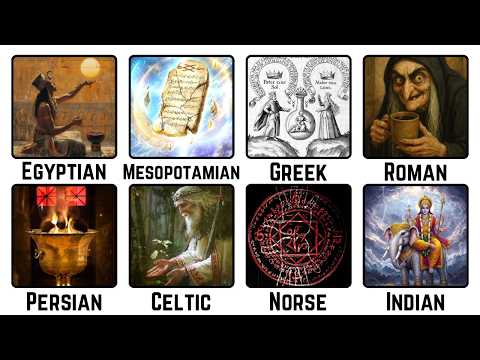
Egyptian Heka: The Breath of Creation

In ancient Egypt, Heka was not merely magic; it was the generative force of creation itself, the divine energy that brought the cosmos into being and sustained it. It was personified as a god, a sentient power inherent in all things. Egyptian magicians, or priests wielding Heka, understood that the universe responded to precise articulation and symbolic representation. Their rituals were intricate performances designed to align with cosmic order (Ma'at), invoking divine forces through potent hymns, sacred gestures, and inscribed hieroglyphs that were believed to possess intrinsic power. They used amulets, spells, and sophisticated astronomical observations to manipulate events, protect against malevolent spirits (Apep being the prime antagonist), and ensure the pharaoh's divine mandate. This wasn't about casting spells; it was about participating in the fundamental workings of existence. Understanding the principles of Heka can inform modern approaches to intent manifestation, emphasizing the power of precise language and symbolic resonance.

Mesopotamian Demonology: Navigating the Underworld

Mesopotamia, the cradle of civilization, viewed the world as a battleground between divine order and a teeming underworld of demons and malevolent spirits. Their magic, deeply intertwined with astrology and divination, was primarily concerned with warding off these entities and appeasing the gods who held sway over them. Rituals involved elaborate incantations recited by priests to diagnose spiritual afflictions, perform exorcisms, and create protective amulets. The focus was often therapeutic; authentic Mesopotamian magic sought to treat diseases believed to be caused by demonic possession or divine displeasure. However, as some scholars and community voices suggest, the manipulation of these forces could also be twisted. This demonstrates a critical aspect of ancient practice: the double-edged nature of intent and the profound responsibility that comes with wielding such power. Exploring these darker aspects requires a robust understanding of protective rituals, which can be found in texts discussing protective rituals.

Greek Theurgy: Ascension Through Divine Art

Ancient Greek magic, particularly later developments like Theurgy, was a complex system aimed at spiritual purification and union with the divine. Unlike more coercive forms of magic, Theurgy emphasized reverence, contemplative practices, and symbolic rituals to achieve ecstatic states and divine communion. Thinkers like Iamblichus saw Theurgy as a Divine Art, a way to ascend beyond the material world through invoking angels, archangels, and the gods themselves. This involved precise invocations, purification rites, and the use of sacred materials believed to bridge the gap between the human and the divine. It's a testament to the idea that magic isn't always about commanding, but sometimes about aligning and ascending. For those interested in the more esoteric aspects, exploring esoteric philosophy can provide further context.

Roman Curse Tablets: The Dark Side of Intentionality

The Romans, known for their pragmatism, displayed it even in their sorcery. Curse tablets, or *defixiones*, were thin sheets of lead or pewter inscribed with spells intended to harm enemies, lovers, or rivals. These were ritually buried or placed in tombs, binding the curse to the underworld and the spirits residing there. The messages were often brutal, invoking deities and demons to afflict their targets with pain, misfortune, or impotence. This stark example highlights the raw power of focused intention, particularly when charged with negative emotion. It serves as a potent reminder of responsibility in magic; the energy you project, intended for good or ill, inevitably seeks manifestation. The creation and use of such artifacts underscores the need for rigorous ethical frameworks in modern occult practice, much like one would find in discussions about ethical magic.

Persian Zoroastrian Rituals: The War Against Darkness

Zoroastrianism, one of the world's oldest monotheistic religions, viewed reality as a cosmic struggle between the forces of good (Ahura Mazda) and evil (Angra Mainyu). Its magical practices were deeply embedded within this dualistic framework, focusing on rituals, prayers, and purification rites to strengthen the good and repel the forces of darkness and deception. Offerings, sacred fires, and the recitation of sacred texts (Avesta) were paramount. The magician's role was to act as a warrior for light, using spiritual technologies to support the cosmic battle and protect the community from malevolent influences. This philosophy resonates with the idea that focused spiritual effort can actively influence the balance of forces, a concept explored in the realm of spiritual warfare.

Celtic Druidic Prophecy: Whispers of Nature's Will

The Druids, the priestly class of ancient Celtic societies, were deeply connected to the natural world, seeing divine essence in trees, rivers, and celestial bodies. Their magic was intrinsically linked to prophecy, divination, and the understanding of natural cycles. They likely utilized sacred groves, standing stones, and elements like water and fire for scrying and communication with spirits. Their practices involved understanding the unseen currents of destiny, often expressed through elaborate rituals and possibly ecstatic states induced by natural means. The emphasis was on harmonizing with the spiritual forces inherent in the environment rather than imposing will upon it. This deep ecological spirituality can inform modern practitioners interested in nature magic and animism.

Viking Seidr and Rune Sorcery: Weaving Fate's Threads

Norse magic was a potent mix of practical sorcery and cosmic understanding. Seidr, often practiced by women called Völva, involved trance states, prophecy, and the manipulation of fate (Wyrd). It was a complex art of weaving destiny, often seen as a dangerous but powerful force. Rune sorcery, on the other hand, utilized the angular symbols of the Elder Futhark, each imbued with potent meaning and magical potential. Runes were carved, inscribed, and invoked for various purposes, from protection and healing to curses and empowerment. The Vikings understood that symbols were not mere representations but conduits of power. Their approach was direct, often gritty, and deeply effective. For those drawn to this path, understanding rune divination is a foundational step.

Ancient China's Taoist Alchemy: The Pursuit of Immortality

Taoist alchemy in ancient China was a sophisticated system that sought not just material transformation but, more profoundly, the transformation of the practitioner themselves. It encompassed both external alchemy (waidan), involving elixirs and herbs, and internal alchemy (neidan), which focused on refining one's own vital energies (Qi) through meditation, breathwork, and sexual practices. The ultimate goal was often longevity or even immortality—achieving a state of harmonious alignment with the Tao, the fundamental principle of the universe. This pursuit of spiritual and physical perfection through energetic manipulation remains a potent area of study for those interested in Taoism and energetic cultivation.

Ancient India's Vedic Mantra Power: The Sound of Creation

In ancient India, Vedic priests wielded the power of mantra—sacred syllables and verses believed to be the fundamental building blocks of reality. They understood that sound vibration held immense creative and transformative power. Through precise intonation and recitation, these priests could invoke deities, manifest desired outcomes, and achieve altered states of consciousness. Mantras were not just words; they were sonic keys to unlocking cosmic energies. This tradition highlights the profound impact of vibration and focused sound in magical practice, a principle that echoes in modern sound healing and mantra meditation.

Mayan Astral Blood Magic: Cosmic Alignment and Sacrifice

The Maya possessed a remarkably advanced understanding of astronomy and cosmology, which they integrated into their magical practices. Their system often involved bloodletting rituals, where rulers and priests would offer their own blood as a potent offering to the gods and the cosmos. This act was believed to nourish the divine, open channels of communication with the spirit world, and ensure the continuation of cosmic cycles. Their magic was deeply tied to celestial events, intricately mapping time and destiny onto the movements of stars and planets. This practice, while intense, demonstrates a willingness to engage physically and energetically with the forces governing reality, a concept that can be viewed alongside discussions on astral projection and cosmic energy.

Practitioner's Verdict: The Enduring Echoes of Ancient Power

What becomes clear when you strip away the dogma and look at the underlying principles is that ancient magic was fundamentally about understanding and interacting with subtle energies, intention, and consciousness itself. Each civilization developed its unique technological interface for this interaction, be it through hieroglyphs, incantations, runes, or celestial alignments. These systems were not mere superstition; they were sophisticated spiritual technologies that shaped societies, influenced thought, and provided a framework for understanding one's place in the cosmos. The fascination endures because these methods tap into fundamental aspects of the human psyche and our innate drive to influence our reality. While the specific forms may change, the core principles of focused will, symbolic representation, and energetic manipulation remain timeless. The challenge for the modern practitioner is to learn from these ancient blueprints, adapt them to contemporary contexts, and wield them with intelligence and responsibility.

Arsenal of the Mage

  • Key Texts:
    • "The Egyptian Book of the Dead"
    • "A History of Magic in the Early Middle Ages" by Richard Kieckhefer (for context on Western traditions)
    • "The Secret Teachings of All Ages" by Manly P. Hall (for broad esoteric overviews)
    • "The Epic of Gilgamesh" (for Mesopotamian context)
    • "The Poetic Edda" and "The Prose Edda" (for Norse lore)
  • Tools & Practices:
    • Symbolic journals for recording sigils, runes, or hieroglyphs.
    • High-quality representations of ancient scripts (e.g., accurate rune charts, hieroglyph guides).
    • Tools for divination: runes, scrying bowls, accurate astronomical charting software.
    • Focusing aids: crystals, specific woods, natural elements that hold symbolic meaning.
    • Research subscription services for academic papers on ancient religions and magic.
  • Modern Resources:
    • Online courses focusing on comparative mythology and ancient religion.
    • Academic journals specializing in ancient history and religious studies.
    • Workshops on symbolic language and ritual construction.

Frequently Asked Questions

  • Q: Is ancient magic dangerous to practice today?
    A: Like any powerful tool, ancient magic carries risks. Practicing without proper understanding, respect, and ethical considerations can lead to unintended consequences. Focus on learning the principles and starting with simpler, foundational techniques.
  • Q: How can I verify the authenticity of ancient magical texts or practices?
    A: Authenticity is a complex issue. Cross-reference information from multiple scholarly sources, archeological findings, and respected esoteric researchers. Be wary of overly sensationalized claims or commercialized interpretations.
  • Q: Can I combine practices from different ancient cultures?
    A: Yes, but with caution. Understanding the core principles of each system is crucial before attempting to blend them. A deep understanding of one tradition before integrating another often leads to more potent results.
  • Q: What's the difference between historical magic and modern occultism?
    A: Historical magic offers blueprints and context, showing how our ancestors interacted with unseen forces. Modern occultism often adapts and reinterprets these ancient systems through contemporary psychological and philosophical lenses.

Your Operation: Choose Your Path

The echoes of ancient power resonate through the ages, not as relics of the past, but as living blueprints for consciousness. Now, it's your turn to engage with this legacy. Choose one of the civilizations explored above and commit to a small, focused act of exploration within the next seven days:

  • Egyptian Heka focus: Craft a short, powerful affirmation in clear, deliberate language, and repeat it with focused intent three times daily.
  • Mesopotamian focus: Dedicate a moment to consciously warding off any negative influences or intrusive thoughts that arise during your day. Visualize a protective barrier.
  • Greek Theurgy focus: Engage in a brief period of contemplative silence, focusing on invoking a sense of higher harmony within yourself.
  • Roman focus: Write down one specific intention you wish to manifest clearly, and seal it symbolically (e.g., by drawing a simple sigil for it or folding the paper in a specific way).
  • Persian focus: Identify one small, habitual "darkness" in your life (e.g., procrastination, negative self-talk) and perform a brief ritual to actively dispel it.
  • Celtic focus: Spend time in nature, observing its patterns and listening for any intuitive whispers of insight or guidance.
  • Viking focus: Meditate on a single runic symbol that resonates with you, contemplating its potential applications in your life.
  • Chinese focus: Practice a short breathing exercise, focusing on the cultivation and circulation of your internal energy (Qi).
  • Indian focus: Select a simple mantra (or create your own) and recite it with focused intent for a few minutes.
  • Mayan focus: Reflect on a significant celestial event (past or future) and consider its potential energetic influence on your life.

Document your experience. Did you notice anything? Was there a shift in your perception or energy? Share your findings in the comments below. The true exploration begins with your direct experience.

Practitioner's Note: True magick requires resources. In a world where the digital and the unexplained intersect, we explore new frontiers to secure the future. Do you dare to be part of the vanguard? Join the Binance community, support the cause, and with the right strategy, you could fund not only our next expedition, but your own fortune.