
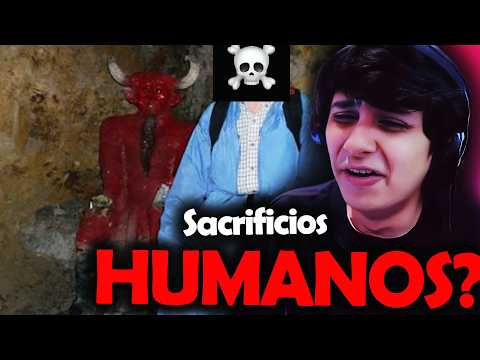
Bolivia. The name itself conjures images of stark, breathtaking landscapes and a rich tapestry of indigenous cultures. Yet, beneath this surface lies a complex and often dark spiritual undercurrent, a realm where ancient traditions meet modern anxieties. This exploration delves into the whispers of darker magic, the realities of folk rituals, and the societal impact of these potent forces, moving beyond sensationalism to understand the practical implications for those who navigate this spiritual terrain. The raw energy of this land, where ancient spirits and modern desires collide, demands a pragmatic approach.
Table of Contents
* The Echoes of Darkness: Understanding "Black Magic" in a Bolivian Context * Pachamama and the "Tío": Navigating Duality in Bolivian Spirituality * The Altar of Ambition: Rituals, Wealth, and the Underbelly of El Alto * Beyond the Spectacle: Deconstructing the "Sullu" and Fetishized Rituals * The Practitioner's Arsenal: Tools for Understanding and Navigating Bolivian Magic * Arsenal del Mago * FAQ: Addressing Common Questions About Bolivian Folk Magic * Tu Operación: Embarking on Your Journey of Discernment
The very mention of "black magic" can evoke fear and misunderstanding. In Bolivia, this term often refers to practices deeply rooted in folk traditions, intertwined with pre-Hispanic beliefs and colonial influences. These aren't necessarily acts of malice as Hollywood portrays them, but rather potent, often reciprocal, spiritual transactions. Understanding these practices requires a shift in perspective, moving away from dogmatic classifications and towards a pragmatic analysis of intention and consequence. The real power lies not in the label, but in the energetic exchange.
The Echoes of Darkness: Understanding "Black Magic" in a Bolivian Context
The term "brujería" or "magia negra" applied to Bolivian practices is often an oversimplification. What is perceived as dark magic by outsiders is frequently a form of folk magic deeply embedded in the social fabric. These rituals are often aimed at securing tangible benefits: wealth, protection, fertility, or even retribution. The commented feedback highlights this duality: mentions of "famdom boliviano" invoked, the shock of Bolivia appearing in a video, and the common misconception of these practices leading to national caricature. The pragmatic view is that these are functional magical systems, developed over centuries to address specific needs in a challenging environment.
The comment regarding wealthy individuals in El Alto and their connection to drug trafficking points to a crucial aspect: power and influence. In many societies, those who wield significant societal power often engage with spiritual practices that reinforce their position. The assertion that these practitioners are "millonarios" and "manejan mitad de la ciudad únicamente por debajo" speaks to a reality where spiritual power is inextricably linked to worldly success. This isn't foreign to any society; it's simply the Bolivian manifestation of a universal principle. The fear expressed by the local resident is a valid response to the tangible power associated with these practices.
Pachamama and the "Tío": Navigating Duality in Bolivian Spirituality
The reverence for Pachamama, Mother Earth, is central to Bolivian spirituality. Offerings to Pachamama are acts of gratitude and connection, seeking balance and sustenance. However, the comments introduce a darker, more chthonic deity: the "Tío" (Uncle). This entity, often associated with the underworld and mineral wealth, demands a different kind of appeasement. The distinction is sharp: Pachamama for nurturing and abundance, the Tío for raw extraction and power.
The stark contrast between offerings for Pachamama and the implicit dangers related to the Tío ("ufffff mejor ni preguntes") underscores the dualistic nature of many spiritual systems. It highlights the need for discernment. When engaging with any spiritual practice, understanding the specific entities or forces being invoked and their associated energetic signatures is paramount. Ignoring these nuances can lead to unforeseen consequences, a concept that resonates deeply within the practices of chaos magic.
The Altar of Ambition: Rituals, Wealth, and the Underbelly of El Alto
The anecdotal evidence about markets in La Paz, Oruro, and Potosí, where fetuses of llamas, pigeons, and even human fetuses are found for sale, paints a vivid, albeit disturbing, picture. The mention of Sacaba and fetuses being thrown for "plata" (money) or the "barrio chino" for abortion fetuses reveals a transactional approach to life and death, where the perceived energetic value of these sacrifices is believed to translate into material gain.
This is where the concept of pragmatic magic becomes essential. While ethically challenging, these practices are driven by a profound desire for prosperity and a belief in energetic transference. The comment suggesting Natalán watch an "iceberg de casos ocurridos en bolivia" to understand "Sullus" and their rituals implies a deeper, more complex folkloric layer that warrants further investigation. The distinction made about "fertilidad" referring to growth in barren lands is a key insight, differentiating metaphorical blessings from more literal, and often darker, interpretations.
Beyond the Spectacle: Deconstructing the "Sullu" and Fetishized Rituals
The fear of accepting a free drink in August, lest one become a "Sullu," points to a belief in spiritual possession or energetic vampirism tied to specific times and traditions. This is not unique to Bolivia; many cultures have cautionary tales about accepting gifts or consuming food from unknown sources in sacred or liminal spaces. The humor derived from "Hola hijitas" and the misrecognition of the greeting ("COMO ES HIJASSSSSSS") highlights the cultural nuances that can lead to misunderstandings and even unintended spiritual encounters.
The comment about the devaluation of the Bolivian peso benefiting foreigners is a pragmatic financial observation, but it also touches upon a broader theme: how external perceptions and economic realities intersect with local spiritual practices. The influx of foreigners, even those drawn to the exoticism of "magic black," can inadvertently commodify or misinterpret these sacred traditions. This is a critical point for anyone interested in ethical engagement with folk magic; it requires deep respect and a clear understanding of intent.
The Practitioner's Arsenal: Tools for Understanding and Navigating Bolivian Magic
To truly understand and navigate the spiritual landscape of Bolivia, or any similar context, requires more than just passive observation. It demands the development of a personal "arsenal" of knowledge and tools. This includes historical context, anthropological studies, and, crucially, an understanding of magical principles that transcend cultural specificity.
Arsenal del Mago
* "Liber Null & Psychonaut" by Peter J. Carroll: Essential for understanding the foundational principles of Chaos Magic, which emphasizes experimentation and psychological manipulation of reality. This book provides a framework for deconstructing and understanding any magical system, including those found in Bolivia, by focusing on intent and energetic charge. * "The Kybalion": Offers seven universal Hermetic principles that are foundational to many esoteric traditions worldwide. Understanding concepts like Mentalism, Correspondence, and Cause and Effect provides a lens through which to analyze the underlying mechanics of rituals, regardless of their cultural origin. * Ethnographic Studies on Bolivian Indigenous Cultures: Academic works that delve into the specific cosmologies, rituals, and beliefs of groups like the Aymara and Quechua are invaluable for a nuanced understanding. Look for authors who approach these traditions with respect and an anthropological lens. * Tarot Deck (e.g., Rider-Waite or Thoth): While not specific to Bolivia, a well-understood tarot deck can serve as a powerful tool for introspection, divination, and understanding symbolic correspondences. The Rider-Waite offers a broadly accessible symbolic language, while the Thoth deck, with its complex Kabbalistic and astrological associations, can provide deeper layers of interpretation relevant to more intricate magical systems. * Journal for Magical Operations: A dedicated space to record observations, experimentations, and insights is critical. This isn't just for note-taking; it's for tracking energetic shifts, the manifestation of intent, and the long-term impact of engaging with spiritual practices.
Chaos Magic, with its emphasis on personal gnosis and the construction of belief systems, offers a unique framework for approaching these potent traditions. It encourages practitioners to dissect rituals by their components: intention, visualization, energy manipulation, and belief. This analytical approach can demystify practices that might otherwise seem frightening or impenetrable.FAQ: Addressing Common Questions About Bolivian Folk Magic
* Q: Is all magic in Bolivia considered "black magic"? A: No. The term is often a simplification. Many practices are rooted in indigenous reverence for nature (Pachamama), seeking balance and prosperity. However, transactional rituals involving darker entities or sacrifices do exist and are often labeled as "magia negra" due to their perceived potency and potential for harm if misused. * Q: Are the rituals involving fetuses real and effective? A: Anecdotal evidence and reports from within Bolivia strongly suggest the existence of such practices, particularly concerning llama fetuses for spiritual offerings and, more disturbingly, evidence of human fetuses being used in transactional rituals for wealth. The effectiveness is a matter of belief and energetic engagement; from a pragmatic standpoint, the belief and potent emotional energy invested in such acts can indeed create significant energetic shifts. * Q: How can a foreigner respectfully engage with or understand Bolivian spirituality? A: Respectful engagement requires intense study, humility, and avoiding sensationalism. Seek out academic resources, learn the languages and cultural contexts, and if interacting with practitioners, do so with deep reverence and an understanding of reciprocity. Avoid treating spiritual practices as tourist attractions. * Q: What is the difference between Pachamama and the "Tío"? A: Pachamama represents Mother Earth, a nurturing and life-giving force associated with general abundance and fertility. The "Tío," often associated with the underworld and mines, is a more demanding entity, invoked for wealth extraction and power, often requiring more potent or specific offerings. * Q: Can chaos magic principles be applied to understanding these Bolivian practices? A: Absolutely. Chaos magic's focus on intent, belief construction, energetic charging, and pragmatic results provides a powerful lens for dissecting and understanding the mechanics behind folk magic. It allows one to see the underlying energetic principles at play, regardless of the cultural packaging.
Tu Operación: Embarking on Your Journey of Discernment
Your operation, starting now, is to become a discerning observer. Don't accept narratives at face value, whether they come from viral videos or ancient texts. Analyze the patterns: what are the stated intentions of these rituals? What are the implied costs and benefits? How does belief influence execution and manifestation?
Engage with this knowledge critically. If you encounter information about these practices, ask yourself: 1. What is the core energetic transaction being attempted? 2. What is the believed outcome, and what is the potential energetic cost? 3. How does the practitioner's belief system shape their perception of reality and their magical practice?
The true power lies not in replicating dark rituals, but in understanding the forces that drive human desire and the energetic principles that govern manifestation. Bolivia's spiritual landscape is a potent reminder that the veil between the mundane and the magical is often thinner than we believe, and that true magical understanding comes from pragmatic, experimental inquiry.
Practitioner's Note: True magick requires resources. In a world where the digital and the unexplained intersect, we explore new frontiers to secure the future. Do you dare to be part of the vanguard? Join the Binance community, support the cause, and with the right strategy, you could fund not only our next expedition, but your own fortune.
No hay comentarios:
Publicar un comentario