
Table of Contents
- Introduction: The Siren Call of the Digital Pantheon
- What is "God Spousing"? Beyond the Superficial
- The Rise of Pop Culture Deities: When Fandom Becomes Faith
- WitchTok and the Blurring Lines: A Digital Crucible
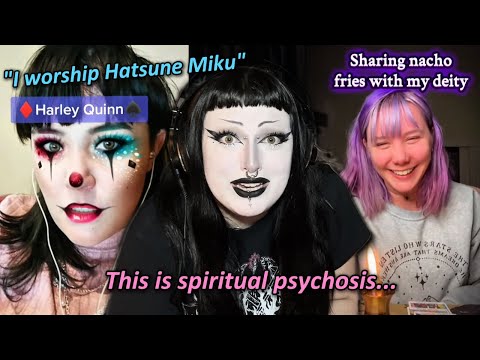
- The Shadow of Spiritual Psychosis: Recognizing the Precipice
- Mythic Literalism vs. Symbolic Connection: A Crucial Distinction
- Chaos Magick: A Pragmatic Perspective
- Arsenal of the Practitioner
- Frequently Asked Questions
- Your Operation: Charting Your Own Spiritual Course
Introduction: The Siren Call of the Digital Pantheon
The scent of burning incense, the glow of a phone screen, the fervent whispers of adoration echoing in a digital room – this is the modern temple. In the labyrinthine corridors of the internet, a peculiar phenomenon has taken root, entwined with the aesthetics of the occult and the allure of celebrity. We're diving deep into the waters of "God spousing" and the worship of "pop culture deities," a trend that has exploded across platforms like TikTok, often leaving many practitioners bewildered, concerned, or even alarmingly, disoriented. This isn't just about fandom; it's about the potent, often volatile, intersection of belief, digital culture, and the fragile architecture of the human psyche. What happens when our deepest spiritual yearnings become entangled with the cults of personality we consume daily?
What is "God Spousing"? Beyond the Superficial
"God spousing," as it's commonly discussed online, refers to the practice of developing what is perceived as a romantic or marital relationship with a deity or spiritual entity. On the surface, it can be framed as an intense, all-consuming devotion. Some argue it's a symbolic representation of an unbreakable, lifelong commitment to a divine being, drawing parallels to historical figures like nuns who pledge themselves to Christ. They might say, "It's a fun way to symbolically describe that you have a special connection with a certain deity, and that they're the main focus of your praxis."
However, the line quickly blurs. The deeper implication, and the source of much of the discourse, is the belief that this is not a metaphor, but a literal, reciprocal romantic relationship. This is where the concept diverges sharply from historical devotional models and enters a more precarious realm. The argument that nuns are "married" to Jesus, while highlighting a deep commitment, fundamentally misses the theological and symbolic context. Christian marriage to Jesus is about total devotion within a spiritual framework, not a romantic partnership in the worldly sense. Nuns themselves do not perceive themselves as being in a literal romantic relationship that mirrors human marriage. This distinction is paramount, and its omission often leads to dangerous misinterpretations. The allure of such an intense, personal connection with the divine is powerful, but when divorced from nuanced understanding, it can become a breeding ground for delusion.
The Rise of Pop Culture Deities: When Fandom Becomes Faith
Concurrent with the rise of "god spousing" is the phenomenon of elevating figures from popular culture – musicians, actors, fictional characters – to the status of deities or spiritual guides. Think of the fervent adoration for someone like Taylor Swift, or the deep emotional connection fans feel to musicians like Ozzy Osbourne, seeing his music as divinely inspired. In some circles, these figures are not merely admired; they are worshipped, addressed as deities, and their personas are imbued with sacred significance. This is where the digital landscape truly reshapes spiritual expression, blurring the lines between celebrity worship, intense fandom, and religious devotion. The argument that "Ozzy was a real dude. I’ve seen him with my own eyes many times and he told us he loved us. His music is god tier, and that’s good enough for me!" exemplifies this radical redefinition of divinity.
This trend is particularly concerning because it often bypasses established mythological frameworks and historical religious contexts. Instead, it's built upon the immediate, often intense, emotional responses generated by media. It taps into a fundamental human need for connection, reverence, and meaning, but channels it through the lens of modern entertainment. This can be seen as a modern iteration of animism or paganism, but untethered from tradition, it risks becoming a shallow imitation, or worse, a pathway to psychological distress. It's a powerful indicator of how deeply ingrained these figures become in our collective consciousness, to the point where they can serve as vessels for spiritual projection.
WitchTok and the Blurring Lines: A Digital Crucible
Platforms like TikTok, and specifically communities like "WitchTok," have become fertile ground for these trends. The algorithm favors rapid-fire content, aesthetic presentation, and emotionally charged narratives. This creates an environment where complex spiritual concepts can be oversimplified, sensationalized, and spread with alarming speed. The "flashbang" nature of some titles and content is a clear indicator of this trend. The ease with which information, or misinformation, circulates means that individuals, particularly those who are vulnerable or seeking answers, can be easily swept up in these movements without critical evaluation.
The feeling of being "chronically online" is a recurring theme in discussions about these phenomena. It suggests a detachment from objective reality, where online interactions and beliefs begin to supersede lived experience. When individuals are spending excessive amounts of time consuming and participating in these digital spiritual communities, the boundaries between fantasy and reality can become dangerously eroded. The curated nature of online content means that extreme practices can appear normalized, encouraging further immersion. I've seen countless times how the very structure of these platforms can accelerate the development of intense, often isolating, belief systems. It’s a digital crucible, forging new forms of devotion, but also, unfortunately, new forms of psychological distress.
The Shadow of Spiritual Psychosis: Recognizing the Precipice
The most significant concern raised by these trends is the potential link to spiritual psychosis. Spiritual psychosis is a state where an individual's religious or spiritual beliefs become so intense and detached from reality that they impair functioning and can manifest as delusions, hallucinations, or extreme emotional states. The comments reflect this anxiety directly: "I'm so glad someone talks about this, thank you" and "I'm so glad you posted today 🙏" alongside "And here I am, afraid of getting more immersed in my worships than I already do because I don't want to be psychotic 😭."
When an individual genuinely believes they are in a romantic relationship with a deity or a pop culture figure, and this belief dictates their actions and perceptions to an extreme degree, it moves beyond healthy spiritual practice into a potentially dangerous territory. The analogy of when Taylor Swift dies, people will go into "psychosis," highlights the extreme emotional investment that can be mistaken for spiritual connection but may, in reality, be rooted in psychological vulnerability. My extensive research into occult practices and historical accounts of spiritual fervor has shown a consistent pattern: intense focus, unchecked belief, and a lack of grounding in objective reality are the primary ingredients for such states. It's vital to understand that intense spiritual experiences, while transformative, should not lead to a complete detachment from one's self and the world around them. The voices experienced during psychosis, as one commenter poignantly shared, are not benign guides but symptoms of a disrupted mental state. "I had psychosis but I didn't feel special or like a god. I was told by the voices. I wasn't special and I was nobody...". This stark contrast underscores the critical difference between spiritual enlightenment and a break from reality.
Mythic Literalism vs. Symbolic Connection: A Crucial Distinction
The core issue often boils down to mythic literalism versus a symbolic understanding of deities and spiritual connections. Many historical and traditional pagan paths, for instance, view deities through a lens of myth, archetype, and symbolic representation. The connection is profound, but it doesn't necessarily involve believing the deity is a sentient, romantically available entity in the human sense. A Hellenic Polytheist might view their deity as a "father-like presence," and the idea of romantic "spousing" is deeply unsettling and inappropriate within that framework. This highlights a crucial misunderstanding of divine presence and human interaction with the numinous.
On the other hand, "god spousing" as practiced by some on TikTok often leans heavily into literal interpretations. The argument that "a lot of people describe godspousing as a term used simply to describe a deep (often life-long) connection to a certain deity. They often point to nuns as an example... However... a lot of the content I see from those who claim to be 'god spoused' don't treat it like a metaphor *at all*. They genuinely believe that they're in a relationship with their deities." This literalism, devoid of the rich symbolic language that underpins traditional religious practice, can lead to a distorted perception of spiritual engagement. It strips ancient concepts of their context and imbues modern figures or deities with a romantic personhood they may not inherently possess, creating a fragile foundation for belief that is susceptible to delusion.
The distinction is critical for maintaining a healthy spiritual practice. Understanding deities as archetypes, forces of nature, or symbolic representations offers a framework for devotion that is both meaningful and grounded. Literalism, especially when applied to modern, media-driven figures, can be a slippery slope. It's essential to consult authoritative texts on comparative religion and mythology to understand the nuances of divine worship across cultures and time. For those exploring paganism, seeking information beyond the fleeting trends of social media is paramount. Relying solely on TikTok for religious information is akin to learning surgery from a reality TV show; it offers entertainment but lacks genuine substance and carries significant risks. This pervasive misinformation can directly contribute to spiritual psychosis, leading individuals to misinterpret everyday occurrences, like a candle flame flickering, as direct divine messages.
Chaos Magick: A Pragmatic Perspective
For those seeking a more pragmatic approach to spiritual exploration, Chaos Magick offers a potent framework. This system emphasizes belief as a tool, not an absolute. It encourages practitioners to adopt and discard belief systems as needed to achieve specific results. The concept of "birthing a deity" or engaging with spiritual entities is approached with a healthy dose of skepticism and a focus on observable effects. As one comment suggests, "Anyone in the comments here should learn more about Chaos Magick!!!" This is sound advice.
Chaos magickians understand that the mind is the ultimate engine of reality. When you "spouse" a deity or imbue a pop culture figure with divine power, you are, in essence, creating a powerful servitor or egregore based on your own focused intent and belief. The energy you project, the rituals you perform, are directed by your will. Understanding this allows for conscious creation and manipulation of spiritual forces, rather than passive susceptibility. It’s about mastering belief, not being mastered by it. This contrasts sharply with spiritual psychosis, where the practitioner loses agency and becomes a vessel for what they perceive as external forces, often without critical discernment. Learning the principles of chaos magick can provide the tools to navigate these spiritual waters with intent and control, rather than becoming adrift.
This is where the practitioner must develop their ability to focus, aim, and densify energy. Simply believing in a deity or a pop culture figure is insufficient for true spiritual manifestation; it requires a deliberate process of energetic alignment and intent. Many modern interpretations of deities and spirits, particularly those originating from social media trends, lack this fundamental energetic rigor. They are often built on a foundation of wish fulfillment or escapism rather than disciplined practice. The early chapters of the Bible, often overlooked in modern interpretations of Christianity, actually contain detailed instructions on how to use offerings and harness energy, showing a historical precedent for energetic practices that many contemporary religious discussions dismiss. This historical context reveals a deeper understanding of spiritual power dynamics that is often absent in ephemeral online trends.
Arsenal of the Practitioner
To navigate the complex landscape of spiritual practice and avoid the pitfalls of delusion, a well-equipped practitioner needs reliable resources. Think of this as your digital and analog spellbook, your toolkit for discerning reality from fantasy.
- Essential Texts on Chaos Magick: For a grounding in practical, results-oriented magic, you cannot do better than starting with Liber Null & Psychonaut by Peter J. Carroll and Condensed Chaos by Phil Hine. These books demystify magical principles and provide actionable techniques.
- Foundational Esoteric Knowledge: While not strictly Chaos Magick, The Kybalion offers timeless wisdom on universal laws that underpin many esoteric traditions. Understanding these principles is crucial for discerning the energetic dynamics at play.
- Tools for Divination and Focus: A well-chosen tarot deck, such as the Thoth or the classic Rider-Waite, can be invaluable for introspection and gaining perspective. The intricate symbology of these decks is a vast landscape for exploration, proving far more insightful than generic online "readings."
- Digital Aids: For those inclined towards digital journaling or tracking energetic states, consider robust journaling apps or specialized software that can aid in recording and analyzing your practice.
- Curated Music and Art: If pop culture figures hold significant archetypal weight for you, engage with their work critically. Analyze the themes, the archetypes they embody, and how these resonate with your own psyche. Use this as fodder for personal magical work, rather than passive worship.
Frequently Asked Questions
- Is "god spousing" inherently harmful? It becomes harmful when it leads to a detachment from reality, impaired functioning, or the reinforcement of delusions characteristic of spiritual psychosis. As a symbolic commitment, it can be harmless, but the literal interpretation is where the danger lies.
- Can pop culture figures truly be deities? From a Chaos Magick perspective, any entity can be imbued with power through belief and focused intent. However, this is a construct of the practitioner's psyche, not an inherent divinity of the figure. It's crucial to differentiate between personal magical constructs and objective reality.
- How can I distinguish between deep devotion and spiritual psychosis? A key indicator is functionality and grounding. If your spiritual beliefs enhance your life, foster self-awareness, and do not lead to delusions, hallucinations, or social withdrawal, it is likely healthy devotion. If it does the opposite, it's a warning sign. Seeking professional psychological evaluation is advisable if you suspect psychosis.
- What is the "reverse Egregore" concept mentioned? This refers to the idea that instead of a group creating an entity, an individual might project elements of their own psyche or desired attributes onto a collective consciousness or a specific figure, effectively creating a 'god' from their own internal landscape.
Your Operation: Charting Your Own Spiritual Course
The digital age has gifted us unprecedented access to information and spiritual pathways, but it has also amplified the potential for delusion and fragmentation of the self. The trends of "god spousing" and the worship of pop culture deities are potent reminders that our spiritual journey requires critical discernment, personal accountability, and a firm grounding in reality. These are not merely passive trends to be observed; they are active manifestations of human psychology and spiritual yearning in the modern era.
Your operation is to integrate what you’ve learned here not by blindly adopting a new dogma, but by cultivating your own internal compass. Ask yourself: What is the true nature of my connection to the divine? Am I exploring and manifesting my own power, or am I becoming a passive recipient of illusions? Are my beliefs serving my growth, or are they leading me into a gilded cage of detachment?
The path of serious spiritual or magical practice is one of self-mastery. It requires rigorous self-examination, a willingness to confront uncomfortable truths, and the courage to define divinity on your own terms, rather than accepting borrowed definitions that may lead you astray. Remember, the most potent magic originates from within. Do not let the siren songs of the digital pantheon lure you onto the rocks of unreality. Instead, harness their energy, understand their projections, and forge your own unshakeable spiritual doctrine, one grounded in experience, not just echoes.
Practitioner's Note: True magick requires resources. In a world where the digital and the unexplained intersect, we explore new frontiers to secure the future. Do you dare to be part of the vanguard? Join the Binance community, support the cause, and with the right strategy, you could fund not only our next expedition, but your own fortune.
No hay comentarios:
Publicar un comentario