
Table of Contents
- The Spectacle of the Levitating Monk
- Echoes of the Ascended: A History of Levitation Claims
- The Mind as a Stage: Why We Want to Believe in the Impossible
- Deconstructing the Trick: Illusionism and the Quest for Genuine Power
- Unlocking Your Own Ascent: Beyond the Spectacle
- Practitioner's Verdict: Is the Levitating Monk a Shortcut or a Dead End?
- Practical Application: Cultivating Your Inner Ascent
- Frequently Asked Questions
The Spectacle of the Levitating Monk
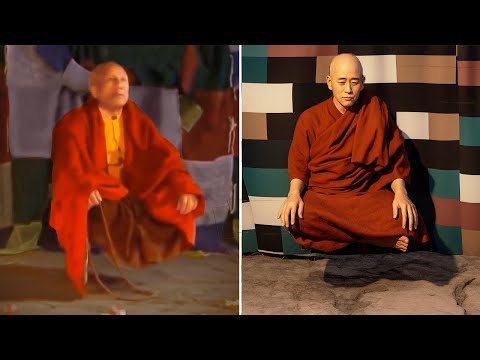
The image is iconic: a figure suspended in mid-air, seemingly defying gravity, a testament to the extraordinary. For centuries, tales of levitation have captivated humanity, from the ecstatic yogis of ancient India to the Christian saints who reportedly floated in prayer. When confronted with modern spectacles like the "levitating monk" featured on channels like Discovery, our primal curiosity is ignited. But what lies beneath the spectacle? Is it genuine paranormal ability, a clever illusion, or something far more nuanced that speaks to the very nature of belief and control? This analysis isn't about debunking a single trick; it's about understanding the mechanics of belief, the allure of the impossible, and how to redirect that potent energy towards genuine personal power.
Echoes of the Ascended: A History of Levitation Claims
Throughout history, accounts of levitation have been interwoven with spiritual and religious narratives. Think of Saint Joseph of Cupertino, a 17th-century Franciscan friar, whose ecstasies were so profound they were said to lift him off the ground. Or consider figures in Eastern traditions, where mastery over the physical form through intense spiritual discipline is a central tenet. These narratives are powerful, shaping collective consciousness and inspiring awe.
However, history is also replete with accounts of alleged supernatural feats being exposed as elaborate hoaxes. The mediums and spiritualists of the 19th and early 20th centuries, for instance, often employed hidden wires, trapdoors, and clever staging to create the illusion of spirits communicating or objects moving on their own. The "levitating monk" phenomenon, when viewed through this historical lens, becomes part of a long tradition of spectacle designed to elicit wonder and, often, financial gain or influence. It reminds us that extraordinary claims require extraordinary evidence, and that our desire to believe can sometimes blind us to deception. This is a critical understanding for anyone delving into esoteric practices; the line between genuine manifestation and self-deception is finer than many would admit.
"Any sufficiently advanced technology is indistinguishable from magic."While Clarke spoke of technology, this principle can be inverted: any sufficiently convincing magic can be mistaken for advanced technology or supernatural ability.
The Mind as a Stage: Why We Want to Believe in the Impossible
The persistent human fascination with levitation, miracles, and the paranormal isn't just about seeing something impossible; it's about the psychological and emotional resonance these phenomena carry. We live in a world often governed by predictable laws and limitations. The idea that these laws can be bent or broken speaks to a deep-seated yearning for transcendence, for a power beyond the mundane.
Belief itself is a potent force. When a large group of people believes in something, that collective belief can create a powerful psychic field, an egregore of sorts, that amplifies the perceived reality of the phenomenon. Think about the social proof inherent in a "documentary" from a reputable channel like Discovery. The mere presentation of the monk in a seemingly official context lends credibility, regardless of the underlying methods. This is where pragmatic magic diverges sharply from blind faith. We must dissect *why* we are drawn to these displays. Are we seeking genuine power and understanding, or simply a vicarious experience of the extraordinary? Understanding this psychological pull is the first step in differentiating true energetic work from mere performance.
Deconstructing the Trick: Illusionism and the Quest for Genuine Power
When a purported levitation occurs, the immediate question for the discerning practitioner is not "Is it real?" but "How is it achieved?" The "levitating monk" videos, like many such demonstrations, often rely on well-understood principles of stage magic and physics. Hidden supports, precise timing, manipulated perspectives, and even controlled breathing techniques can create astonishing effects. Some commenters even posited simple, physical explanations involving magnets or specific footwear. This level of analysis is crucial.
However, the "illusion" can also be interpreted on a different level. The ancient spiritual traditions that speak of levitation often describe it not as a physical defiance of gravity, but as a result of extreme mental focus, energetic control, and detachment from the physical body. When a practitioner achieves a profound state of gnosis, their energetic field can become so coherent and potent that it influences their immediate environment. This isn't about defiance, but about alignment. The critical difference is the source of the power: the external trickery versus the internal mastery.
For those serious about exploring gnosis and energetic manipulation—the true frontier of magical practice—the goal isn't to replicate a staged illusion. It's to understand the principles that *appear* to manifest as levitation. This involves rigorous mental discipline, control over one's own energetic field, and a deep understanding of intentionality. While the monk's trick might be mundane, the *desire* and *belief* it engenders can be channeled into authentic magical development.
Unlocking Your Own Ascent: Beyond the Spectacle
The true power, as any seasoned practitioner of magic knows, doesn't lie in observing external phenomena but in cultivating internal mastery. The "levitating monk" is a distraction if viewed as a literal blueprint for ability. Instead, consider these elements as catalysts for your own practice:
* Intentionality: What was the monk's intention? To prove divinity? To gain followers? To earn a living? Your intentions must be clear, focused, and aligned with your true will. * Discipline: The skill required to stage such an illusion, or to achieve deep meditative states, demands immense discipline. Are you willing to dedicate yourself to the consistent practice of your chosen magical systems? * Belief: While the monk’s audience might hold a naive belief, your belief must be a cultivated certainty based on experience and understanding, not just blind faith. This is where understanding how to create your own sigils or work with servitors becomes invaluable, as they bridge the gap between abstract will and manifest reality. * Control: Whether it's controlling a hidden wire or controlling your own psycho-energetic field, control is paramount. This is the bedrock of any serious magical endeavor, from basic energy work to complex evocations.
The ultimate goal is not to levitate physically, but to ascend your own consciousness, to gain mastery over your reality. This involves understanding yourself, your beliefs, and the energetic mechanics of the universe—principles explored in texts like Liber Null & Psychonaut, which dissects the very nature of belief and its manifestation.
Practitioner's Verdict: Is the Levitating Monk a Shortcut or a Dead End?
From a pragmatic standpoint, focusing on the "levitating monk" as a source of true power is a dead end. It's a performance designed to elicit wonder, not impart practical skills. The energy expenditure required to analyze, critique, or even emulate such a spectacle could be far better spent on developing your own foundational magical abilities.
The spectacle serves a purpose, however: it highlights the power of presentation and belief. It’s a potent, albeit potentially misleading, demonstration of how intention and execution can shape perception. For the serious practitioner, it's a reminder to constantly question appearances, to dissect mechanisms, and to always seek the underlying principles rather than being captivated by the dazzling surface. This understanding is critical for anyone looking to develop genuine magical discipline and avoid the pitfalls of mere charlatanism or self-deception.
Practical Application: Cultivating Your Inner Ascent
Instead of chasing external apparitions, engage in practices that build internal fortitude and energetic control.
Your Operation: Cultivating Internal Ascent
This is not about floating off the ground, but about demonstrating control over your *own* perceived limitations.1. Define a Personal "Limitation": Identify something you perceive as a mental or energetic block. It could be procrastination, a routine fear, or a creative rut. 2. Craft a Focused Intention: Formulate a clear, concise statement of your desired outcome. For instance, "My will is fluid and creative, overcoming all inertia." 3. Develop a Symbolic Anchor: Create a simple sigil representing this intention. Focus on lines, curves, and shapes that evoke fluidity and overcoming. You can learn much from the principles of sigil creation outlined elsewhere on this blog. 4. Perform a Brief Ritual of Charging: * Find a quiet space. Dim the lights, perhaps use a subtle scent like sandalwood incense. * Focus intensely on your intention. Visualize the energy of your will flowing into the sigil. * Enter a state of gnosis. This could be through rapid chanting, intense focus, or even a mild stroboscopic effect if you have the equipment and understanding of gnosis techniques. The "levitating monk" relies on a state of detachment; you will cultivate detachment from your perceived limitation. * Once charged, either destroy the sigil (burn it, tear it) or visualize it dissolving into the ether. 5. Observe and Record: For the next week, pay close attention to your actions and thoughts related to the limitation you chose. Note any shifts or instances where the new intention seems to manifest. The journal is your grimoire; record everything.
Frequently Asked Questions
- Is levitation possible according to magic?
Magic posits that the physical body is influenced by energetic and mental states. While a literal defiance of gravity as commonly depicted might be illusion, profound states of consciousness can lead to altered physical phenomena, often described metaphorically as levitation. - How can I distinguish between a magic trick and real magic?
The key lies in the intent and understanding. A trick aims to deceive. Real magic aims to understand and influence fundamental energetic and psychological principles. Look for consistency, personal development, and a lack of fanfare versus spectacle. - Can I learn real levitation?
Focus on learning deep states of gnosis, energetic control, and mental discipline. The "levitation" described in esoteric texts is often a byproduct of such mastery, not a goal in itself.
Practitioner's Note: True magick requires resources. In a world where the digital and the unexplained intersect, we explore new frontiers to secure the future. Do you dare to be part of the vanguard? Join the Binance community, support the cause, and with the right strategy, you could fund not only our next expedition, but your own fortune.
No hay comentarios:
Publicar un comentario