
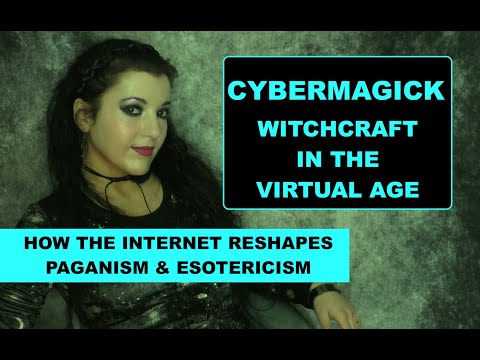
The scent of ozone and silicon. The hum of servers, not unlike the drone of a ritual chant. In an era where our lives are increasingly interwoven with the digital, it's inevitable that the ancient currents of magic would find new channels online. This isn't just about attending online rituals or reading articles; it's about the fundamental transformation of esoteric traditions. We're witnessing the birth of Technopaganism, CyberMagic, and a new understanding of the sacred within the virtual domain. How does technology reshape magic practices? Is the internet truly changing esoteric traditions?
Digital natives, those who've never known a world without the internet, are now growing up navigating simulated realities in games and virtual environments. For them, the distinction between the 'real-life' and the digital astral plane is becoming increasingly blurred. This raises profound questions about how they will perceive traditional spiritual concepts like astral realms and fae realms. As technology advances, so too will the tools and methods of magical practice. The magical tools of the 19th and 20th centuries might seem quaint in the 21st, and it's almost certain that magical practices fifty years from now will be vastly different from what we consider standard today. This evolution is not a deviation, but a natural progression, a testament to the enduring adaptability of human spirituality.
The internet, in its vast interconnectedness, offers unprecedented opportunities for the dissemination of knowledge and the formation of communities. Imagine connecting with fellow practitioners across continents, sharing insights and learning from diverse perspectives, especially on religion and spiritual traditions. This digital agora can be a powerful force for understanding different viewpoints, whether it's exploring the pantheons of other cultures, delving into the complexities of angels and demons, or understanding the symbolism of monsters from varied mythologies. It fosters a unique form of syncretism, allowing for a richer, more nuanced engagement with the esoteric.
The concept of cyberspace itself can be seen as analogous to the Astral Plane. It possesses its own unique pitfalls and benefits, its own landscapes and inhabitants. This digital ether can be a powerful tool for altering consciousness, especially with the rapid evolution of technologies like Virtual Reality (VR), which offer immersive experiences that can profoundly affect our perception of reality and self. The potential for VR to serve as a tool for consciousness alteration is immense, opening up new avenues for exploration and spiritual development.
However, this digital frontier is not without its shadows. Just as the internet allows for the spread of enlightenment, it can also be a fertile ground for deception and misinformation. The ability to create echo chambers, where individuals are primarily exposed to viewpoints that confirm their existing beliefs, can lead to a distorted perception of consensus. This can trick people into thinking their niche beliefs are universally accepted, creating an illusion of widespread agreement where none truly exists. Critical thinking becomes paramount when navigating these digital currents, ensuring that our engagement with online spiritual content is discerning and grounded.
Furthermore, the rise of digital spirituality, with its promise of unfettered exploration, has seen a curious counter-movement: the growth of highly conservative religious groups and Hasidic sects. This phenomenon suggests a natural human inclination towards seeking equilibrium. As in nature, where diversity leads to stability, our collective existence seems to strive for balance, with the boundless freedom of cyber-spirituality coexisting alongside the structured traditions of fundamentalist groups.
The Philosophical Underpinnings: Heidegger and the Digital Age
To truly grasp the impact of technology on magic, we must look to foundational philosophical concepts. Martin Heidegger's exploration of Technē and Poiēsis offers a crucial lens. Technē, in its original Greek sense, wasn't merely about technology but about the way of revealing, the bringing-forth of what is hidden. Poiēsis, on the other hand, is the act of making or creation. Heidegger argued that modern technology often reduces Technē to mere calculation and control, obscuring its deeper, revelatory potential. The danger lies in allowing technology to dictate our understanding of reality, rather than using it as a tool to reveal deeper truths.
How does this philosophical perspective affect pagan and witchcraft traditions? Paganism, by its very nature, often emphasizes a connection to the natural world and a reverence for ancient practices. Cyberpaganism, or Technopaganism, doesn't abandon these roots but reinterprets them through a digital lens. Instead of solely focusing on forests and rivers, practitioners might find sacredness in data streams, algorithms, and virtual landscapes. The essence of magic—the intentional shaping of reality through will and symbolism—remains, but the materials and mediums evolve.
The writing of figures like the CCRU, and thought-forms emerging from academics at Warwick University, represent some of the earliest attempts to grapple with technopaganism. Concepts found in factions like the Adeptus Mechanicus in Warhammer 40k, with their religious veneration of the Omissiah, also touch upon this intersection.
Initiation and ceremonial magic also find new forms online. While traditional initiations often require physical presence, the digital realm allows for remote ceremonies, guided meditations, and the formation of virtual covens. The core elements of ceremonial magic—the purification of space, the invocation of entities, the use of symbolic tools—can be adapted to a digital environment. This doesn't diminish their power but expands their accessibility.
The Practicalities of CyberMagick
For those drawn to the more structured forms of magic, the digital realm offers powerful tools. The creation of sigils, for instance, can be streamlined using digital generators. For practitioners interested in the Goetia, digital tools can assist in the precise generation of seals, allowing them to focus on the energetic and intentional aspects of evocation rather than meticulous drafting. The creation of intelligent entities, such as servers or tulpas, can also be aided by technology, with digital constructs potentially serving as anchors or focal points for these magical creations.
The concept of Technomancy is particularly relevant here. It embodies the integration of magical principles with technological expertise. This isn't just about using a computer to research spells; it's about understanding technology as a magical medium in itself. From coding rituals into scripts to using AI for divination, Technomancy represents a sophisticated evolution of magical practice.
For those on the Chaos Magic path, the digital landscape is a playground of infinite possibility. The flexibility and adaptability of Chaos Magic align perfectly with the fluid nature of cyberspace. Creating digital sigils, developing AI-powered divination tools, or even building virtual servers for specific intentions can be powerful applications of Chaote principles. The ease with which digital tools can be manipulated and reprogrammed mirrors the Chaos Magician's approach to reality itself.
The similarities between cyberspace and the Astral Plane are striking. Both are non-physical realms shaped by consciousness and intention. Both can be navigated and influenced. The potential for using the internet grid for telepathic communication, perhaps even without electronic devices in a future where Magitech interfaces become more sophisticated, is a tantalizing prospect. The idea that the internet might be a natural precursor or a digital echo of the astral realm is a deeply resonant one.
As we increasingly interact with digital divination tools and explore rituals with AI, it raises questions about the future of spiritual energy and its connection to the online world. Advancements in neuroscience and the potential for radio frequencies to link spiritual energy to networks are no longer science fiction but are becoming tangible possibilities. The decoding of memories and thoughts through complex algorithms, allowing for life experiences to be viewed online like movies, or even live-streaming what one sees in real-time, hints at a future where the boundaries between the physical and digital, the individual and the networked, become profoundly blurred.
The commitment to open-source principles in technology also resonates within certain magical communities, emphasizing transparency and collaborative development, contrasting with closed-source applications that can obscure their inner workings—a principle that can be applied to understanding magical systems as well.
Veredict of the Practitioner
The digital realm is not a mere reflection of reality; it is a nascent reality in its own right, a space where magic can manifest and evolve. While ancient traditions provide a vital grounding, embracing technological innovation allows magic to remain relevant and potent in the 21st century. The key lies in discerning the profound philosophical underpinnings of technology and applying them with intentionality, ethical consideration, and a healthy dose of critical thinking.
Mage's Arsenal
- Essential: Chaos Magick Sigil Generator (https://play.google.com/com/cha0smagick.sigilgeneratorfinal) - For creating powerful digital sigils and focusing intent.
- Recommended: Books on Technopaganism and Cyberculture (e.g., "Cyberhenge" by Cowan, "The Virtual Pagan" by McSherry)
- Recommended: Works exploring the intersection of technology and philosophy, particularly Heidegger.
- Essential: A reliable internet connection and a device capable of accessing online resources.
Frequently Asked Questions
- Is CyberMagick a legitimate form of magic? Yes, as magic is fundamentally about intention, will, and symbolism, these principles can be applied to any medium, including digital ones.
- Can I perform rituals entirely online? Absolutely. Online rituals can be just as powerful as physical ones, especially when conducted with focused intent and a strong sense of community, even if that community is virtual.
- What are the risks of CyberMagick? Similar to any form of magic, there are risks of energetic backlash, unintended consequences, or becoming too immersed in the digital world at the expense of physical reality. Critical thinking and ethical practice are paramount.
- How can I get started with Technopaganism? Begin by exploring online communities, researching the intersection of technology and spirituality, and experimenting with digital tools for your practice, like sigil generators or guided meditations.
The transformative power of technology is undeniable. As we continue to innovate and integrate digital tools into every facet of our lives, magic will undoubtedly keep pace. The question is not *if* magic online is possible, but *how* we can best harness its potential ethically and effectively. The digital sacred is here, and it's calling us to explore its uncharted territories.
Your Operation: Design a Digital Sigil
Take the core intention of a personal goal you have (e.g., increased focus, creative inspiration, career advancement). Use the principles discussed to distill this intention into a powerful statement. Then, utilize a tool like the Chaos Magick Sigil Generator to translate this statement into a unique digital sigil. Charge this sigil through focused meditation or a brief digital ritual. Document your process and chosen intention, and observe any subtle shifts or manifestations in your reality over the next few weeks.
Practitioner's Note: True magick requires resources. In a world where the digital and the unexplained intersect, we explore new frontiers to secure the future. Do you dare to be part of the vanguard? Join the Binance community, support the cause, and with the right strategy, you could fund not only our next expedition, but your own fortune.
No hay comentarios:
Publicar un comentario