
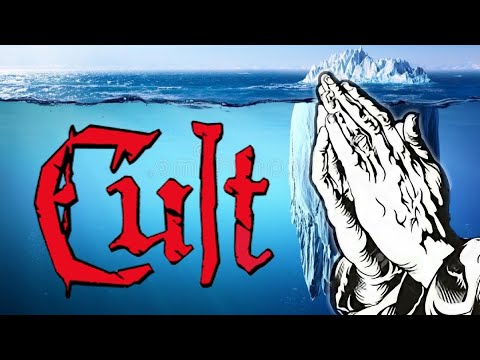
The veil between the mundane and the extraordinary is often thinnest where belief takes root. We delve into the shadowy depths of human conviction, examining the structures that bind us and the forces that can unravel societies. This exploration isn't about dogma; it's about the raw energy of belief, the creation of meaning, and the potent symbolism that fuels both the sacred and the profane. Consider this a deep dive into the architecture of faith, viewed through the pragmatic, experimental lens of chaos magick. Here, we dissect the 'iceberg' of religion and cults, not to judge, but to understand the energetic currents, the psychological triggers, and the potential for both profound connection and dangerous delusion.
Table of Contents
Tier 3: The Foundation of Belief
Every significant ideology, every sprawling religion, and every insidious cult begins with a seed of an idea. At its base, it's about technomancy – the manipulation of information and symbols to effect change. This tier explores the foundational elements that allow a belief system to take root. Think of the profound, yet often simple, truths or grievances that resonate with a segment of the population. These are the initial sparks. For instance, the critique that the Jonestown massacre is falsely labeled a 'suicide' points to a crucial distinction: the active vs. passive role in a belief system's ultimate expression. Were the followers truly acting on their own volition, or were they coerced? This is where the subtle art of cybermancy begins – shaping narratives through disseminated information, subtly guiding perception.
"My race is better than your race." - This primal assertion, often found at the root of many exclusionary ideologies, speaks to a fundamental human desire for identity and belonging, twisted into a tool of division.
The concept of "Cargo Cults" is particularly fascinating from an experimental standpoint. Their tactics, focused on imitating perceived rituals of the external world, 'worked' because the soldiers eventually did return with resources. This illustrates a core principle: belief, when coupled with consistent action and perceived efficacy, can manifest observable results. It's an early, raw form of magitech, where ritualistic imitation leads to desired outcomes, even if the underlying understanding of cause and effect is flawed.
Tier 4: When Ideals Crystallize
As beliefs solidify, they begin to take on structure. This is where we see the emergence of more defined doctrines and practices. Take the example of the Greek Orthodox Old Calendar schism. The intensity of disagreement over something as seemingly minor as a date highlights how doctrinal purity can become a paramount concern within a group, eclipsing practical utility. This level of internal focus can be both a strength, fostering a tight-knit community, and a weakness, leading to ostracization and internal conflict.
The mention of Scientology's stringent vetting processes and the intense scrutiny faced by those who leave speaks volumes about control mechanisms. The stories of individuals feeling trapped, stalked, and abused are not merely anecdotes; they are data points on the spectrum of coercive control. This fascination with control is intrinsically linked to the idea of mastering reality, a goal often pursued through esoteric means. These groups often present themselves as offering a "better" version of an existing, well-known religion, tapping into a desire for enhanced spiritual or psychological fulfillment. This is where the concept of digital divination, the ability to predict and shape outcomes through complex systems, begins to influence group dynamics.
Tier 5: The Art of Persuasion and Influence
At this tier, the focus shifts to the mechanisms of influence and recruitment. The "Give me twelve hundred dollars or you won't go to heaven" model is a classic example of transactional faith, where spiritual salvation is directly tied to financial contribution. This taps into primal fears and desires, offering a clear, albeit often exploitative, path to a perceived reward.
The sheer persistence of groups like Scientology, their ability to track individuals across decades and states despite attempts to disappear, is a testament to their organizational prowess. My father's experience, being called repeatedly over years by a group he had a single, brief, unsettling interaction with in the 80s, demonstrates an almost obsessive dedication to their recruitment or information-gathering protocols. This level of sustained outreach, even when seemingly irrational, underscores the power of persistent messaging. It’s a profound example of esotericism digital, where information is weaponized and deployed with strategic precision.
The mention of Allison Mack, associated with a sex cult, coming from a childhood crush adds a layer of psychological complexity. Discovering a perpetrator of such acts was once admired is a deeply unsettling experience, a true mind-fuck. This speaks to the deceptive nature that can lie beneath charismatic surfaces, a common tactic in systems designed for manipulation. It’s here we see the raw power of Austin Osman Spare’s principles in action – intent focused, meticulously executed by dedicated individuals.
Tier 6: The Edge of the Abyss
This tier delves into the more extreme manifestations of belief, where the line between dedication and delusion becomes dangerously blurred. The chilling accounts from surviving Heaven's Gate members, who still believe in their mission and express a lack of remorse for their actions, are particularly disturbing. Their belief that staying behind to help others 'off themselves' was an 'honor' illustrates a profound detachment from conventional morality, a state achievable through intense ideological conditioning. The state gnóstico can be so profoundly altered that the very fabric of reality as understood by outsiders is completely inverted.
The mention of the $5.75 found in pockets, a Huckleberry Finn reference, adds a layer of symbolic narrative that binds the group's actions to a particular cultural mythos. Mark Twain's own connection to Halley's Comet – being born with it and expecting to die with it – offers a potent example of how individuals can align themselves with cosmic or symbolic cycles, imbuing their lives and deaths with profound personal meaning, however morbid.
The idea that some dangerous cults are still active and may be watching this video, feeling acknowledged, is a stark reminder that these ideologies are not always relics of the past. They are living, breathing entities, capable of adapting and persisting. This is why understanding their mechanics is crucial for chaos magick practitioners; recognizing patterns allows for deconstruction and resistance.
Tier 7: Echoes in the Void
The persistence of belief systems, even when their core tenets are challenged or when the original figures are gone, is a fascinating phenomenon. The Heaven's Gate website, maintained by two members who chose to stay behind, exemplifies this. Their continued propagation of the message suggests a deep-seated commitment to their ideology, transcending the physical presence of their leaders. This is the power of ritualized belief – the actions and teachings become ingrained, self-sustaining.
The commentary about Jim Jones not drinking the 'Kool-aid' himself, but dying from a gunshot wound while his followers endured a 'slow agonizing death,' adds a crucial nuance to the narrative. It questions the leader's ultimate sacrifice and the true nature of the event – was it mass suicide or mass murder? This ambiguity is often where control truly lies: in the narrative that persists after the physical event.
A profound observation was made: "It's fun to look into the rabbit hole and see how deep it goes, but you got to remember to take your head out." This sentiment is critical for any practitioner of the esoteric arts. The exploration of these fringe beliefs can be intellectually stimulating, offering insights into the human psyche and the nature of reality. However, without a grounded perspective, one can become lost in the labyrinth, mistaking theory for fact or becoming entangled in dangerous ideologies. Such mindful detachment is a cornerstone of effective digital divination.
Tier 8: The Unseen Architects
This tier touches upon the more enigmatic and perhaps more dangerous aspects of belief systems. The fear of cults that can thrive in harsh environments like Saskatchewan speaks to the power of shared delusion overcoming physical hardship. It's a testament to the human need for community and meaning, even when those needs are met through deeply unconventional or potentially harmful means.
The mention of the "Windows sound" is a meta-commentary on the jarring intrusion of the mundane into the discussion of the extreme. It's a reminder that even in the deepest dives into the esoteric, we are still operating within the framework of our shared reality, punctuated by familiar digital alerts. This juxtaposition can be unsettling, highlighting the artificiality of the boundaries we often try to impose between the 'normal' and the 'abnormal'.
From a technomancy perspective, the sheer organizational effort required to maintain and track individuals, as exemplified by Scientology, is remarkable. They effectively harness information and leverage it for control and continuation. This is a potent, albeit disturbing, application of systems-thinking and strategic deployment of resources.
Tier 9: Beyond the Veil
The highest tiers of the iceberg often represent the most abstract, the most potent, and the most difficult to quantify aspects of religion and cults. These can include the creation of powerful egregores, the manipulation of collective consciousness, or the pursuit of states of being that transcend normal human experience. The fear associated with cults that offer profound, life-altering (and potentially life-ending) promises taps into humanity's deepest desires for transcendence and meaning. It's the ultimate goal of many esoteric practices: to touch the divine, to reshape reality.
The commentary suggesting that the "best thing is how he describes absolutely horrible stuff with a soft, dancy music on the background" speaks to a deliberate use of juxtaposition to highlight the seductive nature of these ideologies. The pleasant sonic backdrop masks the grim reality, a tactic often employed to disarm the critical mind and appeal directly to the emotional or subconscious centers – a form of magitech applied to narrative construction.
Ultimately, exploring these extremes is about understanding the power of collective belief and the human drive for something more. While the warnings are clear – the potential for harm, manipulation, and delusion is immense – there is also a testament to the human spirit's capacity for intense devotion and the radical reshaping of perceived reality. It's a stark reminder that belief, in any form, is a potent force that demands respect, critical examination, and conscious application.
Practitioner's Verdict
Deconstructing religious and cultic structures through the lens of chaos magick reveals a fascinating interplay of psychological manipulation, symbolic resonance, and energetic dynamics. The 'iceberg' model is effective because it illustrates how the most extreme and visible manifestations are often built upon layers of fundamental human needs and desires. From a practical standpoint, understanding these patterns isn't about condemnation, but about recognizing the mechanics of influence and belief formation. This knowledge is a shield and a tool, allowing for greater discernment in one's own path and a clearer understanding of the forces that shape collective consciousness. The danger isn't inherent in the belief itself, but in the unchecked power it can wield when divorced from critical inquiry and personal responsibility. Chaos magick teaches us to dissect these phenomena, to understand their energetic blueprint, and to wield similar forces consciously for our own evolution, rather than falling prey to those who would exploit them.
Mage's Arsenal
- Esencial: Chaos Magick Sigil Generator - For crafting potent symbols of intent, crucial for manifesting personal goals and understanding the foundational elements of group ideologies.
- The Kybalion by Three Initiates - For understanding the Seven Hermetic Principles, which often form the undercurrents of many spiritual and esoteric systems.
- Liber Null & Psychonaut by Peter J. Carroll - A foundational text for practical chaos magick, exploring states of consciousness and advanced techniques.
- A thorough historical text on comparative religion - To understand the roots and evolution of major belief systems.
- A journal for recording observations and insights - Critical for tracking personal beliefs and analyzing external systems.
FAQ
- Q: How can understanding cult dynamics help a chaos magick practitioner?
A: It helps in recognizing manipulative tactics, understanding how collective belief generates potent energetic fields, and refining one's ability to focus intent consciously, rather than being swayed by external influences. It's about developing discernment and understanding the architecture of belief. - Q: Is it always wrong to have a strong, unified belief system?
A: Not inherently. The danger arises when that belief system becomes rigid, dogmatic, coercive, or leads to the dehumanization of others. Collective intent can be powerful, but it must be wielded with awareness and responsibility. - Q: What is the difference between a religion and a cult?
A: The line is often blurry and subjective. Generally, cults are characterized by isolation, intense devotion to a single leader or ideology, coercive control, and exploitation. Religions are typically more integrated into society and allow for a wider range of belief and practice. However, many established religions have historical or fringe elements that resemble cultic behavior. - Q: How can one avoid falling into a cult or harmful belief system?
A: Maintain critical thinking, encourage open dialogue and questioning, verify information from multiple credible sources, be wary of isolationist tendencies, and trust your intuition. Cults often prey on vulnerability and a desire for certainty.
Your Operation
Select one of the belief systems or ideologies discussed (or one that came to mind during your reading). Dedicate 30 minutes to examining its core tenets and observable behaviors. Now, using a concept from chaos magick, such as sigil creation or focused intent meditation, devise a symbolic representation or mental exercise that encapsulates the *essence* of that belief system's energetic pull – both its attractive power and its potential dangers. Record your observations and the results of your symbolic representation in your journal. Consider how this exercise enhances your understanding of how belief systems, in general, exert influence over individuals and groups.
For those seeking to amplify their personal intentions and create potent symbols of their will, the right tools are essential. I've found that digital sigil generators can be incredibly effective for focusing abstract desires into tangible, digital forms. They help in the precise articulation of intent, a crucial step in any manifestation practice. You can explore this yourself with our Chaos Magick Sigil Generator app. This tool allows you to bypass the manual complexities and dive straight into the energetic core of your intent, ensuring clarity and power in your workings.
Practitioner's Note: True magick requires resources. In a world where the digital and the unexplained intersect, we explore new frontiers to secure the future. Do you dare to be part of the vanguard? Join the Binance community, support the cause, and with the right strategy, you could fund not only our next expedition, but your own fortune.
No hay comentarios:
Publicar un comentario