
Table of Contents
- Introduction: Beyond the Fortune Teller
- Historical Whispers: The Tarot's Esoteric Roots
- The Architecture of the Arcana: Major and Minor
- The Major Arcana: Archetypes of the Soul's Journey
- The Minor Arcana: The Flow of Daily Existence
- Tarot as a Tool for Technomancy and Self-Discovery
- The Book of Thoth: A Deeper Dive into Symbolic Language
- Crafting Your Own Deck: Imprinting Your Intent
- Practical Application: Beyond Divination
- Practitioner's Verdict
- Mage's Arsenal
- FAQ
- Your Operation
The scent of aged paper, the subtle hum of unseen energies, the weight of symbolism in your hand – Tarot. For some, it's mere fortune-telling. For others, a theatrical prop. But for the serious practitioner, the Tarot is far more: it is a pictorial key, a map of consciousness, and a potent tool for navigating the intricate pathways of reality. This isn't about predicting a fixed future; it's about understanding the forces at play, both within you and in the wider matrix of existence. Let's peel back the layers, stripping away the superstition to reveal the raw, practical power of the Tarot.
Historical Whispers: The Tarot's Esoteric Roots
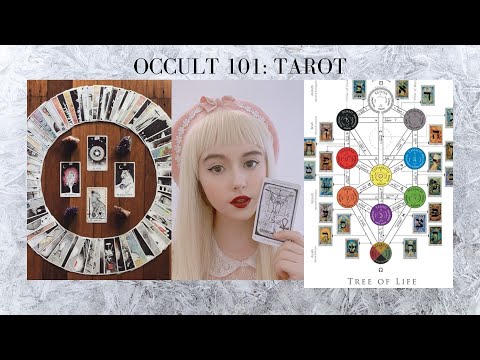
While its exact origins are shrouded in the mists of time, the Tarot didn't spring fully formed into being. Its journey likely began as a deck of playing cards in 15th-century Europe, gradually evolving into the esoteric marvel we recognize today. Figures like Eliphas Levi, Papus, Stanislas de Guaita, and Oswald Wirth, pioneers in the occult revival, recognized its profound symbolic depth. They saw beyond the game, linking the cards to Kabbalistic principles, astrology, and the very archetypes of the collective unconscious that Carl Jung would later explore. This isn't just a deck; it's a visual language, a system designed to communicate with the deeper self and the universe.
The Architecture of the Arcana: Major and Minor
At its core, a standard Tarot deck is divided into two main sections: the Major Arcana and the Minor Arcana. Think of it as a grand narrative or a comprehensive system. The Major Arcana represents the significant life lessons, spiritual archetypes, and major turning points, while the Minor Arcana mirrors the events and circumstances of everyday life, broken down into four suits.
The Major Arcana: Archetypes of the Soul's Journey
Comprising 22 cards, the Major Arcana are the trump cards, the archetypal figures that populate the landscape of the human psyche and spiritual development. From the naive yet potent leap of The Fool, representing new beginnings and a leap of faith (often linked to Diogenes or a similar archetype of embracing simplicity), to the profound culmination of The World, symbolizing completion and integration, these cards speak of universal human experiences. Cards like The Magician, The High Priestess, The Emperor, and The Empress aren't just static images; they are active forces, embodiments of will, intuition, structure, and nurturing power. Understanding these archetypes is crucial for anyone delving into Technomancy or seeking to understand the foundational energies that shape our reality.
The Minor Arcana: The Flow of Daily Existence
The 56 cards of the Minor Arcana are divided into four suits, typically Wands, Cups, Swords, and Pentacles (or variations thereof). Each suit corresponds to a different aspect of human experience: Wands to creative energy, passion, and action; Cups to emotions, relationships, and intuition; Swords to thought, conflict, and challenges; and Pentacles to the material world, finances, and the physical body.
The numbered cards (Ace through 10) represent the progression of experiences within each suit, from the emergence of a new potential (Ace) to the culmination or challenge of a cycle (10). The Court Cards—Page, Knight, Queen, and King—represent individuals, personalities, or specific modes of approaching these energies. The interplay between these suits and numbers provides the granular detail, the "what-ifs" and the daily dynamics, that complement the grander themes of the Major Arcana.
Tarot as a Tool for Technomancy and Self-Discovery
The true power of Tarot isn't in passive prediction; it's in active engagement. It serves as a sophisticated interface for the subconscious mind, a means to access insights that might otherwise remain buried. Think of each card as a glyph, a piece of code in a larger symbolic operating system. By learning to read these glyphs, you begin to understand the underlying logic of your experiences. This is where Digital Divination can truly shine, and where tools can augment the process. For instance, consulting detailed astronomical charts or Kabbalistic correspondences can deepen understanding, but the sheer volume of information can be overwhelming. This is precisely why utilizing specialized tools can streamline the process, allowing you to focus on the core of the operation. For example, the Lunar Phase Calculator can provide critical timing insights for your readings, ensuring your practice aligns with potent energetic cycles.
The Book of Thoth: A Deeper Dive into Symbolic Language
For those seeking a more advanced, intellectually rigorous approach, Aleister Crowley's The Book of Thoth is an essential, albeit dense, text. It offers a comprehensive exploration of the Tarot through the lens of the Great System of Magick, integrating Kabbalah, astrology, and a unique symbolic framework. It's not entry-level reading; it requires dedication and a willingness to grapple with complex metaphysics. Understanding the celestial intelligences and the angelic and demonic hierarchies associated with each minor arcana card, as detailed by Crowley and others like Eliphas Levi, reveals layers of intricate power that can be harnessed by the dedicated practitioner. This complexity underscores why practical tools for organization and reference are so valuable.
Crafting Your Own Deck: Imprinting Your Intent
The superstition that one cannot buy their own Tarot deck is just that – a superstition, often rooted in historical stigma against playing cards and divination. Creating your own deck, however, offers a unique and powerful avenue for personal connection and energy imprinting. As some practitioners wisely note, making your own deck is a profound way to infuse your personal energy and intent into the very fabric of the tool. This act of creation can be as significant as any ritual. For those embarking on this path, a tool that aids in the design and generation of symbols is invaluable. The Chaos Magick Sigil Generator can be a powerful ally in this process, allowing you to translate your intentions into unique visual forms that can then be incorporated into your hand-crafted cards.
Practical Application: Beyond Divination
While Tarot's divinatory aspect is well-known, its applications extend far beyond predicting the future. It is a powerful tool for shadow work, self-reflection, and creative inspiration. Each card presents a symbolic narrative, an archetype that can be explored through meditation, journaling, or even artistic expression. For instance, meditating on The Hermit can illuminate periods of introspection and the search for inner wisdom, while The Tower can serve as a catalyst for understanding necessary upheaval and destruction of limiting structures in your life. This is where the practice of Rituals with IA, while nascent, starts to intersect with ancient symbolic systems – using structured symbolic inputs to catalyze specific mental states or manifestations. Exploring the symbolic connections between Tarot and other esoteric systems, like the I Ching or Norse Runes, further expands its utility. Tools like the I Ching Oracle can offer complementary perspectives, enriching your understanding of cyclical change and destiny.
"The Tarot is a pictorial representation of the forces of the universe and of the path of human consciousness through them."
Practitioner's Verdict
The Tarot is not a passive oracle but an active partner in self-exploration and magical practice. Its strength lies in its depth, its intersection with various esoteric traditions (Kabbalah, astrology), and its ability to act as a tangible representation of abstract concepts. While the "new age fluff" often associated with Tarot can be misleading, its core as a symbolic system and an archetypal map is undeniable and incredibly potent for serious practitioners. The key is to approach it with a critical, experimental mindset, seeking understanding and practical application rather than absolute pronouncements.
Mage's Arsenal
- Essential: Chaos Magick Sigil Generator (Link) - For creating unique symbols and sigils as visual anchors for intent, perfect for custom decks or personal magical operations.
- The Book of Thoth by Aleister Crowley - For advanced study of Tarot symbology and its integration with Magick.
- 78 Degrees Of Wisdom by Rachel Pollack - A comprehensive and accessible guide to Tarot.
- Lunar Phase Calculator (Link) - For timing rituals and readings with cosmic alignments.
- I Ching Oracle (Link) - For complementary divinatory insights and understanding cyclical change.
- Goetian Seals Generator (Link) - Useful if exploring the deeper, more challenging aspects of the Tarot's connections to ceremonial magic.
FAQ
- Can I really buy my own Tarot deck?
Absolutely. The idea that you cannot buy your own deck is a modern superstition. The most powerful deck for you is the one you connect with and use consistently. - What's the difference between Tarot and Oracle decks?
Tarot decks follow a structured system of 78 cards with Major and Minor Arcana, rich in symbolism and historical esoteric connections. Oracle decks are far more varied, with custom structures and themes, often focusing on specific spiritual messages or archetypes outside the traditional Tarot framework. - How do I start learning Tarot if I'm a complete beginner?
Start with a deck that calls to you visually. Focus on understanding the Major Arcana first, then gradually integrate the Minor Arcana. Meditate on individual cards, journal your thoughts, and practice simple spreads like a three-card pull. - Can Tarot be used for something other than predicting the future?
Yes, and this is where its true power lies. It's an excellent tool for self-reflection, shadow work, understanding personal archetypes, creative inspiration, and as a symbolic language for magical operations.
Your Operation
Take a moment to select a single card from a Tarot deck (yours or a digital representation). Study its imagery intently. What emotions does it evoke? What thoughts arise? Now, consider this card not as a prediction, but as a symbol of an energy currently active within you or your immediate environment. How can you consciously engage with or transform this energy through a simple act of will or intention, perhaps by designing a sigil representing your chosen focus for this energy using our Chaos Magick Sigil Generator, or by performing a brief contemplation exercise?
Practitioner's Note: True magick requires resources. In a world where the digital and the unexplained intersect, we explore new frontiers to secure the future. Do you dare to be part of the vanguard? Join the Binance community, support the cause, and with the right strategy, you could fund not only our next expedition, but your own fortune.
No hay comentarios:
Publicar un comentario