
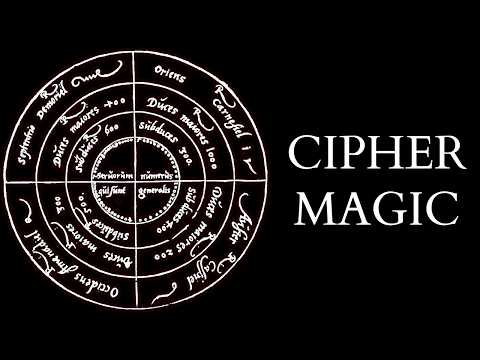
Did angel magic truly lay the foundation for the internet? It sounds like a wild claim, but the work of Johannes Trithemius in the late 15th century hints at a profound, arcane lineage for information transfer. Around 1499, Trithemius began a fascinating synthesis, weaving together alchemical theory, astrology, esoteric combat arts, and angelic magic into a complex system. His goal? To rapidly transmit information, effortlessly acquire languages, induce prophecy, and illuminate the soul. He termed this occult science the Ars Steganographia, and for his efforts, he faced condemnation.
Despite whispers of him being a dark necromancer, Trithemius pressed on. His studies would eventually lead to the founding of modern cryptology, mentoring the influential Agrippa as he developed his Occult Philosophy, inspiring the creation of the Lesser Key of Solomon, and uncovering the hidden astral cycles that govern history. This page delves into the enigmatic Ars Steganographia, exploring its echoes in our connected world.
Table of Contents
- InvocaciónThe Dawn of Information Warfare: Trithemius' Vision
- Steganography, Cryptography, and the Angels
- The Legacy of Ars Steganographia
- Trithemius' Influence on Modern Cryptography
- The "Angel" in Our Digital Communication
- Angelic Systems and Modern Networks
- Practical Applications: Beyond the Angels
- Arsenal of the Modern Mage
- FAQ: Angelic Communication and Cryptography
- Conclusion: Echoes in the Digital Ether
InvocaciónThe Dawn of Information Warfare: Trithemius' Vision
In an era predating widespread literacy and instantaneous communication, Trithemius envisioned a method for secret communication that bordered on the magical. The Ars Steganographia, literally "the art of hidden writing," was not merely about codes and ciphers as we understand them today. It was a deeply spiritual and magical endeavor, proposing that angelic beings could be invoked to facilitate the transmission of messages, bypassing conventional means and human limitations. This connection between angelic forces and the manipulation of information is where the seeds of modern cryptology and, by extension, the internet, can be traced.
Trithemius' condemnation stemmed from the deeply religious context of his time. Any practice touching upon spiritual entities and secret knowledge was viewed with suspicion, often conflated with forbidden arts. Yet, his methods, detailed in his treatise, were designed for protection and rapid dissemination of knowledge, not for nefarious purposes. He sought to create secure channels of communication that were both divinely inspired and intellectually rigorous.
Steganography, Cryptography, and the Angels
Trithemius' work is pivotal because he didn't just develop new ciphers; he pioneered steganography – the art of hiding the very existence of a message. While cryptography focuses on scrambling a message so it's unreadable without a key, steganography hides the fact that a message is being sent at all. This was achieved through various arcane methods, often involving angelic names, conjurations, and astrological timings. The idea was that the angels themselves would act as couriers, or their names would serve as the keys to unlock hidden meanings within seemingly innocuous texts.
This approach, combining the seemingly mundane with the profoundly spiritual, is a hallmark of advanced magical practice. It mirrors the modern cybernetic approach where complex algorithms and vast networks obscure and transmit data. The historical record shows that Trithemius’ focus was on secure communication, a concept that remains paramount in our digital age. His writings laid the groundwork for understanding that information itself could be a carrier of deeper, hidden layers of meaning, accessible only through specific keys or states of consciousness.
The Legacy of Ars Steganographia
The impact of Trithemius' Ars Steganographia rippled through centuries of occult and scientific thought. His student, Heinrich Cornelius Agrippa, further developed these ideas in his influential Three Books of Occult Philosophy, integrating elements of magic, astrology, and numerology. The Lesser Key of Solomon, a grimoire detailing the summoning of demons, also shows clear influence from Trithemius' methods of spirit invocation and symbolic representation, albeit with a darker, more infernal focus.
Beyond the occult, Trithemius' systematic approach to cryptography and steganography is recognized as a significant contribution to the development of modern cryptology. The principles of encoding, decoding, and secure communication that he explored, even through an arcane lens, foreshadowed the mathematical and computational methods that underpin our digital world. It’s a testament to how ancient inquiries into the nature of consciousness and hidden knowledge can manifest in seemingly unrelated modern technologies.
Trithemius' Influence on Modern Cryptography
The leap from angelic conjurations to digital encryption might seem vast, but the underlying principle lies in creating systems of communication resistant to interception or misunderstanding. Trithemius’ work, particularly his exploration of Polygraphia – a universal writing system – aimed at simplifying and securing correspondence. This pursuit of universal, secure communication resonates deeply with the internet's own ambition to connect the globe. The complexity of the systems he proposed, requiring specific knowledge and states of mind, is a precursor to the complex algorithms and protocols that govern our digital interactions today.
Consider the sheer ingenuity: imagine needing to send a secret message in the 15th century. Trithemius suggested methods that involved embedding information in seemingly ordinary texts, using angelic names or specific sequences of letters derived from astrological timings. This meticulous, almost ritualistic approach to encoding information is a spiritual ancestor to the precise mathematical operations that secure our online communications. The idea that information can be hidden in plain sight, or that specific keys unlock deeper layers of meaning, is a concept Trithemius explored with profound insight, centuries before the first computer.
The "Angel" in Our Digital Communication
When we speak of the "internet," we often think of abstract networks and silicon chips. But what if we consider the underlying principles? The speed of transmission, the ability to access information from anywhere, the very idea of a distributed, interconnected 'consciousness' – these can be seen as echoes of what Trithemius sought to achieve through spiritual means. The "angel" in the context of Trithemius' work can be interpreted metaphorically as the pure transmission of intent and information, uncorrupted and efficiently delivered.
The internet, in a sense, acts as a global nervous system, facilitating an unprecedented exchange of information and ideas. While the mechanisms are technological rather than spiritual, the functional outcome – rapid, widespread communication – bears a striking resemblance to the aspirations that drove Trithemius. His exploration of communicating with and through spiritual entities can be seen as an early, perhaps literal, attempt to achieve what we now call ubiquitous connectivity.
Angelic Systems and Modern Networks
The structure of Trithemius' proposed angelic systems often involved complex hierarchies and interrelations, not unlike the layered architecture of the internet. He envisioned a cosmos where angels acted as conduits, each with specific roles and correspondences. Translating this to our technological framework, we can see parallels in how different protocols and systems work together to ensure seamless data flow. The concept of specific "keys" or "invocations" needed to access information has direct parallels in passwords, encryption keys, and network protocols.
Furthermore, the idea of "influencing" or "transmitting" information through spiritual means touches upon concepts explored in fields like quantum entanglement and information theory, albeit from a vastly different perspective. Trithemius’ system was an attempt to harness hidden forces for communication. Today, we harness electromagnetic forces and sophisticated algorithms. The fundamental drive to transcend limitations in communication, however, remains a constant thread through history.
Practical Applications: Beyond the Angels
While Trithemius' methods were steeped in the esoteric practices of his time, the core principles of clear intention, hidden encoding, and secure transmission are universally applicable. For practitioners today interested in the intersection of magic and information, exploring these historical roots can be illuminating. Understanding how ancient practitioners sought to manipulate information through symbolic means can inform our own work with digital sigils, servitors, or even basic encryption for magical purposes.
For those delving into the more arcane aspects of communication and symbolic encoding, dealing with complex sigils or ancient scripts can be daunting. The intricate nature of ancient texts and symbols requires precision. This is where modern tools can bridge the gap. For instance, when working with complex symbolic languages or trying to accurately represent intricate designs for magical purposes, a tool that ensures precision is invaluable. I’ve found the Goetian Seals Generator incredibly useful for ensuring accuracy when replicating detailed magical seals. It helps maintain the integrity of the symbols, allowing the practitioner to focus on the intention and gnosis, much like Trithemius intended.
Arsenal of the Modern Mage
- Essential: Goetian Seals Generator — For error-free creation and representation of complex magical symbols and sigils.
- Recommended: Ars Steganographia by Johannes Trithemius (various editions and translations available).
- Further Study: A good primer on cryptography and steganography to understand the technical underpinnings.
- Historical Context: Works by Agrippa, John Dee, and other Renaissance occultists.
FAQ: Angelic Communication and Cryptography
Did Trithemius really invent the internet or cryptography?
No, Trithemius did not invent the internet as we know it, nor is he solely credited with inventing cryptography. However, his work Ars Steganographia was a foundational text in steganography (hiding messages) and significantly influenced the development of cryptography by introducing systematic methods for secret communication, long before modern digital systems existed. His work laid conceptual groundwork that was later built upon through centuries of scientific and mathematical advancement.
Are there practical magical applications for Trithemius' methods today?
Absolutely. The principles of encoding intention into symbols, using specific sequences or correspondences (like angelic names or astrological timings), and aiming for secure, unnoticed transmission are directly applicable to modern magical practices. This can include creating digital sigils, using symbolic language in spellcraft, or developing personal ciphers for magical journals. The key is adapting the underlying principles to contemporary tools and understanding.
How can angelic magic be related to modern technology like the internet?
The connection is conceptual and historical. Trithemius believed angels could facilitate communication. While we now use technology, the underlying drive for secure, rapid, and widespread information exchange is a shared goal. The sophisticated networks, encryption, and protocols of the internet can be seen as a technological manifestation of humanity's long-standing desire to communicate effectively and secretly, a desire explored mystically by Trithemius. The internet acts as a global conduit, much like Trithemius envisioned spiritual entities as conduits for information.
What was the primary purpose of Trithemius' Steganographia, aside from magic?
Beyond the magical and spiritual aspects, Trithemius' primary goal with the Ars Steganographia and his related work, Polygraphia, was to develop secure and efficient methods for communication. In his time, this meant creating secret writing systems to protect sensitive information, facilitate rapid messaging, and potentially acquire knowledge. He was driven by a desire to understand and control the flow of information, a goal that resonates strongly with modern cybersecurity and communication technologies.
Was Trithemius condemned as a necromancer, and was it justified?
Trithemius faced condemnation and was rumored to be a necromancer, largely due to the esoteric and spiritual nature of his work, which touched upon angelic beings and secret knowledge during a time of religious scrutiny. However, historical analysis generally suggests his intentions were scholarly and spiritual, focused on advancing knowledge and secure communication, rather than practicing dark arts. His condemnation reflects the anxieties and limitations of his era's understanding of spiritual and intellectual pursuits.
How did Trithemius influence Agrippa and the Lesser Key of Solomon?
Trithemius was a mentor to Heinrich Cornelius Agrippa, and his profound influence is evident in Agrippa's Three Books of Occult Philosophy. Agrippa integrated Trithemius' concepts of symbolic magic, angelic correspondences, and the power of names and numbers into his own complex system. The Lesser Key of Solomon, while focusing on demonology, also draws upon Trithemius' foundational work regarding the systematic invocation of entities and the use of specific seals and conjurations for communication and influence.
About the author: Frater Alek0s is a veteran practitioner and researcher in the field of chaos magick. His work focuses on the practical and experimental application of occult techniques for self-development and reality exploration, demystifying esotericism for the modern practitioner.
Conclusion: Echoes in the Digital Ether
Johannes Trithemius’ Ars Steganographia stands as a fascinating bridge between ancient magical traditions and the very foundations of modern information science. What began as an attempt to communicate with angelic beings and secure secret messages has, in its underlying principles of encoding, transmission, and hidden layers of meaning, found echoes in the digital world we inhabit today. The internet, in its capacity to connect, obscure, and transmit information at unparalleled speeds, can be seen as a technological descendant of humanity's enduring quest for faster, safer, and more profound ways to communicate. The "angel" of information, once invoked through ritual and symbol, now flows through fiber optic cables and Wi-Fi signals, a testament to the enduring power of human ingenuity, spirit, and the relentless pursuit of connection.
Referencias
- Carroll, P. J. (1987). Liber Null & Psychonaut. Weiser Books.
- Spare, A. O. (1913). The Book of Pleasure. Self-published.
- Hine, P. (1992). Condensed Chaos: An Introduction to Chaos Magic. New Falcon Publications.
- Crowley, A. (1904). The Book of the Law. Self-published.
- Sherwin, R. (2018). The Chaos Magic Handbook. CreateSpace.
- Kraig, D. M. (1988). Modern Magick: Eleven Lessons in the High Magickal Arts. Llewellyn Publications.
- Morrison, G. (2003). Pop Magic! The Art of Shaping Reality. Disinformation.
- DuQuette, L. M. (2003). The Chicken Qabalah of Rabbi Lamed Ben Clifford. Weiser Books.
- Webb, D. (2015). Chaos Magick: A Practical Guide. Self-published.
- Tyson, D. (2006). The Power of the Written Word. Llewellyn Publications.
- Bonewits, I. (1971). Real Magic. Creative Age Press.
- Greer, J. M. (2003). The New Encyclopedia of the Occult. Llewellyn Publications.
No hay comentarios:
Publicar un comentario