
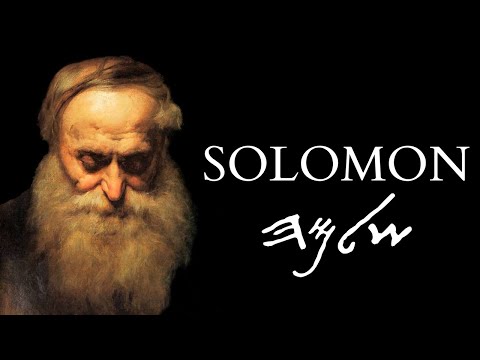
Solomon, the third king of Israel, stands as a figure of immense esoteric significance, his legend weaving through religious texts, art, and occult practices for millennia. But how did this revered monarch become intrinsically linked with arcane powers and the mastery of demons? This deep dive into the esoteric dimensions of King Solomon unveils his transformation from a biblical ruler to an occult icon.
SolarThe Biblical Narrative: Wisdom and Wealth
Solomon's story begins in the Hebrew Bible, where he is famously gifted divine wisdom by God in a dream vision. This supernatural insight would shape his reign, making him renowned not only for his justice and understanding but also for his unparalleled wealth and the magnificent Temple he constructed in Jerusalem. His wisdom was profound, his judgment astute, and his reign marked an era of peace and prosperity for Israel. This divine endowment, however, laid the groundwork for later, more mystical interpretations of his capabilities.
Table of Contents
The Arcane Transformation: From King to Magus
The transition of Solomon from a historical and religious figure to an occult king is a fascinating journey through centuries of evolving mythologies and esoteric traditions. While the Bible paints him as divinely wise, the later development of folklore and occult grimoires attributed to him a far more direct and potent involvement with supernatural forces, particularly demons. This association is not unique to Solomon; many figures of historical or religious importance have been imbued with magical attributes over time, often as a way to legitimize or explain profound works or a perceived exceptional level of power and influence.
The Pact of Solomon: Demons and the Temple
One of the most potent narratives surrounding Solomon's occult legacy involves his supposed command over demons. Legends suggest that in his quest to build the Temple, an undertaking of immense scale and complexity, Solomon employed supernatural forces. This idea often manifests as a pact or a method of control, where Solomon, through divine grant or esoteric knowledge, could bind demons to his will, forcing them to serve him. This often involved mystical tools or symbols, chief among them King Solomon's Ring, which purportedly granted him dominion over the infernal host.
The imagery of Solomon surrounded by misshapen demons, coerced into building the Temple for the Israelite God, is indeed striking and has fueled centuries of speculation and artistic interpretation. It raises questions about the nature of divine power, the perceived role of supernatural entities in ancient constructions, and the complex relationship between the sacred and the profane in esoteric thought.
The Lesser Key of Solomon: A Grimoire's Legacy
The legend of Solomon's mastery over demons found its most tangible form in the grimoire tradition, particularly in texts attributed to him. The Goetian Seals Generator is a modern tool that helps practitioners engage with these ancient symbols. The *Lesser Key of Solomon*, a 17th-century compilation, is perhaps the most famous of these attributed works, divided into five books, including the *Ars Goetia*. This book lists 72 demons that Solomon allegedly summoned and controlled, detailing their seals, ranks, and the tasks they could perform.
The *Ars Goetia* lays out a system of Solomonic magic, providing instructions for conjuring these spirits, compelling them to appear, and making them obey the magician's commands. It describes the necessary preparations, the magical circle, the names of God, and the specific rituals required to harness their powers. This text has been profoundly influential in the history of Western occultism, shaping demonology and magical practices for centuries.
The Esoteric King: Solomon's Enduring Influence
The association of Solomon with demonology and esoteric magic has cemented his status as a central figure not just in religious history but in occult myth-history. From medieval romances to Renaissance magic, and into modern esoteric practices, Solomon is consistently depicted as a magus, a possessor of divine wisdom and supernatural power, capable of commanding spirits and wielding knowledge beyond mortal ken.
His story exemplifies how figures of historical and religious importance can be reinterpreted and imbued with new meanings within different cultural and spiritual contexts. The legend of Solomon the Magus continues to fascination, inspiring practitioners to explore the intricate relationship between divine wisdom, earthly power, and the mastery of forces both seen and unseen.
Arsenal of the Modern Mage
Engaging with the esoteric traditions associated with King Solomon often involves understanding and utilizing ancient symbols and seals. For the modern practitioner, technology can bridge the gap between historical practice and contemporary application.
* Essential: Goetian Seals Generator - This digital tool provides a convenient way to generate and study the seals of the 72 demons attributed to King Solomon, facilitating a deeper connection with the ancient practices of Solomonic magic. * Recommended Reading: *Solomon the Esoteric King* by Yuval Noah Harari (though often cited, his work is more historical and less occult-focused; for deeper esoteric context, consider Lenormant or Torijano). * Study Guide: For those new to esotericism, orienting oneself with reliable sources is crucial.
FAQ: Unpacking the Legend of Solomon
Who was King Solomon according to the Bible?
In the Hebrew Bible, Solomon was the third king of Israel, succeeding his father David. He is renowned for his divinely granted wisdom, his construction of the First Temple in Jerusalem, and a period of great peace and prosperity.How did Solomon become associated with demons?
The association likely evolved from his legendary wisdom and power. Folklore and later occult texts, such as the *Ars Goetia*, attributed to him the ability to summon and control demons, often in service of his divine tasks, like building the Temple.What is the "Lesser Key of Solomon"?
It is a 17th-century grimoire, or book of magic, attributed to King Solomon. It contains information on various aspects of ceremonial magic, including the summoning and control of 72 demons, their seals, and the rituals required for their invocation.Did Solomon really command demons?
From a historical and strictly religious perspective, there is no evidence that Solomon commanded demons. This aspect of his legend belongs to the realm of folklore, esoteric traditions, and occult myth-history, rather than verifiable historical fact.How are Solomon's seals used in magic?
The seals, or sigils, of the 72 demons listed in the *Ars Goetia* are traditionally used by magicians to invoke and command these spirits. Each seal is believed to represent a specific demon and is used in conjunction with rituals, incantations, and other magical tools.About the author: Frater Alek0s is a veteran practitioner and researcher in the field of chaos magick. His work focuses on the practical and experimental application of occult techniques for self-development and reality exploration, demystifying esotericism for the modern practitioner.
What is the esoteric significance of Solomon?
Esoterically, Solomon represents the archetypal wise king and magus who attained supreme knowledge and control over both the material and spiritual worlds. He symbolizes the pinnacle of human achievement through divine favor and magical mastery.Referencias
- Mathers, S. L. M. (1904). The Goetia: The Lesser Key of Solomon the King. Weiser Books.
- Peterson, J. H. (2001). The Lesser Key of Solomon. Weiser Books.
- McGregor, J. (2018). The Ars Goetia: A Practical Guide. New Falcon Publications.
- Crowley, A. (1904). The Goetia: The Lesser Key of Solomon the King. Self-published.
- Rankine, D. (2009). The Grimoire of St. Cyprian. Avalonia.
- Skinner, S. (2006). The Goetia of Dr Rudd. Golden Hoard Press.
- Boudet, J. (2001). The Grimoire of Armadel. Weiser Books.
- Waite, A. E. (1898). The Book of Black Magic and of Pacts. Redway.
- Rudd, T. (2007). The Goetia of Dr Rudd: The Angels and Demons of Liber Malorum Spirituum. Golden Hoard Press.
- Kieckhefer, R. (1989). Magic in the Middle Ages. Cambridge University Press.
- Agrippa, C. (1533). De Occulta Philosophia Libri Tres. Various.
- Betz, H. (1986). The Greek Magical Papyri in Translation. University of Chicago Press.
No hay comentarios:
Publicar un comentario