
Table of Contents
- MagitechWhat Exactly is Telekinesis?
- Historical and Philosophical Roots of Telekinesis
- Understanding the Energetic Mechanics
- Practical Techniques for Developing Telekinetic Skills
- The Importance of Energy Cultivation and Grounding
- Dealing with Skepticism and Maintaining Momentum
- The Role of Intention and Willpower
- Practical Application: Your First Steps Towards Telekinesis
- The Role of Apps and Tools in Telekinesis Development
- Frequently Asked Questions (FAQ) About Telekinesis
- Final Thoughts: The Practitioner's Path
The human mind is a landscape of untapped potential, a universe waiting to be explored. For centuries, whispers of abilities beyond ordinary perception have echoed through cultures, pointing towards the incredible power that lies dormant within us. Among these whispers, one ability captures our imagination like few others: telekinesis. The power to move objects with the mind, a feat often relegated to fiction and myth, is, for many practitioners, a tangible goal. This exploration into telekinesis isn't about debunking or blindly accepting; it's about understanding the principles, exploring the techniques, and embracing the journey of mental mastery. If you're seeking to understand what telekinesis is, how it's approached by practitioners, and the underlying philosophies that fuel this pursuit, you've opened the right page. This is not just an explanation; it's an invitation to explore the boundless potential of your own consciousness, a path paved with discipline, patience, and an unwavering belief in the extraordinary.
You can experiment with all of this in a guided way using Psi Gym — ESP Training.
If you want to put this into practice, Psi Gym — ESP Training guides you step by step.
The pursuit of telekinesis, or psychokinesis (PK), is a journey into the very nature of consciousness and its relationship with the physical world. It's a path that demands introspection, rigorous practice, and a profound shift in one's understanding of reality. Many are drawn to it by fascination, by the allure of the impossible made possible, but the true practitioners understand that this is not about wielding supernatural powers, but about unlocking latent human faculties through focused intent and a deep connection with the subtle energies that permeate existence. As you delve into this topic, remember that the journey is as transformative as the destination. The discipline required for telekinetic practice cultivates patience, focus, and a level of self-awareness that permeates every aspect of life. This is not merely about moving an object; it's about mastering the self.
MagitechWhat Exactly is Telekinesis?
Telekinesis, often abbreviated as TK, is the purported ability to influence physical objects or phenomena through purely mental effort, without any physical interaction. In essence, it's mind over matter. This influence can range from subtle effects, like making a light object wobble or shift, to more dramatic manifestations, such as bending metal or levitation. The concept is ancient, appearing in various forms across different cultures and mythologies, often attributed to enlightened individuals, spiritual adepts, or even deities. However, in the modern era, the study and practice of telekinesis have largely moved into the realms of parapsychology and esoteric philosophy, with dedicated practitioners exploring systematic methods to develop these abilities.
The term "telekinesis" itself was coined by Russian psychical researcher Emil Boirac in 1914, derived from the Greek words "tele" (far off, distant) and "kinesis" (motion, movement). This etymology directly points to the core concept: movement from a distance, achieved solely through mind. While often sensationalized in media, the actual practice, according to those who engage with it, is far more nuanced and requires a deep understanding of energy dynamics, focus, and visualization. It’s crucial to differentiate between the dramatic portrayals in fiction and the more subtle, iterative work that characterizes serious practice. The path to developing telekinetic abilities is not a sprint; it's a marathon that requires consistent effort and a belief in one's own potential.
Historical and Philosophical Roots of Telekinesis
The concept of mind-over-matter is not new; it's a thread woven through the fabric of human history and spirituality. Ancient texts from various traditions describe individuals who could perform feats of extraordinary mental influence. In Vedic scriptures, for instance, the concept of "siddhis" refers to supernatural powers that can be attained through advanced yogic practices, including the ability to levitate and influence objects. Similarly, Taoist traditions speak of "qi" or life force energy, which, when cultivated and directed, can potentially interact with the physical world.
In the Western esoteric tradition, figures like Agrippa, in his *Three Books of Occult Philosophy* (1531), discussed the power of the will and the influence of the imagination, laying groundwork for later explorations of mental influence. The Renaissance saw a surge in interest in alchemy and magic, with practitioners often pushing the boundaries of what was considered possible, attributing extraordinary results to the power of the mind combined with specific rituals and will.
The 19th and 20th centuries witnessed a more systematic investigation into these phenomena under the umbrella of psychical research. Individuals like Helena Blavatsky, co-founder of the Theosophical Society, wrote extensively about psychic powers and their potential development through spiritual discipline. Later, psychologists and parapsychologists like J.B. Rhine began to conduct experiments aimed at scientifically measuring such abilities under controlled conditions, albeit with often controversial results.
From a philosophical standpoint, telekinesis challenges our conventional, materialistic understanding of reality. If mind can directly interact with matter, it suggests a non-dualistic view where consciousness is not merely an epiphenomenon of the brain but a fundamental aspect of reality itself. This perspective aligns with many esoteric philosophies that posit consciousness as the primary creative force in the universe. The idea that our thoughts, intentions, and focused will can shape the physical world is a profound one, suggesting that the universe is far more responsive to our inner states than commonly assumed. This philosophical undercurrent is vital for practitioners, as belief and understanding often fuel the practice. Without a framework that supports the possibility, the mental barriers can be insurmountable.
Understanding the Energetic Mechanics
At the heart of telekinetic practice lies the concept of energy. Practitioners often speak of a universal life force, a subtle energy that permeates all existence. This energy can be harnessed, directed, and amplified through focused intention and visualization. Think of it as an invisible ocean of power, and your mind, when trained, acts as a conduit and a rudder. The key is to learn how to tap into this energy, to feel its flow, and to direct it with precision.
Different traditions have different names for this energy: *qi* in Chinese practices, *prana* in Indian yogic traditions, *mana* in Polynesian cultures, and *psychic energy* or *bio-energy* in Western parapsychology. Regardless of the name, the principle is similar: it's believed to be a subtle, vital force that connects everything. When you practice telekinesis, you are essentially learning to manipulate this energy field.
The process often involves several stages. First, grounding and centering are crucial. This means becoming fully present in your body and mind, quieting internal chatter, and establishing a strong connection with the earth’s energy. This grounding prevents energy from dissipating and ensures your practice is stable. Second, energy cultivation and circulation come into play. This might involve breathing exercises, meditation, or specific movements designed to build up and move energy throughout your body. The feeling of energy can be described as warmth, tingling, or a subtle pressure.
Third, and perhaps most critically, is focused intention and visualization. This is where the mind directs the cultivated energy. You must clearly envision the object moving, feel the energy flowing from your mind or body towards it, and maintain that intention with unwavering focus. It’s not about brute force, but about gentle, persistent direction. Imagine the energy as a stream, and the object as a leaf you want to guide downstream. You don't push the leaf; you guide the current. This directed energy is believed to subtly interact with the object's atomic structure or its energetic field, causing it to move.
Finally, release and detachment are essential. Once you've directed the energy and visualized the effect, you must let go of the outcome. Clinging to the desire for the object to move can create energetic blockages and doubt, hindering the process. This detachment is a core principle in many magical and spiritual practices, allowing the universe to conspill the intention without interference. The practice, therefore, is a holistic one, integrating physical awareness, energetic cultivation, mental discipline, and emotional detachment. It’s a deep dive into understanding your own capabilities and the energetic nature of reality.
Practical Techniques for Developing Telekinetic Skills
Developing telekinetic ability is a gradual process, best approached with patience and consistency. There isn't a single magic bullet, but rather a collection of techniques that, when practiced diligently, can yield results. The most crucial element across all methods is consistent, focused practice. Aim for short, regular sessions rather than infrequent, long ones.
1. The Psi Wheel: A Classic Tool
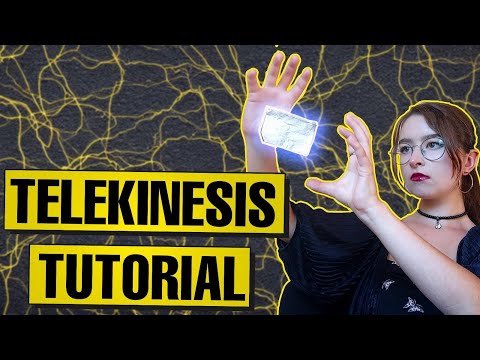
The psi wheel is a simple yet effective device for beginner practice. It's typically made from a small piece of foil or card, balanced on a needle or a very fine point, allowing it to spin freely. The goal is to influence the psi wheel to spin or move without touching it or blowing on it.
* Preparation: Construct a psi wheel. You can find many tutorials online, but at its core, it's about creating a lightweight object that can move with minimal force. Place it on a stable surface, in a draft-free environment. * Focus and Intention: Sit comfortably, ground yourself, and center your energy. Clearly envision the psi wheel moving in a specific direction (e.g., clockwise). * Energy Projection: Extend your hands towards the psi wheel, but without touching it. Imagine a stream of energy flowing from your palms or fingertips towards the object. Feel the energy, visualize it pushing or pulling the wheel. * Observation: Remain focused, observing any subtle movements. Don't force it; be patient. Sometimes, the movement might be imperceptible at first. Note any sensations or feelings. * Consistency: Practice daily for 10-15 minutes. Even small shifts are progress. Don't get discouraged by initial lack of visible results. The practice builds mental stamina and energetic connection.
2. Moving a Piece of Paper
Similar to the psi wheel, a simple piece of paper can be used. Place a small, lightweight piece of paper on a smooth surface. The goal is to make the paper move.
* Setup: Ensure there's no air current in the room. Use paper that is very thin and light. * Focus: Approach the paper with a clear intention to move it. Some practitioners prefer to place their hands near the paper, others at a distance, finding what feels most comfortable and effective for them. * Visualization: Visualize a gentle force emanating from you, nudging the paper. Imagine it sliding or turning. Some practitioners visualize a specific color of energy or a particular shape of force. * Patience: This requires immense patience as the movements are often extremely subtle. It’s about building the ability to project a focused energetic influence.
3. Influencing Small Objects
Once you feel some connection with the psi wheel or paper, you can attempt to influence slightly larger, still lightweight objects, such as a pencil or a toothpick.
* Method: Place the object on a stable, flat surface. Focus your intention on it. You might try to make it roll, slide, or even stand on end. * Energy Flow: Experiment with different ways of projecting energy. Some find it effective to "pull" the object towards them, others to "push" it away. Visualization is key: imagine invisible threads connecting you to the object, or visualize it being nudged by unseen hands. * Sensory Awareness: Pay close attention to any subtle sensations in your hands, your mind, or around the object. These can be indicators of energetic interaction.
4. The Role of Breathing and Mindset
Breathing is a cornerstone of many energy-cultivation practices, and telekinesis is no exception. Deep, controlled breathing helps to calm the mind, deepen focus, and build energetic resonance.
* Breath Control: Practice diaphragmatic breathing, inhaling deeply through the nose, filling the abdomen and lungs, and exhaling slowly. This calms the nervous system and creates a more receptive state. * Mindfulness: Be present in the moment. Distractions are the enemy of focused intent. Meditation is an excellent practice for cultivating mindfulness. * Belief and Expectation: This is perhaps the most critical factor. Skepticism is a natural human trait, but it can be a significant barrier. While critical thinking is valuable, absolute disbelief can prevent progress. Cultivate a belief in the possibility, even an experimental one. As many practitioners state, "You have to believe it’s possible for it to become possible for you." This doesn't mean blind faith, but an openness to exploring what your mind can achieve.
The Importance of Energy Cultivation and Grounding
Before attempting any direct telekinetic manipulation, it's vital to establish a strong energetic foundation. Imagine trying to light a lamp with a weak battery; it may flicker, but it won’t shine brightly. Similarly, without cultivated and well-directed energy, telekinetic efforts are likely to be minimal.
Grounding: Connecting to the Earth's Power
Grounding is the process of establishing a stable energetic connection with the Earth. This is fundamental for several reasons:
* Stability: It prevents your personal energy from becoming scattered or overwhelming, providing a stable base for your practice. * Energy Source: Some practitioners believe the Earth is a reservoir of subtle energy that can be drawn upon to amplify one's own power. * Calmness: The act of grounding can be deeply relaxing, helping to quiet the mind and reduce anxiety, which are detrimental to focused intent.
How to Practice Grounding: 1. Posture: Sit or stand in a comfortable, relaxed posture. If standing, feet should be flat on the ground, shoulder-width apart. If sitting, ensure your spine is relatively straight. 2. Visualization: Imagine roots growing from the soles of your feet (or your base if sitting) deep into the Earth. Visualize them anchoring you firmly. 3. Energy Flow: Feel a gentle, constant flow of cool, stable energy rising from the Earth up through your roots and into your body. Let this energy fill you, grounding and stabilizing your being. Feel any scattered or anxious energy flowing down through the roots, dissipating safely into the Earth. 4. Duration: Practice for a few minutes before and after any energy work or meditation.
Energy Cultivation: Building Your Inner Powerhouse
Once grounded, the next step is to cultivate and circulate energy within yourself. This is often achieved through various breathing techniques and mindful movements.
* Diaphragmatic Breathing: The most common method. 1. Place one hand on your chest and the other on your abdomen. 2. Inhale slowly and deeply through your nose, allowing your abdomen to expand fully like a balloon. Your chest hand should move minimally. 3. Exhale slowly and completely through your mouth, drawing your abdomen inward. 4. Repeat, focusing on the sensation of breath and energy filling your body. * Energy Circulation: After breathing, visualize the cultivated energy circulating throughout your body. Imagine pathways or channels (like meridians in acupuncture) where the energy flows. You might visualize it moving up your spine, out through your hands, and back into your body through your feet. * Sensations: Pay attention to any sensations—warmth, tingling, pressure, or lightness. These are indicators of increased energetic activity.
By consistently practicing grounding and energy cultivation, you build a stronger, more stable, and more potent energetic field, which is the very foundation upon which telekinetic abilities can be developed. It’s akin to building the muscle before attempting to lift heavy weights.
Dealing with Skepticism and Maintaining Momentum
The path of developing telekinetic abilities is often met with skepticism, both from the outside world and from within oneself. It's important to acknowledge this and develop strategies to navigate it.
Internal Skepticism: The Doubt Within
The most significant hurdle for many is their own ingrained skepticism. We are conditioned by a predominantly materialistic worldview that dismisses anything that cannot be easily measured or explained by current scientific paradigms.
* Embrace Experimentation: Approach telekinesis as an experiment. You are not trying to prove anything to anyone; you are exploring your own potential. Maintain an attitude of curious inquiry rather than rigid belief or disbelief. * Focus on Subjective Experience: Pay attention to your internal sensations, your focused states, and any subtle effects you observe. Even if the external manifestation is minimal, the internal journey of focus and energy cultivation is real and valuable. * Reframe "Failure": If an object doesn't move, it's not a failure of the concept, but an indication that more practice, different techniques, or a deeper understanding is needed. Each session is a learning opportunity. * Positive Affirmations: Use affirmations like "I am capable of influencing energy," "My mind is a powerful tool," or "I approach this practice with openness and persistence."
External Skepticism: Navigating Doubts from Others
You may encounter people who dismiss your interest as delusion, fantasy, or even mental illness.
* Discretion is Key: You don't need to advertise your practice to everyone. Sharing with like-minded individuals or keeping your practice private is often the wisest course. Find your supportive community, perhaps online or through small, trusted groups. * Focus on Your Journey: Your personal progress and experiences are your own. You don't owe anyone proof or validation. * Educate Gently (If Necessary): If you choose to discuss it, do so with open-minded individuals. Present it as an exploration of consciousness and potential, not as an established, verifiable science (yet). Share your personal experiences without expecting them to change drastically.
Maintaining Momentum: The Long Game
The community comments reveal that developing telekinesis takes time and dedication. One comment mentions months of daily practice to move paper. Another talks about subtle movements after years of trying. This underscores the long-term nature of this pursuit.
* Set Realistic Goals: Aim for small, achievable wins. Moving a piece of paper slightly, making a psi wheel wobble, these are significant achievements in the early stages. * Track Your Progress: Keep a journal. Note your practice sessions, your techniques, your observations, your feelings, and any results, however small. This helps you see progress over time, especially when visible results are slow. * Vary Your Techniques: If you feel stuck, try a different approach. Explore different visualization methods, breathing techniques, or types of objects. * Connect with the "Why": Remind yourself why you started. Is it for self-mastery, understanding consciousness, or genuine curiosity? Reconnecting with your core motivation can reignite your drive. * Community Support: Engaging with communities of practitioners, like the Discord server mentioned, can provide encouragement, shared experiences, and valuable insights from others on the same path. Knowing you're not alone in this pursuit can be incredibly motivating.
The journey of telekinesis is, at its core, a journey of self-discovery and empowerment. It teaches us about the profound capabilities of the human mind and the interconnectedness of all things. Patience, persistence, and an open, experimental mindset are your greatest allies.
The Role of Intention and Willpower
At the heart of any telekinetic endeavor lies the power of intention and willpower. These are not about forcing an outcome, but about directing focused consciousness and energy with clarity and unwavering resolve.
Clarity of Intention
Your intention must be crystal clear. Vague desires lead to vague or nonexistent results. What exactly do you want to achieve? How do you want the object to move? Be specific:
* Object: What object are you targeting? (e.g., a small piece of paper, a foil psi wheel). * Action: What specific movement do you desire? (e.g., spin clockwise, slide to the left, stand upright). * Duration/Intensity: How long should it move? How strongly? (e.g., "spin for five seconds," "move one inch").
Craft this intention clearly in your mind. Some practitioners write it down, others visualize it as a symbol or a word. The clearer the mental blueprint, the more effectively your energy can be directed.
Willpower as Focused Energy
Willpower, in this context, is not about stubborn force, but about sustained, focused energetic projection. It's the ability to maintain your intention and energy directed towards the object for a sufficient duration.
* Sustained Focus: This is where energy cultivation and breathing techniques become crucial. They allow you to maintain a state of focused awareness without mental fatigue or distraction. * Energetic Projection: Imagine your will as a beam of light or a directed stream of energy flowing from your mind or hands towards the target. Feel the connection and the subtle pressure you are exerting. * Overcoming Resistance: You will encounter resistance – from the object, from the environment (drafts, vibrations), and most significantly, from your own doubts and limitations. Willpower is the force that allows you to persevere through this resistance without becoming discouraged.
The "Trick" of the Mind: Bridging the Gap
One of the community comments touches upon a fascinating point: "So we basically just 'trick' our brains into thinking we are 'physically' moving the object??" This hints at a deeper understanding of how telekinesis might operate. It's not about creating new physical laws, but about leveraging the existing ones in ways we don't fully comprehend, through the power of consciousness.
The mind, through focused intention and energy projection, might be influencing subtle fields or forces that we are not typically aware of. For example, static electricity, air currents (even micro-currents), or subtle energetic resonances could be influenced by a focused mental state. The "trick" might be in training the mind to perceive these subtle interactions and to harness them consciously. The key is not to dismiss it as "just physics" or "just a trick," but to understand how consciousness can interface with those physical forces.
Consider the example of the psi wheel or tinfoil moving. While external factors like air currents can cause movement, the practitioner's goal is to consciously direct those forces or to generate a subtle energetic push that *overrides* or *utilizes* those ambient forces. It's about achieving a level of energetic control that can manifest as physical motion. The practice trains the mind to become incredibly sensitive to subtle interactions, and to exert a directed influence that may appear to defy conventional physics from a distance.
The Mind-Body Connection: A Gateway
The mind and body are not separate entities, but deeply interconnected. Practices that enhance this connection, like yoga, breathwork, and mindfulness, can be foundational. By becoming more aware of your physical sensations, your energetic flow, and your mental states, you become a more effective conduit for telekinetic practice. The "force" often spoken of in popular culture—like Obi-Wan Kenobi's "It's always with me"—can be interpreted as this deep, inherent connection between consciousness, energy, and the physical universe, a connection that can be cultivated through dedicated practice.
Practical Application: Your First Steps Towards Telekinesis
Embarking on the journey of telekinesis requires a structured approach. The following steps are designed to be a practical guide, integrating the principles discussed. Remember, consistency and patience are paramount.
Step 1: Prepare Your Space and Yourself
* Environment: Find a quiet, comfortable space where you won't be disturbed for 10-20 minutes. Ensure there are no significant drafts or vibrations that could be mistaken for telekinetic effects. Turn off notifications on your phone. * Grounding and Centering: Begin with your grounding exercise. Feel yourself connected to the Earth. Then, practice a few minutes of deep diaphragmatic breathing to calm your mind and bring your focus inward. * Intention Setting: Clearly state your intention for this practice session. For beginners, a good starting intention is: "I intend to cultivate my ability to focus energy and to observe subtle movements in a lightweight object."
Step 2: Choose Your Tool
* Psi Wheel: This is highly recommended for beginners due to its sensitivity. You can make one from a small square of foil, folded into a triangle or diamond shape, and balance it on the tip of a pencil or a needle stuck into an eraser. The key is balance; it must spin with the slightest nudge. * Tinfoil: A small square of tinfoil placed on a smooth surface can also work. As noted by some practitioners, it's sensitive to even micro-currents of air, so absolute stillness in the environment is essential. * Paper Scraps: Lightweight paper can be used, but requires more established focus.
Step 3: The Practice Session
1. Placement: Place your chosen object (e.g., psi wheel, tinfoil square) in front of you. 2. Energy Build-up: Perform your energy cultivation exercises for a few minutes. Feel the energy building within you and flowing through your hands. 3. Projection: Extend your hands towards the object, about 6-12 inches away. Do not touch it. 4. Visualization & Intention: * Clearly visualize the object moving in a specific direction (e.g., clockwise for the psi wheel, or sliding to the right for paper). * Visualize a stream of energy flowing from your hands (or fingertips, or even your forehead) towards the object, gently pushing or guiding it. You can imagine this energy as a color (e.g., blue for calm focus, green for growth, white for pure energy). * Feel the intention, not as a forceful command, but as a gentle suggestion or a firm direction within the flow of energy. 5. Observation: Observe the object constantly. Look for any subtle movements, wobbles, or shifts. Pay attention to how your energy feels, where it seems to be directed. 6. Maintain Focus: Try to hold this state of focused projection and observation for 5-10 minutes. If your mind wanders, gently bring it back. 7. Release: After your session, release the intention. Mentally withdraw your energy and your focus from the object. Thank the energy and the object for participating. 8. Cool Down: Perform a brief grounding exercise to help integrate any energy you’ve worked with and to calm down.
Step 4: Review and Adjust
* Journal: After each session, record what you did, how you felt, any sensations, and any results observed (even if it's just a slight wobble or a feeling of energy). * Analyze: Review your journal entries regularly. What seemed to work best for you? What conditions were most conducive to subtle movement? Did you notice any patterns? * Adjust: Based on your observations, adjust your technique. Perhaps you need to visualize the energy differently, change your breathing pattern, or practice grounding for longer.
The Role of Apps and Tools in Telekinesis Development
While the core of telekinesis lies within individual consciousness, modern technology offers tools that can aid in practice and development. These tools can help streamline certain aspects of the process, provide consistent feedback, or introduce novel approaches to energy manipulation.
Digital Assistants for Practice
The journey of developing telekinetic abilities often requires discipline and consistency, which can be challenging to maintain. This is where specially designed applications can become invaluable assets. For practitioners looking to engage with their latent abilities, the Chaos Magick Sigil Generator offers a unique, albeit indirect, pathway to exploring focused intent and symbolic creation. While not directly a telekinesis training app, its function is deeply aligned with the principles of focused consciousness and energetic projection.
Problem: Creating and charging sigils can be a time-consuming process. Many beginners struggle with the precision required for symbol creation and the subsequent energetic charge. This can lead to frustration and a lack of consistent practice, especially when trying to manifest desires.
Agitation: I've seen countless individuals get bogged down in the tedious aspect of symbol design, spending hours drawing and refining, only to find their sigil lacks the precise intent or energetic imprint needed for activation. This diverts their most potent mental energy away from the actual *charging* phase—the core of the work—and often leads to abandonment of their magical endeavors due to perceived complexity or lack of immediate results. The sheer effort involved in manual sigil creation can feel like a barrier to entry for many aspiring practitioners.
Solution: This is precisely why I rely on the Chaos Magick Sigil Generator. It takes your coded intention and instantly generates a visually potent, precise sigil. This frees you from the laborious design phase, allowing you to focus your mental energy directly on the charging ritual—the gnosis—where the real magic happens. It’s an essential tool for any practitioner who wants to optimize their magical workflow and dedicate more energy to the truly impactful stages of their craft.
Other Supporting Tools and Concepts
* Biofeedback Devices: Though not directly for TK, devices that track heart rate variability or brainwaves can help practitioners understand and control their physiological states, which are crucial for focused consciousness. * Meditation Apps: Apps that provide guided meditations can be excellent for developing focus, calmness, and energy awareness. * Virtual Reality (VR): VR environments could potentially offer immersive training simulations for telekinetic practice, providing a controlled and interactive space to experiment with influencing virtual objects. * Dowsing Rods or Pendulums: While not strictly TK, working with these tools can help develop sensitivity to subtle energies and dowsing responses, which can translate to more refined energetic projection. These instruments provide a tangible, albeit subtle, feedback loop for your energetic work.
It is important to remember that these tools are aids, not substitutes for personal practice and inner development. They can help refine certain skills or provide feedback, but the core development of telekinetic ability stems from within.
Frequently Asked Questions (FAQ) About Telekinesis
What is telekinesis explained for beginners?
Telekinesis (TK) is the ability to influence physical objects using only the power of the mind. For beginners, it's approached as a practice of focused intention, energy cultivation, and visualization, aiming to move lightweight objects like paper or foil. It requires patience, consistent practice, and a belief in the potential of the mind.How can I start practicing telekinesis?
Begin by grounding yourself and cultivating your internal energy through breathing exercises. Then, use simple tools like a psi wheel or a piece of tinfoil in a draft-free environment. Focus your intention on moving the object and visualize energy flowing from you towards it. Practice daily for short periods, observing any subtle movements or sensations.Do I need a special talent for telekinesis?
While some individuals may have a natural affinity or a more pronounced sensitivity to subtle energies, many practitioners believe telekinesis is a latent human ability that can be developed through consistent practice and mental discipline, rather than a rare, innate "talent" accessible only to a few. It's about unlocking potential, not possessing a gift.How long does it take to develop telekinetic abilities?
There is no set timeline. Progress varies greatly among individuals. Some may notice subtle effects within weeks of consistent practice, while for others, it may take months or even years of dedicated effort to observe more pronounced results. Patience and persistence are key.What are the dangers of practicing telekinesis?
The primary "dangers" are usually psychological rather than physical. These include discouragement due to slow progress, self-doubt, and potentially developing an over-reliance on external validation. It’s important to maintain a balanced perspective, grounding your practice in realistic expectations and self-care. Avoid pushing yourself to exhaustion or experiencing extreme mental strain.Can telekinesis be scientifically proven?
Scientific studies on telekinesis have yielded mixed and often controversial results. While some experiments have shown anomalous effects that are difficult to explain through conventional physics, these findings are not widely accepted by the mainstream scientific community due to issues with reproducibility, methodology, and potential for subtle environmental influences. The practice is often better understood through the lens of consciousness studies and esoteric philosophy than mainstream physics.Is it okay to use tools like a psi wheel or tinfoil?
Absolutely. Tools like psi wheels, tinfoil, or even specially designed apps like the Chaos Magick Sigil Generator can be very helpful, especially for beginners. They provide a focal point for your intention and a sensitive indicator of subtle energetic influence. They act as training aids, helping you hone your focus and energetic projection.What is the role of belief in telekinesis?
Belief plays a critical role. While not a substitute for practice, a genuine belief or at least an open-minded willingness to explore the possibility can significantly enhance your results. Skepticism can act as a mental barrier, preventing the focused intent and energetic flow required. Approaching practice with a sense of curious expectation can be more productive than unwavering doubt.How much practice is needed for telekinesis?
Consistency is more important than duration. Short, regular practice sessions (e.g., 10-20 minutes daily) are generally more effective than infrequent, lengthy ones. The goal is to build mental discipline, energetic awareness, and sustained focus over time.About the author: Frater Alek0s is a veteran practitioner and researcher in the field of chaos magick. His work focuses on the practical and experimental application of occult techniques for self-development and reality exploration, demystifying esotericism for the modern practitioner.
Final Thoughts: The Practitioner's Path
The journey into telekinesis is more than just an attempt to move objects with the mind; it is a profound exploration of consciousness, energy, and the very fabric of reality. It is a path that asks for relentless dedication, a willingness to shed doubt, and an open heart to the possibilities that lie beyond our current understanding. The subtle movements of a psi wheel, the slight shift of a piece of paper, are not just tricks; they are affirmations of potential, milestones on a path of self-mastery.
As you continue your practice, remember the wisdom gleaned from fellow travelers: patience is not just a virtue, but a necessity. The universe responds to sustained, focused energy, not to forced commands born of impatience. Each session, whether it yields visible results or not, refines your inner landscape, making you more attuned to the subtle energies that govern existence. The Chaos Magick Sigil Generator serves as a modern tool to amplify your intent, streamlining the symbolic creation so you can focus on the potent stage of energetic charging. Integrate such tools wisely, not as a replacement for your inner work, but as an enhancement.
This exploration into telekinesis is an ongoing dialogue between your conscious will and the universe’s responsive nature. It’s a testament to the idea that perhaps, as practitioners have long suggested, reality is far more malleable than we habitually assume. Keep practicing, keep exploring, and keep your intention clear. The journey itself is the greatest transformation.
The Psi Gym — ESP Training tool, part of the cha0smagicklabs ecosystem, is built exactly for this kind of work.
---
Referencias
- Carroll, P. J. (1987). Liber Null & Psychonaut. Weiser Books.
- Spare, A. O. (1913). The Book of Pleasure. Self-published.
- Hine, P. (1992). Condensed Chaos: An Introduction to Chaos Magic. New Falcon Publications.
- Crowley, A. (1904). The Book of the Law. Self-published.
- Sherwin, R. (2018). The Chaos Magic Handbook. CreateSpace.
- Kraig, D. M. (1988). Modern Magick: Eleven Lessons in the High Magickal Arts. Llewellyn Publications.
- Morrison, G. (2003). Pop Magic! The Art of Shaping Reality. Disinformation.
- DuQuette, L. M. (2003). The Chicken Qabalah of Rabbi Lamed Ben Clifford. Weiser Books.
- Webb, D. (2015). Chaos Magick: A Practical Guide. Self-published.
- Tyson, D. (2006). The Power of the Written Word. Llewellyn Publications.
No hay comentarios:
Publicar un comentario