
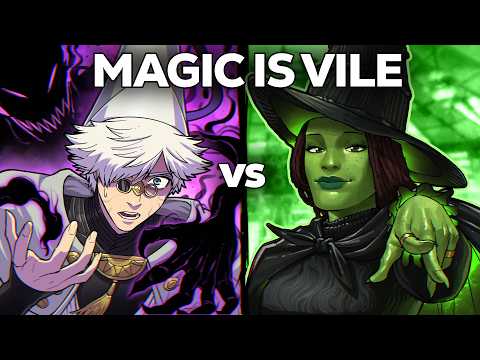
For decades, both anime and Hollywood have been building stories around one of the oldest ideas in fiction: magic. While Hollywood's approach often feels formulaic, anime has quietly been experiencing a revival of fantasy, creating some of the coolest depictions of magical powers we've seen in years. So, what's the difference? And who does magic better?
The first thing you need to understand is that the way magic is presented profoundly shapes the narrative. Hollywood often treats magic as a 'chosen one' trope—a special power bestowed upon an ordinary protagonist, fundamentally changing them into someone capable of defeating evil. Think Harry Potter or Percy Jackson. It's a powerful narrative device, but what if magic was something more inherent to the world, or even a dangerous, unpredictable force?
Table of Contents
CaosThe "Chosen One" Trope vs. Inherent Magic
Hollywood frequently leans on the "chosen one" narrative. A regular protagonist discovers they have extraordinary magical abilities, which then elevates them above everyone else. This approach makes the protagonist special, the sole key to saving the day. While compelling, it can sometimes limit the scope of how magic is perceived or utilized within the story. It becomes a plot device for the hero, rather than an integrated aspect of the world itself.
Anime, on the other hand, often treats magic as a fundamental part of the world-building. It's not always about the protagonist being uniquely chosen, but rather how they navigate and interact with a world where magic is a given. This leads to a wider variety of magical systems and applications. For instance, in some anime, magic is a scientific system, like in Fullmetal Alchemist, where alchemy is a rigorous discipline based on laws of equivalent exchange. In others, it's a cryptic force of chaos, as seen in some interpretations of Adventure Time's magic, gradually distorting the world.
Magic as a System vs. Magic as a Tool
A key distinction often lies in how magic is treated: as a tool or as a system. In many Hollywood productions, magic is a utility—a means to an end for the protagonist. It's a power-up, a way to overcome obstacles. The rules are often flexible, bending to serve the plot's needs. This can lead to a sense of inconsistency, where magic might work one way in one scene and another way later, simply because the story requires it.
Anime, however, frequently invests more heavily in establishing clear rules and limitations for its magic systems. This consistency, as many fans point out, makes the magic feel more believable and integrated. Even when the magic is overtly fantastical, the internal logic is often adhered to, making the characters' struggles and triumphs feel more earned. This detailed world-building, where magic has its own physics and consequences, allows for more creative and memorable depictions. The magic isn't just a decoration; it's a core element that drives the narrative and influences the characters' lives, decisions, and even the very fabric of their reality. This approach fosters a deeper connection between the audience and the magical elements presented.
The Danger and Consequences of Magic
Anime also tends to explore the inherent dangers and unintended consequences of magic more profoundly. Whether it's the ethical dilemmas of forbidden spells, the corrupting influence of power, or the simple physical toll of wielding immense forces, anime often doesn't shy away from showing the dark side of magical abilities. This reluctance to sanitize magic makes it feel more real and impacts the narrative stakes.
Consider the contrast in how teachers are portrayed. Anime fantasy stories frequently feature mentors trying to protect their students from the dangers of magic and the world (think of characters like Gojo in Jujutsu Kaisen or Lord Enel in One Piece with his Devil Fruit abilities). Conversely, some Hollywood narratives depict teachers using their students as pawns in larger, often morally grey, plans (Dumbledore's complex role in Harry Potter is a prime example). This difference in mentorship reflects a broader theme: anime often emphasizes the inherent risks of magic, while Hollywood might focus more on its potential for heroism or spectacle.
Worldbuilding and Creative Depth
Ultimately, much of anime's success in depicting magic comes down to world-building. The creators often embed magic deeply within the culture, history, and environment of their fictional worlds. This leads to a richer, more immersive experience. Magic isn't an add-on; it's an integral part of how the world functions, how its societies are structured, and how its conflicts arise.
This creative depth is what allows anime to continuously surprise audiences with unique magical concepts, from intricate spellcasting systems to elemental powers and even the subtle manipulation of reality. The dedication to exploring the 'what ifs' of magic, its limitations, its costs, and its potential, resonates with audiences seeking something beyond the familiar tropes. It's this commitment to a world where magic feels both wondrous and consequential that sets it apart.
Arsenal of the Mage
- Essential: Goetian Seals Generator (Play Store) — This app is invaluable for any practitioner interested in the intricate details of sigils and magical seals. It helps in accurately generating and visualizing these powerful symbols, ensuring precision which is often overlooked in traditional digital art tools when aiming for specific esoteric purposes. The precision offered by such tools streamlines the creation process, allowing you to focus on the intent and energy behind the seal, rather than struggling with manual design inaccuracies.
- Recommended: Liber Null & Psychonaut by Peter J. Carroll.
- Further Reading: The Book of Pleasure by Austin Osman Spare.
FAQ: What Are Your Burning Questions?
What makes anime's magic so creative compared to Hollywood's?
Anime often dedicates more effort to establishing consistent, intricate magic systems that are deeply integrated into the world and its lore. This allows for more unique applications and consequences, rather than relying solely on a protagonist's special abilities.
Is the "chosen one" trope inherently bad in magic stories?
Not inherently bad, but it can become repetitive. When magic is exclusively tied to a predestined hero, it can limit the exploration of magic's broader societal impact, its dangers beyond protagonist-level threats, or how ordinary individuals might interact with it.
Do Hollywood movies ever do magic right?
Yes, absolutely. While the trend leans towards certain tropes, films like The Sorcerer's Apprentice (2010) showcased creative magic usage and some explanation of its workings. However, these instances are often exceptions rather than the rule in mainstream fantasy cinema.
Why does consistency in magic systems matter?
Consistency builds believability and allows the audience to understand the stakes. When magic has clear rules and limitations, the characters' triumphs feel earned, and their struggles against magical obstacles are more impactful. It makes the fantasy world feel more robust and thought-out.
How does anime explore the dangers of magic effectively?
Anime frequently depicts magic with significant costs, risks, and moral complexities. This includes showing the physical toll on the user, the potential for corruption, the ethical dilemmas of certain spells, or how magic can inadvertently cause chaos and destruction, making the narrative more compelling.
Can the lessons from anime's magic be applied to personal magical practice?
Definitely. The emphasis on clear intent, understanding the 'rules' (even if self-imposed), and respecting the potential consequences of your actions are vital in personal magical work. Treating magic as a serious, integrated force, rather than just a convenient tool, can lead to more potent results.
About the author: Frater Alek0s is a veteran practitioner and researcher in the field of chaos magick. His work focuses on the practical and experimental application of occult techniques for self-development and reality exploration, demystifying esotericism for the modern practitioner.
What about shows like Avatar: The Last Airbender?
Avatar: The Last Airbender is an excellent example that bridges some of these gaps. It features a protagonist who is 'chosen' but also has a deeply developed elemental magic system with clear rules, limitations, and consequences. The world is built around these abilities, and the characters face genuine dangers stemming from them.
Referencias
- Carroll, P. J. (1987). Liber Null & Psychonaut. Weiser Books.
- Spare, A. O. (1913). The Book of Pleasure. Self-published.
- Hine, P. (1992). Condensed Chaos: An Introduction to Chaos Magic. New Falcon Publications.
- Crowley, A. (1904). The Book of the Law. Self-published.
- Sherwin, R. (2018). The Chaos Magic Handbook. CreateSpace.
- Kraig, D. M. (1988). Modern Magick: Eleven Lessons in the High Magickal Arts. Llewellyn Publications.
- Morrison, G. (2003). Pop Magic! The Art of Shaping Reality. Disinformation.
- DuQuette, L. M. (2003). The Chicken Qabalah of Rabbi Lamed Ben Clifford. Weiser Books.
- Webb, D. (2015). Chaos Magick: A Practical Guide. Self-published.
- Tyson, D. (2006). The Power of the Written Word. Llewellyn Publications.
- Bonewits, I. (1971). Real Magic. Creative Age Press.
- Greer, J. M. (2003). The New Encyclopedia of the Occult. Llewellyn Publications.
No hay comentarios:
Publicar un comentario