
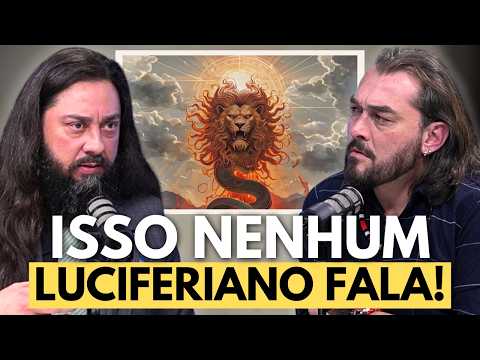
The title itself, "MAGO LAMON FALA A VERDADE SOBRE O DEMIURGO," ignites a spark of curiosity, hinting at profound revelations from a figure claiming mastery. But what does it truly mean to be a mage in the modern era? Is it about wielding ancient texts, understanding historical narratives, or perhaps navigating the complex currents of belief itself? This exploration delves into the nature of the mage, the historical and philosophical underpinnings of the term, and how these concepts resonate in contemporary discourse, particularly when discussing figures like the Demiurge. We aim to dissect the archetype, separating enduring wisdom from dogma, and explore how genuine seekers can tread the path of knowledge and personal evolution.
RitualThe Archetype of the Mage: Beyond the Wand and Wizard Hat
The term "mage" conjures images of venerable figures steeped in arcane knowledge, often associated with ancient traditions, esoteric studies, and a profound understanding of hidden forces. But the essence of a mage transcends mere ceremonial accouterments or adherence to rigid dogma. At its core, the mage is an individual dedicated to the pursuit of wisdom, the exploration of consciousness, and the practical application of esoteric principles for personal and, potentially, collective transformation. This pursuit is not one of passive reception but of active investigation, experimentation, and integration. The mage is a seeker who understands that knowledge is not a static entity to be acquired, but a dynamic force to be experienced and lived.
Table of Contents
- RitualThe Archetype of the Mage: Beyond the Wand and Wizard Hat
- Historical Tapestry of the Mage Figure
- The Demiurge in Esoteric Thought: A Catalyst for Inquiry
- The Mage's Path: Discipline, Experimentation, and Integration
- Arsenal of the Adept
- FAQ: Frequently Asked Questions
- Your Operation: Stepping Onto the Path
Historically, figures identified as mages or sorcerers were often seen as intermediaries between the mundane and the divine, privy to secrets and rituals that could influence the natural world or the human psyche. From the shamanistic traditions of ancient cultures to the intellectual currents of Hermeticism and Kabbalah in the West, the concept of the mage has evolved, yet its central tenets remain: a deep connection to the unseen, a rigorous intellectual discipline, and a commitment to spiritual development. The mage, therefore, is not merely a practitioner of magic, but a living embodiment of the quest for truth, order, and light.
Historical Tapestry of the Mage Figure
The concept of the mage is not monolithic; it is woven through the diverse religious, philosophical, and cultural fabrics of human history. Ancient Mesopotamian civilizations had their diviners and sorcerers, while Egyptian priests wielded knowledge of hieroglyphs and rituals to influence cosmic forces. In Greek antiquity, figures like Pythagoras, with his mathematical mysticism, and later Neoplatonists, who saw the soul's ascent through various stages of consciousness, touched upon what could be considered magmatic principles.
The Renaissance and the subsequent Enlightenment periods saw a resurgence of interest in Hermeticism, alchemy, and Kabbalah. Figures like Agrippa, Paracelsus, and later, those associated with the Hermetic Order of the Golden Dawn, meticulously studied and practiced systems that sought to comprehend the universe through correspondences, rituals, and the manipulation of spiritual energies. The very idea of a "Great Work," an alchemical process of transformation, mirrors the inner journey of the mage.
In more recent times, figures like Aleister Crowley, Peter J. Carroll, and Austin Osman Spare, while often associated with modern occultism and chaos magic, also represent a continuation of the mage's lineage, albeit with a critical and experimental approach to tradition. Their work often challenges established doctrines, emphasizing personal gnosis and the direct experience of reality. The current discourse, often seen in online communities and discussions surrounding figures like Mago Lamon and Annabel Sampaio, reflects this ongoing evolution, where historical archetypes are re-examined through contemporary lenses, leading to passionate debates about truth, belief, and the very nature of spiritual authority.
The Demiurge in Esoteric Thought: A Catalyst for Inquiry
The concept of the Demiurge, originating in Plato's Timaeus, refers to a divine craftsman or lesser deity who fashioned the material universe. In many esoteric traditions, this figure takes on a more complex role, sometimes depicted as an imperfect creator, an architect of illusions, or even a malevolent entity responsible for the suffering and limitations of the material world. This interpretation often arises from Gnostic traditions, which posit a dualistic worldview where the material realm is seen as inherently flawed compared to a higher, spiritual reality.
For the mage, the Demiurge represents not just a theological construct but a potent symbol for the forces that shape our perceived reality. It can symbolize the limitations of our own understanding, the constraints of societal conditioning, or the very matrix of the material world that we seek to transcend. Engaging with the concept of the Demiurge encourages critical examination of our beliefs, our understanding of creation, and our place within the cosmic order. It pushes the practitioner to question assumptions and to seek direct experience rather than relying solely on inherited doctrines.
The passionate debates surrounding figures who speak about the Demiurge highlight the deeply personal and often conflicting interpretations of these ancient ideas. For some, the Demiurge is a literal entity to be understood or even challenged, while for others, it is a metaphor for the illusions that bind consciousness. The role of the mage, in this context, is not to provide definitive answers but to facilitate the inquiry, encouraging independent research and personal revelation rather than blind adherence to any single perspective.
The Mage's Path: Discipline, Experimentation, and Integration
The journey of a mage is fundamentally one of self-discovery and the refinement of consciousness. It is a path marked by rigorous discipline, not in the sense of rigid adherence to external rules, but in the cultivation of inner focus, emotional control, and intellectual clarity. This discipline allows the practitioner to engage with the subtle energies of the universe, to perceive patterns that elude the ordinary observer, and to effect change through focused intent.
Experimentation is the lifeblood of the mage. As Peter J. Carroll emphasizes in his works, belief itself can be a mutable tool. The true mage does not cling dogmatically to any single paradigm but tests hypotheses, observes results, and learns from both successes and failures. This experimental mindset is crucial for navigating the often paradoxical and counter-intuitive nature of esoteric principles. Whether exploring the power of sigils, the subtleties of ritual, or the potential of altered states of consciousness, the mage approaches each endeavor with an open, curious, and critical mind.
Integration is the ultimate goal. The fragmented knowledge gained through study and experimentation must be synthesized into a coherent inner framework. This involves not only understanding esoteric concepts intellectually but also embodying them in one's life. The mage seeks to bridge the gap between the inner world of spirit and the outer world of manifestation, to live in alignment with higher principles, and to contribute to the unfolding of the Great Work. This process is continuous, a lifelong dedication to growth and the realization of one's full potential.
Arsenal of the Adept
To navigate the complexities of esoteric study and practice, certain tools and resources prove invaluable. These range from ancient texts to modern technological aids, each serving a specific purpose in the mage's quest.
* Essential: Goetian Seals Generator — For those delving into the intricate symbolism of the Goetia, accurately rendering and understanding these powerful sigils is paramount. Many practitioners find that traditional methods can be time-consuming or prone to minor inaccuracies that can subtly alter the energetic signature of a seal. The Goetian Seals Generator offers a precise, digital method to create these potent symbols, allowing you to focus on the intention and energetic charge rather than the meticulous drafting of lines and curves. This tool acts as a digital scribe, ensuring the fidelity of the seal while freeing your mental energy for the more crucial aspects of ritual work. * Foundational Texts: Works by authors such as Aleister Crowley, Peter J. Carroll, Austin Osman Spare, and traditional Hermeticists like Agrippa and Paracelsus, provide the intellectual and practical bedrock for many esoteric paths. * Digital Archives: Online repositories such as Sacred Texts, Hermetics.org, and Esoteric Archives offer a wealth of primary source material, allowing for deep dives into historical grimoires and esoteric philosophies. * Personalized Tools: Journals for recording magical workings, dream diaries, and sigil creation software can enhance practical experimentation and self-reflection.
FAQ: Frequently Asked Questions
What distinguishes a true mage from someone merely dabbling in occultism?
The distinction often lies in the depth of commitment, the rigor of discipline, and the integration of knowledge into one's life. A dabbler might explore various interests superficially, while a mage dedicates themselves to a path of continuous learning, experimentation, and personal transformation, often with a profound intellectual and spiritual framework.
How does one verify the "truth" presented by a figure claiming esoteric knowledge?
Verification is a multifaceted process. It involves critical thinking, cross-referencing information with established historical and philosophical sources, and, most importantly, personal experimentation. The mage learns to trust their own intuition and direct experience, using external teachings as guides rather than absolute doctrines. If a teaching resonates with personal insight and practical results can be achieved, it gains validity for the individual practitioner.
What role does belief play in the effectiveness of a mage's work?
Belief is a powerful force in practically all esoteric traditions, particularly in Chaos Magic, where it is often viewed as a tool to be employed. Peter J. Carroll's concept of "belief as a tool" suggests that even if a paradigm is not literally believed to be true, adopting its framework can unlock specific magical effects. The mage understands how to wield belief strategically, engaging with different systems of thought to achieve desired outcomes, while also maintaining a critical distance and the flexibility to adopt new frameworks as needed.
How can one begin their journey as a mage without getting lost in dogma or ego traps?
The initial steps involve cultivating humility and a genuine thirst for knowledge. Start with foundational texts and principles, but always maintain a critical and experimental approach. Document your practices and observations. Be wary of claims of absolute truth or authority; instead, seek to understand the underlying principles and adapt them to your own path. Engaging with established mentors or communities can provide valuable guidance, but the ultimate responsibility for discernment and growth lies with the individual seeker.
What is the significance of figures like the Demiurge in modern magical practice?
The Demiurge serves as a potent symbol for exploring the nature of creation, illusion, and perceived limitations. In modern practice, engaging with this concept encourages reflection on societal constructs, personal beliefs, and the very fabric of reality we inhabit. It prompts questions about the origin of suffering, the nature of the divine, and the possibility of transcending perceived limitations. It is a catalyst for deeper inquiry into the architect of our experience, whether that architect is seen as external or internal.
About the author: Frater Alek0s is a veteran practitioner and researcher in the field of chaos magick. His work focuses on the practical and experimental application of occult techniques for self-development and reality exploration, demystifying esotericism for the modern practitioner.
Your Operation: Stepping Onto the Path
The journey of a mage is not a passive reception of information but an active engagement with the principles of esoteric wisdom. Begin by grounding yourself in the foundational concepts and historical contexts. Delve into the works of recognized figures within esoteric traditions, but do so with a critical and experimental eye.
1. Cultivate Inner Discipline: Start a daily practice, however small. This could involve meditation, journaling, or a focused study period. Consistency is key to building mental fortitude. 2. Engage in Active Research: Do not merely read; investigate. Cross-reference information from various sources, paying attention to historical context and recurring themes. 3. Experiment Safely: Choose a simple practice, such as creating a basic sigil or performing a small ritual. Document your intentions, methods, and observed results meticulously. 4. Question Everything: Challenge your own assumptions and beliefs. If a concept or teaching doesn't stand up to scrutiny or practical testing, be willing to set it aside or re-evaluate it. 5. Seek Understanding, Not Certainty: Recognize that the path of the mage is one of continuous learning. Embrace the inherent mysteries and avoid the trap of believing you have found absolute, unassailable truth.
The path of the mage is a lifelong commitment to expanding consciousness, refining perception, and integrating spiritual knowledge into the fabric of existence. It is a journey of courage, curiosity, and unwavering dedication to the pursuit of truth.
Referencias
- Carroll, P. J. (1987). Liber Null & Psychonaut. Weiser Books.
- Spare, A. O. (1913). The Book of Pleasure. Self-published.
- Hine, P. (1992). Condensed Chaos: An Introduction to Chaos Magic. New Falcon Publications.
- Crowley, A. (1904). The Book of the Law. Self-published.
- Sherwin, R. (2018). The Chaos Magic Handbook. CreateSpace.
- Kraig, D. M. (1988). Modern Magick: Eleven Lessons in the High Magickal Arts. Llewellyn Publications.
- Morrison, G. (2003). Pop Magic! The Art of Shaping Reality. Disinformation.
- DuQuette, L. M. (2003). The Chicken Qabalah of Rabbi Lamed Ben Clifford. Weiser Books.
- Webb, D. (2015). Chaos Magick: A Practical Guide. Self-published.
- Tyson, D. (2006). The Power of the Written Word. Llewellyn Publications.
- Bonewits, I. (1971). Real Magic. Creative Age Press.
- Greer, J. M. (2003). The New Encyclopedia of the Occult. Llewellyn Publications.
No hay comentarios:
Publicar un comentario