
Table of Contents
- RitualThe Profound Significance of Swinging: A Cosmic Mimicry
- The Minoan Swing: Echoes of an Ancient Civilization
- Ancient Greek Rituals: Dionysian Ecstasy and Purification
- Ancient Chinese Festivals: Harmony with Celestial Cycles
- Rites of Passage and Harvest Rituals: Marking Life’s Transitions
- The Science of Swinging: Experiencing the Transcendent
- Medieval Britain: Folklore and Protective Rites
- The French Nobility and Fragonard's "The Swing": A Symbol of Divine Play
- The Industrial Revolution and the Modern Playground: Democratizing the Sacred Motion
- Serpent Goddess of Ancient India and the Garden Swing Set
- Swing Boats and Pirate Ships: The Thrill of the Liminal
- Modern Day Meanings: Reclaiming the Sacred in the Mundane
- Your Operation: Integrating the Swing's Power Today
- FAQ: Understanding the Swing's Spiritual Legacy
- Frequently Asked Questions (FAQ)
- Arsenal of the Mage
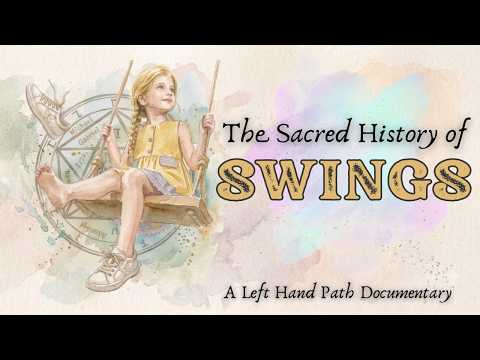
Long before the gentle arc of a playground swing became associated with childhood joy, this seemingly simple motion was a profound conduit for the sacred. Across millennia and continents, the act of swinging transcended mere physical movement; it served as a potent instrument in ancient rituals, occult magic, and profound spiritual ceremonies. This deep dive into the social history, forgotten folklore, and dark mythology surrounding the swing reveals its integral role as a bridge—connecting the earthly realm with the celestial, the living with the departed, and humanity with the divine.
If you want to put this into practice, Lunar Phase Calculator guides you step by step.
In this comprehensive exploration, we will traverse the ages, from Dionysian purification rites in Ancient Greece and fertility magic in Asian religious festivals to the solar alignments and spiritual rites observed in traditional societies worldwide. By examining historical sources, ancient art, and mythological traditions, we aim to illuminate how this fundamental human motion evolved from a sacred ritual into the playful pastime we recognize today. This is not just about playground equipment; it's about understanding a fundamental human impulse deeply intertwined with our quest for meaning and connection.
RitualThe Profound Significance of Swinging: A Cosmic Mimicry
For thousands of years, to step onto a swing was to perform an act of cosmic mimicry. Across European folklore, Asian religious festivals, and ancient Mediterranean mystery traditions, the act of swinging was intrinsically linked to the fundamental cycles of life and the cosmos. This connection manifested in several key ways:
- Agricultural Growth: The upward and downward motion of the swing was often seen as mirroring the growth of crops, symbolizing the fertility of the earth and the promise of a bountiful harvest. The cyclical nature of swinging resonated with the cyclical nature of planting, growing, and reaping.
- Solar Alignment: The arc of the swing, reaching its apex and returning, was symbolically associated with the sun's path across the sky. Certain festivals incorporated swinging to honor the sun's power, ensure its benevolent return, and align human activities with celestial rhythms. This was particularly prevalent during solstices and equinoxes, times of significant cosmic transition.
- Spiritual Purification: The sensation of movement, the altered state of consciousness it could induce, and the symbolic association with ascension made swinging a tool for spiritual purification. It was believed to cleanse the spirit, release negative energies, and open pathways for divine communication. This purification aspect was often central to rites of passage and harvest festivals, marking transitions and celebrating renewal.
In this full documentary, we delve into historical sources, analyze ancient art, and trace mythological traditions to understand how this simple, repetitive motion—a fundamental expression of human physicality—became an integral part of our spiritual and cultural heritage. The transformational power of the swing offers a unique lens through which to view humanity's enduring relationship with the sacred, the cyclical, and the celestial.
The Minoan Swing: Echoes of an Ancient Civilization
Our journey into the spiritual uses of swings begins in the Bronze Age Aegean with the Minoan civilization, flourishing on the island of Crete from approximately 2700 to 1450 BCE. While direct pictorial evidence of swings is scarce from this period, the pervasive themes in Minoan art and religion suggest a culture deeply attuned to cyclical motion and natural rhythms. The Minoans were renowned for their vibrant frescoes, intricate pottery, and elaborate religious practices, often centered around nature deities, bull symbolism, and ecstatic rituals. The bull, a creature of immense power and primal energy, frequently appears in Minoan iconography, symbolizing fertility, strength, and the cyclical nature of life and death. The powerful, dynamic movements associated with bull-leaping rituals—a sport famously depicted in Minoan art—hold a symbolic resonance with the energy and power generated by swinging. It is conceivable that the cyclical motion of swinging, particularly in ritualistic contexts, served as a way to connect with or emulate the primal forces celebrated by the Minoans, perhaps linked to fertility rites aimed at ensuring the abundance of their island’s resources or to ecstatic ceremonies intended to achieve altered states of consciousness.
The Minoan fascination with the sea and celestial bodies also hints at ritualistic practices that embraced cyclical movements. Their sophisticated understanding of astronomy, evident in their architecture and calendar systems, suggests an awareness of cosmic cycles that would naturally lead to ritualistic observances. The rhythmic rocking and soaring of a swing can be metaphorically linked to the tides, the phases of the moon, and the apparent movement of celestial bodies. While concrete archaeological evidence for Minoan swings remains elusive, the cultural context—a society deeply connected to nature, cycles, and potentially ecstatic religious expression—provides fertile ground for considering the swing’s symbolic presence. The very act of rhythmic oscillation could have been interpreted as a form of prayer or communication, an earthly mimicry of cosmic dances. The absence of direct evidence does not preclude its possibility, especially considering the perishable nature of materials used for early swing constructions and the focus of archaeological findings on more durable artifacts.
Furthermore, the Minoan emphasis on feminine divine principles, often represented by serpent goddesses and mother goddesses, aligns with the later association of swinging with feminine fertility rites. The gentle, nurturing sway of a swing can be seen as a metaphor for a mother’s embrace or the gentle rocking of a cradle, both potent symbols of life-giving and nurturing energies. This connection, though speculative for the Minoan period, lays a groundwork for understanding how this simple mechanical action could have been imbued with profound meaning, bridging the gap between the physical and the spiritual realms within one of Europe’s earliest advanced civilizations.
Ancient Greek Rituals: Dionysian Ecstasy and Purification
In Ancient Greece, the swing, or kothornos (which could refer to a type of sandal or a swing-like device), played a significant role in religious festivals, most notably those dedicated to Dionysus, the god of wine, fertility, ecstasy, and theater. Dionysian rites were characterized by their ecstatic nature, often involving communal feasting, dancing, music, and sometimes altered states of consciousness intended to achieve union with the divine. The rhythmic, soaring motion of swinging aligned perfectly with the ecstatic and dissociative aspects of these rituals. It provided a physical means to transcend the mundane, to feel a sense of liberation and elevation, and to symbolically connect with the divine power of Dionysus, who himself was associated with liberation and breaking down boundaries.
The ritualistic swinging was often linked to purification ceremonies. In many cultures, the act of being lifted high into the air, suspended between earth and sky, was seen as a way to cleanse oneself of earthly impurities or to ascend to a higher spiritual state. This would have been particularly relevant in rites aimed at renewal, such as those performed after periods of mourning, before significant undertakings, or as part of agricultural festivals seeking divine favor for fertility. There are accounts suggesting that swinging was used to purify individuals, perhaps by symbolic expulsion of negative influences or by facilitating a spiritual ascent that left worldly taints behind. This practice echoes across various traditions where elevation and rhythmic movement are used for spiritual cleansing. The Greeks also integrated swings into marriage and fertility rites, linking the rise and fall motion with the cycles of conception and birth, seeking to invoke divine blessings for procreation and abundance.
Beyond Dionysian cults, the swing also appears in other contexts. In Delphi, associated with the Oracle, swinging may have been employed to induce trance-like states in supplicants or priestesses who would then receive divine prophecies. The rhythmic motion could have facilitated a dissociative state, making the individual more receptive to visionary experiences or divine communication. The association of high places and soaring movements with divine proximity is a recurring theme in ancient mythologies, and the swing provided a tangible, accessible way to experience this simulated ascent. The Greek understanding of the cosmos, with its intricate interplay of divine forces and human fate, easily accommodated such practices. The swing, in its simplicity, became a powerful symbol and tool for navigating the spiritual landscape, facilitating communion with gods, purification, and prophecy.
Ancient Chinese Festivals: Harmony with Celestial Cycles
In ancient China, the swing held a prominent place in festivals, particularly during the Qingming Festival (also known as Tomb-Sweeping Day) and the Double Ninth Festival (Chongyang Jie). These traditions highlight the swing’s deep connection to celestial harmony, ancestral veneration, and the cyclical nature of life. Qingming, traditionally observed around April 4th or 5th, is a time for honoring ancestors, visiting burial sites, and celebrating the arrival of spring. This period signifies a time of renewal and a reawakening of nature after winter. The act of swinging during Qingming was believed to help people connect with the spirits of their ancestors, who were thought to be more accessible during this transitional period. The upward motion was metaphorically seen as sending prayers or messages to the heavens and the ancestral realm, while the rhythmic movement could also induce a meditative state, facilitating communion with the departed.
The Double Ninth Festival, celebrated on the ninth day of the ninth lunar month, is another occasion where swinging played a vital role. This festival is associated with longevity, ascending heights, and warding off malignant influences. The custom of climbing mountains (ascending) and wearing dogwood (a plant believed to have protective properties) was often accompanied by swinging. The act of reaching great heights through swinging symbolized ascending to higher spiritual realms, achieving greater wisdom, or transcending earthly troubles. It was also believed that the vigorous movement of swinging, combined with the protective properties of dogwood, could ward off evil spirits and misfortune, particularly the ‘evil qi’ associated with the number nine, which could bring illness. This dual association—with ancestral connection and spiritual ascent/protection—underscores the multifaceted spiritual significance of the swing in Chinese culture.
The connection to agricultural cycles was also paramount. The timing of these festivals often coincided with crucial points in the agricultural calendar, and the swing’s motion, mimicking growth and ascension, was believed to encourage fertility in the land and ensure good harvests. The rhythmic sway could be seen as a form of sympathetic magic, encouraging the steady growth of crops from seed to maturity. The shared experience of communal swinging also fostered social cohesion and a sense of collective participation in honoring nature’s cycles and the ancestral lineage. These ancient practices illustrate how the swing was not merely a form of entertainment but a vital ritualistic tool for maintaining harmony between humanity, nature, and the spiritual world.
Rites of Passage and Harvest Rituals: Marking Life’s Transitions
Across numerous cultures, the swing has been intrinsically woven into rites of passage and harvest rituals, serving as a symbolic mechanism for marking significant life transitions and celebrating the bounty of the land. In many indigenous communities, particularly in parts of Africa and Southeast Asia, the swinging ceremony played a crucial role in initiating adolescents into adulthood. The process of swinging could represent a symbolic death and rebirth: the swinging motion might simulate the journey into the spirit world or the womb, with the descent signifying emergence into a new phase of life, marked by greater responsibility and spiritual awareness. This transition was often accompanied by fasting, seclusion, and instruction in the traditions and responsibilities of adulthood, with the swing acting as a focal point for this liminal experience.
In harvest festivals, the swing’s association with fertility and cosmic cycles became even more pronounced. As the crops reached their peak and were ready for harvest, communities would engage in ritualistic swinging to thank the spirits or deities for their bounty and to ensure the continuation of the cycle for the following year. The upward motion symbolized the successful growth and reaching towards the heavens, while the rhythmic descent could represent the grounding of that energy for future prosperity. In some traditions, specific individuals, often women seen as conduits of life-giving energy, would perform these ritual swings. The communal nature of these festivals also meant that swinging often became a joyous, shared activity, reinforcing social bonds and collective gratitude. This blending of the sacred and the secular, the individual journey with the communal celebration, highlights the swing’s versatility as a ritualistic tool.
The symbolic interpretation of swinging as a bridge between worlds is also evident. For instance, in some cultures, swinging was believed to facilitate communication with spirits of the deceased or deities. The elevated position achieved while swinging could be seen as bringing individuals closer to the celestial or spiritual realms, making them more receptive to divine messages or ancestral guidance. Conversely, the downward motion might represent drawing down divine or ancestral blessings to the earth. This duality—ascending to heaven and descending to earth—made the swing a potent symbol of connection and mediation, bridging the gap between the temporal and the eternal, the material and the spiritual. The swing’s ability to invoke these powerful symbolic meanings across diverse cultures speaks to its deep-seated role in the human psyche and spiritual practice.
The Science of Swinging: Experiencing the Transcendent
While ancient cultures attributed profound spiritual and magical meanings to swinging, modern science offers intriguing insights into the physiological and psychological effects that might explain its appeal and efficacy as a ritualistic tool. The physics of swinging are relatively straightforward: a pendulum motion driven by gravity and momentum. However, the human experience of this motion engages several complex systems within the body and mind.
Proprioception and Vestibular System: Swinging directly stimulates the vestibular system, located in the inner ear, which is responsible for balance and spatial orientation. The rhythmic acceleration and deceleration, as well as the tilting of the head, send signals to the brain that influence our sense of equilibrium and movement. This constant sensory input can have a grounding effect, much like the repetitive chanting or drumming used in many meditations. Simultaneously, proprioception, the sense of the relative position of one's own parts of the body and the strength of effort being employed in movement, is highly engaged. The body becomes acutely aware of its own motion and position in space.
Altered States of Consciousness: The repetitive, rhythmic motion of swinging has been shown to induce alpha brainwave states, which are associated with relaxation, calm focus, and a relaxed state of mind—often described as a light meditative state. This alpha state is conducive to creativity, problem-solving, and accessing deeper levels of consciousness. For ancient practitioners, this scientifically measurable shift in brain activity would have been experienced as a sacred trance, a state of heightened spiritual receptivity, or a feeling of detachment from the worries of the physical world. The feeling of weightlessness at the apex of the swing, a brief moment of apparent suspension against gravity, can also contribute to a sense of transcendence or altered perception, making it easier to enter a focused or contemplative state.
The Power of Repetition and Dissociation: The predictable, cyclical nature of swinging can act as a form of sensory integration, helping to organize the nervous system. For individuals prone to anxiety or overstimulation, the rhythmic motion can be profoundly calming, akin to the soothing effect of rocking a baby. This calming effect allows the mind to quiet down, making it easier to focus intention or to enter a state where dissociation from the ego-mind becomes possible. This dissociation is crucial in many magical traditions, as it allows the practitioner to bypass the critical faculty of the conscious mind and impress their will directly upon the subconscious, the realm where magical intentions are believed to take root and manifest. The scientific understanding of how swinging affects our nervous system provides a tangible basis for why this ancient practice felt so potent and transcendent across so many spiritual traditions.
Medieval Britain: Folklore and Protective Rites
In Medieval Britain, as in many parts of Europe, the swing transitioned from overtly sacred ritual to a more integrated element within folklore, imbued with protective and sometimes even cautionary meanings. While the grand, public swinging ceremonies of antiquity may have waned or transformed, the practice’s essence lingered in more localized traditions and superstitions. The swing, often found in domestic settings or community spaces, became associated with warding off negative influences and ensuring general well-being. Children swinging were thought to be particularly protected, their innocence and the joyous motion acting as a natural shield against lurking malevolent forces. The rhythmic back-and-forth motion was sometimes seen as a way to create a protective energetic boundary, or to ‘rock away’ bad luck.
There are folklore traditions that link swinging on specific days or under certain conditions to fertility and prosperity. For instance, swinging at Beltane, the ancient Celtic festival marking the beginning of summer, might have been practiced to ensure a fertile season and good fortune. The height achieved was sometimes interpreted as a measure of future prosperity or closeness to the divine. Conversely, a sense of apprehension also surrounded the swing. In some tales, lingering too long on a swing or swinging too high could attract unwanted attention from the ‘fae’ or other supernatural entities. This cautionary aspect highlights the inherent duality of many ancient practices: the same force that could elevate and protect could also, if misused or disrespected, draw peril. Such beliefs likely served as social controls, encouraging moderation and respect for unseen forces.
The association with children’s play also imbued the swing with a connection to innocence and ephemeral joy, qualities often seen as antithetical to darker, more sinister spiritual influences. Therefore, children playing on swings were considered to be in a kind of liminal state, somewhat shielded from the adult world’s spiritual dangers because of their uncorrupted nature and the pure energy of their play. This belief in the protective power of children’s innocent activities is a recurring theme in folklore. While not always a direct religious rite, the swing in medieval British folklore remained a potent symbol, capable of invoking protection, fertility, and a connection to the unseen forces that shaped daily life and spiritual beliefs.
The French Nobility and Fragonard's "The Swing": A Symbol of Divine Play
During the Rococo period in 18th-century France, the swing found a new, significant place within the aristocratic circles, becoming a symbol of leisure, flirtation, and a certain spiritual playfulness, famously immortalized in Jean-Honoré Fragonard's masterpiece, "The Swing" (c. 1767). While the overt religious rituals of earlier eras had largely faded among the elite, the underlying themes of elevated motion, liberation, and connection to divine or primal forces were reinterpreted through a lens of aristocratic leisure and romantic intrigue. Fragonard’s painting captures a moment of clandestine courtship, where a young woman, adorned in fashionable attire, is playfully pushed by an hidden admirer while her unsuspecting husband looks on. The scene is bathed in a soft, ethereal light, and the vibrant colors evoke a sense of joy, abandon, and perhaps a touch of forbidden delight.
The swing in Fragonard’s painting transcends its use as mere garden furniture; it becomes a symbol of a fleeting, almost dreamlike moment. The woman’s raised leg, kicking off her shoe towards a statue of Cupid (the god of love), is a gesture imbued with romantic symbolism. The swing’s arc lifts her into a position that is both revealing and suggestive, a moment suspended between innocence and dalliance. This depiction aligns with the concept of "Lila," a Sanskrit term often translated as "divine play" or "sport," which describes the spontaneous, creative, and often playful cosmic dance through which the divine manifests and dissolves the universe. In Hinduism, Lila suggests that the universe is essentially a cosmic game played by the divine, characterized by joy, beauty, and a sense of freedom from rigid structure. Fragonard's swing, in this interpretation, echoes this divine play—a moment of delightful, uninhibited interaction that transcends ordinary rules and conventions, hinting at a playful, perhaps even divine, force at play.
For the French nobility, life was a carefully choreographed performance, yet within its gilded cage, moments of genuine abandon and playful transgression, like the one depicted, were highly prized. The swing offered a physical manifestation of escaping the mundane, of momentarily defying gravity and societal constraints. It represented a space for flirtation, for dreams, and for a sophisticated form of "divine play" that reflected their privileged, often hedonistic, lifestyle. While not a religious rite in the traditional sense, the swing in this context captured a spiritual sentiment—a celebration of beauty, youth, transience, and the playful, often amorous, currents that connect beings. It was less about ascending to the heavens and more about embracing the ecstatic, delightful, and sometimes mischievous aspects of earthly existence, mediated by a simple, elegant motion.
The Industrial Revolution and the Modern Playground: Democratizing the Sacred Motion
The Industrial Revolution brought about seismic shifts in society, transforming not only manufacturing and labor but also the very fabric of childhood and public recreation. As cities grew and populations became concentrated, there was a burgeoning awareness of the need for public spaces for health, recreation, and moral development, especially for children. This era witnessed the burgeoning of the organized playground movement, which, while seemingly a secular development, carried echoes of the swing’s ancient spiritual resonances: physical well-being, connection with nature, and a space for transcendent experience through motion. Figures like Friedrich Engels, though primarily a political theorist, contributed to discussions about urban planning and the need for workers’ access to fresh air and outdoor activities, recognizing their importance for physical and mental health.
The educational philosophies of figures like Friedrich Fröbel, the inventor of the kindergarten system, also highlight this continuity. Fröbel believed in the importance of play, particularly in nature, for child development. His "gifts" and "occupations" for children emphasized sensory exploration, symbolic representation, and creative expression. While he didn't invent the swing, his advocacy for outdoor play and connection to natural rhythms laid the groundwork for understanding playgrounds as spaces for holistic development. Fröbel's emphasis on the "sacredness of childhood" and the developmental benefits of movement suggests an indirect spiritual underpinning to these new recreational spaces. The swing, as a key element of early playgrounds, thus inherited some of its ancient symbolism—offering children a chance to experience elevation, freedom, and a connection to natural forces, albeit in a more secularized context.
Innovators like Charles Wicksteed, often referred to as the father of the modern playground, played a pivotal role in designing and advocating for public spaces that integrated swings and other play equipment. Wicksteed Park in Northamptonshire, England, opened in 1920, was conceived as a place for working families to enjoy leisure and recreation. These playgrounds, with their swings, were not just about physical exercise; they provided children with opportunities for imaginative play, social interaction, and a sense of liberation. The simple act of swinging on a public playground could offer a child a momentary escape from the often harsh realities of industrial life, a taste of freedom and exhilaration. In essence, the Industrial Revolution and the subsequent playground movement democratized the ancient ritual of swinging, making its physical and psychological benefits accessible to a much wider population, carrying forward, albeit in transformed ways, the age-old human desire for elevation, release, and connection.
Serpent Goddess of Ancient India and the Garden Swing Set
The symbolism of the swing’s connection to fertility and divine feminine power finds a profound parallel in ancient Indian traditions, particularly concerning serpent deities and their association with life-giving forces, abundance, and cosmic cycles. In Hinduism, serpents, or Nagas, are powerful beings often associated with water, fertility, precious stones, and the underworld—a realm connected to the earth’s bounty. They are revered as guardians of treasures and symbols of cosmic energy, representing both creation and destruction. The cyclical shedding of their skin symbolizes rebirth and transformation, echoing the themes of renewal inherent in harvest rituals and rites of passage. The Naga connection to water is also crucial, as water is the primordial element for life and agriculture. The rhythmic movement of swinging can be seen as a symbolic invocation of these serpentine energies—a gentle rocking that mimics the flow of water or the gentle undulation of a serpent’s body, thereby encouraging fertility and prosperity.
The evolution of the swing found a domestic echo in the widespread adoption of garden swing sets, particularly in the Victorian and Edwardian eras. These became symbols of domestic tranquility, family life, and a connection to nature within the burgeoning suburban landscape. While far removed from ancient temple rituals, the garden swing set retained a vestige of its earlier symbolic meaning. It offered a private space for contemplation, for enjoying the natural surroundings, and for fostering familial bonds. The gentle swing motion in a garden setting could evoke a sense of peace, detachment from worldly stress, and a subtle connection to the natural rhythms of the day and seasons. This domestic iteration of the swing, installed in private gardens, subtly continued the tradition of using this motion for personal well-being and a quiet communion with nature’s cycles.
Furthermore, the association of the swing with goddesses of fertility and transformation is a recurring theme. Many ancient mother goddesses, often depicted with serpentine attributes or associated with watery realms, represent the generative and regenerative powers of the universe. The rhythmic motion of swinging could be seen as a form of sympathetic magic, attuned to the nurturing and life-affirming energies embodied by these goddesses. The garden swing set, in its more serene setting, allowed individuals to experience a personalized version of this ancient ritual—a gentle sway that could facilitate relaxation, introspection, and a quiet appreciation for the continuity of life, subtly connecting the modern individual to the ancient reverence for the divine feminine and the cycles of the earth. This evolution from temple ritual to domestic amenity illustrates the enduring resonance of the swing’s symbolic power across vastly different cultural contexts.
Swing Boats and Pirate Ships: The Thrill of the Liminal
The swing’s inherent thrill and its association with liminality—being in a transitional state or place—found a new expression in amusement park attractions like swing boats and pirate ship rides. These attractions, while designed purely for entertainment, tap into the same psychological and perhaps even spiritual impulses that made ancient swinging rituals potent. The pirate ship, a large pendulum ride that swings back and forth, mimics the motion of a ship on rough seas, evoking adventure, danger, and a sense of being suspended between the familiar and the unknown. The pirate theme itself often conjures images of rebellion, freedom, and a life lived outside conventional societal norms—themes that resonate with the liberating aspects of ancient ecstatic rituals.
Swing boat rides, which are essentially large, multi-person swings, amplify the sensation of soaring and suspension. The communal aspect of these rides also harks back to ancient group rituals, where shared experience fosters connection and collective emotion. The exhilaration of these rides, the feeling of flying or falling, and the heightened sensory input can induce a state of joyful abandon. This mirrors the ecstatic states sought in ancient Dionysian rites or shamanic journeys. For many, the amusement park ride offers a safe, controlled way to experience a sense of transcendence, to momentarily escape the constraints of ordinary reality, and to feel a thrill that is both physical and psychological. This modern form of "divine play" allows individuals to engage with primal energies and feelings of liberation in a secular yet powerfully evocative context.
The connection to historical seafaring and exploration—pirates, ships—also taps into a deep human fascination with journeys into the unknown, the discovery of new worlds, and the inherent risks and rewards associated with venturing beyond the known. This resonates with the ancient use of swinging to bridge worlds—whether between life and death, earth and sky, or the mundane and the divine. In these modern attractions, the swing’s motion becomes a metaphor for navigating the unpredictable currents of life, for embracing adventure, and for experiencing the thrill of being at the edge of control. While they lack the explicit spiritual intent of their ancient predecessors, these rides continue to harness the primal power of rhythmic motion to evoke strong emotions, facilitate communal experience, and offer a taste of the extraordinary, reminding us that the human desire for elevation and liminal experience remains potent.
Modern Day Meanings: Reclaiming the Sacred in the Mundane
In contemporary society, the spiritual and ritualistic significance of swinging has largely receded from conscious awareness, yet its echoes persist in subtle, often unconscious, ways. The simple act of rocking or swaying is frequently employed for self-soothing and stress relief. Think of an adult gently rocking a baby, a person unconsciously swaying while listening to music, or even the calming effect of pacing. These behaviors tap into the primal, grounding rhythm of the swing, activating our innate capacity for self-regulation through the vestibular system. This innate human need for rhythmic motion suggests a deeper, perhaps ancestral, memory of its calming and centering properties.
Furthermore, the psychological benefits of swinging, such as improved mood, reduced anxiety, and enhanced focus, are increasingly recognized. As noted earlier, the alpha brainwave states induced by swinging can foster creativity and a sense of well-being. This has led to the integration of rhythmic movement therapies in clinical settings, acknowledging the powerful mind-body connection that swinging facilitates. For practitioners of modern esoteric arts, the swing can be consciously re-embraced as a ritualistic tool. Incorporating rhythmic swaying, rocking, or even a dedicated swinging practice can serve to deepen meditative states, enhance focus during spellwork, or facilitate trance for divination or astral projection. Some modern witches and chaos magicians utilize simple back-and-forth motions, whether on a swing or through other forms of rhythmic movement, to achieve altered states and charge sigils or talismans.
The rediscovery and reinterpretation of ancient practices are hallmarks of contemporary spirituality. For those seeking a deeper connection to these forgotten rites, the swing offers a tangible entry point. It is accessible, requires no elaborate equipment, and its effects are readily felt. Whether through returning to traditional practices, exploring modern therapeutic applications, or consciously integrating its motion into personal magical work, the swing invites us to reconnect with a practice that has served humanity for millennia. It serves as a powerful reminder that profound spiritual experiences can be found in the most unexpected places, including the simple, universal joy of soaring through the air. The sacred history of the swing is not entirely lost; it waits to be rediscovered in the rhythm of movement and the echo of our ancestral connection to the cosmic dance.
Your Operation: Integrating the Swing's Power Today
The journey through the sacred history of swings reveals a practice deeply embedded in human spirituality, ritual, and folklore. From the ecstatic rites of Dionysus to the ancestral connections in China and the modern reinterpretation in amusement parks, the swing has consistently served as a conduit for transformation, purification, and connection. Now, let's explore how you can consciously integrate this ancient power into your modern practice.
The problem many modern practitioners face is finding simple, accessible tools that can facilitate profound states of consciousness without requiring extensive preparation or complex rituals. We often feel disconnected from nature, from our ancestors, and from the primal rhythms of the universe. This disconnection can lead to scattered intentions, difficulty entering deep meditative states, and a general feeling of being spiritually unanchunged.
Many of us struggle to find that essential quietude needed for deep magical work. Hours can be spent trying to focus, only to be pulled back by the nagging anxieties of daily life. The desire for a pure, unadulterated spiritual experience—one that bypasses the over-analysis of the conscious mind and taps directly into the subconscious—can feel like an unattainable luxury in our fast-paced world. We seek a way to momentarily transcend the mundane, to feel that exhilarating lift that reconnects us with something larger than ourselves, but often lack the key to unlock that state easily.
This is where the wisdom of the ancients concerning swinging becomes incredibly relevant. While you might not have access to a sacred grove or an ancient temple, the fundamental principles can still be applied using accessible tools. For those seeking to deepen their connection to lunar cycles, understand the subtle energies influencing their intentions, or simply find a more grounded, rhythmic approach to their spiritual practices, the Lunar Phase Calculator app is an invaluable resource. It simplifies the complex tracking of lunar phases, allowing you to align your practices with the most potent energetic windows. Imagine being able to instantly know the optimal time for charging sigils, performing banishing rituals, or setting intentions for abundance, all based on the moon’s position. This app removes the guesswork and allows you to focus on the magical work itself, ensuring your practices are synchronized with natural cosmic rhythms. It’s an essential tool for any modern practitioner aiming for greater efficacy and deeper connection.
Download the Lunar Phase Calculator today and begin synchronizing your spiritual practice with the ancient rhythms of the cosmos. It’s a simple step that can unlock profound shifts in your magical work.
FAQ: Understanding the Swing's Spiritual Legacy
What is the spiritual significance of swinging?
The spiritual significance of swinging is multifaceted, encompassing themes of purification, connection to the divine, ancestral veneration, fertility, and transcendence. It symbolizes a bridge between the earthly and celestial realms, a mimicry of cosmic cycles, and a means to achieve altered states of consciousness for ritualistic purposes.
Were swings used in ancient religious rituals?
Yes, swings were demonstrably used in ancient religious rituals. Notable examples include Dionysian purification rites in Ancient Greece, fertility and ancestral veneration ceremonies in Ancient China (Qingming and Double Ninth festivals), and rites of passage in various indigenous cultures worldwide. The rhythmic motion was believed to facilitate communion with deities, spirits, and the cosmic order.
How did the Industrial Revolution change the use of swings?
The Industrial Revolution led to the development of public playgrounds, democratizing access to swinging. While the overt religious significance diminished, swings in playgrounds retained symbolic value for childhood joy, freedom, and a connection to nature, evolving into tools for recreation and physical well-being rather than direct spiritual ritual.
Can swinging still be used for spiritual practices today?
Absolutely. Modern practitioners can consciously integrate swinging or rhythmic motion into their practices for meditation, trance induction, grounding, or focused intention. The rhythmic stimulation of the vestibular system can aid in achieving alpha brainwave states conducive to deep work. Tools like the Lunar Phase Calculator app can help align these practices with cosmic cycles.
What is the connection between swings and fertility rituals?
The swinging motion, symbolizing growth, ascension, and cyclical renewal, was often linked to fertility. In harvest festivals, it was believed to encourage bountiful crops. In marriage rites, it symbolized procreation and the continuation of life. This association is particularly strong in cultures that revered serpent deities or mother goddesses connected to earth's generative power.
Is there a scientific explanation for the spiritual effects of swinging?
Yes, modern science explains that swinging stimulates the vestibular system and promotes alpha brainwave states, associated with relaxation and altered consciousness. This rhythmic motion also engages proprioception and can induce states of calm focus and dissociation, making it scientifically understood why swinging might have facilitated spiritual experiences like trance or heightened receptivity.
Frequently Asked Questions (FAQ)
What is the primary spiritual function of ancient swinging practices?
The primary spiritual function of ancient swinging practices was to act as a conduit for connection and transformation. This involved bridging the earthly and celestial realms, facilitating purification, invoking fertility and prosperity, and achieving altered states of consciousness for divine communion or prophecy.
How did cultures like ancient Greece and China utilize swings in their spiritual frameworks?
Ancient Greece incorporated swings into ecstatic Dionysian rites for purification and to achieve heightened spiritual states, potentially for prophecy. Ancient China used swings during festivals like Qingming and the Double Ninth, linking them to ancestor veneration, spiritual ascension, and maintaining harmony with celestial and agricultural cycles.
What is the symbolic meaning of the swing's motion in spiritual contexts?
In spiritual contexts, the swing’s motion symbolizes growth (agricultural, spiritual), ascension (towards heavens or divine beings), purification (cleansing of spirit), cyclical renewal (like seasons or life stages), and the bridge between worlds (earthly/celestial, living/dead). It can also represent divine play or ecstatic liberation.
How can modern practitioners reconnect with the spiritual legacy of swinging?
Modern practitioners can reconnect by consciously incorporating rhythmic motion into their practices, using tools like the Lunar Phase Calculator for cosmic alignment, or by studying the folklore and mythology surrounding swings. The goal is to harness the swing's inherent capacity for inducing altered states, grounding, and symbolic connection.
About the author: Frater Alek0s is a veteran practitioner and researcher in the field of chaos magick. His work focuses on the practical and experimental application of occult techniques for self-development and reality exploration, demystifying esotericism for the modern practitioner.
Arsenal of the Mage
- Essential: Lunar Phase Calculator — Track lunar cycles for synchronized spiritual practices and optimal intention setting.
- Recommended: Books on comparative mythology, folklore, and ancient religions (e.g., works by Mircea Eliade, Joseph Campbell, or specific texts on Greek, Chinese, or Celtic rituals).
- Useful: A comfortable space for rhythmic movement (a garden swing, a rocking chair, or even just a quiet spot for swaying).
The echo of the swing resonates through history—a simple motion carrying profound spiritual weight. Whether in ancient rites, folklore, or modern therapeutic practices, its power to elevate, purify, and connect remains undeniable. May your own journey be filled with rhythmic discovery.
The Lunar Phase Calculator tool, part of the cha0smagicklabs ecosystem, is built exactly for this kind of work.
Have you ever felt a special connection to the act of swinging? Share your experiences or insights in the comments below. What other ancient rituals do you believe hold untapped spiritual power?
Referencias
- Frazer, J. G. (1890). The Golden Bough: A Study in Comparative Religion. Macmillan.
- Eliade, M. (1958). Patterns in Comparative Religion. Sheed & Ward.
- Thomas, K. (1971). Religion and the Decline of Magic. Oxford University Press.
- Cohn, N. (1975). Europe's Inner Demons. Basic Books.
- Ginzburg, C. (1966). The Night Battles: Witchcraft and Agrarian Cults in the Sixteenth and Seventeenth Centuries. Johns Hopkins University Press.
- Hutton, R. (1999). The Triumph of the Moon. Oxford University Press.
- Kieckhefer, R. (1989). Magic in the Middle Ages. Cambridge University Press.
- Russell, J. B. (1972). Witchcraft in the Middle Ages. Cornell University Press.
- Carroll, P. J. (1987). Liber Null & Psychonaut. Weiser Books.
- Spare, A. O. (1913). The Book of Pleasure. Self-published.
No hay comentarios:
Publicar un comentario