
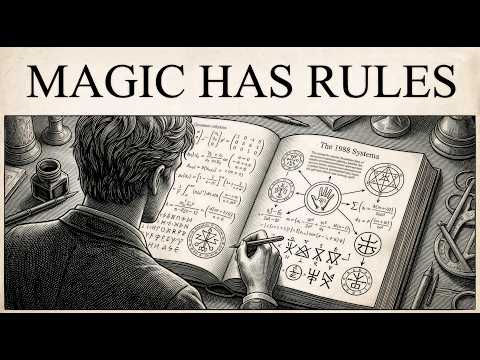
In the realm of the arcane, few moments mark a paradigm shift as profoundly as the year 1988. It was a year when the abstract language of physics and the ancient art of sorcery began to intertwine, suggesting a unified mechanism underlying both. This convergence wasn't just metaphorical; it proposed a literal framework for how spells might operate, mirroring the very forces that govern subatomic particles. The book that dared to bridge this gap, Sorcery as Virtual Mechanics, published by Steven Mace, offered a radical proposition: that the Feynman diagrams physicists use to describe particle interactions could, in fact, describe the mechanics of magick.
MagitechThe Feynman Diagram: A Universe of Exchange
Physicists employ intricate diagrams, known as Feynman diagrams, to visualize and calculate the interactions between subatomic particles. These diagrams, characterized by arrows representing particles and vertices signifying force exchange, are more than just visual aids; they are the very language used to speak about the universe's fundamental operations. Each line and vertex corresponds to a precise mathematical term, allowing scientists to describe complex events, such as two electrons repelling each other through the exchange of a photon, with astonishing accuracy. Before Richard Feynman developed this method, grasping such dynamic interactions at the quantum level was nearly impossible. The intricate dance of force and particle exchange, once shrouded in mystery, became quantifiable and understandable through these schematics.
Table of Contents
- MagitechThe Feynman Diagram: A Universe of Exchange
- Steven Mace's Radical Proposition: Sorcery as Virtual Mechanics
- A Synchronicity of Publication and Passing
- Bridging the Ethereal and the Physical
- The Legacy of Virtual Mechanics
- The Physics of the Unseen
- The Tension of Unacknowledged Mechanisms
- Operationalizing the Impossible
- The Goetian Connection: Seals and Virtual Mechanics
- Mage's Arsenal
- Frequently Asked Questions (FAQ)
- The Future of Magick as Physics
- Appendix: Further Explorations
Steven Mace's Radical Proposition: Sorcery as Virtual Mechanics
In February of 1988, Steven Mace published a book that dared to place one of these profound Feynman diagrams on its cover. This was no mere ornamental choice; it was the thesis. Mace's book, Sorcery as Virtual Mechanics, argued that the same underlying mechanism physicists used to describe electromagnetic interactions was precisely what governed the casting of spells by a sorcerer. He posited that magic, far from being an ethereal force, possessed a tangible, operative mechanism—one that could be learned and wielded by anyone willing to understand its protocol. The book's central argument was revolutionary: it didn't just theorize about magic's efficacy; it sought to prove its operational basis, effectively turning magick into a branch of physics.
A Synchronicity of Publication and Passing
In a twist of fate that resonated deeply with the book's themes, Steven Mace placed copies of Sorcery as Virtual Mechanics on a shelf in a New Haven bookstore on the very day Richard Feynman, the brilliant mind behind the diagrams, passed away. Mace was unaware of Feynman's death until he read it in an obituary two days later. This profound synchronicity—the author of a book whose core visual metaphor came from Feynman publishing on the day of Feynman's death, without any conscious causal link—underscored the very concepts Mace explored: the interconnectedness of events and the operation of underlying universal mechanisms, a subject also touched upon by Jungian psychology and the practices of Chaos Magick.
Bridging the Ethereal and the Physical
The implications of Mace's work are staggering. By framing sorcery through the lens of virtual mechanics, he offered a potential bridge between the seemingly disparate realms of the spiritual and the material. The book connected concepts such as virtual photons, Jung's documented synchronicities, and the experimental approaches of Chaos Magick into a cohesive operational pattern. This framework suggested that magicians throughout history, operating on instinct or tradition, had unknowingly been manipulating the same fundamental forces that physicists described. The notion that one could consciously "operate the mechanism" of reality, without needing to fully comprehend its deepest \"why,\" aligns with the practical, results-oriented ethos of modern magical traditions.
The Legacy of Virtual Mechanics
While Sorcery as Virtual Mechanics is now out of print and notoriously difficult to find, its ideas continue to resonate. The concept that magic operates on a verifiable, physical mechanism—akin to the exchange forces in quantum physics—profoundly alters our understanding of both disciplines. It suggests that the "impossible" might simply be the result of operating an unknown or misunderstood physical law. Mace's framework provides a theoretical underpinning for practices that have long relied on intuition and faith, grounding them in a language that science itself uses to describe the universe's fundamental interactions. This perspective invites practitioners to view their work not as arcane rituals, but as precise operations within a larger, comprehensible cosmic engine.
The Physics of the Unseen
Mace's work is a testament to the idea that the universe operates on principles that transcend our conventional understanding. By applying the rigorous logic of physics to the practice of sorcery, he opened a new avenue for exploration. The book implies that the patterns observed in quantum field theory—the dance of virtual particles mediating forces—are mirrored in the energetic exchanges of spellcasting. This is not merely a philosophical musing; it's a proposed operational model. Understanding this mechanism allows for a more deliberate and precise approach to magical workings. The intention, the focus, and the release—all factors in a successful spell—can be viewed as specific inputs into this virtual mechanical system, much like directing energy between subatomic entities.
The Tension of Unacknowledged Mechanisms
One of the most striking observations from Mace's framework is the recognition that countless magicians throughout history likely operated this same mechanism without possessing the explicit knowledge of it. Their rituals, their incantations, and their focused intentions were, in essence, protocols for interacting with these fundamental forces. The tension arises from the gap between the observable effect—the magic—and the unknown cause. Mace’s book attempts to fill this gap, providing a name and a model for the underlying "physics" of the impossible. This suggests that the power of belief, intention, and synchronicity, as explored by figures like Carl Jung, might not be purely psychological phenomena but manifestations of these underlying virtual mechanics.
Operationalizing the Impossible
The true power of Sorcery as Virtual Mechanics lies not just in its theoretical framework but in its implicit invitation to practice. If magic is indeed a form of physics, then it can be learned, applied, and refined. Mace's work suggests that the "protocol" for operating this mechanism is accessible. This aligns with the principles of Chaos Magick, which emphasizes experimentation and results over dogma. By understanding that spells are, in a sense, carefully orchestrated energetic exchanges, practitioners can approach their craft with a newfound scientific rigor. It transforms ritual from a blind act of faith into a calculated operation, where intention and focus are the key variables determining the outcome.
The Goetian Connection: Seals and Virtual Mechanics
The principles laid out by Steven Mace in Sorcery as Virtual Mechanics offer a fascinating lens through which to view older magical traditions, such as those involving the seals of Goetia. The intricate geometric designs of these seals, meticulously crafted and imbued with specific intentions, can be understood as visual protocols. Just as a Feynman diagram maps the exchange of force between particles, a Goetian seal can be seen as a diagram for directing specific energetic interactions with archetypal forces or entities. The precise proportions, the associated sigils, and the ritualistic invocation all serve as instructions for operating the "virtual mechanics" of the universe to achieve a desired outcome.
The problem for many practitioners working with complex sigils or seals is the inherent difficulty in their creation and activation. Precise geometry and the accurate representation of symbolic elements are crucial, and a single error can lead to a distorted or failed working.
This is where modern tools can be revolutionary. For instance, if you're working with the powerful seals of the Ars Goetia, struggling to get the proportions just right or needing to generate a clean, digital representation for a ritual, you face a common hurdle. Creating these seals manually requires a deep understanding of esoteric geometry and often significant artistic skill. A flawed seal can lead to a misdirected intention, undermining the entire magical operation. This is precisely the kind of obstacle that technological advancements can help overcome, allowing practitioners to focus on the intent and gnosis rather than the minutiae of draughtsmanship.
This is why I strongly recommend the Goetian Seals Generator. This app takes the complexity out of seal creation. It allows you to accurately generate and even customize Goetian seals, ensuring the integrity of the symbolic framework. By providing a reliable and precise tool for seal generation, the Goetian Seals Generator democratizes access to these powerful symbols, enabling practitioners to perform workings with greater confidence and efficacy, directly aligning with the principles of operational magic Mace described.
Mage's Arsenal
- Essential: Goetian Seals Generator - For precise creation and digital representation of Goetian seals.
- Foundational Reading: Sorcery as Virtual Mechanics by Steven Mace. (Note: This book is extremely rare and often out of print. Seek digital archives or rare book dealers.)
- Theoretical Context: Works by Richard Feynman on Quantum Electrodynamics (e.g., QED: The Strange Theory of Light and Matter).
- Psychological Correlates: Works by Carl Jung on Synchronicity and Archetypes.
- Experimental Magick: Books by Peter J. Carroll (e.g., Liber Null & Psychonaut) and Austin Osman Spare (e.g., The Book of Pleasure).
Frequently Asked Questions (FAQ)
What is the significance of the year 1988 in relation to magick?
The year 1988 is significant because it marked the publication of Steven Mace's book, Sorcery as Virtual Mechanics. This book proposed that magick operates on the same fundamental mechanics as particle interactions in physics, using Feynman diagrams as its central metaphor. The near-simultaneous death of physicist Richard Feynman added a layer of profound synchronicity to this event.
What are Feynman diagrams and how do they relate to magic?
Feynman diagrams are visual representations used by physicists to describe interactions between subatomic particles. They depict particles as lines and force exchanges as vertices. Mace's thesis was that the logic and structure of these diagrams could directly map onto the process of spellcasting, suggesting that magic is a form of applied physics, or "virtual mechanics."
Why is Steven Mace's book so hard to find?
Sorcery as Virtual Mechanics is notoriously difficult to find as it is largely out of print and has not seen widespread re-publication. This rarity, coupled with its radical content, has led many to speculate that forces exist which wish to suppress this knowledge, a phenomenon often discussed in esoteric circles.
Can anyone learn to operate these "virtual mechanics"?
According to Mace's thesis and the logic of virtual mechanics, yes. The book suggests that if magic has a mechanism identical to physical forces, then understanding and applying the correct "protocol"—intention, focus, gnosis, and release—can allow anyone to operate it. This aligns with the practical, experimental approach of Chaos Magick.
How does this relate to Jung's concept of synchronicity?
Carl Jung's concept of synchronicity describes meaningful coincidences—events that are connected not by causality but by meaning. Mace's framework of virtual mechanics provides a potential physical underpinning for synchronicity. If events can be influenced by the exchange of forces and information akin to subatomic interactions, then "meaningful coincidences" might be the observable result of these underlying, non-causal connections being activated by intention.
What is the difference between metaphor and mechanism in Mace's work?
Mace explicitly sought to move beyond metaphor. Many previous attempts to link magic and physics relied on analogy. Sorcery as Virtual Mechanics, however, proposed a literal, operational mechanism—identical to that described by physics. It wasn't saying magic is like physics; it argued magic is physics, operating on the same principles and subject to the same laws, albeit through a different application of intention and consciousness.
Are spells just a form of applied quantum mechanics?
Mace's book suggests a strong parallel, framing magic as operating via principles analogous to quantum field theory, particularly the exchange of virtual particles. While it's not identical to quantum mechanics as currently understood in mainstream physics, it proposes a similar underlying mechanism for how forces and information are exchanged and how events can be influenced through focused intention. It's the "physics of the impossible," or at least, the closest scientific parallel magic has ever found.
Does this mean magic is "real" in a scientific sense?
Mace's work argues for magic being "real" in a scientifically operative sense. By proposing a concrete, testable mechanism analogous to those described in quantum physics, he suggests that magic is not merely belief or placebo but a form of interacting with the fundamental forces of the universe. The efficacy of magic, seen through this lens, is dependent on correctly operating this mechanism—understanding the protocol.
The Future of Magick as Physics
While the practical application of Mace's theories remains a frontier for exploration, the core idea—that the universe possesses a unified mechanism for interaction, understandable through both physics and sorcery—is revolutionary. It challenges us to reconsider the boundaries between science and spirituality, suggesting they may be two sides of the same coin. The exploration of virtual mechanics in magic invites a new era of magical practice, one grounded in experimental rigor, precise intention, and a profound understanding of the interconnectedness of all things. As practitioners, we stand at the threshold of a reality where the seemingly impossible can be approached with the systematic understanding of a scientist.
Appendix: Further Explorations
Virtual Mechanics and Chaos Magick
The principles of Chaos Magick, particularly its emphasis on belief as a tool, the operational nature of magic, and the use of sigils to encode intention, find a powerful resonance in Steven Mace's concept of virtual mechanics. Carroll's ideas about "techno-shamanism" and Spare's focus on the subconscious mind as a generator of symbolic power align with the notion of consciously manipulating universal interaction mechanisms. Mace's work provides a potential 'how' to the 'what' and 'why' that these traditions explore, suggesting that the energy channeled in Chaos Magick rituals is, at its core, the same energy that mediates fundamental particle forces.
The Role of Intention and Belief
Central to both physics (in its interpretation of quantum phenomena) and magic is the role of intention and belief. In quantum mechanics, the observer's role and the act of measurement can influence outcomes. In magic, intention is the driving force behind a spell, amplified by belief and focus. Virtual mechanics provides a framework where intention acts as the operator of the universal mechanism, directing the exchange of forces and information to manifest a desired outcome. This suggests that belief is not merely a psychological state but a critical component in the operational protocol of magic.
Synchronicity as a Manifestation of Virtual Mechanics
Carl Jung's concept of synchronicity, defined as meaningful coincidences lacking a causal link, is profoundly illuminated by Mace's theory. If the universe operates on a mechanism of virtual particle exchange that can be influenced by focused intention, then seemingly coincidental events could be understood as the direct result of these energetic interactions. A magician, consciously or unconsciously, might be manipulating these forces to create opportune moments or to align disparate events, leading to synchronicities that appear without conventional cause but are deeply meaningful to the practitioner.
The Rarity and the "Powers That Be"
The scarcity of Mace's book and the difficulty in finding complete versions have led to speculation about deliberate suppression. In esoteric circles, it's common to believe that certain knowledge, particularly that which could empower the masses, is actively kept from public access by established powers—whether governmental, religious, or even esoteric organizations themselves. The idea that "powers that be" might wish to keep "common folk" from understanding and using this fundamental truth about reality is a recurring theme in discussions surrounding Mace's work.
Personal Experience and Verification
Many individuals who have encountered Mace's ideas report a sense of recognition, feeling as though they had intuitively grasped similar concepts. The ability to explain the successes and failures in their own magical practice through a more concrete, scientific lens is invaluable. When a spell works brilliantly, explaining it as a successful operation of virtual mechanics, and when it fails, analyzing it as an error in the "protocol," provides a more robust and less faith-based approach to magical experimentation.
The Physics of the Impossible vs. Unexplained Science
The assertion that magic is "only science unexplained" is a common refrain in discussions bridging these fields. Mace's work elevates this by proposing a specific, identifiable mechanism. It suggests that magic isn't just unexplained science; it's science operating through principles that are currently outside the mainstream paradigm of physics, yet directly analogous to its known mechanics. It is the "physics of the impossible" because it deals with observable effects that current scientific models struggle to explain through conventional causality.
The Observer Effect in Magick
Similar to how the observer effect in quantum mechanics suggests that the act of observation can influence the outcome, in Mace's framework, the conscious intention of the magician acts as the "observer" and "operator." The magician's focused awareness and intent direct the flow of virtual particles or energetic exchanges, influencing reality. This highlights the active role of consciousness in shaping external events, a concept central to many magical and spiritual traditions.
About the author: Frater Alek0s is a veteran practitioner and researcher in the field of chaos magick. His work focuses on the practical and experimental application of occult techniques for self-development and reality exploration, demystifying esotericism for the modern practitioner.
Connecting to Core Principles
Steven Mace's framework provides a mechanism for understanding seemingly disparate concepts: the power of symbols (sigils, seals), the necessity of altered states (gnosis), the role of intention, the significance of synchronicities, and the influence of archetypal forces. By positing a unified underlying principle—virtual mechanics—he offers a way to integrate these elements into a coherent and operational model of magic. This is what makes the book so profound and why its ideas continue to inspire practitioners seeking a more rigorous understanding of their craft.
Referencias
- Carroll, P. J. (1987). Liber Null & Psychonaut. Weiser Books.
- Spare, A. O. (1913). The Book of Pleasure. Self-published.
- Hine, P. (1992). Condensed Chaos: An Introduction to Chaos Magic. New Falcon Publications.
- Crowley, A. (1904). The Book of the Law. Self-published.
- Sherwin, R. (2018). The Chaos Magic Handbook. CreateSpace.
- Kraig, D. M. (1988). Modern Magick: Eleven Lessons in the High Magickal Arts. Llewellyn Publications.
- Morrison, G. (2003). Pop Magic! The Art of Shaping Reality. Disinformation.
- DuQuette, L. M. (2003). The Chicken Qabalah of Rabbi Lamed Ben Clifford. Weiser Books.
- Webb, D. (2015). Chaos Magick: A Practical Guide. Self-published.
- Tyson, D. (2006). The Power of the Written Word. Llewellyn Publications.
- Bonewits, I. (1971). Real Magic. Creative Age Press.
- Greer, J. M. (2003). The New Encyclopedia of the Occult. Llewellyn Publications.
No hay comentarios:
Publicar un comentario