
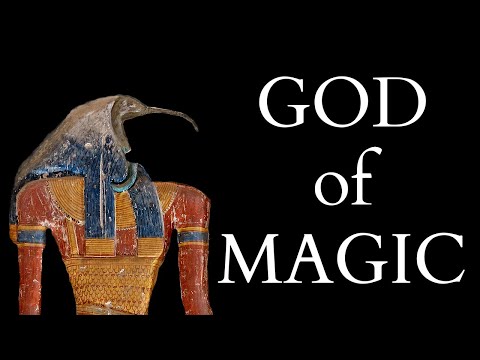
In the grand tapestry of ancient Egypt, few deities command the mystique and enduring influence of Thoth. More than just a god, Thoth stands as the very embodiment of divine knowledge, the meticulous scribe of the cosmos, and the silent architect of fate. His legacy, originating from the sands of antiquity, transcends millennia, weaving through the fabric of Western esoteric traditions and continuing to resonate with modern practitioners seeking deeper understanding. If you are drawn to the currents of magic, hermetic philosophy, or the ancient pathways of wisdom, you are likely to find your journey intersecting with the profound influence of Thoth.
MagitechThe Origin and Evolution of Thoth
The exact genesis of Thoth remains shrouded in the mists of time, a characteristic that only deepens his enigmatic allure. Early Egyptian beliefs suggest his roots may lie in a lunar deity, a celestial observer charting the silent passage of night and the waxing and waning of the moon. This celestial connection imbued him with an association with cycles, rhythm, and the subtle influences that govern earthly affairs. As Egyptian civilization flourished, so too did the pantheon, and Thoth’s role expanded, solidifying his position as a pivotal figure. He transitioned from a lunar association to becoming the supreme mediator in divine disputes, the arbiter of justice (Ma'at), and the silent witness to the cosmic order. His profound intellect and role as the divine scribe led him to be recognized as the god of writing, language, knowledge, and, crucially, magic, or heka.
Table of Contents
- MagitechThe Origin and Evolution of Thoth
- Thoth's Syntheses: From Egyptian God to Hermetic Father
- The Role of Heka (Magic) in Thoth's Domain
- Thoth, Fate, and the Cosmic Order
- Thoth in Modern Esoteric Practice
- The "Thothful" Nature of Inquiry
- Thoth and the Ogdoad of Hermopolis
- Thoth's Enduring Impact on Hermeticism
- FAQs About Thoth
- The Scholar's Toolkit: Essential Resources
- Visualizations and Symbolism
- Thoth in Daily Practice
- Conclusion: The Everlasting Scribe
This mastery over the written word and the arcane arts made him indispensable. He was credited with recording the spells that aided Osiris in his resurrection, and he famously interceded in the tumultuous conflict between Horus and Set, ensuring a semblance of divine justice prevailed. His worship was particularly prominent in Hermopolis, where he was revered as the Lord of the Ogdoad—an assembly of eight primordial deities embodying the fundamental forces of creation. This multifaceted nature allowed him to absorb and transcend the limitations of a single domain, establishing him as a god of multifaceted wisdom.
Thoth's Syntheses: From Egyptian God to Hermetic Father
The true transcendence of Thoth’s influence is most powerfully illustrated through his syncretism with the Greek deity Hermes. As Greek and Roman cultures interacted with and absorbed elements of Egyptian civilization, their pantheons began to merge. The attributes of swiftness, communication, and wisdom embodied by Hermes found a natural resonance with Thoth. This fusion was not merely a renaming; it was a profound merging of divine essences, resulting in the legendary figure of Hermes Trismegistus—the Thrice Great Hermes.
Hermes Trismegistus became far more than just an Egyptian god or a Greek messenger; he was elevated to the status of a mythical sage and the founder of hermetic philosophy. His teachings, purportedly revealed to humanity, formed the bedrock of alchemy, astrology, and magic, shaping the philosophical landscape of Western esotericism for centuries. The iconic "Emerald Tablet," a foundational text of alchemy, is attributed to him, purportedly containing the summation of all knowledge: "As above, so below." In this profound sense, Thoth, through his Greek counterpart, did not merely survive the decline of classical Egyptian theology—he became its enduring avatar, a living testament to the power of knowledge, the efficacy of magic, and the immutable nature of fate.
The Role of Heka (Magic) in Thoth's Domain
For practitioners deeply immersed in the arcane arts, Thoth's connection to heka—the Egyptian concept of magic—is paramount. It’s crucial to understand that Egyptian magic, as embodied by Thoth, was not about incantations for personal gain in a superficial sense. Instead, heka was understood as the fundamental divine force that permeated creation, the underlying language and power through which the cosmos was spoken into existence. Thoth, as the divine scribe and architect of this cosmic language, was the master of heka.
His role in magical practices was often that of a patron or a guide. When rituals or spells were performed, invoking Thoth was a way to tap into the underlying principles of magical efficacy. He represented the clarity of intent, the precision of language, and the power of symbolic representation—all vital components of effective magical work. For those drawing sigils, crafting talismans, or performing complex divinatory rites, Thoth’s association with writing and knowledge made him a natural deity to call upon for precision and success. The meticulous nature of creating sacred texts or symbols mirrors Thoth’s own role as the divine record-keeper.
Thoth, Fate, and the Cosmic Order
Beyond wisdom and magic, Thoth held dominion over fate. This aspect of his divinity speaks to his role as the cosmic accountant, the deity who recorded and perhaps even guided the unfolding of destiny. In ancient Egyptian thought, fate was not a rigid, inescapable chain of events, but rather a complex interplay of divine will, human action, and cosmic patterns. Thoth, as the god of writing and knowledge, was the one who inscribed these patterns, who understood the celestial mechanics that governed cause and effect.
This understanding of Thoth as a keeper of fate offers a unique perspective for modern practitioners. It highlights the importance of understanding the underlying currents that influence manifestation. Whether one is working with astrological timings, lunar cycles, or even digital tools, recognizing the principle of cosmic order that Thoth represents can lend depth to one's practice. The idea that our desires, when properly articulated and charged with intent, can be "written" into the fabric of reality is a central tenet that resonates with Thoth's domain. This connection is particularly potent when dealing with tools that represent codified intent, such as sigils, or when seeking to align one's actions with auspicious timings.
Thoth in Modern Esoteric Practice
The enduring legacy of Thoth means that his influence is deeply felt within contemporary occult and esoteric circles. For many, he is revered not just as an ancient deity but as a living archetype—the God of Wisdom, the ultimate communicator, and the patron of all who seek knowledge and mastery over the hidden arts.
Practitioners often invoke Thoth for clarity in thought, inspiration in writing, and precision in magical workings. His association with the moon also connects him to intuitive practices, divination, and the cyclical nature of manifestation. In technomancy, where digital tools are used for magical ends, Thoth’s role as the divine scribe and patron of writing is particularly relevant. The precise coding required for sigil generators, the structured logic of divination software, or even the creation of digital talismans can be seen as modern manifestations of Thoth’s ancient domain.
When working with complex symbolic systems or seeking to imbue digital creations with magical intent, calling upon Thoth can provide the necessary focus and precision. His embodiment of knowledge makes him an ideal invoked entity for anyone seeking to understand intricate magical systems or to effectively translate their will into a desired outcome. The very act of understanding and disseminating esoteric knowledge, as we do on this platform, is a practice that aligns perfectly with the Thothian archetype.
The "Thothful" Nature of Inquiry
The resonance between the sound of "Thoth" and the English word "thought" is not merely a linguistic coincidence; it underscores a deep connection between the deity and the very act of cognition and ideation. This is a concept that has not gone unnoticed by those who study him. A truly "Thothful" approach to inquiry involves a deep dive into understanding, a meticulous examination of evidence, and a commitment to uncovering the underlying principles. It is about engaging with knowledge not just passively, but actively—questioning, analyzing, and synthesizing information to arrive at a deeper truth.
This method of inquiry is fundamental to the spirit of exploration found within the hermetic traditions that Thoth helped to inspire. It means approaching esoteric subjects with rigor, acknowledging their complexity, and appreciating the multifaceted nature of divine principles. It's about moving beyond simplistic definitions to grasp the subtle nuances and interconnectedness of various occult sciences. A "Thothful" mind is one that seeks not just answers, but understanding, and recognizes that true wisdom often lies in the journey of discovery itself, a journey Thoth intimately understands and guides.
Thoth and the Ogdoad of Hermopolis
The significance of Thoth's association with the Ogdoad of Hermopolis cannot be overstated. This group of eight primordial deities represented the fundamental, chaotic forces that existed before creation—the very potencies of the unformed abyss. Within this primeval assembly, Thoth played a crucial role, often depicted as both a member and the architect of the cosmic order that emerged from this chaos. The Ogdoad typically included deities representing concepts like darkness, watery abyss, infinity, and hiddenness, which were essential for the emergence of light and form.
Thoth's presence within this group signifies his deep connection to the very source of creation. He was not merely a god who appeared after the world was made; he was instrumental in the process of its making. As the divine scribe and the embodiment of cosmic intellect, he understood the blueprint of existence. His role within the Ogdoad highlights his function as a mediator between the formless void and the manifested reality, a theme that echoes throughout hermetic philosophy. Understanding this connection provides a profound insight into Thoth's power as a god of creation and order, capable of bringing structure and meaning to even the most fundamental forces.
Thoth's Enduring Impact on Hermeticism
The fusion of Thoth with the Greek Hermes to form Hermes Trismegistus marked a pivotal moment in the history of Western esoteric thought. Hermes Trismegistus became the legendary progenitor of hermeticism, a philosophical and spiritual tradition that has profoundly influenced alchemy, astrology, magic, and Kabbalah. The "Corpus Hermeticum," a collection of philosophical and religious writings attributed to Hermes Trismegistus, served as a primary source of inspiration for Renaissance thinkers and occultists alike.
These texts delve into profound concepts such as the nature of God, the cosmos, the human soul, and the hidden principles of the universe. The famous Hermetic axiom, "As above, so below," encapsulates the core belief in the interconnectedness of all things, from the celestial realms to the earthly plane. Thoth, through Hermes Trismegistus, provided the foundational knowledge and the archetypal figure for this entire lineage of wisdom. His influence is not confined to ancient history; it is alive in the very foundations of modern occult practice, offering a continuous thread of esoteric understanding that connects the ancient world to our own.
FAQs About Thoth
What are the main domains associated with Thoth?
Thoth is primarily associated with wisdom, writing, magic (heka), the moon, knowledge, scribal arts, judgment, fate, and creation. He was also recognized as the mediator of divine disputes and the scribe of the gods. His synthesis with Hermes Trismegistus also links him to hermetic philosophy, alchemy, and astrology.
How did Thoth become Hermes Trismegistus?
During the Greco-Roman period, Egyptian and Greek cultures intermingled. The attributes of the Greek god Hermes, who was associated with communication, travel, and intellect, were found to be highly compatible with those of Thoth. This led to a syncretism where the two deities were merged into a single, composite figure known as Hermes Trismegistus, meaning "Hermes the Thrice Great." This figure became the legendary founder of hermetic philosophy.
What is the significance of Thoth's association with the ibis and baboon?
Thoth was most commonly depicted as an ibis-headed man or as a baboon. The ibis, with its distinctive curved beak, was thought by some to resemble a scribe's stylus or stylus and palette, symbolizing his role as the divine writer. The baboon form, often depicted in a contemplative or watchful posture, represented his wisdom and his connection to the dawn and the sun's cycle, aligning with his nocturnal and lunar associations.
Can Thoth be invoked in modern magic?
Absolutely. Thoth is a widely invoked deity in many modern magical traditions, particularly those influenced by hermeticism and chaos magic. Practitioners often call upon him for clarity of thought, inspiration, success in writing or creative endeavors, precision in spellcasting, and guidance in understanding complex magical principles. His association with heka makes him a natural patron for magicians.
What is the connection between Thoth and "fate"?
Thoth’s role as the divine scribe extended to recording and understanding the unfolding of destiny. He was seen as the keeper of cosmic records and the arbiter of judgment. This means he was not just writing down events, but also understanding the intricate mechanisms of cause and effect that shape them. For practitioners, this aspect of Thoth highlights the importance of intention, precise articulation of desires, and understanding the underlying order when working with manifestation or divination.
How does Thoth relate to the concept of "thought"?
The similarity between the name "Thoth" and the English word "thought" is often noted. This phonetic echo underscores his primary association with intellect, wisdom, and cognition. He represents the divine spark of ideation, the power of language to shape reality, and the meticulous process of knowledge acquisition and dissemination. To be "Thothful" is to engage in deep, deliberate, and insightful thinking, characteristic of his divine nature.
What was the Ogdoad of Hermopolis?
The Ogdoad of Hermopolis was a group of eight primordial deities in ancient Egyptian religion, representing the fundamental forces of chaos and the unformed state of the universe before creation. Thoth was a key member of this group, often depicted as the intellect that brought order to this primordial chaos, enabling creation to occur. Their existence highlights Thoth's role not just as a god of existing knowledge, but as a force behind the very act of creation and the establishment of cosmic order.
The Scholar's Toolkit: Essential Resources
To truly delve into the profound depths of Thoth requires diligent study and a commitment to exploring the myriad facets of his influence. While direct experiential work is paramount, understanding his historical and philosophical context is invaluable. Access to reliable texts and tools can significantly enhance one's practice and comprehension. The journey into esoteric knowledge is often facilitated by having the right resources at hand, allowing for deeper exploration and more precise application of learned principles.
When precision in magical creation and understanding of complex symbolic systems is required, a well-crafted tool can be indispensable. The meticulous nature of Thoth's domain, from cosmic decrees to the precise articulation of spells, mirrors the need for accuracy when working with potent magical constructs. This is where specialized applications can serve as modern extensions of ancient practices, automating complex processes and allowing the practitioner to focus on the core magical intent and gnosis.
For those seeking to master the creation and charging of complex magical symbols, especially those with a focus on intricate design and efficient generation, a dedicated digital tool can prove invaluable. The challenges of manually creating such symbols, ensuring symmetry, accuracy, and rapid generation for effective charging, can be a significant hurdle. Many practitioners find that manual methods are time-consuming and prone to error, detracting from the crucial elements of intent and gnosis.
This is precisely where reliable digital assistance becomes a boon. By automating the complex creation of symbols, these tools free up the practitioner's mental energy to focus on the crucial aspects of magical work: the clarity of intention and the achievement of a state of gnosis. The modern practitioner, much like ancient scribes meticulously detailing sacred texts, can leverage technology to enhance their arcane endeavors. The goal is to ensure the magical construct is as potent and precise as possible, facilitating the manifestation of will.
For instance, when working with the foundational principles of hermeticism or symbolic magic, the creation of precise sigils or talismans is often a key component. Imagine the challenge of manually designing a complex sigil, ensuring perfect balance and form, only to have a slight miscalculation disrupt its energetic integrity. The desire for efficiency and accuracy in such craft is a constant for dedicated practitioners.
Fortunately, the digital age offers solutions. Tools designed for the modern magician can help streamline these processes. For example, crafting intricate symbolic representations for magical purposes can be greatly aided by specialized software. One such tool that proves exceptionally useful for practitioners who appreciate precision and symbolic depth is the Goetian Seals Generator. This application is designed to assist in the creation and understanding of complex symbolic forms, allowing users to generate and explore various designs with ease.
By utilizing such a resource, practitioners can save considerable time and effort, ensuring that their symbolic creations are as potent and aesthetically aligned with their magical intent as possible. This allows for greater focus on the deeper, more esoteric aspects of the work. Relying on such assistive technologies is not a dilution of magical practice but a strategic adaptation, ensuring that the core of the work—intent and gnosis—remains paramount.
Visualizations and Symbolism
Thoth's iconography is rich with symbolism, offering further layers of understanding for the practitioner. His most common forms—the ibis and the baboon—are not arbitrary choices but are imbued with deep meaning relevant to his domains.
The ibis, a wading bird often seen probing the mud with its long beak, was seen as a natural scribe. Its hunting method of carefully examining the ground for sustenance was likened to the meticulous process of recording knowledge. The curved beak itself was sometimes interpreted as representing a stylus, and the bird's association with the dawn and the moon linked it to cycles of revelation and hidden knowledge. The ibis's ability to navigate both water and land also symbolized Thoth's role as a mediator between different realms—the physical and the divine, the known and the unknown.
The baboon, another form associated with Thoth, is often depicted in a seated, contemplative posture, gazing towards the rising sun. This imagery connects Thoth to the dawn, the beginning of creation, and thus to his role as a god of creation and renewal. Baboons were also seen as intelligent and social creatures, reflecting Thoth's association with wisdom, communication, and the ordering of society. Their nocturnal activity also reinforced his lunar connections. In some depictions, baboons are shown raising their hands in adoration of the sun, linking them to solar worship and the divine light of knowledge.
These symbolic animal forms are not mere decorations; they are visual keys that unlock deeper aspects of Thoth’s nature, reminding practitioners of his multifaceted powers and his intimate connection to the natural world and the cycles of existence.
Thoth in Daily Practice
For the modern practitioner, Thoth offers a wellspring of practical inspiration that can be integrated into daily life. Beyond grand rituals, his influence can be found in the mindful application of knowledge and the precise articulation of intent.
Consider your own daily interactions with language and information. Every written word you produce, every piece of knowledge you acquire, every decision you make based on reasoned thought can be seen as a subtle invocation of Thothian principles. To approach these activities with a sense of sacredness—treating writing as a form of spellcraft, research as a quest for divine knowledge, and decision-making as an act of inscribing one’s fate—elevates the mundane into the magical.
When you are faced with a complex task, a challenging piece of writing, or the need for clarity in communication, consciously invoke Thoth: "By the wisdom of Thoth, grant me clarity of thought and precision of expression." This simple act can shift your mindset, aligning your energy with his archetypal domain. Similarly, when engaging in practices like journaling, charting lunar phases, or even organizing your digital files, you are, in essence, participating in the Thothian practice of ordering and recording.
The development of structured thought processes, the pursuit of disciplined learning, and the careful crafting of communication are all pathways that honor Thoth. He reminds us that knowledge is power, but wisdom is the skillful application of that power. By cultivating these habits, we not only enhance our personal and magical lives but also actively participate in the enduring legacy of this ancient and profound deity.
About the author: Frater Alek0s is a veteran practitioner and researcher in the field of chaos magick. His work focuses on the practical and experimental application of occult techniques for self-development and reality exploration, demystifying esotericism for the modern practitioner.
Conclusion: The Everlasting Scribe
Thoth stands as a testament to the enduring power of intellect, the sacredness of language, and the fundamental role of magic in shaping reality. From his origins as an ibis-headed deity in the fertile lands of ancient Egypt to his apotheosis as Hermes Trismegistus, the father of hermetic philosophy, his influence has been profound and pervasive. He is the divine scribe who records the decrees of fate, the patron of wisdom who illuminates the path of knowledge, and the master of heka who understands the very fabric of creation.
For the magician, the philosopher, or indeed any seeker of truth, Thoth offers a powerful archetype. He encourages precision in intent, diligence in study, and reverence for the power of articulated thought. His presence reminds us that the universe is, in many ways, a sacred text, and that by understanding its language, we can indeed learn to write our own destinies. As long as humanity continues to seek knowledge, to communicate, and to engage with the mysterious forces that govern existence, the spirit of Thoth will continue to guide and inspire.
Referencias
- Cunningham, S. (1988). Wicca: A Guide for the Solitary Practitioner. Llewellyn Publications.
- Conway, D. J. (2002). Moon Magick: Myth & Magic, Crafts & Recipes, Rituals & Spells. Llewellyn Publications.
- Grimassi, R. (2000). Encyclopedia of Wicca & Witchcraft. Llewellyn Publications.
- Kynes, T. (2016). Lunar Living: Working with the Magic of the Moon Cycles. Llewellyn Publications.
- McCoy, E. (1995). The Witch's Circle: A Modern Practitioner's Guide to the Old Ways. Llewellyn Publications.
- Dugan, E. (2006). The Moon: Myth and Image. Four Winds Press.
- Matthews, C. (2002). The Celtic Tradition. Element Books.
- Beyer, R. (2000). The Goddess and the Moon. Llewellyn Publications.
- Bord, J. (1974). The Secret Country. Paul Elek.
- Campanelli, P. (2005). The Wheel of the Year. Llewellyn Publications.
- Farrar, J. (1984). The Witches' God: Lord of the Dance. Robert Hale.
- Franklin, A. (2008). The Art of Lunar Magick. Llewellyn Publications.
No hay comentarios:
Publicar un comentario