
Table of Contents
- SolarWhat is Wicca? Unpacking the Core Beliefs
- Paganism: A Broad Tapestry of Ancient and Modern Traditions
- Witchcraft: Practices and Power
- The Interconnection: Wicca, Paganism, and Witchcraft
- Wiccan Festivals and Sabbats
- The Role of the Book of Shadows
- Wicca vs. Witchcraft vs. Paganism: Clarifying the Terms
- Beyond the Stereotypes: The Reality of Modern Practice
- FAQ: Understanding Wicca, Paganism, and Witchcraft
- Your Next Steps: Integrating Understanding into Practice
Wicca, Paganism, and Witchcraft are often used interchangeably, but they represent distinct yet interconnected spiritual paths. For many, these terms evoke images of ancient rituals, nature worship, and perhaps a touch of mystery. But what truly lies at the heart of these contemporary spiritual movements? In this comprehensive exploration, we delve into the origins, beliefs, practices, and modern expressions of Wicca, Paganism, and Witchcraft, aiming to demystify these often misunderstood traditions and illuminate their profound connection to nature, personal empowerment, and the cyclical rhythms of life. This deep dive is designed not just to inform, but to inspire a deeper understanding and appreciation for these enduring spiritual paths.
You can experiment with all of this in a guided way using Chaos Magick Sigil Generator.
If you want to put this into practice, Chaos Magick Sigil Generator guides you step by step.
Wicca, in particular, has carved out a significant space in modern spirituality, often associated with reverence for the Earth, the divine feminine, and a celebratory approach to life's cycles. Paganism, by contrast, is a much broader umbrella term encompassing a diverse array of pre-Christian indigenous religions from around the world, emphasizing nature worship and polytheism. Witchcraft, while often conflated with Wicca, is more accurately understood as a set of magical and spiritual practices that can be, and often are, integrated into Wiccan and other Pagan traditions. This article seeks to clarify these distinctions, explore their common ground, and provide a foundational understanding for anyone curious about what is Wicca, Paganism, and Witchcraft.
SolarWhat is Wicca? Unpacking the Core Beliefs
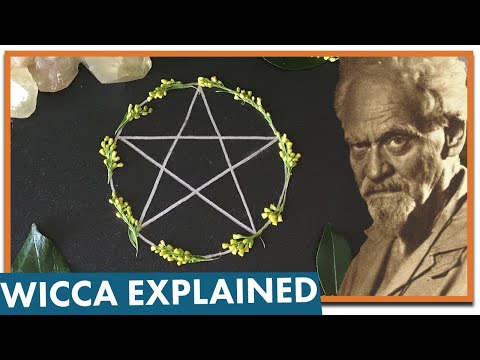
Wicca is a contemporary Pagan religion that often appears to be a revival of older witchcraft traditions. It is important to note that Wicca, as a distinct religion, is relatively modern, with its roots tracing back to the mid-20th century, primarily through the work of Gerald Gardner. Gardner, an Englishman, claimed to have been initiated into a witchcraft coven in the 1930s and subsequently developed Wicca based on his own spiritual experiences, research into folk magic, and interpretations of historical witchcraft accusations. This has led to what is Wicca, Paganism, and Witchcraft, a complex question with many layers of interpretation and practice.
At its theological core, Wicca is typically duotheistic, revering a God and a Goddess. These deities are often seen not as anthropomorphic figures in the Abrahamic sense, but as immanent forces of nature and cosmic principles. The Goddess is frequently associated with the moon, the cycles of life and death, and the nurturing, creative aspects of divinity. She is honored in her various forms: Maiden (youth and new beginnings), Mother (fertility and maturity), and Crone (wisdom and endings). The God, often depicted with horns, is linked to the sun, the wild, fertility, and courage. He embodies the active, masculine principle of the cosmos and is seen as complementary to the Goddess. Many Wiccans also acknowledge a pantheon of other deities, drawing from various mythologies, or embrace a more panentheistic view where the divine is seen as both within and beyond the universe.
The concept of immanence is central to Wiccan theology: the divine is not solely a distant creator but is present within all things, especially in nature. This immanent divinity is why the natural world holds such profound significance for Wiccans. The changing seasons, the phases of the moon, the growth of plants, the patterns of animal life – all are seen as manifestations of the divine. This deep connection to nature fosters a strong environmental ethic among Wiccans. The understanding that what happens to the Earth happens to us, as we are intrinsically part of it, drives a commitment to ecological stewardship and sustainability. As Ethan Doyle White notes in his seminal work, "Wicca: History, Belief, and Community in Modern Pagan Witchcraft," the religion's emphasis on the immanent divine has consistently fostered a deep reverence for the natural world and its cycles (Doyle White, 2016).
Wiccan ethics are often summarized by the Wiccan Rede, a poetic statement of principles. A widely quoted verse states: "An it harm ye none, do what ye will." This principle emphasizes personal responsibility and the importance of not causing harm to oneself or others. It's a directive for self-determination and ethical action, suggesting that one's will should be guided by a consideration for the well-being of all sentient beings. This ethical framework encourages introspection and mindful decision-making in all aspects of life, from personal interactions to spiritual practices. The understanding of reciprocal action, often encapsulated in the "Law of Threefold Return" or "Rule of Three," suggests that whatever energy a practitioner sends out into the world will return to them threefold, amplified. This belief reinforces the importance of positive intent and ethical conduct. This concept is further explored in "The Triumph of the Moon" by Ronald Hutton, where he delves into the historical development and ethical underpinnings of modern pagan witchcraft (Hutton, 2019).
Paganism: A Broad Tapestry of Ancient and Modern Traditions
Paganism is a far broader category than Wicca. It's an umbrella term that encompasses a diverse range of polytheistic, animistic, and nature-based spiritual traditions that largely originated before the rise of Christianity and Islam. While often characterized by their reverence for nature and polytheistic pantheons, Pagan traditions are incredibly varied, reflecting the rich cultural tapestries of the regions from which they emerged. This diversity is what makes defining Paganism as a monolithic entity challenging and, frankly, inaccurate.
Historically, "Pagan" was a term used by early Christians to describe those who practiced non-Abrahamic religions, particularly polytheistic faiths common in the Roman Empire. Today, Neo-Paganism refers to modern revivals and reconstructions of these ancient traditions, as well as new spiritual paths inspired by them. These can include Hellenismos (revival of ancient Greek religion), Asatru (revival of Norse traditions), Kemeticism (ancient Egyptian religion), Celtic Reconstructionism, and various indigenous traditions from Europe, Africa, and the Americas. Each of these paths has its own unique mythologies, pantheons, rituals, and ethical frameworks. For instance, Hellenistic practitioners might focus on the gods of Olympus like Zeus, Hera, and Athena, while followers of Asatru honor Odin, Thor, and Freyja. Ancient Egyptian devotees might engage with deities such as Ra, Isis, and Osiris.
A common thread running through many Pagan traditions is the concept of animism – the belief that spirits inhabit all things: rocks, rivers, trees, animals, and celestial bodies. This animistic worldview fosters a deep sense of interconnectedness with the natural world and encourages a respectful, reciprocal relationship with the environment. Rituals often involve honoring these spirits, seeking guidance, and participating in the natural cycles of the Earth. The work of Sabina Magliocco in "Witching Culture: Folklore and Neopaganism in America" highlights how modern Pagans often draw inspiration from folk traditions and the perceived animistic qualities of the natural world (Magliocco, 2004).
Polytheism is another prevalent characteristic of many Pagan paths, recognizing multiple gods and goddesses, each with distinct attributes, domains, and mythologies. These deities are often seen as aspects or manifestations of a greater divine source, or as independent powers. The relationship between humans and these deities is typically one of reverence, negotiation, and mutual respect, rather than absolute submission. Rituals and offerings are common ways to honor and commune with these divine beings. The interaction with deities is often personal and experiential, encouraging a direct relationship rather than one mediated solely by dogma or clergy. The acknowledgment of a divine presence in multiple forms allows for a rich and varied spiritual landscape.
It's crucial to distinguish between historical Paganism and modern Neo-Paganism. While Neo-Paganism draws inspiration from ancient traditions, it is a modern religious movement shaped by contemporary contexts, scholarship, and the personal experiences of its practitioners. The reconstructionist movements, in particular, strive to accurately revive ancient practices based on available historical and archaeological evidence, but this is often balanced with modern interpretations and adaptations. As Patricia Iolana argues in her essay "Pagan Scholarship from a Pagan Perspective," the integration of scholarly research with personal spiritual experience is vital for authentic modern Pagan practice (Iolana, n.d.).
Witchcraft: Practices and Power
Witchcraft, at its most fundamental level, refers to a broad spectrum of magical practices and beliefs. It is less a specific religion and more a discipline or a set of skills that can be incorporated into various spiritual frameworks, including Wicca, other Pagan paths, or even secular or personal spiritual systems. The term itself carries a heavy historical burden, often associated with fear, persecution, and superstition due to centuries of witch hunts and negative propaganda. However, in contemporary understanding, witchcraft is largely reclaimed as a path of personal empowerment, connection with nature, and conscious engagement with the forces of the universe.
Modern witchcraft encompasses a vast array of techniques, including spellcasting, divination, herbalism, energy work, and ritual. Spellcasting, for instance, often involves focusing intention through symbolic actions, tools, and words of power to effect change in accordance with one's will. This can range from simple charms for protection to complex workings for manifestation or healing. Divination methods, such as Tarot, runes, scrying, or astrology, are used to gain insight into present circumstances, explore potential future outcomes, or seek guidance from the divine or the subconscious mind. Herbalism in witchcraft involves the use of plants and their energetic properties for healing, ritual, and spell work, recognizing the inherent magical qualities of the plant kingdom.
Energy work is a cornerstone of many witchcraft practices. It involves manipulating and directing subtle energies – often referred to as chi, prana, or simply "energy" – for purposes of healing, protection, or spellcasting. This can include grounding oneself to the Earth, shielding from negative energies, or directing energy towards a specific goal. Ritual, a structured form of symbolic action, is used to create sacred space, invoke deities or energies, focus intention, and facilitate altered states of consciousness necessary for magical work. Rituals can be elaborate public ceremonies or simple personal practices performed in solitude.
The concept of "immanent divinity" or "immanent magic" is often present in witchcraft. This means that magic is not seen as an external force being manipulated, but as an inherent aspect of the universe and of oneself, which can be consciously accessed and directed. The belief that one possesses inherent magical potential is a key aspect of empowerment in witchcraft. The work of Leon A. van Gulik on "The Blind Moondial Makers" explores how creativity and renewal, even in seemingly simple crafts, can be seen as expressions of magical principles (van Gulik, 2019). Simultaneously, practitioners often emphasize the importance of intention and visualization in directing this energy effectively. The understanding that the mind, through focused will and emotion, can influence reality is a foundational element.
Is Witchcraft compatible with Paganism and Wicca? Absolutely. Many Wiccans identify as witches, and many Wiccans practice witchcraft as an integral part of their religious path. Similarly, individuals practicing other forms of Paganism may also identify as witches and engage in witchcraft practices. However, not all witches are Wiccan, and not all Pagans practice witchcraft. This distinction is important for understanding the landscape of modern spiritualities. For example, a solitary practitioner might blend elements from various traditions, creating a personal path of witchcraft that is distinctly their own, drawing from folk magic, ceremonial magic, or even technomancy. The act of creating and charging sigils using digital tools, for instance, is a modern manifestation of witchcraft that can be integrated into any spiritual framework.
The Interconnection: Wicca, Paganism, and Witchcraft
While distinct, Wicca, Paganism, and Witchcraft are deeply interconnected, often overlapping and informing one another. Wicca can be seen as a specific, formalized religion within the broader landscape of Neo-Paganism. Witchcraft can be viewed as a set of practices that can be, and often are, employed by Wiccans and other Pagans, but also by individuals outside of these specific religious affiliations. This dynamic interplay allows for a rich and evolving spiritual ecosystem.
Many Wiccans consider themselves to be Pagan because Wicca is a modern Pagan religion. However, not all Pagans are Wiccan. A follower of Hellenismos, for example, is Pagan but not necessarily Wiccan. Likewise, while many Wiccans practice witchcraft and identify as witches, the practice of witchcraft is not exclusive to Wicca. An eclectic witch might draw from various magical traditions, including Wicca, but might not adhere to all Wiccan theological tenets or affiliations. This eclecticism allows individuals to craft a spiritual path that resonates deeply with their personal experiences and beliefs. The personal nature of spiritual exploration is a common theme across these traditions.
The emphasis on nature, personal experience, and ethical responsibility forms a common thread. In a world often characterized by rigid dogma and disconnection from the natural world, these paths offer a way to reconnect with the Earth, the divine in its many forms, and the innate power within oneself. The ability to adapt and evolve, as seen in the integration of digital tools like sigil generators into traditional witchcraft practices, showcases the dynamic nature of these spiritual paths. Tools such as the Chaos Magick Sigil Generator allow practitioners to create and charge sigils with unparalleled ease and speed, proving that even ancient practices can find new life in the digital age. This technological integration is a testament to the adaptable and ever-evolving nature of modern spiritual practices, including those rooted in Wicca, Paganism, and Witchcraft.
The journey into understanding what is Wicca, Paganism, and Witchcraft is a path of exploration, personal discovery, and often, profound connection. It encourages a mindful engagement with the world, a respect for all life, and an acknowledgment of the subtle energies that weave through existence. Whether one finds resonance with the duotheistic framework of Wicca, the diverse polytheism of Paganism, or the empowering practices of witchcraft, the underlying principles often point towards a more conscious, connected, and empowered way of living. The emphasis on personal integrity, self-awareness, and ethical action empowers individuals to take an active role in their spiritual lives and their impact on the world.
Wiccan Festivals and Sabbats
A significant aspect of Wiccan practice is the observance of festivals known as Sabbats. These eight festivals mark the turning of the Wheel of the Year, celebrating the changing seasons and the cycles of life, death, and rebirth. They are divided into two groups: the Greater Sabbats (also known as Cross-Quarter Days) and the Lesser Sabbats (Solstices and Equinoxes).
The Lesser Sabbats, or Solar Festivals, include:
- Winter Solstice (Yule): Celebrated around December 21st, marking the longest night of the year and the rebirth of the Sun God. It's a time for introspection, honoring the darkness, and anticipating the return of light.
- Spring Equinox (Ostara): Occurring around March 20th, this festival celebrates the balance of day and night and the burgeoning of spring, symbolizing fertility, new growth, and new beginnings.
- Summer Solstice (Litha): Around June 21st, celebrating the longest day of the year and the peak of the Sun God's power. It's a time for joy, abundance, and harnessing solar energy.
- Autumn Equinox (Mabon): Celebrated around September 22nd, marking the second harvest and the balance of day and night before the descent into darkness. It's a time for gratitude, reflection, and preparing for winter.
The Greater Sabbats, or Cross-Quarter Days, have more ancient folk origins and are often more intensely celebrated:
- Samhain: Celebrated around November 1st, marking the Wiccan New Year and the thinning of the veil between worlds. It's a time to honor ancestors, reflect on the past year, and confront mortality.
- Imbolc: Observed around February 1st, signaling the first stirrings of spring and the return of longer days. It honors the Goddess in her aspect as the Maiden and is associated with purification, inspiration, and hope.
- Beltane: Celebrated around May 1st, marking the height of spring and the union of the God and Goddess. It's a festival of fertility, passion, creativity, and joyous celebration.
- Lammas (Lughnasadh): Observed around August 1st, marking the first harvest and the sacrifice of the grain god. It's a time for gratitude, acknowledging abundance, and preparing for future harvests.
These festivals are typically celebrated with rituals, feasts, and community gatherings. The specific practices can vary widely among different Wiccan traditions and individual practitioners, but they generally involve honoring the divine in nature and marking the passage of time.
The Role of the Book of Shadows
Often referred to as the BOS, the Book of Shadows is a personal grimoire containing the private rituals, spells, correspondences, insights, and lore of a Wiccan or witch. It is not a standardized text like the Bible or the Quran; rather, it is a unique and evolving document that reflects the individual practitioner's spiritual journey and magical discoveries. For many, the BOS is a sacred repository of personal wisdom and magical knowledge.
Traditionally, a Book of Shadows might contain sections on:
- Rituals: Detailed descriptions of ceremonies for Sabbats, Esbats (full moon rituals), initiations, blessings, consecrations, and spell workings
- Spells: Recipes for spells, including ingredients, steps, chants, and correspondences (e.g., planetary hours, colors, herbs)
- Correspondences: Information on herbs, crystals, essential oils, colors, planets, elements, deities, runes, tarot cards, and their associated magical properties
- Divination: Notes on methods like Tarot, runes, astrology, scrying, or pendulum work
- Deities and Spirits: Information on pantheons, specific deities honored, and methods of invocation or evocation
- Personal Reflections: Journal entries, dream records, insights from meditations, and magical experiences
- Ethical Guidelines: Personal interpretations of the Wiccan Rede and other ethical principles
In the digital age, many Wiccans and witches maintain their Books of Shadows electronically, using apps or word processing documents. This offers advantages in terms of searchability, ease of editing, and security. For example, using a secure digital platform or password-protected files can be an effective way to maintain the privacy and personal nature of a Book of Shadows, especially when dealing with sensitive information or personal spell workings. While the medium may change, the essence of the BOS as a living document of personal magical exploration remains constant.
Wicca vs. Witchcraft vs. Paganism: Clarifying the Terms
To reiterate and solidify understanding, let’s explicitly address the common points of confusion regarding what is Wicca, Paganism, and Witchcraft. Drawing from the insights of scholars like Ethan Doyle White and Ronald Hutton, and the lived experiences of practitioners:
- Paganism: This is the broadest term, referring to a diverse group of polytheistic, nature-based religions and spiritualities that are largely indigenous to Europe and other parts of the world, predating Abrahamic religions. It's an umbrella that covers many traditions, including Wicca, Hellenismos, Asatru, Druidry, and more. A common thread is reverence for nature and often polytheistic or animistic beliefs.
- Wicca: This is a specific religion that emerged in the mid-20th century, primarily credited to Gerald Gardner. It is *a* Pagan religion, typically duotheistic (God and Goddess), with specific theological concepts, ethics (like the Wiccan Rede), and a structured cycle of festivals (Sabbats and Esbats). Not all Pagans are Wiccan.
- Witchcraft: This refers to a set of magical practices and beliefs that can be incorporated into various spiritual paths. Historically, it was often associated with folk magic and sometimes persecuted. Today, it's often reclaimed as a path of personal empowerment, nature connection, and will-working. One can be a Wiccan witch, a Pagan witch (practicing other Pagan traditions), or a witch who doesn't identify as Wiccan or Pagan. For instance, technomancy, the use of technology in magical practice, has become a significant aspect of modern witchcraft, enabling practitioners to create digital sigils using tools like the Chaos Magick Sigil Generator, a tool that facilitates focused intention and symbolic creation for modern practitioners. This demonstrates how witchcraft can adapt and integrate new methodologies.
Understanding these distinctions is key to appreciating the richness and diversity within modern spiritual landscapes. It allows for a more nuanced conversation about what these paths mean to their followers and how they continue to evolve in the 21st century. The personal journey of each practitioner is unique, and the labels we use are often less important than the genuine spiritual connection and ethical conduct they represent.
Beyond the Stereotypes: The Reality of Modern Practice
It's essential to move beyond the sensationalized stereotypes often depicted in popular media. The reality of modern Wicca, Paganism, and Witchcraft is far more nuanced and personal. While some traditions may involve elaborate rituals and specific theological frameworks, many practitioners engage with these paths in deeply personal and often solitary ways. The emphasis on personal gnosis, direct experience with the divine, and ethical self-governance are hallmarks of many contemporary spiritual seekers.
The idea that all Wiccans or Pagans worship the devil is a gross mischaracterization, often stemming from historical persecution and misunderstanding. As previously discussed, Wiccan theology typically centers on a God and Goddess, often associated with natural forces, rather than an Abrahamic devil figure. Similarly, while some darker or more challenging paths exist within the broader spectrum of witchcraft and Paganism, they do not represent the entirety of these traditions.
Furthermore, the notion of Wicca or Paganism being a hierarchical, dogmatic religion is also a misconception. While some covens and traditions have established structures and initiatory paths, many practitioners are solitary and forge their own spiritual paths through personal study, intuition, and experimentation. The flexibility and adaptability of these paths are part of their appeal to many modern individuals seeking spiritual fulfillment outside of mainstream organized religions. The ability to integrate personal insights and learnings, as documented in a personal Book of Shadows, reflects this emphasis on individualized spiritual development.
For those considering exploring Wicca, Paganism, or Witchcraft, approaches such as using digital tools for symbolic creation, like the Chaos Magick Sigil Generator, can be an accessible entry point to understanding intention and manifestation. This application simplifies the complex process of creating sigils, enabling users to focus on the energetic charge and release, a core magical concept applicable across many traditions. By removing some of the technical hurdles of traditional sigil creation, such tools allow for a more direct engagement with the psychological and energetic elements of magical practice. This technological integration exemplifies how modern witchcraft adapts ancient principles for contemporary practitioners.
FAQ: Understanding Wicca, Paganism, and Witchcraft
What is Wicca?
Wicca is a modern Pagan religion that typically reveres a God and Goddess, emphasizes divine immanence in nature, and follows an ethical principle of "An it harm ye none, do what ye will." It is characterized by seasonal festivals (Sabbats) and often personal magical practice.
Is Wicca the same as Paganism?
No. Paganism is a broad umbrella term for many polytheistic and nature-based religions that largely predate Abrahamic faiths. Wicca is a specific religion that falls under the Pagan umbrella. Not all Pagans are Wiccan.
What is the difference between Wicca and Witchcraft?
Wicca is a religion, while witchcraft is a set of magical practices. Many Wiccans are witches, and they practice witchcraft as part of their religion. However, one can practice witchcraft without being Wiccan, and not all Pagans practice witchcraft.
Are Wiccans devil worshippers?
No. This is a common misconception. Wiccan theology typically centers on the worship of a God and Goddess, often associated with natural forces, rather than devil worship. The concept of a devil figure is largely rooted in Abrahamic traditions.
How do Wiccans worship?
Wiccan worship often involves rituals performed outdoors or in sacred space, honoring the God and Goddess, celebrating the seasons (Sabbats), and observing lunar cycles (Esbats). Practices include meditation, chanting, spellcasting, divination, and communing with nature.
Is Wicca a real religion?
Yes. Wicca is recognized as a religion by many governments and organizations worldwide. It has its own theology, ethics, practices, and community structures, though it is diverse and decentralized.
What is Witchcraft?
Witchcraft is a broad term for magical practices, often emphasizing personal empowerment, connection to nature, and the manipulation of subtle energies. It can include spellcasting, divination, herbalism, and ritual, and can be practiced within various spiritual frameworks, including Wicca and other Pagan traditions.
What is Paganism?
Paganism is an umbrella term for diverse polytheistic, animistic, and nature-based religions and spiritualities, many of which have ancient roots. Neo-Paganism refers to modern revivals or new spiritual paths inspired by these traditions.
Can I practice Wicca if I'm not initiated?
Yes. While some Wiccan traditions have formal initiatory paths, many Wiccans are solitary practitioners who learn and practice independently. Personal study, intuition, and ethical practice are highly valued.
What is the Law of Threefold Return?
This is a Wiccan principle suggesting that whatever energy a practitioner sends out into the world will return to them threefold, often amplified. It encourages positive intent and responsible magical action.
What is a Book of Shadows?
A Book of Shadows (BOS) is a personal grimoire where a witch or Wiccan records their rituals, spells, correspondences, insights, and magical discoveries. It is a sacred, living document unique to the individual.
How has technology impacted modern witchcraft?
Technology has introduced new tools and methods, such as digital sigil generators like the Chaos Magick Sigil Generator, online communities, and digital resources for study. This integration allows for greater accessibility and adaptation of ancient practices to contemporary life.
About the author: Frater Alek0s is a veteran practitioner and researcher in the field of chaos magick. His work focuses on the practical and experimental application of occult techniques for self-development and reality exploration, demystifying esotericism for the modern practitioner.
Your Next Steps: Integrating Understanding into Practice
Understanding what is Wicca, Paganism, and Witchcraft is just the beginning of a rich spiritual journey. The core principles of reverence for nature, personal responsibility, and the pursuit of divine connection resonate deeply with many seekers today. Whether you are drawn to the structured festivals of Wicca, the diverse pantheons of Paganism, or the empowering practices of witchcraft, the path is one of continuous learning and personal evolution.
If you are interested in harnessing your personal will and intention through symbolic creation, exploring the use of digital tools can offer a fascinating gateway. The process of crafting a sigil, whether digitally or through traditional means, is a powerful exercise in focus and manifestation. By using resources like the Chaos Magick Sigil Generator, you can streamline the creation process and dedicate more energy to the crucial steps of charging and releasing your intention. This practical application allows you to translate theoretical knowledge into tangible magical experience. Remember, the journey is as important as the destination, and each step taken with intention and integrity contributes to your spiritual growth.
The Chaos Magick Sigil Generator tool, part of the cha0smagicklabs ecosystem, is built exactly for this kind of work.
Have you explored Wicca, Paganism, or Witchcraft in your own spiritual journey? What aspects of these traditions resonate most with you? Share your experiences, insights, or questions in the comments below. If this exploration into ancient spiritual paths has sparked your curiosity, consider sharing this knowledge with others who might benefit from a clearer understanding. Blessed be.
Referencias
- Cunningham, S. (1988). Wicca: A Guide for the Solitary Practitioner. Llewellyn Publications.
- Gardner, G. (1954). Witchcraft Today. Rider & Company.
- Valiente, D. (1962). Witchcraft for Tomorrow. Rider & Company.
- Starhawk (1979). The Spiral Dance. Harper & Row.
- Hutton, R. (1999). The Triumph of the Moon. Oxford University Press.
- Grimassi, R. (2000). Encyclopedia of Wicca & Witchcraft. Llewellyn Publications.
- Buckland, R. (1974). Buckland's Complete Book of Witchcraft. Llewellyn Publications.
- Farrar, J. (1981). Eight Sabbats for Witches. Robert Hale.
- Carroll, P. J. (1987). Liber Null & Psychonaut. Weiser Books.
- Spare, A. O. (1913). The Book of Pleasure. Self-published.
No hay comentarios:
Publicar un comentario