
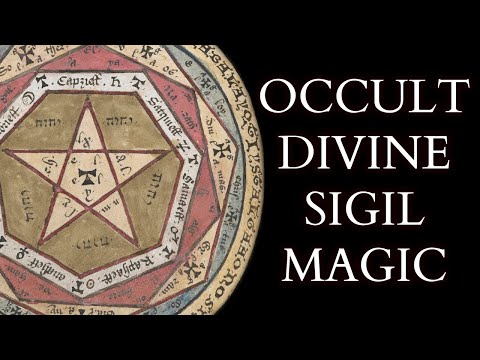
The very fabric of ceremonial magic offers profound insights into humanity's quest for the divine and mastery over the unseen. Among the most audacious texts to emerge from medieval esotericism is The Sworn Book of Honorius (Liber Juratus Honorii). This grimoire makes an extraordinary claim: to provide the practitioner with the means to behold God face-to-face, to glimpse celestial realms, and to command spirits of all orders.
It's a text that not only outlines a path to visionary experience and spiritual power but also boldly critiques religious institutions that sought to suppress such practices, arguing that such opposition was, in fact, a sign of demonic influence. This ancient work compels a deep dive into its rituals, its theology, and its enduring legacy in the annals of magic.
Table of Contents
RitualThe Bold Claims of The Sworn Book of Honorius
At its core, The Sworn Book of Honorius promises a transformative journey. It asserts that through a meticulously defined process, one can generate a divine sigil—a powerful symbol representing the True and Living God. This sigil is the linchpin of the entire system, serving as the key to unlocking a series of profound experiences. The practitioner is guided towards visions of heavenly palaces, the hierarchical ranks of angels, and the company of the blessed. The ultimate promise is a direct, beatific vision of the Divine Glory itself.
But the book’s ambitions do not end with spiritual ecstasy. Post-beatific vision, the divine sigil becomes an instrument of unparalleled command. It is said to grant the magician dominion over celestial, aerial, and terrestrial spirits, bestowing upon the practitioner nearly limitless magical power. This scope of ambition positions the text as one of the most significant survivals of medieval ceremonial magic, a testament to a time when the pursuit of direct divine knowledge and spiritual authority through ritual was a prominent, albeit often clandestine, endeavor.
Historical Context and Critique of Authority
The historical landscape in which The Sworn Book of Honorius emerged was one of shifting religious and political power structures. The text's audacious argument—that the Church’s attempts to eradicate magical practices were evidence of its own demonic subjugation—is a radical stance. It positions magical practitioners not as heretics, but as those holding genuine, divinely sanctioned knowledge, persecuted by a corrupt system. This inversion of authority suggests a deep dissatisfaction with prevailing religious dogma and a fervent belief in the legitimacy of esoteric pathways to divine connection.
Such a perspective highlights the complex relationship between religious institutions and the practice of magic throughout history. While the Church often condemned magical arts as diabolical, texts like Honorius suggest an internal theological justification for them, often drawing upon biblical narratives and angelology to legitimize their practices. This critical engagement with institutional power offers a fascinating lens through which to view the historical development of ceremonial magic and its practitioners.
The Path to Vision and Command
The journey outlined in The Sworn Book of Honorius is not one undertaken lightly. It demands rigorous preparation, including periods of fasting, meditation, and deep psychological priming. The text details specific rituals, purifications, and bindings with natural forces, suggesting a holistic approach that integrates the practitioner’s entire being into the magical operation. The table of contents itself is described as a process of specific rituals, implying that the very structure of the book is imbued with magical intent.
This emphasis on preparation and the detailed ritualistic structure resonates with many traditions of ceremonial magic, where the operator's state of being is as crucial as the rites performed. The promise of vivid dreams or visions, as noted by community members, is a common outcome of such intensive practices, blurring the lines between the waking world and the dreamscape, the manifest and the subtle.
Angels, Spirits, and the Divine Sigil
The central role of the divine sigil in The Sworn Book of Honorius is paramount. This symbol, representing God, is the conduit through which all subsequent spiritual experiences and commands flow. The text implies that understanding and correctly manifesting this sigil is the first and most critical step. Its creation and utilization go beyond mere symbolic representation; it is described as a direct link to divine power, enabling communication with and command over celestial, aerial, and terrestrial spirits.
The concept of a divine name or sigil being the key to spiritual authority is echoed in various esoteric traditions. The idea that this divine name might consist of 73 words, with a 73-letter name derived from the first letter of each word, showcases a complex system of numerology and symbolism that was prevalent in medieval contemplative and magical practices. This intricate structure underscores the intellectual and spiritual rigor demanded by the text.
Challenges and Interpretations
As with many ancient grimoires, interpretations of The Sworn Book of Honorius vary, and its practices are demanding. Some accounts suggest that the full ritualistic process could span months, with the final weeks being exceptionally intense. The promise of seeing God face-to-face or commanding spirits is a profound spiritual undertaking, often requiring a profound shift in the practitioner's worldview and personal discipline.
The text's focus on a specific theological framework—one that appears to be rooted in Catholicism, as indicated by certain community comments about it "tragic that this only works for Catholics"—presents a unique challenge. However, the underlying principles of symbolic representation, ritual preparation, and the pursuit of altered states of consciousness for visionary experience are universal within the study of magic and mysticism. The Merkabah and Hechalot traditions, for instance, share a similar emphasis on ascending through celestial palaces to achieve direct divine encounter.
The Legacy of the Liber Juratus
The Sworn Book of Honorius stands as a bridge between ancient theurgic practices and the later development of ceremonial magic. Its influence can be seen in its sophisticated approach to ritual, its theological arguments, and its comprehensive system for spiritual attainment and spiritual command. The text encourages practitioners to engage directly with these ancient traditions, suggesting that the "true name" and its constituent parts hold keys to understanding, akin to discovering hidden treasures.
The exploration of such texts reveals layers of commentary, innovation, and transmission of traditions through the ages. Understanding the manner, method, and motivations behind the transmission of these secrets provides a cleaner, more profound image of their significance. The ongoing study of The Sworn Book of Honorius offers invaluable insights into the historical aspirations and practices of those who sought to touch the divine and command the unseen.
Mage's Arsenal
- Essential: Goetian Seals Generator — While The Sworn Book of Honorius details its own divine sigil, mastering spirit command often involves understanding various symbolic systems. This app can help you generate and study precise representations of goetic seals, a crucial element in certain forms of spirit magic.
- Recommended Reading: The Sworn Book of Honorius: Liber Iuratus Honorii by Joseph H. Peterson.
- Further Study: Conjuring Spirits: Texts and Traditions of Medieval Ritual Magic by Joseph Fanger.
- Contextual Reading: Invoking Angels: Theurgic Ideas and Practices, Thirteenth to Sixteenth Centuries by Joseph Fanger.
FAQ: Frequently Asked Questions
What is the primary goal of The Sworn Book of Honorius?
The primary goal is to achieve a direct vision of God and celestial realms through the use of a divine sigil, and subsequently, to gain the power to command celestial, aerial, and terrestrial spirits.
Does the book require specific religious affiliation?
While originating from a medieval Christian context, the core principles of symbolic representation, ritual preparation, and pursuit of visionary states are often adaptable. However, the text itself is framed within a specific theological system.
How long does the ritual process typically take?
Community accounts suggest that the complete ritualistic process can be extensive, potentially spanning months, with the final stages being particularly intense and demanding.
What is the significance of the divine sigil mentioned in the book?
The divine sigil is central to the text's promise. It is believed to be a representation of the True and Living God, serving as the key to spiritual visions and the instrument for commanding various orders of spirits.
About the author: Frater Alek0s is a veteran practitioner and researcher in the field of chaos magick. His work focuses on the practical and experimental application of occult techniques for self-development and reality exploration, demystifying esotericism for the modern practitioner.
Can this text be considered a source for practical magic today?
Yes, The Sworn Book of Honorius is studied for its historical significance and the potent magical theories it espouses. While the specific rituals may require extensive adaptation, the principles of preparation, symbolic work, and visionary practice remain relevant to modern practitioners of ceremonial magic.
Referencias
- Carroll, P. J. (1987). Liber Null & Psychonaut. Weiser Books.
- Spare, A. O. (1913). The Book of Pleasure. Self-published.
- Hine, P. (1992). Condensed Chaos: An Introduction to Chaos Magic. New Falcon Publications.
- Crowley, A. (1904). The Book of the Law. Self-published.
- Sherwin, R. (2018). The Chaos Magic Handbook. CreateSpace.
- Kraig, D. M. (1988). Modern Magick: Eleven Lessons in the High Magickal Arts. Llewellyn Publications.
- Morrison, G. (2003). Pop Magic! The Art of Shaping Reality. Disinformation.
- DuQuette, L. M. (2003). The Chicken Qabalah of Rabbi Lamed Ben Clifford. Weiser Books.
- Webb, D. (2015). Chaos Magick: A Practical Guide. Self-published.
- Tyson, D. (2006). The Power of the Written Word. Llewellyn Publications.
- Bonewits, I. (1971). Real Magic. Creative Age Press.
- Greer, J. M. (2003). The New Encyclopedia of the Occult. Llewellyn Publications.
No hay comentarios:
Publicar un comentario