
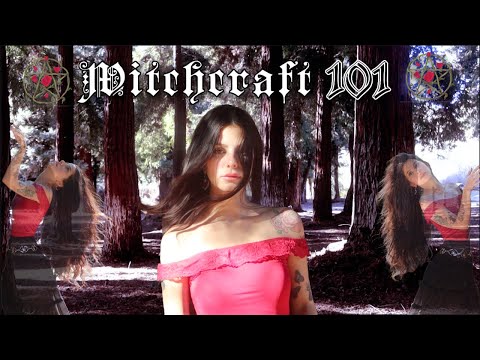
Magic, at its heart, is the manipulation of energy for a specific desired outcome. It's a suspension of what we see and a belief in and utilization of what we cannot see but instinctively know to be true. Magic cannot be tested in a laboratory, dissected, and placed under a microscope; it lives in the consciousness of the user, manifesting itself in practical living.
Hello, my beautiful angels, and welcome back to this page of the grimoire. I am finally making this video, and it has taken me so long to want to sit down and create this content because I was worried I would just add to the echo chamber of other witchcraft for beginners content available. There is a surplus of information out there for baby witches, and I don't want to simply echo what has already been said. However, I also want to provide a foundational understanding for those stepping into their power.
Table of Contents
This is a space that is meant to be reflective, informative, and a launching pad for your own unique magical journey. The world is in a really chaotic space right now, and I feel like a lot of us witches can actually feel that energetically. So, if you need a nice little distraction or you just want to spend some time with me today, I guess that is why I am returning to the space and creating again.
GnosisThe Foundation of Witchcraft: More Than Just Spells
Before we dive into the practical application, let's explore the core tenets that make up a magical existence. Many beginners are drawn to witchcraft by the allure of spells and visible manifestations, which is perfectly valid. However, true magical practice is built upon several fundamental pillars. Understanding these will not only deepen your practice but also ensure its longevity and effectiveness.
Pillar 1: The Nature of Magic and Energy
Magic, as I've come to understand it and as is fundamental to any true magical practice, is the conscious direction of energy toward a specific outcome. This isn't about waving a wand and expecting instant results; it's about understanding the subtle currents that flow through all things and learning to interact with them. The universe is alive with energy, and magic is the art of becoming a conscious participant in its flow.
This energy is not confined to the dramatic gestures often portrayed in media. It's in the rustle of leaves, the warmth of the sun, the pulse of your own heart. Learning to perceive and manipulate this energy is the first, and arguably most crucial, step for any aspiring witch. It requires a shift in perspective – from seeing the world as a collection of inert objects to recognizing it as a vibrant, interconnected web of consciousness and energy.
This requires a cultivation of what some traditions call "psychic energy" or "aetheric force." It's the energy that fuels intuition, intention, and manifestation. Without a foundational understanding and connection to this energy, spells can feel hollow, rituals may lack potency, and the feeling of magic can elude you. It's about recognizing that the universe is responding to your energetic signature, and by understanding this, you can begin to shape your reality.
Pillar 2: Belief and Intention as Tools
Magic lives in the mind. This is not to say that physical actions and tools are irrelevant, but they are secondary to the power of your inner landscape. Your beliefs are not just passive thoughts; they are active forces that shape your reality. If you believe magic is possible, you open the door for it to be so. If you doubt, you erect barriers.
Intention is the focused direction of your belief. It’s the clear, unwavering declaration of what you wish to manifest. A vague intention will yield vague results. A powerful, specific intention, charged with belief, becomes a potent force for change. This is where the concept of "belief as a tool," a tenet of chaos magic, becomes so powerful. You can adopt beliefs that serve your magical work, not because they are objectively "true" in a scientific sense, but because they enable you to enact magical change.
Many traditions emphasize the importance of clarity in intention. For instance, when working with spirits or entities, the clarity of your request is paramount. The same applies to sigil work or spellcasting. The more precisely you can define your desire, the more effectively energy can be directed towards it. This often involves introspection and self-awareness to truly understand what you want and why you want it.
Pillar 3: The Importance of Gnosis and Altered States
To truly wield magic, you must learn to enter states of consciousness where the mundane mind is quieted, and the subtle energetic currents become accessible. This is often referred to as "gnosis," an altered state of consciousness. There are numerous paths to gnosis, and what works for one witch may not work for another. The key is to find what allows you to bypass your rational mind and tap into your subconscious or superconscious.
Some common methods include: * Inhibitory Gnosis: Achieved through intense focus on a single point, meditation, or trance-like states where the mind becomes still. Think of deep meditation or focusing on a candle flame until the world fades away. * Excitatory Gnosis: Induced through states of intense emotion, chanting, dancing, or rhythmic movement. This can involve ecstatic states, but also states of intense joy, anger, or sorrow. * Somatic Gnosis: Utilizing extreme physical states like exhaustion, sensory deprivation, or pain to shift consciousness. This is less common for beginners and requires careful understanding.
The goal of gnosis is to reach a state where your intention can be imprinted upon the energy you are directing, bypassing the mental filters and doubts of the ordinary conscious mind. It's in these states that the "magic happens" – where the symbol becomes the reality, and the desired outcome begins to weave itself into existence.
Pillar 4: Practical Application and Manifestation
Magic is not merely theoretical; it is experiential. The true test of any magical practice lies in its ability to manifest tangible results in your life. This means moving beyond abstract concepts and engaging in concrete actions. Whether it's casting a spell for protection, creating a sigil for abundance, or performing a ritual for clarity, the focus must always be on bringing about a desired change.
This is where tools and techniques come into play. While intention and belief are paramount, external aids can help focus your energy and amplify your efforts. These can include: * Tools: Wands, athames, chalices, candles, crystals, herbs, and symbolic objects. * Rituals: Structured ceremonies that create sacred space and focus intent. * Sigils: Symbols designed to represent a desire, charged and released. * Servitors: Energetic constructs created to perform specific tasks. * Divination: Tools like tarot cards or runes to gain insight and guidance.
The "Arsenal of the Mage" section below will delve into some specific tools that can aid your practice. Remember, these are extensions of your will, not replacements for it. They are aids to help you channel and direct the magical energy that already resides within you.
Pillar 5: Ethical Considerations and Personal Responsibility
With great power comes great responsibility. Every magical act has consequences, both seen and unseen. It is vital to approach witchcraft with a strong ethical framework and a deep sense of personal responsibility. What you send out into the world will, in some form, return to you.
This means: * Respecting Free Will: Avoid casting spells that directly manipulate or harm others against their will. While protection spells are acceptable, coercive magic is generally considered unethical and can backfire spectacularly. * Understanding Reciprocity: The universe operates on principles of balance. What you take, you must also give. Be mindful of the energy you expend and the energy you draw upon. * Personal Accountability: You are responsible for your actions and their outcomes. Do not blame external forces or entities for what manifests in your life if it stems from your own magical workings. Embrace the lessons, even in difficult manifestations. * Continuous Learning: Ethical witchcraft is an ongoing process of learning and self-reflection. As you grow in power and understanding, your ethical considerations will also evolve.
The path of witchcraft is a journey of self-discovery and empowered living. These pillars are not rigid rules but guiding principles to help you build a solid foundation for your own unique magical existence.
The Pillars in Practice: Moving Beyond Theory
Understanding the foundational pillars is essential, but the true magic lies in their application. Many beginners find themselves overwhelmed by the sheer volume of information, unsure of where to begin. The key is to start with the basics and build from there.
Crafting Your Intention: The Art of Precise Desire
As mentioned, intention is the engine of magic. Without a clear, focused intention, your spells and workings will likely fizzle out. This is where many practitioners, especially those who are new, struggle. They might have a general desire, like "more money," but lack the specificity to direct the energy effectively.
Consider the difference between "I want more money" and "I intend to attract an unexpected financial windfall of $500 within the next week to cover an unforeseen bill." The second intention is far more potent because it is specific, time-bound, and tied to a clear purpose.
To practice crafting intentions, try this exercise: 1. Identify a Desire: What is something you genuinely wish to manifest? 2. Clarify the "Why": Why do you want this? Understanding the underlying motivation can strengthen your intention. 3. Define the "What" and "When": Be as specific as possible about the outcome and the timeframe. 4. Phrase it Positively: Frame your intention in terms of what you *want* to happen, not what you *don't* want. Instead of "I don't want to be sick," use "I intend to maintain vibrant health and well-being." 5. Condense it: Try to distill your intention into a single, powerful sentence or even a short phrase. This will be what you focus on during your magical work.
Exploring Gnosis Safely and Effectively
Finding your path to gnosis is a deeply personal journey. What might induce a trance state for one person could be mundane for another. Experimentation is key, but it must be done safely and with awareness.
For beginners, I often recommend starting with less intense methods: * Focused Meditation: Sit in a quiet space, focusing on your breath. When your mind wanders (and it will), gently bring your focus back to your breath. The aim isn't to stop thinking, but to develop the ability to command your focus. * Visualization: Close your eyes and vividly imagine a scene. Engage all your senses: what do you see, hear, smell, taste, and feel? This can be a scene of peace, or it can be a visualization of your desired outcome. * Chanting: Repeating a word, phrase, or sound rhythmically. This can be a mantra, a prayer, or even a single syllable like "Om." The repetition helps to quiet the analytical mind.
When you are preparing to work with an intention or a ritual, aim to enter a state of gnosis just before or during the key moment of your working. This might be as you light a candle, speak an incantation, or focus on a sigil. The deeper the state of gnosis, the more potent the imprint of your intention.
The Power of Symbols: Sigils and Beyond
Symbols are a language that bypasses the rational mind and speaks directly to the subconscious. This is why they are so central to magic. Sigils are a prime example, condensing complex desires into potent, unique symbols.
The process of creating a sigil is a direct application of many of the principles we've discussed: 1. Formulate your intention: As discussed, be specific, positive, and concise. 2. Convert to a statement: Write your intention as a sentence. "I will find my lost keys." 3. Remove repeating letters: From "I will find my lost keys," you get: I W L F N D M Y O S T K E Y. 4. Create the sigil: Combine these letters into a unique symbol. This is where artistic expression and intuition come into play. You can abstract the letters, merge them, simplify them, or combine them in any way that creates a glyph you find aesthetically pleasing and energetically resonant. 5. Charge the sigil: This is where gnosis comes in. During a state of altered consciousness, focus intently on the sigil, imbuing it with your energy and intention. 6. Release it: Once charged, forget about it. A common method is to destroy the original representation of the sigil (burn it, tear it up) and then let the intention go. The subconscious, now imprinted, will work to manifest it.
Drawing sigils by hand can be a wonderful, intimate process. However, for those who struggle with artistic representation or want to expedite the process, digital tools offer an alternative.
Applying Ethics in Your Practice
As you begin to explore spellcasting, sigils, or working with deities and spirits, ethical considerations become paramount. Witchcraft is not about bending the world to your will regardless of the cost. It is about aligning yourself with universal energies and manifesting responsibly.
Consider the concept of "as above, so below." The energetic principles that govern the cosmos also govern your personal life. What you sow, you shall reap. If you engage in manipulative or harmful magic, you are essentially creating negative energetic patterns that will eventually return to you.
For example, if you cast a spell to make someone fall in love with you, you are interfering with their free will. While it might seem appealing, the outcome is rarely true love and often leads to obsession, resentment, or other unhealthy attachments, for both parties. It's far more effective and ethical to cast spells for mutual attraction, understanding, or for the highest good of all concerned.
When in doubt, always ask yourself: * Is this action respecting the free will of all involved? * Is this action aligned with my highest good and the highest good of others? * Am I prepared to accept the potential consequences of this action?
Arsenal of the Mage
To aid in your magical practice, having the right tools can be incredibly beneficial. While intention is king, these aids can help focus your energy and streamline your workings.
* Essential Tool: Goetian Seals Generator (https://play.google.com/store/apps/details?id=com.app.goetiansealsgeneratorapp) One of the most challenging aspects of working with entities from traditions like the Goetia is the precise nature of their seals. An incorrectly drawn seal can lead to miscommunication or unintended consequences. The Goetian Seals Generator takes the guesswork out of it. It allows you to generate accurate, usable versions of these powerful sigils, ensuring your workings are grounded in correct form. This tool dramatically simplifies the process of preparing for such complex magical operations, letting you focus on the intention and the energy, rather than spending hours on precise drafting. It's an invaluable resource for anyone exploring this path.
* Recommended Reading: *Liber Null & Psychonaut* by Peter J. Carroll A foundational text for modern chaos magic, it delves into the theory and practice of magic, including techniques for sigil creation and altered states of consciousness.
* Essential Reference: *The Book of Pleasure* by Austin Osman Spare Spare, a pioneer of sigil magic, outlines his philosophy and methods for creating sigils as a means of bypassing the censorious conscious mind and manifesting desires.
* Practical Aid: A reliable journal or digital note-taking app. Essential for recording intentions, sigils, ritual details, observations, and any synchronicities you notice. This practice is crucial for tracking your progress and learning from your experiences.
* Symbolic Focus: A dedicated candle or set of candles. Candles are potent tools for focusing energy and intent. The color of the candle can correspond to your intention (e.g., green for abundance, red for passion, blue for peace).
* Elemental Representation: Small items representing earth, air, fire, and water. These can be as simple as a stone (earth), a feather (air), a candle flame (fire), or a small dish of water. They help in creating sacred space and grounding your rituals.
FAQ: Frequently Asked Questions
Q1: I'm a beginner, where should I start with witchcraft?
Start by understanding the core pillars: magic as energy manipulation, the power of belief and intention, the importance of altered states (gnosis), practical application, and ethical considerations. Don't get bogged down in complicated rituals initially. Focus on clarifying your intentions and exploring simple meditation or visualization techniques to begin understanding energy and consciousness. Reading foundational texts like those by Carroll and Spare can also provide a good starting point for theory.Q2: How do I know if my magic is working?
Magic works on many levels, and not all manifestations are immediate or obvious. Look for subtle shifts and synchronicities in your life that align with your intentions. Keep a magic journal to record your workings, your intentions, and any observations. Over time, you'll start to see patterns and recognize how your focused energy is influencing your reality. Also, be patient. Some manifestations take time, and the universe has its own timing.Q3: What is the difference between witchcraft and Wicca?
Wicca is a specific pagan religion that incorporates witchcraft practices. Witchcraft, on the other hand, is a broader term that encompasses a wide range of magical practices, beliefs, and traditions, not all of which are Wiccan or even pagan. Many people identify as witches without adhering to Wiccan dogma. Chaos magic, for instance, is a form of witchcraft that is highly individualistic and doesn't rely on a specific pantheon or religious structure.Q4: Do I need to have a coven or partner in my practice?
No, you do not need a coven or a partner to practice witchcraft. Many witches practice solitary, finding great power and fulfillment in their individual journey. Covens can offer community, shared learning, and amplified power for certain workings, but they are not a requirement. Your personal connection to magic and your own inner power are the most crucial elements.Q5: Are there "bad" or "dark" forms of witchcraft?
The concepts of "good" and "evil" in magic are often subjective and tied to intent. However, any magic that seeks to harm, control, or coerce others against their will is generally considered unethical and can lead to negative repercussions for the practitioner. True power comes from a place of balance, respect, and responsibility. Focusing on personal growth, protection, and positive manifestations is a more sustainable and ethical path.Q6: How important is it to have a dedicated altar or sacred space?
Creating a dedicated altar or sacred space is highly recommended, especially for beginners. It serves as a focal point for your energy and intention, helping to create a boundary between the mundane world and your magical practice. It doesn't need to be elaborate; a small shelf with a few symbolic items can be just as powerful as an ornate altar. The key is that it is a space where you can focus and connect with your practice without distraction.About the author: Frater Alek0s is a veteran practitioner and researcher in the field of chaos magick. His work focuses on the practical and experimental application of occult techniques for self-development and reality exploration, demystifying esotericism for the modern practitioner.
Your Operation: Building a Magical Existence
Embarking on a path of witchcraft is a profound commitment to engaging with the energies of the universe and shaping your own reality. It's a journey that requires patience, practice, and a willingness to explore the depths of your own consciousness.
1. Define Your Core Intention: What is one specific, positive outcome you wish to manifest in the next month? Write it down as a clear, concise statement. 2. Explore a Gnosis Technique: Dedicate 5-10 minutes daily for a week to practice one gnosis technique (meditation, visualization, or chanting). Note how you feel afterwards. 3. Create a Sigil: Based on your core intention, create a sigil. You can do this by hand or use a digital tool. Focus on the creation process, then, during a moment of focus, imagine it charged with your intent. 4. Set Up a Simple Altar: Designate a small space for your practice. Place a candle and perhaps an item that represents your core intention or an element. Light the candle when you feel drawn to it. 5. Reflect and Record: Keep a journal of your experiences. Note your intentions, your gnosis practices, your sigil workings, and any synchronicities or changes you observe.
Remember, your magical existence is a living, breathing thing. It will evolve as you do. Embrace the learning process, trust your intuition, and always practice with integrity and responsibility.
Referencias
- Cunningham, S. (1988). Wicca: A Guide for the Solitary Practitioner. Llewellyn Publications.
- Gardner, G. (1954). Witchcraft Today. Rider & Company.
- Valiente, D. (1962). Witchcraft for Tomorrow. Rider & Company.
- Starhawk (1979). The Spiral Dance. Harper & Row.
- Hutton, R. (1999). The Triumph of the Moon. Oxford University Press.
- Grimassi, R. (2000). Encyclopedia of Wicca & Witchcraft. Llewellyn Publications.
- Buckland, R. (1974). Buckland's Complete Book of Witchcraft. Llewellyn Publications.
- Farrar, J. (1981). Eight Sabbats for Witches. Robert Hale.
- Murray, M. (1921). The Witch-Cult in Western Europe. Oxford University Press.
- Leland, C. G. (1899). Aradia: Gospel of the Witches. David Nutt.
- Berger, H. (2005). Witchcraft and Magic: Contemporary North America. University of Pennsylvania Press.
- Crowther, P. (1959). The Witches Speak. Athol Publications.
No hay comentarios:
Publicar un comentario