
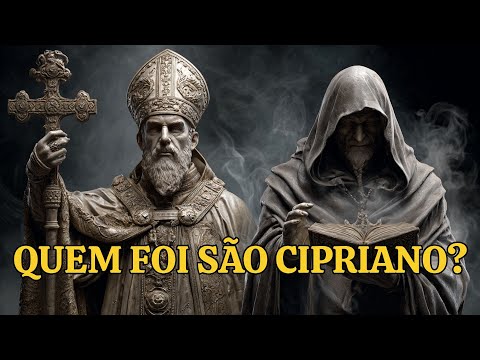
The name Saint Cyprian evokes two vastly different figures: the Christian martyr and bishop, and the powerful sorcerer whose grimoire continues to fascinate and frighten. This duality is at the heart of his enduring mystique. But who was the real Cyprian, and how did his story become intertwined with both sacred faith and forbidden arts?
In this grimoire entry, we delve into the historical and legendary accounts of Cyprian, exploring the evolution of his persona and the profound spiritual lessons embedded within his narratives. We will examine the transformation from an occult practitioner to a symbol of spiritual conversion, offering a unique perspective on the interplay of magic, faith, and personal evolution.
Table of Contents
RitualThe Two Cyprians: Martyr and Magus
The historical figure of Saint Cyprian of Carthage (c. 200–258 AD) was a prominent bishop known for his theological writings and his martyrdom during the Decian persecution. His legacy is one of steadfast faith and leadership within the early Christian church. He championed Christian doctrine and discipline, even excommunicating members who sought to return to the church after sacrificing to pagan gods during persecution.
However, a contrasting narrative emerged that linked Cyprian to a powerful sorcerer from Antioch. This Cyprian, according to legend, was deeply immersed in occult practices, mastering the secrets of witchcraft and arcane arts. This syncretic figure, distinct from the historical bishop, became the protagonist of numerous folk tales and grimoires, most notably the infamous Book of Saint Cyprian.
The convergence of these two figures is a fascinating phenomenon. It suggests a popular desire to imbue even saintly figures with a deeper, more complex history, or perhaps a method of recontextualizing older magical traditions within a Christian framework. The sorcerer Cyprian's tale often involves a dramatic conversion, where, overwhelmed by the power of Christian faith (sometimes through the intervention of a converted witch like Justina), he renounces his magical practices and embraces Christianity, becoming a martyr.
This dual narrative highlights a common theme in magical and religious history: the idea that true power lies not in external formulas or pacts, but in internal transformation and faith. The stories posit that even one who has delved deeply into the "shadows" can choose the "light." This is a powerful message of redemption and the potential for profound change, resonating across centuries and cultures.
The Infamous Book of Saint Cyprian
The Book of Saint Cyprian (often known in Portuguese as Livro de São Cipriano) is a grimoire that has circulated widely, particularly in Portugal and Brazil. Its origins are murky, likely a compilation of various magical texts and folklore attributed to the legendary sorcerer Cyprian. The book is often presented with a black cover, adding to its mystique and perceived danger.
Historically, such grimoires were often viewed with suspicion by religious authorities due to their association with forbidden practices, pacts, and potentially harmful rituals. The association with "black magic" or "witchcraft" has led to the book being treated with fear and caution by many. It is said to contain spells for invisibility, love, protection, and even more controversial rituals, often requiring specific ingredients and precise incantations.
From a spiritualist perspective, as explored in the original context, such books are often seen not as sources of eternal pacts with malevolent forces, but as tests or tools that can lead to greater self-awareness. The "risks" are often framed as spiritual tests or challenges, where the practitioner's intention and inner strength are paramount. The idea of encountering such texts can be a catalyst for introspection regarding one's desires, fears, and spiritual path.
The circulation of these books reflects a persistent human fascination with the occult and the desire for power or knowledge beyond ordinary means. However, the spiritualist interpretation consistently emphasizes that true, lasting power stems from inner transformation, prayer, and unwavering faith in the divine, rather than external magical formulas or perceived pacts.
Faith, Magic, and Transformation
The narrative of Saint Cyprian, particularly the sorcerer who converts, offers a profound lesson on transformation. It suggests that the path of magic, while potent, is not necessarily a one-way street to "evil." Rather, it can be a journey that, through disillusionment or divine intervention, leads to a higher spiritual understanding.
The core message is that external rituals, incantations, or even supposed "pacts" are less significant than the internal state of the individual. The true power, from this spiritualist viewpoint, lies in the strength of one's faith, the sincerity of one's prayer, and the commitment to inner growth and positive transformation. The story of Cyprian becoming a saint after being a feared sorcerer exemplifies this ultimate triumph of spirit over perceived darkness.
This perspective challenges the black-and-white view of magic often presented. Instead, it frames magical practices as potentially leading to a deeper understanding of spiritual forces, which can then be redirected towards higher purposes. Therefore, what might be seen as a "forbidden" path can, through a change of heart and intention, become a stepping stone towards spiritual illumination.
The concept of "no eternal pacts with evil" is central. It implies that even if one engages in practices perceived as dark, the path is not irrevocably sealed. Free will and the capacity for change are paramount. The universe, from this viewpoint, offers constant opportunities for redirection and redemption.
The Power of Intention and Faith
In many magical traditions, the power of intention is paramount. A sigil, for example, is a symbol imbued with a specific desire. When charged through a state of gnosis, it acts as a catalyst for manifestation. This principle is not exclusive to chaos magic; it is echoed in various forms of magic and spiritual practice.
The story of Cyprian’s conversion suggests that this focused intention can be redirected. The same mental discipline used to craft powerful spells can, when aligned with faith and divine will, be used for spiritual advancement and positive impact. The transformation of a sorcerer into a saint underscores the idea that the "fuel" of magical practice—focused consciousness—can be directed towards any goal, sacred or profane.
From a spiritualist lens, the most potent "magic" is indeed the transformative power of love and unconditional connection to the divine. Prayer, when deeply felt and sincere, can be a powerful act of aligning one's will with a higher purpose. This aligns with the idea that true spiritual evolution comes from within, fostered by faith, wisdom, and ethical conduct.
The narrative serves as a reminder that individuals are not bound by past actions or perceived "negative paths." The law of return, or karma, is often discussed in spiritual circles, but it is also framed as a system of learning and growth, offering continuous opportunities for correction and evolution. The choice to seek the light, to embrace faith and inner transformation, is always present.
Spiritual Guidance and Protection
Many practitioners seek spiritual guidance and protection, especially when exploring the more esoteric aspects of magic or dealing with potentially challenging energies. The figure of Saint Cyprian, in his dual nature, has become a protector for many who navigate these paths, particularly those who have previously engaged with darker arts or fear their influence.
In spiritualist traditions, protection is often seen as stemming from one's own inner light and connection to benevolent spiritual forces. Genuine prayer, a strong moral compass, and clear, positive intentions are considered the most effective forms of spiritual armor. This is the "magic" that comes not from a book of spells, but from the state of one's soul.
The concept of "interventions" by spiritual guides or angels to help individuals who stray from their intended path also appears in some spiritual narratives. These figures might guide someone towards a more positive direction, akin to how Saint Cyprian's story depicts divine intervention leading to his conversion.
For those who feel drawn to the legacy of Saint Cyprian, whether as a symbol of occult knowledge or as a figure of potent spiritual conversion, the focus remains on personal growth and aligning with positive spiritual forces. It's about understanding that the journey through perceived darkness can ultimately lead to a profound appreciation and embrace of the light.
The Power of Choice and Redemption
Ultimately, the story of Saint Cyprian, especially the version involving the sorcerer, is a powerful testament to the human capacity for choice and redemption. It suggests that no one is beyond the reach of transformation, and that a conscious decision to turn towards the light, guided by faith and spiritual wisdom, can fundamentally alter one's path.
The legend encourages individuals to examine their own spiritual journeys. Are there practices or beliefs that currently hold you back from spiritual evolution? Are you seeking a path towards greater light and understanding? The narrative of Cyprian's journey from powerful sorcerer to revered saint offers hope and an example that change is always possible.
The key lies in recognizing that true power is not in manipulating external forces through arcane rituals, but in cultivating inner strength, wisdom, and a deep connection to the divine. The most profound "magic" is the magic of self-transformation, the ability to overcome past limitations and embrace a path of spiritual growth and love.
This message is universal: regardless of one's past or current practices, the choice to seek light, foster faith, and engage in positive transformation is always available. The story of Saint Cyprian, in all its complexity, serves as a beacon of hope and a powerful reminder of this enduring truth.
Frequently Asked Questions (FAQs)
What is the primary difference between Cyprian of Carthage and the sorcerer Cyprian?
Cyprian of Carthage was a historical figure, an early Christian bishop and martyr known for his theological writings and leadership. The sorcerer Cyprian is a legendary figure, often depicted as a powerful practitioner of witchcraft and occult arts, whose story is associated with the Book of Saint Cyprian. The latter's narrative typically involves a conversion to Christianity.
Is the Book of Saint Cyprian considered dangerous?
The Book of Saint Cyprian is often associated with folk magic and rituals that some consider risky or having negative spiritual implications. While it contains a wealth of lore and historical magical practices, many spiritual traditions emphasize that true spiritual power comes from inner faith and transformation, rather than external grimoires. Its "danger" is often interpreted as a spiritual test or a reflection of the practitioner's own inner state and intentions.
Can someone who practices magic truly become a saint or a figure of light?
The narrative of the sorcerer Cyprian's conversion strongly suggests that transformation is possible. From a spiritualist perspective, the ultimate power lies in faith, intention, and inner change. If one's path involves exploring various forms of spiritual or energetic practices, the critical factor for positive evolution is often the ultimate alignment with principles of love, wisdom, and service, rather than the specific practices themselves.
What spiritual lessons can be learned from Saint Cyprian's story?
The story offers several profound lessons: the power of transformation and redemption, the idea that one is not bound by past actions, the supremacy of inner faith and intention over external magical formulas, and the constant availability of choosing the path of light. It challenges dichotomies of good and evil, suggesting that even those who have explored darker paths can find their way to spiritual illumination.
How can practitioners of magic ensure they are on a positive spiritual path?
Focusing on clear intention, cultivating inner virtue (like compassion and integrity), practicing sincere prayer or meditation, and seeking alignment with benevolent spiritual forces are key. It’s about ensuring that one's spiritual or magical pursuits are ultimately aimed at growth, healing, and positive contribution, rather than solely personal gain or manipulation. The practice of ethical consideration and self-reflection is paramount.
Are there any specific protections recommended when studying texts like the Book of Saint Cyprian?
While the spiritualist view emphasizes inner strength and faith as the primary protections, some traditions might suggest purification rituals, the use of sacred symbols (like crosses or specific divine names), prayer, and maintaining a clear, positive intention during study. However, the most potent protection is often considered to be a strong, virtuous character and a sincere connection to the divine.
The Mage's Arsenal
- Essential: Goetian Seals Generator — For those who delve into the esoteric arts, understanding and correctly manifesting seals is crucial. This app helps generate and clarify these ancient symbols, ensuring accuracy in your workings and preventing potential misinterpretations that could lead to unintended consequences.
- Recommended Reading: Accounts and theological works related to Cyprian of Carthage.
- Further Exploration: Scholarly articles and historical analyses of grimoires and folk magic traditions, particularly those concerning the Iberian Peninsula and Latin America.
- Practical Tool: A journal for recording reflections on transformation, faith, and personal spiritual growth.
About the author: Frater Alek0s is a veteran practitioner and researcher in the field of chaos magick. His work focuses on the practical and experimental application of occult techniques for self-development and reality exploration, demystifying esotericism for the modern practitioner.
Your Operation
The narrative of Saint Cyprian, with his journey from potent sorcerer to revered saint, is a powerful archetype of transformation. Consider your own spiritual path. What "dark arts" or esoteric practices have you explored, and how have they shaped your understanding of faith and power? Reflect on the intentionality behind your magical or spiritual pursuits. Are they driven by genuine growth and connection, or by external desires that might lead you astray?
Engage with the core lesson: true spiritual power is cultivated from within, through faith, ethical conduct, and a conscious choice to align with light. If you find yourself drawn to the potent symbolism found in grimoires like the Book of Saint Cyprian, approach them with discernment and a focus on your ultimate spiritual evolution. Use tools like the Goetian Seals Generator not as a shortcut to power, but as a means to understand and respectfully engage with complex esoteric traditions, always prioritizing your inner light and spiritual well-being.
The story is not about fearing magic, but about understanding its potential and directing its energy towards constructive, spiritually uplifting ends. What choices will you make in your own journey towards transformation?
Referencias
- Carroll, P. J. (1987). Liber Null & Psychonaut. Weiser Books.
- Spare, A. O. (1913). The Book of Pleasure. Self-published.
- Hine, P. (1992). Condensed Chaos: An Introduction to Chaos Magic. New Falcon Publications.
- Crowley, A. (1904). The Book of the Law. Self-published.
- Sherwin, R. (2018). The Chaos Magic Handbook. CreateSpace.
- Kraig, D. M. (1988). Modern Magick: Eleven Lessons in the High Magickal Arts. Llewellyn Publications.
- Morrison, G. (2003). Pop Magic! The Art of Shaping Reality. Disinformation.
- DuQuette, L. M. (2003). The Chicken Qabalah of Rabbi Lamed Ben Clifford. Weiser Books.
- Webb, D. (2015). Chaos Magick: A Practical Guide. Self-published.
- Tyson, D. (2006). The Power of the Written Word. Llewellyn Publications.
- Bonewits, I. (1971). Real Magic. Creative Age Press.
- Greer, J. M. (2003). The New Encyclopedia of the Occult. Llewellyn Publications.
No hay comentarios:
Publicar un comentario