
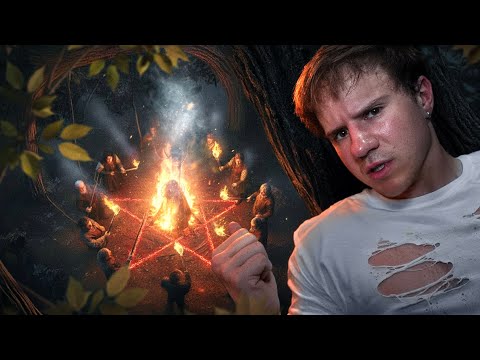
Salem. The name alone conjures images of bewitched accusers, hanging judges, and crackling flames. But what really happened during the Salem Witch Trials? And are the echoes of that hysteria still felt today? I embarked on a quest to delve into the heart of this infamous town, to uncover the truth behind the legends, and to find out if the 'witches' of today hold any real power. Join me as we investigate.
MagitechThe Crucible of Accusation: Unraveling the Salem Witch Trials
The story of the Salem Witch Trials is a chilling testament to mass hysteria, fear, and the dangerous power of unchecked belief. It all began in 1692, a time steeped in religious fervor and a deep-seated fear of the unknown. In the small Puritan community of Salem, Massachusetts, a group of young women began exhibiting strange afflictions: contorted bodies, fits of rage, and nonsensical babbling. These were not just childish pranks, as some might assume; these were seen as outward manifestations of demonic possession.
Table of Contents
The primary accusers were a group of girls, including Elizabeth (aged nine) and Abigail (aged eleven), daughters of Reverend Samuel Paris. Their afflictions were interpreted by the community and the local magistrates as proof of witchcraft. The prevailing belief system dictated that anyone acting strangely or defying societal norms could be in league with the Devil. This created a fertile ground for accusations, and soon, names were being thrown around with terrifying speed. It’s crucial to understand the historical context; in the 17th century, the concepts of mental illness as we understand them today were non-existent. Strange behavior was often attributed to supernatural forces.
The trials themselves were a grim affair. Accused individuals were often pressured to confess, and false confessions were seen as proof of guilt. The 'evidence' used was often spectral, meaning it involved claims of seeing the accused's spirit tormenting the accusers. This was incredibly difficult to refute. Judges like Samuel Putnam, who presided over many of the trials, wielded immense power. He later apologized, recognizing the grave errors made, but the damage was done. Hundreds were accused, dozens were executed by hanging or pressing, and the town was forever scarred by this dark chapter.
"The Devil will not rest, but we must hope and pray that we shall shortly have his agents in this Land." - Reverend Samuel Parris, a sentiment that echoed the fear of the time.
We are now standing at the archaeological site of the Samuel Paris home, the very place where the girls' strange behavior first became a public concern. It's a sobering thought to be in a location where such profound historical events unfolded, a place that directly instigated the chain reaction of accusations and executions. The air here feels heavy with history, a palpable reminder of how fear and belief can warp reality.
Modern Witchcraft: Hysteria or Heritage?
The most intriguing aspect of investigating Salem today is the persistence of witchcraft within the community. Far from being relics of the past, practitioners of modern witchcraft still call Salem home. But what does 'witchcraft' mean in the 21st century? Is it the same dark, malevolent force the Puritans feared, or something entirely different?
I met with Lucas, a local practitioner who agreed to share his perspective and demonstrate some of his craft. Unlike the terrified accusers of centuries past, Lucas approaches his practice with a sense of heritage and connection to nature. He spoke of harnessing the energy of storms, a practice that sounds fantastical, but as he explained, it's about understanding and channeling natural forces rather than conjuring them from nothing. His demonstration during a storm, while not conjuring lightning as some might assume, was a powerful display of connecting with and working with elemental energies.
The 'witches' of today are a far cry from the figures of colonial fear. They often practice ethical witchcraft, rooted in nature worship, personal empowerment, and a deep respect for the unseen forces of the world. The 'magic' they perform is less about curses and hexes, and more about intention, ritual, and subtle manipulations of energy. This is where the modern understanding of witchcraft diverges sharply from the historical context of Salem.
The historical Salem Witch Trials were a tragedy born from religious extremism, social anxieties, and a lack of critical thinking. They were not a genuine investigation into supernatural powers, but a horrifying example of how fear can lead to persecution. The 'witches' accused then were likely victims of circumstance, social outcasts, or perhaps even individuals genuinely suffering from psychological or neurological conditions that were misunderstood.
The practice of witchcraft today, on the other hand, is often a spiritual path, a way of connecting with oneself and the environment. While the historical events in Salem were tragic, the modern practice offers a fascinating insight into the evolution of belief systems and the enduring human fascination with the mystical. It's about understanding the power of intention and the subtle energies that surround us, not about spectral attacks or pacts with demons.
The 'Ummis' Method: A Glimpse into Ancient Divination
One of the more peculiar details emerging from the historical accounts is the mention of methods used by the accusers to divine the future. While often dismissed as mere childish games, some of these practices hint at older, more esoteric traditions. The "Ummis method," or a similar egg-and-mirror divination technique, was mentioned as something the girls dabbled in. While it sounds rudimentary, divination has a long and complex history across many cultures and magical traditions.
To truly understand the context of historical accusations, one must investigate the practices of the time, even the ones that seem outlandish. While the girls' use of such methods might have been performative or exaggerated, it reflects a cultural curiosity about the unknown and a desire to peer beyond the veil of ordinary reality. This investigative approach to understanding beliefs, even those that seem irrational, is key to grasping the mindset of the era.
Investigating Sources: The Foundation of Truth
When diving into a topic as layered and controversial as the Salem Witch Trials, the ability to investigate sources critically is paramount. As noted in "Library 1600: Introduction to College," "Reputation/Authority, Purpose, Conflicts of Interest, Bias" are crucial points to consider when evaluating any source (4.4 Investigate the source). It's not enough for a source to appear credible; its origins, its author's expertise, and its underlying agenda must be examined thoroughly.
For instance, while the historical accounts of the trials are often sensationalized, academic research provides a more grounded perspective. Likewise, understanding modern witchcraft requires looking beyond sensational stereotypes and investigating the actual practices and philosophies of their adherents. My own investigation aimed to be as objective as possible, seeking to understand both the historical context of fear and persecution and the diverse realities of modern practitioners. This involves distinguishing between genuine historical records and later interpretations or fictionalizations.
The Cambridge Dictionary defines "investigating" as "to examine a crime, problem, statement, etc. carefully, especially to discover the truth." This simple definition underpins all genuine inquiry, whether it's a police detective examining a crime scene or a historian poring over ancient texts. The process is systematic and requires a discerning eye.
Mage's Arsenal
- Essential: Goetian Seals Generator — While not directly related to the Salem Witch Trials, this tool is invaluable for anyone investigating ancient symbols and their meanings, offering a modern digital approach to historical occult imagery.
- Recommended: Historical texts and academic papers on the Salem Witch Trials. Look for scholarly works that cite their sources.
- For Context: Modern witchcraft literature that discusses ethical practices and nature-based spirituality.
- For Understanding: A good dictionary, like Cambridge Dictionary, to ensure precise understanding of key terms.
FAQ
What was the real cause of the Salem Witch Trials?
The Salem Witch Trials are widely believed to have been caused by a combination of factors, including mass hysteria, religious extremism, social tensions, and possibly ergot poisoning, which can cause hallucinations and spasms. There is no evidence that actual witchcraft was involved.
Are modern witches the same as the accused witches of Salem?
No. Modern witchcraft is a diverse spiritual path focused on nature, personal growth, and energy work. The 'witches' accused during the Salem trials were victims of a colonial society's fear and persecution of anything deemed heretical or devilish.
What evidence was used in the Salem Witch Trials?
The evidence was largely spectral and anecdotal, including accusations from the afflicted girls, confessions (often coerced), and purported sightings of the accused's spirits. Physical evidence, as we understand it today, was rarely a factor.
Did judges apologize for their role in the trials?
Yes, some of the judges and key figures involved in the trials later expressed remorse and acknowledged their mistakes. For example, Judge Samuel Sewall publicly apologized in 1697 for his role in the proceedings, recognizing the injustices that had occurred.
How can one investigate historical events reliably?
Reliable investigation involves consulting multiple sources, prioritizing scholarly works and primary documents, evaluating the author's authority and potential biases, and cross-referencing information. Avoid relying on sensationalized accounts or single sources without verification.
About the author: Frater Alek0s is a veteran practitioner and researcher in the field of chaos magick. His work focuses on the practical and experimental application of occult techniques for self-development and reality exploration, demystifying esotericism for the modern practitioner.
Conclusion: Lessons from the Past
My journey into Salem revealed a town grappling with a dark history, but also a place where modern witchcraft is practiced with respect and intention. The Salem Witch Trials serve as a potent reminder of the dangers of fear-mongering, the fragility of justice when clouded by hysteria, and the importance of critical thinking. Investigating the past, and indeed any subject, requires a commitment to truth, an openness to different perspectives, and the courage to question deeply held beliefs, both historical and personal. The 'witches' of Salem today practice a form of magic that is about connection and empowerment, a far cry from the malevolent forces feared centuries ago.
I ventured into the heart of Salem, a town steeped in the chilling history of the Witch Trials, to uncover the truth. What really happened to those accused? And what about the witches practicing there today?
I investigated the historical hysteria, met a modern practitioner, and explored the fascinating divide between fear-driven accusations and intentional magic. Discover the lessons learned from this dark chapter of history and the evolving face of witchcraft.
Plus, a special recommendation for the Goetian Seals Generator to help you explore ancient symbols in a modern way.
Read the full grimorie entry here: [URL]
Referencias
- Carroll, P. J. (1987). Liber Null & Psychonaut. Weiser Books.
- Spare, A. O. (1913). The Book of Pleasure. Self-published.
- Hine, P. (1992). Condensed Chaos: An Introduction to Chaos Magic. New Falcon Publications.
- Crowley, A. (1904). The Book of the Law. Self-published.
- Sherwin, R. (2018). The Chaos Magic Handbook. CreateSpace.
- Kraig, D. M. (1988). Modern Magick: Eleven Lessons in the High Magickal Arts. Llewellyn Publications.
- Morrison, G. (2003). Pop Magic! The Art of Shaping Reality. Disinformation.
- DuQuette, L. M. (2003). The Chicken Qabalah of Rabbi Lamed Ben Clifford. Weiser Books.
- Webb, D. (2015). Chaos Magick: A Practical Guide. Self-published.
- Tyson, D. (2006). The Power of the Written Word. Llewellyn Publications.
- Bonewits, I. (1971). Real Magic. Creative Age Press.
- Greer, J. M. (2003). The New Encyclopedia of the Occult. Llewellyn Publications.
No hay comentarios:
Publicar un comentario