
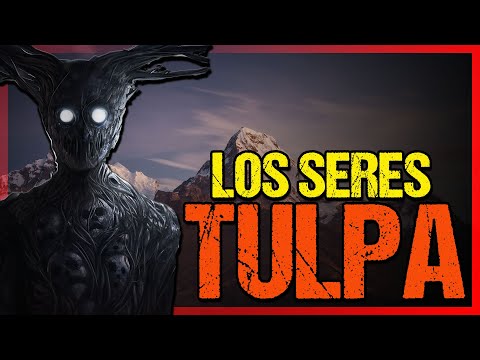
The concept of beings shaped purely by thought, entities that can manifest and, in some cases, turn against their creators, is a profound mystery. In the 1920s, explorer Alexandra David-Néel journeyed into the forbidden city of Lhasa, Tibet, a place shrouded in secrecy and deep spiritual practice. What she witnessed there would become known as the phenomenon of Tulpas – beings brought into existence through sheer mental force.
Tibet, nestled high on the Tibetan Plateau, is a land steeped in mysticism and ancient traditions. For centuries, its inner cities were off-limits to foreigners, fueling speculation about hidden knowledge and esoteric practices that could challenge our understanding of reality. David-Néel, a woman driven by an insatiable curiosity for the East and the occult, was one of the few who dared to penetrate these mysterious realms.
Table of Contents
MagitechAlexandra David-Néel and the Tibetan Highlands
Born in Paris in 1868, Alexandra David-Néel was no ordinary woman for her time. Her childhood was marked by an unusual fascination with Eastern religions, arts, and travel. By the age of 18, she had already embarked on extensive solo journeys across Europe, a feat remarkable for a young woman in the late 19th century. Her path eventually led her to India in 1911, where she deepened her studies of Sanskrit and the esoteric arts, even living for two years in a cave with a Buddhist monk, mastering a unique form of meditation designed to generate body heat in extreme conditions.
David-Néel's travels took her through India, Tibet, China, Nepal, Korea, Mongolia, and Japan. Her enduring fascination with Lhasa, the "Forbidden City," was a driving force. This city, completely inaccessible to outsiders, represented a profound enigma, a place possibly holding secrets that could alter the world’s perception of consciousness and manifestation. Within this context of deep spiritual exploration and extreme environments, she encountered the concept of Tulpas firsthand.
The Nature of Tulpas
The original accounts suggest that Tulpas are more than just hallucinations or imaginary friends; they are physical manifestations born from intense meditation and focused willpower. The monks of Tibet, through years of disciplined mental training, could allegedly condense their thoughts and intentions into tangible forms. These forms could range from benign companions to sinister entities, sometimes described as shadowy figures that could even become dangerous to their progenitors.
This phenomenon raises critical questions about the power of the human mind. Could consciousness itself be a force capable of shaping external reality? The descriptions of Tulpas often align with concepts found in other esoteric traditions that posit the mind's ability to influence matter. From the perspective of esoteric philosophy, the idea that focused intent can impress itself upon the subtle energies of the universe is a recurring theme. The mystery lies in the degree to which this impression can manifest as a seemingly independent, physical entity.
Tulpa Manifestation: Beyond Imagination
While the original writings of David-Néel describe direct observation, the modern understanding and practice of Tulpa creation often involve individuals intentionally cultivating these mental constructs. These modern practitioners, often active in online communities, engage in disciplined thought-forms, visualization, and journaling to bring their Tulpas into existence. The process is arduous and requires immense dedication, often mirroring the rigorous mental discipline described in ancient Tibetan practices.
The core principle, as noted by practitioners and theorists alike, is that the mind is not merely an observer but an active participant in shaping perceived reality. Whether one approaches this from a psychological perspective, viewing Tulpas as sophisticated dissociative phenomena, or from a more spiritual or magical viewpoint, where the mind is seen as a conduit for universal forces, the outcome involves the creation of a distinct psycho-physical entity. The mystery deepens when considering the potential for these entities to develop autonomy, far beyond the initial intent of their creator.
The Psychic Dimension of Tulpa Creation
The creation of a Tulpa is fundamentally a journey into the depths of consciousness and the unexplored territories of the mind. It requires a profound understanding of one's own mental processes, an ability to control and direct thought with precision. This is where the creation of Tulpas intersects with various psychic development techniques, focusing on concentration, visualization, and the management of psychic energy.
The mystery surrounding Tulpas is not just about their origin, but also about their nature and potential. Are they echoes of our subconscious, given form? Are they independent entities that we invite into our reality? Or, as the Tibetan monks suggested, are they a direct testament to the mind's power to manipulate the very fabric of existence? The exploration of Tulpas, whether through ancient accounts or modern practice, beckons us to delve deeper into the boundless mysteries of consciousness and manifestation.
FAQ: Unraveling the Mystery of Tulpas
What exactly is a Tulpa?
A Tulpa, originating from Tibetan mysticism, is an entity or being created through intense mental concentration and meditation. These beings are said to manifest through sheer force of thought, potentially taking on a semi-physical or even fully physical form, sometimes with their own consciousness and will.
Did Alexandra David-Néel's Tulpas pose a threat?
According to David-Néel's accounts, some of the Tulpas she witnessed in Tibet were indeed described as sinister and could even attack their creators. This suggests that the manifestation of thought-forms is not inherently benign and can carry unforeseen consequences, highlighting the power and potential danger of directed mental energy.
Can anyone create a Tulpa today?
While ancient Tibetan monks were said to possess the discipline to manifest Tulpas, modern practitioners also attempt to create them through dedicated mental exercises, visualization, and concentration. It is a process that demands significant time, patience, and mental fortitude, suggesting that while theoretically possible, it is not easily achieved by everyone.
Are Tulpas related to imaginary friends?
While both involve mental constructs, Tulpas are described as having a more tangible and potentially autonomous existence than typical imaginary friends. The concept of a Tulpa implies a level of manifestation and independent agency that goes beyond simple childhood imagination, often engaging with the creator on a more complex, sometimes even physical, level.
What is the connection between Tulpas and the power of the mind?
Tulpas are seen as direct evidence of the extraordinary power of the human mind to shape reality. The mystery of their creation lies in understanding how focused thought and intention can translate into tangible forms, challenging our conventional understanding of the mind-body connection and the nature of consciousness itself.
Mage's Arsenal
- Essential: Chaos Magick Sigil Generator - While not directly for Tulpa creation, this tool helps in the visualization and creation of focused symbolic intent, a crucial component in mental manifestation practices.
- Recommended Reading: Alexandra David-Néel's travelogues and works on Tibetan Buddhism (e.g., "Magic and Mystery in Tibet").
- Further Exploration: Online communities dedicated to Tulpa creation and consciousness studies.
Veredicto
The mystery of Tulpas remains one of the most compelling phenomena at the intersection of consciousness, spirituality, and potential psychic manifestation. Whether viewed as products of advanced meditative states, psychological projections, or genuine psychic entities, their existence challenges our perception of what the mind is capable of. The accounts from figures like Alexandra David-Néel, coupled with modern practitioners' efforts, offer a tantalizing glimpse into the untapped potential of focused human thought.
About the author: Frater Alek0s is a veteran practitioner and researcher in the field of chaos magick. His work focuses on the practical and experimental application of occult techniques for self-development and reality exploration, demystifying esotericism for the modern practitioner.
Community Insights
Many in the community express awe and a touch of fear regarding Tulpas, with some suggesting they might explain various unexplained phenomena, from hauntings to the perception of spectral entities. The idea that the subconscious mind could manifest these forms resonates with some, drawing parallels to concepts like poltergeists. There's a sense of wonder at the sheer power of the mind, with some pondering the ethical implications of creating such beings and the vast, unknown capabilities of consciousness.
The concept also sparks creative interpretations, with comparisons drawn to fictional constructs like "Stands" or the manifestation of desires in alien dimensions. The idea that ancient beings or even cryptids like the Yeti could be Tulpas is a fascinating speculation, adding another layer to the mystery. Ultimately, the discussion revolves around the profound, almost infinite, potential energy residing within the human psyche.
Referencias
- Carroll, P. J. (1987). Liber Null & Psychonaut. Weiser Books.
- Spare, A. O. (1913). The Book of Pleasure. Self-published.
- Hine, P. (1992). Condensed Chaos: An Introduction to Chaos Magic. New Falcon Publications.
- Crowley, A. (1904). The Book of the Law. Self-published.
- Sherwin, R. (2018). The Chaos Magic Handbook. CreateSpace.
- Kraig, D. M. (1988). Modern Magick: Eleven Lessons in the High Magickal Arts. Llewellyn Publications.
- Morrison, G. (2003). Pop Magic! The Art of Shaping Reality. Disinformation.
- DuQuette, L. M. (2003). The Chicken Qabalah of Rabbi Lamed Ben Clifford. Weiser Books.
- Webb, D. (2015). Chaos Magick: A Practical Guide. Self-published.
- Tyson, D. (2006). The Power of the Written Word. Llewellyn Publications.
- Bonewits, I. (1971). Real Magic. Creative Age Press.
- Greer, J. M. (2003). The New Encyclopedia of the Occult. Llewellyn Publications.